“He knew that all was well, because he had done the best that he could, from day to day.”
— Artaban reflects on his lifelong quest after missing the Christ child.


Henry Van Dyke (1895)
Genre
Historical Fiction / Spirituality
Reading Time
90 min
Key Themes
See below
Sign in to track this book
A forgotten fourth wise man searches his whole life for the Messiah. He repeatedly sacrifices his treasures and delays his journey to help those in need, finding true divinity in selfless service.
Artaban, a Persian scholar, studies the stars and old prophecies. He determines that the Messiah will soon be born. He sells all his belongings, turning his inheritance into three beautiful jewels: a sapphire, a ruby, and a pearl. These are meant as gifts for the new King. He plans to meet three other wise men—Caspar, Melchior, and Balthazar—at the old ziggurat of Borsippa to start their journey to Bethlehem. Artaban's loyal servant, Orod, helps him get ready for the hard trip, believing in his master's search. Artaban feels a strong spiritual calling. He is sure this pilgrimage will bring him closer to divine truth and his life's purpose.
As Artaban rides toward Borsippa, he finds a dying Hebrew man with desert fever. Torn between his urgent quest and his kind nature, Artaban chooses to stop and care for the stranger. He gives medicine and comfort, saving the man's life. This act of kindness makes him miss his meeting with the other wise men, who leave without him, saying they could not wait. To pay for the man's care and for the delay, Artaban has to sell his valuable sapphire. With sadness, he continues his journey alone, now without his first gift and unsure if he will ever find the King.
Artaban eventually reaches Bethlehem, but Joseph and Mary, with the infant Jesus, have already gone to Egypt. As he rests in a house where a mother and her child hide, King Herod's soldiers arrive to kill the innocent children. Artaban sees the terror and confronts the centurion. He bribes him with his beautiful ruby to spare the child and the house. The centurion, impressed by the jewel and Artaban's firm manner, agrees to leave. Artaban again feels he has failed, having missed the King and given up another valuable gift, but he has saved a life.
For the next thirty-three years, Artaban constantly searches for the King. He travels through Egypt, Arabia, Persia, and many other lands. He follows every rumor and prophecy, asking about a newborn King, a wise teacher, or a healer. During his long journey, he meets countless people suffering from poverty, sickness, and injustice. Each time, his kind heart makes him use his remaining money and his skills as a healer to help those in need. He becomes known as a kind and wise man, though his main search remains unfinished. His last jewel, the pearl, remains untouched, waiting for its intended recipient.
During his travels, Artaban is unjustly imprisoned in Babylon for several years. Even in his cell, his desire to serve remains strong. He shares his knowledge and comfort with other prisoners, easing their suffering and offering hope. His time in prison, though a harsh detour from his quest, strengthens his empathy and resolve. He continues to believe that one day he will find the King, never forgetting his original purpose, despite the many setbacks and personal sacrifices.
After his release from prison, now an old man, Artaban hears news of a great prophet and healer in Judea. This person is called the 'King of the Jews' and will soon be crucified during the Passover festival in Jerusalem. A spark of hope returns to him; could this be the King he has sought for so long? With new determination, he goes to Jerusalem, carrying his last treasure, the great pearl. He plans to offer it as a ransom if the King is in trouble. His body is weak, but his spirit is firm, driven by his lifelong quest.
As Artaban nears Golgotha, where the crucifixion is happening, he sees Roman soldiers leading a young woman to be sold into slavery to pay her father's debts. The woman, a Hebrew, asks for help. She recognizes Artaban from his reputation as a kind man. Seeing her distress and the unfairness of her situation, Artaban faces his final, most important choice. He gives his magnificent pearl, his last and most valuable treasure, to the Roman captain to buy the woman's freedom. With this act, he has no earthly possessions left.
Right after giving away the pearl, a large earthquake hits Jerusalem, throwing debris from the temple onto the streets. Artaban, already weak from age and tiredness, is hit by a falling tile. As he lies dying, a soft, comforting voice speaks to him, saying, 'Truly I tell you, just as you did it to one of the least of these my brothers, you did it to me.' Artaban, though he never physically met Jesus, finally understands that his lifelong acts of kindness and sacrifice were direct service to the King he sought.
With a look of deep peace and understanding on his face, Artaban dies. He dies not sad for failing to give his gifts directly to the King, but with the calm knowledge that his entire life's journey, full of detours, sacrifices, and acts of kindness, was his true pilgrimage. His three jewels, though never given to the Christ child, had been offered in spirit through the suffering people he met. He found the King not in a manger or on a throne, but in the faces of the poor, the sick, and the oppressed.
The Protagonist
Artaban transforms from a scholar seeking a physical king to a compassionate servant who realizes the King is found in every act of mercy.
The Supporting
Orod provides a grounded counterpoint to Artaban's spiritual idealism, highlighting the magnitude of Artaban's initial sacrifice.
The Mentioned
Their successful journey highlights Artaban's 'failure' in conventional terms, emphasizing his unique path.
The Supporting
His salvation marks the first step in Artaban's journey of selfless service.
The Supporting
He serves as an instrument for Artaban's second act of selfless sacrifice.
The Supporting
Their rescue further shapes Artaban's path of selfless giving.
The Supporting
Her plight leads to Artaban's ultimate act of selfless love, fulfilling his quest.
The Mentioned
Though never physically present, Jesus's spiritual presence guides Artaban's transformation, culminating in the revelation of His true identity.
The main theme is that true devotion and worship are found not in grand gestures or material gifts to a god, but in selfless service and kindness toward other people. Artaban's journey shows this. He repeatedly gives up his personal goal and sacrifices his valuable gifts to help the sick, the innocent, and the oppressed. His final message from Jesus directly confirms that 'just as you did it to one of the least of these my brothers, you did it to Me,' solidifying this theme.
“'Inasmuch as thou hast done it unto one of the least of these my brethren, thou hast done it unto Me.'”
The story redefines true worship. Artaban starts with a common idea: giving precious gifts to a King. However, his journey shows that the deepest worship is a life lived by divine principles of love and mercy. Each time he sacrifices a jewel to save a life or lessen suffering, he is, in effect, offering a more meaningful gift to the spirit of the King he seeks, even if he does not realize it until he dies. His journey suggests that spiritual fulfillment comes from showing divine love, not just from rituals or offerings.
“'The King has accepted thy gifts, Artaban, for every cup of water thou hast given to the thirsty, and every crust of bread to the hungry, and every garment to the naked, and every visit to the sick, and every ransom for the captive, has been given to Me.'”
Artaban's journey involves many sacrifices, each leading to a form of redemption or deeper understanding. He sacrifices his inheritance, his meeting with the other Magi, and eventually his three precious jewels. These acts of giving, first seen as failures or hindrances to his main quest, are ultimately revealed as the very ways he achieves spiritual redemption and fulfills his purpose. The story implies that true redemption comes not from avoiding suffering or loss, but from embracing them through self-giving love.
“'My King, I have waited for Thee, and I have sought Thee for thirty-three years, and I have not found Thee, and I have not presented my gifts.'”
Despite many problems, missed chances, and over three decades passing, Artaban never gives up his search. His faith in the King's coming and his steady resolve to find Him drive his continuous search. Even when imprisoned or facing what seems like useless efforts, he continues. He shows a deep and lasting faith that goes beyond immediate results. His persistence is eventually rewarded, not in the way he first imagined, but in a deeper spiritual discovery.
“'For thirty-three years I have sought the King. I have made my pilgrimage. I have kept the faith.'”
Symbolic gifts representing Artaban's material sacrifices and spiritual offerings.
These three jewels are Artaban's initial, tangible gifts for the newborn King. They serve as a concrete representation of his wealth and his intention for traditional worship. As he sacrifices each jewel to help a suffering individual, they transform from literal gifts for a monarch into symbolic offerings of compassion and selflessness to humanity. Their repeated sacrifice underscores the story's central theme that true worship is found in acts of mercy, making them powerful symbols of Artaban's spiritual transformation and his redefined understanding of devotion.
A literal and metaphorical journey of spiritual discovery.
Artaban's physical journey across lands and through decades is a direct metaphor for his spiritual pilgrimage. Each detour, delay, and encounter on his path is an opportunity for growth and a test of his faith and compassion. The physical arduousness of his travels reflects the spiritual difficulties and sacrifices he makes. The journey's end, not at a physical meeting with the King but in a spiritual revelation, highlights that the true destination was never a place, but a state of being and understanding achieved through a lifetime of selfless acts.
The reader knows Artaban is serving Jesus, while Artaban remains unaware until his death.
Dramatic irony is a key device in the story. The reader, familiar with the Christian narrative, understands that Artaban's acts of mercy towards the 'least of these' are, in fact, direct service to Jesus, even as Artaban believes he is failing in his primary quest to find the King. This creates a poignant tension throughout the narrative, culminating in the powerful moment of revelation when Jesus's voice confirms to Artaban what the reader has long suspected, reinforcing the story's central message about the nature of true worship.
A direct, supernatural intervention that provides the ultimate resolution and thematic clarity.
The disembodied voice of Jesus at Artaban's deathbed serves as the ultimate plot device for resolution and thematic affirmation. It directly answers Artaban's lifelong question, validates his entire journey, and delivers the story's core message in a clear, unambiguous manner. This supernatural element provides a conclusive and emotionally powerful ending, solidifying the idea that Artaban's 'failures' were, in fact, his greatest successes in the eyes of the divine King he sought.
“He knew that all was well, because he had done the best that he could, from day to day.”
— Artaban reflects on his lifelong quest after missing the Christ child.
“It is better to follow even the shadow of the best than to remain content with the worst.”
— Artaban's justification for his journey despite uncertainties.
“”
— Artaban offers his last treasure to help a slave girl, sacrificing his goal.
“Not so, my Lord! For when saw I thee an hungered and fed thee? Or thirsty, and gave thee drink?”
— Artaban questions Jesus at the moment of his death, unaware of his acts of charity.
“Verily I say unto thee, Inasmuch as thou hast done it unto one of the least of these my brethren, thou hast done it unto me.”
— Jesus's response to Artaban, revealing the meaning of his life's deeds.
“The journey is the reward.”
— Summarizing Artaban's spiritual journey despite never meeting Jesus physically.
“He had sought for the King and found him in the hearts of the poor and suffering.”
— Narration on Artaban's realization through his charitable acts.
“One by one the jewels disappeared, but each one bought a life.”
— Describing how Artaban used his treasures to help others along his way.
“The star of hope still shone before him, and led him on.”
— Artaban continues his quest despite setbacks and delays.
“For love is the light that guides the wise men.”
— Reflection on the true motivation behind Artaban's journey.
“He had given away the last of his treasures, but he had found the greatest treasure of all.”
— Artaban's final understanding as he dies, having served others.
“In the helpfulness of others, he saw the hand of God.”
— Artaban experiences kindness from strangers during his travels.
“The years of his pilgrimage were not lost; they were fulfilled.”
— Narration on the meaning of Artaban's life after his death.
“To seek is to find, if the heart is pure.”
— Moral drawn from Artaban's story of spiritual seeking.
Ready to see how well you understood this book? Take our interactive quiz with 10 questions.
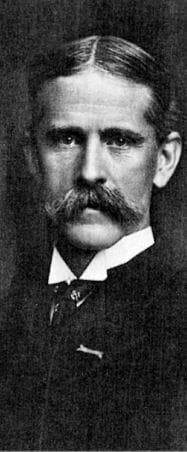
Biography coming soon.







