“There is a way to everything, if only you can find it.”
— The children are trying to solve a problem with the Amulet's magic.

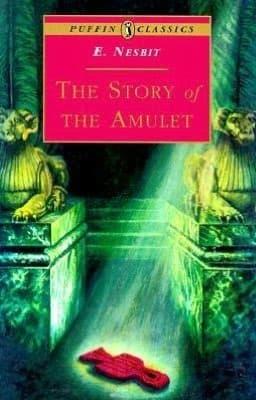
E. Nesbit (1905)
Genre
Fantasy / Children's / Young Adult
Reading Time
292 min
Key Themes
See below
Sign in to track this book
When five children rediscover their sand-fairy in a London pet shop, they embark on an anachronistic quest for a magical amulet's missing half, catapulting them from ancient Egypt to the heart of Babylon, where historical figures and forgotten civilizations collide with Edwardian propriety in a whirlwind of magical mishaps.
The five children – Cyril, Anthea, Robert, Jane, and the Lamb (baby Hilary) – live in London with their mother while their father is away as a war correspondent. During their mother's illness, they visit a pet shop in Camden Town. There, they find the Psammead, the sand-fairy from their previous adventures, now trapped and unhappy. They buy it and take it home. The Psammead, though it cannot grant wishes anymore, tells them about a powerful Amulet. Half of it is hidden in the pet shop. With its help, they find one half of the Amulet, a large, glowing blue stone with strange symbols. The Psammead explains that the Amulet can grant wishes of time travel, but only if both halves are present and if the 'Word of Power' is known.
To find the other half of the Amulet, the children and the Psammead use the single half to wish themselves to a time and place where the full Amulet existed. They wish to go to ancient Egypt, thinking the Amulet's design looks Egyptian. They arrive in a grand temple, where priests and the young Pharaoh, Amen-hotep IV (later Akhenaten), mistake them for divine visitors. They meet a wise priest who seems to know more than he says. While they enjoy ancient Egypt, they do not find the other half of the Amulet. They learn only that it is a powerful object sought by many throughout history.
Back in London, the children make another wish using the half-Amulet. This time, they wish for 'the greatest queen' to help them. A magnificent and strong woman, Queen Hatasu of Babylon, appears in their drawing-room with her attendants. Hatasu, used to absolute power, finds modern London confusing and uncivilized. Her presence causes much disruption, from demands for lavish meals to her inability to understand English customs or money. The children try to keep her a secret from their nurse and other adults, leading to many funny and awkward situations as they try to meet her royal demands.
Through talking with Queen Hatasu, the children eventually learn that she knows the 'Word of Power' – 'I am that I am' (or similar, simplified for children in the book). With this phrase, their half-Amulet can fully function for time travel. Wanting to find the other half, they wish to visit the lost continent of Atlantis, hoping it might be there. They find a beautiful but doomed civilization. There, they meet a wise old priestess who confirms the Amulet's great power and its connection to Atlantis's fate. Still, they do not find the missing half.
The children's next adventure takes them to ancient Rome, during Julius Caesar's time. They see Roman life and military power firsthand. By chance, they get to meet Caesar himself. They are impressed by his intelligence and ambition. They go with Caesar on his invasion of Britain, seeing the fight between Roman legions and ancient Britons. Despite being near a powerful historical figure, they do not find the other half of the Amulet. They realize the Amulet's full power goes beyond just time travel, suggesting a greater purpose.
Back in London, the Lamb (Hilary) becomes very sick. Modern medicine does not seem to work, and their mother is worried. Desperate, the children use the Amulet to wish for a cure. This sends them on a series of historical journeys to find the best healers. They visit a famous ancient Greek doctor, a medieval alchemist, and a wise woman in a prehistoric cave. Each offers different, sometimes strange, remedies. Despite their efforts, the Lamb's condition does not improve. They realize that wishing for a cure might not be enough; they need to understand the Amulet's magic and its connection to wishes.
Through clues and the Psammead's hints, the children learn that the other half of the Amulet has been with them all along, disguised. The other half is the ornament worn by their nursemaid, a seemingly ordinary piece of jewelry. When the two halves are put together, the Amulet glows with great power. At this point, the Psammead tells its own past story: it was once a powerful creature in ancient times, but its abilities were cursed or lessened over time, leading to its current, weaker form. The complete Amulet's power extends to healing and understanding.
With both halves of the Amulet together, the children can wish to see a truly good time. They go to a utopian future, a beautiful and peaceful London where technology has solved many problems. People live in harmony and happiness. They see that humanity has grown morally and socially. It is revealed that the Amulet is not just a wishing stone, but a catalyst for human progress, guiding people and civilizations towards better understanding and peace. The Amulet's purpose is to inspire and help positive change, rather than simply granting selfish desires.
After returning from the future, the complete Amulet, now understood and empowered, is used to heal the Lamb. The baby recovers, to the relief of the children and their mother. With its task done and the Amulet's true nature revealed, the Psammead begins to fade. It explains that its purpose was to guide the children to reunite the Amulet and understand its power. It says goodbye, promising to return to its own kind or a place of rest. It leaves the children with the lessons learned from their magical adventures and the understanding that true magic is in kindness and wisdom.
After the Psammead leaves, the children keep the complete Amulet. It no longer grants wishes in the same whimsical way, but acts as a strong symbol of wisdom, understanding, and the connection of time and humanity. Their adventures have made them more mature, giving them a deeper appreciation for history, culture, and the potential for human goodness. Their father returns home from the war, safe, bringing their family back together. The children carry the lessons from their extraordinary experiences, forever changed by their encounters with ancient civilizations, historical figures, and the magical Amulet. They understand that magic can be found in everyday life and the pursuit of knowledge.
The Protagonist
Cyril matures from a somewhat cynical leader to one who embraces the wonder and responsibility of magic.
The Protagonist
Anthea's empathy and imagination deepen, allowing her to understand the broader implications of the Amulet's power.
The Protagonist
Robert learns to temper his impulsiveness with a greater understanding of responsibility and the impact of his actions.
The Protagonist
Jane's innocent observations contribute to the children's understanding, and she grows in courage.
The Supporting
The Lamb's illness and recovery serve as a catalyst for the children's growth and the revelation of the Amulet's power.
The Supporting
The Psammead's arc reveals its past and culminates in its final departure after guiding the children to reunite the Amulet.
The Supporting
Queen Hatasu's brief but impactful appearance serves to advance the plot by revealing the 'Word of Power'.
The Mentioned
Caesar provides a historical encounter that broadens the children's perspective on leadership and power.
The Supporting
Her illness and the Lamb's recovery underscore the challenges and comforts of family life.
This theme is central to the children's adventures. Unlike their previous encounters with the Psammead where wishes were straightforward, here the Amulet's wishes, especially for time travel, come with complex and often unexpected results. The children learn that simply wishing for something (like 'the greatest queen' or a cure for the Lamb) can lead to difficulties or fail to solve the main problem. Their journey shows that true power is not in immediate satisfaction but in understanding, wisdom, and careful thought. This leads to the realization that the Amulet's true purpose is more than simple wish-granting.
“'It's all very well wishing, but one never knows what will happen,' said Cyril gloomily.”
The book explores many historical periods, from ancient Egypt and Babylon to Roman Britain and Atlantis. Through time travel, the children gain a clear, immersive understanding of different cultures, leaders, and ways of life. They learn to empathize with people from different eras, seeing both the common aspects of human experience and the clear differences. Meeting figures like Pharaoh Amen-hotep IV, Queen Hatasu, and Julius Caesar firsthand helps them go beyond textbook knowledge. This leads to a deeper appreciation for history and the development of human society, resulting in a vision of a utopian future built on past lessons.
“'How very different everything is when you see it really happening,' said Anthea.”
Both the children and the Amulet are on a journey of discovery. The children try to understand the Amulet's true nature and its missing half, which reflects their own growth and search for meaning in their magical experiences. The Amulet's 'identity' changes from a simple wishing stone to a catalyst for human progress and understanding. The Psammead's story of its past also connects to this theme, as it tries to fulfill its ancient purpose by guiding the children. The book suggests that purpose is found not just in magical power, but in the wisdom gained and the positive impact one can have on the world.
“'The Amulet is not just for wishing. It is for seeing, and for understanding, and for making things better,' the Psammead explained slowly.”
The strong bond between the five children is always present throughout their adventures. They rely on each other, argue, but ultimately protect and care for one another. The illness of the baby Lamb becomes a strong reason for their shared action and shows their deep love and sense of responsibility. This shared experience strengthens their family unit, teaching them to work together and prioritize the well-being of their loved ones over individual desires. Their mother's role, though often unaware of the magic, grounds their escapades in the reality of family life and parental concern.
“'We must make him well, whatever it costs, and whatever happens to us,' said Cyril, and the others nodded.”
The central magical artifact, initially incomplete, driving the plot.
The Amulet is the primary magical artifact, initially found as one half and later completed. Its incompleteness drives the children's quest across time, as they seek its missing counterpart. Once complete, it gains its full power, allowing for more precise and profound wishes, including visions of the future and healing. It symbolizes the idea that true power and understanding are often fragmented and require effort to unite. The Amulet functions as both a literal vehicle for time travel and a symbolic representation of humanity's journey towards wisdom and progress.
A magical ability enabling visits to various historical periods.
Time travel is the main plot mechanic, facilitated by the Amulet. It allows the children to visit ancient Egypt, Babylon, Atlantis, Roman Britain, and a utopian future. This device serves to educate the reader about history, provide varied settings for adventure, and highlight the continuity and change of human civilization. The challenges of navigating different historical eras, such as language barriers, cultural clashes (like with Queen Hatasu), and the dangers of the past, create conflict and humor, while also expanding the children's worldview.
A magical creature acting as a reluctant mentor and source of exposition.
The Psammead, the sand-fairy from previous books, serves as the children's magical guide and source of exposition. Though grumpy and often unwilling, it provides crucial information about the Amulet, its powers, and its history. It sets the children on their quest, offers cryptic clues, and eventually reveals its own tragic backstory, linking it directly to the Amulet's ancient origins. The Psammead's role is to facilitate the plot by providing necessary magical context and nudging the children towards the Amulet's true purpose, acting as a bridge between the magical and human worlds.
A specific phrase required to activate the Amulet's full potential.
The 'Word of Power' is a crucial linguistic plot device that unlocks the full capabilities of the half-Amulet. The children learn this phrase, 'I am that I am,' from Queen Hatasu, albeit indirectly. Its discovery marks a turning point, allowing them greater control over their time travels and eventually leading to the Amulet's completion. This device emphasizes that true magical power often requires not just a physical object, but also knowledge, understanding, and the correct invocation, connecting the magical item to a deeper philosophical or spiritual concept.
“There is a way to everything, if only you can find it.”
— The children are trying to solve a problem with the Amulet's magic.
“The past is the past, and it is best to leave it alone.”
— A warning about meddling with time travel through the Amulet.
“Magic is not a thing to be played with.”
— The Psammead advises the children on the seriousness of their adventures.
“If you want a thing very much, you can generally get it, if you are willing to pay the price.”
— Reflecting on the costs and consequences of using the Amulet's powers.
“The world is full of beautiful things, if only we have eyes to see them.”
— Observing wonders during their travels to different times and places.
“It is not wise to judge by appearances.”
— Learning that magical beings or situations may not be as they seem.
“Home is where the heart is, and our hearts are here.”
— The children express longing for their own time after an adventure.
“Every action has its consequence, in magic as in life.”
— Discussing the ripple effects of their time-travel interventions.
“The greatest magic is often the simplest.”
— Noticing that small, kind acts can have powerful effects.
“Courage is not the absence of fear, but the will to go on in spite of it.”
— Encouraging each other during a perilous moment in their journey.
“Time is a river that flows in one direction, and we must be careful not to dam it.”
— A metaphorical lesson on the nature of time from their experiences.
“Friendship is a magic stronger than any amulet.”
— The children realize their bond helps them more than the artifact.
“To understand the present, one must sometimes visit the past.”
— Justifying their time travels as a way to learn and grow.
“The true treasure is not gold or jewels, but wisdom and love.”
— Reflecting on what they've gained from their adventures beyond material things.
Ready to see how well you understood this book? Take our interactive quiz with 10 questions.
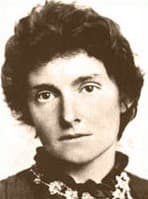
E. Nesbit was a prolific English writer and poet, best known for her classic children's fantasy novels such as 'The Story of the Amulet' and 'The Enchanted Castle.' Her innovative blend of magic and everyday life created a lasting impact on children's literature, influencing generations of authors. She was also a co-founder of the Fabian Society.







