“She was not to be consoled, for she had lost what she had never had.”
— Lucy reflecting on her parents' departure and her self-imposed exile.

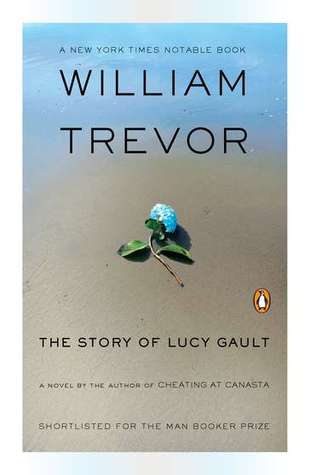
William Trevor (2002)
Genre
Literary Fiction / Historical Fiction
Reading Time
300 min
Key Themes
See below
Sign in to track this book
A child's desperate act to preserve her idyllic Irish life unravels into a lifetime of misunderstanding and unspoken grief, forever altering the fates of those she loves.
In 1921, Captain Everard Gault and his English wife, Heloise, live a privileged but uneasy life at Lahardane, their ancestral home in County Cork, Ireland, amidst the escalating violence of the Irish War of Independence. Their nine-year-old daughter, Lucy, is deeply attached to Lahardane, its grounds, and her dog, Toby. Fearing for their safety after a local man, Mahon, threatens Captain Gault for refusing to sell land, Everard and Heloise decide to move to England. Lucy is heartbroken and cannot understand leaving. The night before their planned departure, she overhears her parents discussing their move and, in a desperate attempt to make them stay, decides to run away, hoping they will be forced to remain at Lahardane to find her.
Lucy hides in a disused boathouse near the sea, with Toby. When her parents discover her absence, a frantic search begins, involving the estate workers and local police. Captain Gault finds a note from Lucy by the sea, expressing her wish for them to stay. Later, Toby returns to the house alone, his fur wet, and a child's nightdress is found near the water. These clues, with Lucy's known love for the sea, lead Everard and Heloise to the devastating conclusion that Lucy has drowned. Overwhelmed by grief and guilt, they leave Lahardane and Ireland the very next day, unable to bear the memories, believing their daughter is dead. They instruct the estate's caretakers, the Quinns, to maintain the house.
After three days, cold, hungry, and terrified, Lucy emerges from her hiding place. She makes her way back to Lahardane, expecting to be scolded but relieved to have her parents back. Instead, she finds the house deserted and quiet. She calls out for her parents, but only the Quinns respond, their faces filled with shock and sorrow. They explain that her parents, believing her dead, have left for England. Lucy is consumed by horror and guilt, realizing the irreversible damage her childish act has caused. The Quinns, especially Mrs. Quinn, struggle with how to care for her and the immense secret of her existence, knowing her parents are grieving her supposed death.
Lucy begins a solitary life at Lahardane, cared for by the Quinns. Her parents, in their grief, never return or inquire about the house beyond general upkeep, reinforcing the Quinns' belief that Lucy's existence must remain a secret to spare them further pain. Lucy grows up isolated, without formal schooling or companions her age; her only real connection is with the Quinns and the memories of her parents. The house and grounds become her entire world. Her childhood is marked by an enduring sense of guilt and the weight of her parents' absence, a consequence of her own actions. The Quinns, out of a misguided sense of protection and loyalty, maintain the deception, ensuring no one outside a very small circle knows Lucy is alive.
As years pass, the Quinns become Lucy's guardians. Mr. Quinn continues his work on the estate, while Mrs. Quinn meticulously cares for Lucy, educating her through books from the Lahardane library. They are loyal, believing they are acting in Lucy's and her parents' best interests by maintaining the illusion of her death. This decision, however, condemns Lucy to a life of isolation. She becomes a recluse; her interactions are limited to the Quinns and a few trusted local tradespeople. She occasionally sees Father Leahy, who also knows the secret, but her world remains small, defined by the boundaries of Lahardane and the unspoken tragedy that binds them all.
Decades pass. Lucy is a young woman, still living alone at Lahardane, maintained by the aging Quinns. The memory of her parents is a constant presence. One day, Mahon, the man who had threatened Captain Gault years ago, returns to the area after having been imprisoned for political violence. He is embittered and still holds a grudge against the Gaults. He discovers that Lucy is alive and residing at Lahardane. Mahon sees an opportunity to exploit the situation, viewing Lucy as a symbol of the old order and a way to inflict further pain or gain something from the Gault estate. His presence introduces a new threat and unease into Lucy's already fragile existence, unsettling the quiet, secluded life she has built.
Mahon, fueled by old grievances and a sense of injustice, breaks into Lahardane. He confronts Lucy, who is now in her late twenties, and assaults her. The attack leaves Lucy severely injured, both physically and psychologically. Mr. Quinn, hearing the commotion, intervenes, driving Mahon away. Lucy is left traumatized, and the incident further cements her reclusive nature. Her already profound sense of isolation and vulnerability is intensified. This act of violence shows the lingering consequences of the past and how external forces continue to intrude upon Lucy's carefully constructed, yet fragile, world at Lahardane, reminding her of the dangers outside its walls.
Following the attack, Lucy recovers, but her reclusiveness deepens. The Quinns, now very old, continue to care for her, though their health is failing. News of Mahon's attack eventually reaches Everard and Heloise Gault in England, in a vague and distorted manner. This news, with Heloise's increasing frailty and a deep longing for resolution, prompts her to finally return to Lahardane after decades of absence. She arrives, an old woman herself, hoping to find some closure regarding her daughter's supposed death and the life they left behind. Her return marks an important moment, bringing the long-buried truth closer to the surface.
Upon Heloise's arrival at Lahardane, the Quinns, who are now very frail, are finally forced to reveal the truth: Lucy is alive and has been living in the house all these years. Heloise is overwhelmed with shock, disbelief, and a flood of emotions – joy, sorrow, guilt, and confusion. She is introduced to her daughter, now an elderly woman, scarred by her past and the attack. The reunion is deeply emotional but also fraught with the weight of decades of misunderstanding, unspoken grief, and the irreversible passage of time. They attempt to bridge the chasm created by Lucy's childhood act and her parents' subsequent departure, grappling with the profound consequences of their shared history.
Heloise stays at Lahardane with Lucy, and they begin to tentatively rebuild a relationship. Heloise, though deeply hurt by the years of deception and the lost time, offers Lucy forgiveness. However, the years of separation, the trauma Lucy endured, and the profound guilt Lucy carries cannot be entirely erased. Lucy remains marked by her past; her reclusive habits are deeply ingrained. While there is some peace and reconciliation, the story emphasizes that some wounds, once inflicted, can never fully heal. The novel concludes with both women living out their remaining days at Lahardane, sharing a fragile, hard-won understanding, but forever shaped by the events of 1921.
The Protagonist
From an innocent, impulsive child, Lucy becomes a reclusive, guilt-ridden woman, eventually finding a fragile reconciliation with her mother in old age.
The Supporting
He moves from a man of authority and tradition to a grieving father, living a life of quiet sorrow and never learning the truth about his daughter.
The Supporting
From a grieving mother living in exile, she returns to confront the past, discovering her daughter is alive and seeking a complex reconciliation.
The Supporting
He dedicates his life to caring for Lucy and the estate, maintaining a lifelong secret out of misguided loyalty.
The Supporting
She transforms from a housekeeper into a surrogate mother and keeper of a profound secret, enduring the weight of her choice for decades.
The Antagonist
From a disgruntled local with a political grudge, he becomes an assailant, inflicting further trauma on Lucy.
The Supporting
He remains a static character, a moral witness to Lucy's life and the Gaults' tragedy, offering quiet support.
Guilt is a central, pervasive theme in the novel, driving the actions and shaping the lives of multiple characters. Lucy's initial act of running away is born of childish desperation, but its tragic consequence—her parents' belief in her death—leaves her with a lifelong burden of guilt. She lives in isolation, feeling responsible for their sorrow. Everard and Heloise Gault carry the guilt of leaving Ireland and, by extension, the perceived loss of their daughter. The Quinns, too, are burdened by their complicity in the deception, believing they are preventing further pain but simultaneously condemning Lucy to a solitary existence. The novel explores whether such deep-seated guilt can ever truly be atoned for, or merely endured.
“She was a woman who had lived with guilt for so long that she scarcely noticed it now, like a garment that had become part of her skin.”
The novel explores the theme of isolation, both physical and emotional. Lucy's life at Lahardane, after her parents' departure, is one of extreme solitude. She grows up without peers, formal education, or a connection to the outside world, except for the Quinns. This isolation is a direct consequence of her actions and the Quinns' decision to keep her existence a secret. Her parents, Everard and Heloise, also experience a form of isolation in England, living with their private grief and the inability to speak of their lost daughter. The attack by Mahon further entrenches Lucy's reclusiveness, making her retreat deeper into the protective shell of Lahardane. The book suggests that even when physically together, characters can remain profoundly alone.
“Lahardane, once a place of family life, became a shrine to a child who wasn't there, and a prison for the one who was.”
Trevor shows how a single, impulsive act in the past can ripple through generations, shaping destinies and creating irreversible consequences. Lucy's childhood decision to run away, intended to keep her family together, instead tears them apart and condemns her to a lifetime of separation and guilt. The political tensions of 1920s Ireland, which prompted the Gaults' initial departure, also resurface decades later with Mahon's attack, further illustrating how historical grievances continue to impact individual lives. The novel highlights the difficulty of escaping or undoing the past, showing how characters are perpetually bound by the events that came before.
“The past was not a country to be visited, but a climate in which they all still lived.”
While guilt and isolation are prominent, the novel also looks at the journey towards forgiveness and reconciliation, particularly in its later stages. When Heloise finally returns to Lahardane and discovers Lucy is alive, the possibility of forgiveness emerges. Heloise must forgive Lucy for the initial act and the Quinns for their deception, while Lucy grapples with forgiving herself and understanding her parents' choices. The reconciliation is not a simple, neat resolution but a difficult, tentative process, acknowledging that while love can endure, the scars of time and misunderstanding remain. It suggests that true forgiveness is less about erasing the past and more about accepting its indelible mark.
“Forgiveness came, in its own time, like a tide turning, but it could not wash away all the debris of the years.”
The central engine of the plot, driving the decades-long separation and tragedy.
The entire tragedy of 'The Story of Lucy Gault' hinges on a profound misunderstanding. Lucy's intention in running away is to force her parents to stay, but her note and the discovery of her wet nightdress are misinterpreted as evidence of her drowning. This miscommunication, or lack of complete information, leads her parents to believe she is dead and to leave Ireland. The Quinns then perpetuate this misunderstanding out of misguided loyalty and fear. This device underscores how easily intentions can be misconstrued and how a single error in interpretation can lead to devastating, long-lasting consequences, shaping the entire narrative arc.
The ancestral home as a symbol of lost innocence, enduring memory, and a 'prison' for Lucy.
Lahardane, the Gault family estate, functions as a powerful symbol throughout the novel. Initially, it represents Lucy's childhood paradise and her deep connection to her heritage. After her parents' departure, it transforms into a physical manifestation of her isolation and guilt—a 'prison' where she lives out her life, a constant reminder of what she lost and what she caused. It also symbolizes the lingering presence of the past and the Anglo-Irish gentry's fading influence in a changing Ireland. The house remains a silent witness to Lucy's life, holding the family's secrets and memories within its walls, never truly letting go.
Expediting the passage of decades to highlight the long-term impact of past events.
Trevor employs significant chronological gaps, often jumping forward years or decades in the narrative. After Lucy's parents leave, the story quickly moves through her childhood and into her adulthood, only occasionally detailing specific events. This technique serves to emphasize the vast amount of time that passes and the enduring, unchanging nature of Lucy's isolated life at Lahardane. It effectively conveys the slow, relentless grind of years shaped by a single, defining event, highlighting the long-term psychological and emotional consequences without needing to detail every mundane year, thus focusing on the overarching themes of prolonged guilt and isolation.
Shifting perspectives to reveal different characters' internal states and the layers of misunderstanding.
The novel primarily uses a limited omniscient third-person perspective, but often shifts its focus between characters like Lucy, Heloise, and the Quinns. This allows the reader access to the internal thoughts and motivations of various individuals, revealing their private grief, guilt, and rationalizations. By showing what each character knows or believes at different times, Trevor masterfully builds the tragic irony of the situation – the reader often knows more than the characters, especially regarding Lucy's survival. This shifting perspective deepens the reader's understanding of the complexities of the misunderstanding and the emotional toll it takes on everyone involved.
“She was not to be consoled, for she had lost what she had never had.”
— Lucy reflecting on her parents' departure and her self-imposed exile.
“The past is a foreign country; they do things differently there.”
— Narrator reflecting on the changes in Ireland and Lucy's life.
“It was her own silence that had condemned her.”
— Lucy realizing her role in the family tragedy.
“Time does not heal; it merely accommodates.”
— Observation on Lucy's lifelong grief and adaptation.
“She had chosen her solitude, and in that choice found a kind of freedom.”
— Describing Lucy's life at Lahardane after her parents leave.
“The house held its memories like secrets in the walls.”
— Description of Lahardane, the family home.
“In the end, we are all alone with our decisions.”
— Narrator's reflection on Lucy's isolated life.
“Love is not always a rescue; sometimes it is a sentence.”
— Reflecting on the Gault family's love and its consequences.
“She lived in the shadow of a mistake that was not hers.”
— Describing Lucy's burden from her parents' actions.
“The landscape remembered what people forgot.”
— Observation on the Irish countryside and history.
“There is a loneliness that comes from being misunderstood by those who should know you best.”
— Lucy's feelings towards her parents and their absence.
“She wore her past like a garment she could not remove.”
— Describing Lucy's enduring connection to her childhood trauma.
“In waiting, she found a purpose that eluded others.”
— Lucy's lifelong wait for her parents' return.
“The heart has its own geography, uncharted and wild.”
— Reflection on Lucy's emotional landscape.
Ready to see how well you understood this book? Take our interactive quiz with 10 questions.







