“For in those days there was no King in England; and every man did what was right in his own eyes.”
— Describing the chaotic state of England before Arthur's reign.

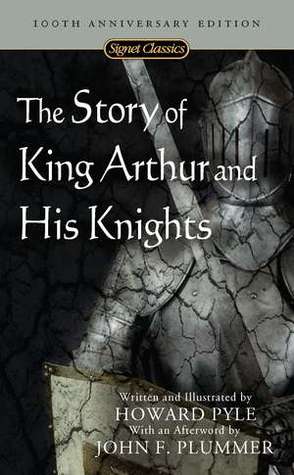
Howard Pyle (1903)
Genre
Fantasy / Children's / Historical Fiction
Reading Time
400 min
Key Themes
See below
Sign in to track this book
Young Arthur pulls Excalibur, courts Guinevere, and navigates Camelot's magic and treachery, all through Howard Pyle's classic stories.
After Uther Pendragon dies, England falls into disorder, with many lords wanting the throne. Merlin the Enchanter sets a test: a sword in a stone anvil. Whoever pulls it out is the rightful king. Sir Ector, a knight, brings his son Sir Kay and his foster son Arthur to a tournament. When Sir Kay forgets his sword, young Arthur, not knowing what the sword means, pulls the sword from the stone for him. Seeing this, Sir Ector and Sir Kay know Arthur's true birth and claim to the throne, as Merlin said.
Arthur's claim to the throne is not accepted right away. Many kings and barons, including King Lot, King Uriens, and King Ryons, refuse to recognize a young, unknown boy as their ruler and go to war against him. With Merlin's advice and magic, and the loyalty of knights like Sir Ector and Sir Kay, Arthur fights to establish his power. Merlin's spells and Arthur's leadership help turn the fight, making the rebellious kings accept him as their king, though some remain angry.
Once his kingdom is safe, Arthur, guided by Merlin, starts the Order of the Round Table. He gathers the bravest and best knights from the land, inviting them to Camelot. The Round Table is made so no knight sits at the head, showing equality among its members. Its goal is to uphold justice, protect the innocent, and fight evil. This time is a golden age of knights, with Arthur at its center, inspiring his knights to good deeds and adventures.
During his early reign, Arthur's sword breaks in battle. Merlin leads him to a lake where the Lady of the Lake appears, offering him a new, stronger sword: Excalibur. This magic blade is said to be unbreakable. With the sword, Arthur also gets a magic scabbard that stops its wearer from bleeding, making him almost unbeatable. Merlin warns Arthur that the scabbard is more useful than the sword itself, a lesson Arthur will later forget.
Arthur hears tales of Princess Guinevere, daughter of King Leodegrance. He sends his knights, including Sir Lancelot, to ask for her hand. Guinevere, impressed by Arthur's name and his knights, agrees to marry him. Their wedding is a grand event, showing the strength of Arthur's kingdom. King Leodegrance gives Arthur the Round Table itself, with one hundred knights, making the order stronger.
Morgana le Fay, Arthur's half-sister and a sorceress, dislikes him. She often plans his ruin, using magic to create illusions, mislead knights, and steal magic items. Once, she steals Excalibur's magic scabbard, which protects Arthur, and replaces it with a fake. She tries to have Arthur killed by one of her knights, Sir Accalon, but her plans often fail, usually because of Merlin's foresight or the loyalty of Arthur's knights.
Merlin, despite his wisdom and magic, falls in love with the enchantress Nimue (or Vivien). He teaches her many of his magic secrets, believing she loves him. But Nimue grows tired of him and fears his power. Using the spells Merlin taught her, she traps him in a magic prison—a cave, a tree, or a tower of air—where he is held forever. Arthur and his kingdom lose their greatest magic protector.
A vision of the Holy Grail appears in Camelot, making many knights of the Round Table go on a quest to find it. This quest is for spiritual purity. Many knights, despite their bravery, are not worthy of the Grail because of their sins. Sir Lancelot, though a great warrior, is held back by his love for Queen Guinevere. The quest shows the spiritual hopes and flaws within the knightly order.
Sir Lancelot, Arthur's most trusted knight, and Queen Guinevere fall into a deep, forbidden love. Their affection, at first hidden, becomes an open secret in the court, causing whispers. This relationship slowly damages the morals of Camelot and the unity of the Round Table. Despite their efforts to hide it, their love brings great sorrow and helps lead to the kingdom's fall, giving a tool to those who want to see Arthur ruined.
Sir Mordred, Arthur's son and nephew, a knight of the Round Table, is ambitious and mean. He, with other disloyal knights, tells Arthur about Lancelot and Guinevere's affair, forcing the king to sentence his queen to death. Lancelot saves Guinevere, leading to a war between Arthur and his knight. While Arthur is fighting Lancelot in France, Mordred takes the chance to seize the throne and tries to force Guinevere to marry him, starting a civil war.
Arthur returns to England to face Mordred. The two armies meet in a battle on Salisbury Plain, the Battle of Camlann. It is a bloody fight, with many deaths. Arthur, seeing Mordred, attacks him. In a final fight, Arthur kills Mordred, but Mordred wounds Arthur mortally. The best knights are killed, and the Round Table is broken, marking the end of an era.
After the Battle of Camlann, Arthur is dying. He tells Sir Bedivere, the last loyal knight, to throw Excalibur back into the lake. After hesitating, Bedivere obeys, and the Lady of the Lake's hand takes the sword. Arthur is then carried by three queens in a black boat to the island of Avalon, a place of healing. His fate remains a mystery, with some believing he will return to England when needed. The golden age of Camelot ends in sorrow and legend.
The Protagonist
From an unknown youth to a legendary king, Arthur strives to build a perfect kingdom, only to see it crumble due to human frailties and betrayals.
The Supporting
Merlin guides Arthur to kingship and helps establish Camelot, but his power and wisdom are ultimately undone by his own affections, leading to his magical imprisonment.
The Supporting
Guinevere marries Arthur and becomes queen, but her illicit love for Lancelot unravels her life and contributes to Camelot's destruction, leading her to a life of penance.
The Supporting
As Arthur's most esteemed knight, Lancelot achieves great renown, but his love for Guinevere leads to his betrayal of Arthur, civil war, and ultimately, a life of sorrow and penance.
The Antagonist
Morgana consistently attempts to usurp Arthur's throne and destroy him, driven by jealousy and a thirst for power, but her efforts are ultimately unsuccessful in the long run, though she causes great harm.
The Antagonist
Mordred grows from a resentful figure to the ultimate betrayer, successfully orchestrating the downfall of Camelot and delivering the mortal blow to Arthur, though he perishes in the act.
The Supporting
From a somewhat proud foster brother, Kay matures into a loyal and steadfast knight and seneschal to King Arthur.
The Supporting
Sir Ector raises Arthur as his own son, then humbly accepts and supports Arthur's rightful claim to the throne, becoming a foundational pillar of his early reign.
The book looks at the ideals of chivalry—honor, courage, justice, and service—as shown by King Arthur and the Round Table. Knights are meant to protect the innocent. But it contrasts this ideal with human nature: pride, envy, lust, and betrayal. Camelot's fall is a result of the knights not living up to their own standards, especially through Lancelot and Guinevere's affair and Mordred's treachery. This theme is central to the kingdom's tragic story, showing that even good intentions can be ruined by human flaws.
“For in those days a man might be a knight, and yet be a very wicked man, and do many a foul deed.”
Merlin's prophecies and Arthur's role as king, shown by pulling the sword from the stone, suggest a set path. Yet, the choices made by characters—Arthur's trust, Lancelot and Guinevere's love, Morgana and Mordred's malice—drive the story's tragic events. While Arthur is meant to rule, how his reign ends is shaped by the free will and moral failings of those around him, and his own choices. This shows that even with a grand destiny, individual actions have big results, leading to the kingdom's fall despite its fated start.
“For it is by destiny that thou shalt be king.”
Love, in its forms, is a strong force in the story. Arthur's love for Guinevere is pure, while Lancelot and Guinevere's love is passionate but forbidden, leading to betrayal. The love between Arthur and his knights builds the Round Table, but this bond breaks from betrayal of trust, especially by Lancelot and Mordred. Morgana's hate, from family resentment, also drives her betrayals. This theme shows how love, when wrong, can be as destructive as any force, leading to the kingdom's end.
“And so, through the sin of two people, was brought about the downfall of the greatest fellowship that ever was.”
The story shows the repeating nature of power and civilizations. Arthur rises from nothing to create a golden age of peace and justice, a time of great chivalry. But this era is doomed to fall, brought down by internal conflict, moral failures, and outside threats. The story follows the kingdom's rise, its peak, and its fall, ending with the Battle of Camlann and Arthur's trip to Avalon. This theme suggests that even the best efforts are temporary, leaving only legend and the hope of a future return.
“Here now lies Arthur, once was king and king will be again.”
A magical sword that signifies rightful kingship and provides supernatural power.
The sword in the stone serves as a divine test and undeniable proof of Arthur's destined kingship, removing all doubt about his lineage. Later, Excalibur, given by the Lady of the Lake, is a magical weapon that grants Arthur immense power in battle and its scabbard provides protection from harm. These swords are not merely weapons but symbols of authority, destiny, and the magical forces that underpin Arthur's reign. The loss of the scabbard and the eventual return of Excalibur to the lake symbolize the beginning and end of Arthur's era.
Foresight and enchantment used to guide and protect Arthur and his kingdom.
Merlin's ability to foresee future events and wield powerful magic is a crucial plot device. His prophecies often foreshadow key events, such as Arthur's kingship, the coming of great knights, and the eventual downfall of Camelot. His magic provides direct aid in battles, helps establish the Round Table, and thwarts early threats. However, his eventual magical imprisonment by Nimue serves as a turning point, signaling the kingdom's vulnerability and the loss of its primary magical defense, allowing for subsequent tragedies to unfold without his guidance.
A symbol of equality, fellowship, and the chivalric ideal.
The Round Table is more than just a piece of furniture; it is a powerful symbol of the ideals Arthur strives to uphold: equality among knights, democratic discussion, and collective dedication to justice and honor. Its creation marks the golden age of Camelot, uniting the greatest knights in a common purpose. The eventual shattering of the Round Table, caused by internal strife and betrayal, directly mirrors the collapse of Arthur's kingdom and the end of the chivalric ideal. It represents the rise and fall of a perfect society.
A mystical artifact representing spiritual purity and ultimate truth.
The Quest for the Holy Grail serves as a spiritual crucible for the knights of the Round Table. It is not a physical quest for power or land, but a journey of self-discovery and moral purification. Its appearance highlights the spiritual aspirations of Camelot but also exposes the moral failings and unworthiness of many knights, including Lancelot. Only the purest knights, like Sir Galahad (though not extensively featured in Pyle's version, the quest itself is), are deemed worthy. The Grail's elusive nature underscores the gap between the chivalric ideal and the imperfect reality of human nature, contributing to the disillusionment within the court.
“For in those days there was no King in England; and every man did what was right in his own eyes.”
— Describing the chaotic state of England before Arthur's reign.
“Wherefore it was a sad and doleful time for many a poor soul in England.”
— Further emphasizing the suffering caused by the lack of a strong ruler.
“And it came to pass that upon a certain Christmas Day, when all the people were gathered together in the great church of London, there appeared a miracle.”
— Introducing the miraculous appearance of the Sword in the Stone.
“Whoso pulleth out this sword of this stone and anvil, is rightwise King born of all England.”
— The inscription on the Sword in the Stone, declaring the next king.
“For many years King Arthur ruled his kingdom with great justice and wisdom, and all men loved him.”
— Summarizing Arthur's early reign and his reputation.
“And so, by and by, there came to be established that most noble and famous order of the Knights of the Round Table.”
— Describing the formation of the legendary fellowship.
“For it was the custom of King Arthur that at every feast of Pentecost he should not eat until he had heard or seen some great marvel.”
— Highlighting a tradition of Arthur's, emphasizing his desire for adventure.
“And ever Sir Lancelot was accounted the best knight in all the world.”
— Introducing Lancelot's unparalleled reputation as a knight.
“For a knight without courtesy is as a sword without a point.”
— A philosophical observation on the importance of good manners for a knight.
“For when a man is given over to pride, there is no telling what ill may befall him.”
— A warning about the dangers of pride, a recurring theme in the tales.
“Thus did King Arthur bring order out of chaos, and peace out of strife, and good out of evil.”
— A summary of Arthur's accomplishments in establishing his kingdom.
“And ever it was the custom of the Round Table that no knight should take a quest that was too easy for him.”
— Emphasizing the challenging nature of the quests undertaken by Arthur's knights.
“For the love of a good woman is a mighty thing, and may lead a man to do great deeds, or to fall into great sorrow.”
— A reflection on the powerful and often dual nature of love in the stories.
“And so it was that the glory of King Arthur's court shone like a star in the firmament, a beacon for all Christendom.”
— Describing the peak of Arthur's reign and its influence.
Ready to see how well you understood this book? Take our interactive quiz with 10 questions.
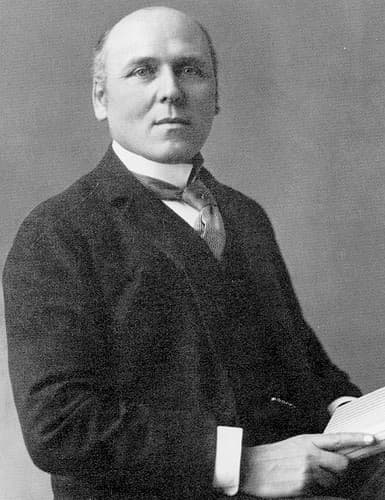
Biography coming soon.







