“He knew that the world was a place of broken things, and that the only way to mend them was to love them.”
— Edgar's understanding of his relationship with his dogs and the world.

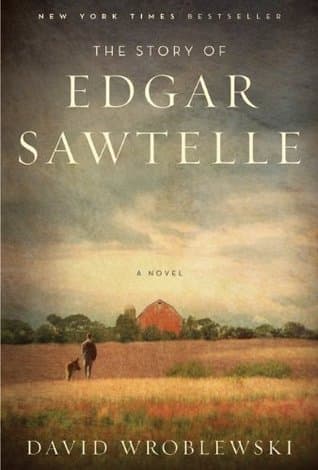
David Wroblewski (2008)
Genre
Literary Fiction
Reading Time
12-15 hours
Key Themes
See below
Sign in to track this book
A mute boy, loyal to his unique dog breed, flees into the Wisconsin wilderness to escape his uncle's treachery and find out how his father died, only to be drawn back by an unbreakable connection to home and a need for revenge.
The Sawtelle family has a long tradition of breeding and training a special line of dogs on their remote Wisconsin farm. Edgar Sawtelle, born mute, communicates through American Sign Language, which his parents, Gar and Trudy, and their dogs, especially his beloved companion Almondine, understand. The farm operates as a peaceful, self-sufficient world, centered around the dogs and the bond between Edgar and his parents. Gar, a kind and dedicated father, teaches Edgar the details of dog training and the farm's responsibilities, giving him a deep love and understanding of their unique dogs. Edgar's childhood is marked by a deep connection to nature, the dogs, and his family, all living within the quiet rhythms of their isolated life.
The peaceful life on the Sawtelle farm is disturbed by the unexpected return of Claude, Gar's charming but troubled younger brother. Claude, who has been away for years, is initially welcomed by Trudy, though Gar remains cautious. Edgar, despite his muteness, observes keenly and immediately feels an unsettling presence from his uncle. Claude's interactions with the family are subtly manipulative. He begins to involve himself in the farm's daily life, often challenging Gar's authority and making Trudy uncomfortable. The dogs, especially Almondine, also show an unusual dislike for Claude, growling and acting defensively in his presence. This further fuels Edgar's unease about his uncle's intentions.
One day, while working in the barn, Gar Sawtelle collapses and dies suddenly. The official cause is a sudden aneurysm, but Edgar is very suspicious. He had seen a strange interaction between Gar and Claude shortly before his father's death, involving a vial and a struggle. The tragedy shatters the Sawtelle family. Trudy is grief-stricken and vulnerable, while Edgar is consumed by a silent, strong belief that Claude is responsible for his father's death. The farm is plunged into mourning, and the once lively atmosphere is replaced by a heavy sense of loss and unspoken suspicion. Claude, always present, takes on a more prominent role, seemingly comforting Trudy while subtly taking control of the farm.
After Gar's death, Claude quickly secures his position on the farm. He begins to manage the dog kennels and farm operations, and, to Edgar's horror, starts a romantic relationship with Trudy. Edgar, meanwhile, is tormented by his suspicions. He begins a secret investigation, carefully searching for clues that might expose Claude's guilt. He watches Claude's behavior, searches his belongings, and tries to piece together the events leading up to his father's death. His muteness makes it hard to communicate his fears, isolating him in his search for truth, but his determination is strong, driven by grief and a fierce loyalty to his father.
Edgar experiences a vivid, haunting vision of his father's ghost, appearing as a spectral figure in the rain, signing a message about his murder. This supernatural encounter confirms Edgar's belief that Claude is a killer. With this new certainty, Edgar tries to expose Claude during a family dinner. He uses the dogs to reenact the struggle he witnessed, hoping to provoke a confession or show Claude's guilt. However, his plan fails completely. Claude manipulates the situation, making Edgar appear unstable and dangerous. In the chaos that follows, Claude injures one of the dogs, and Edgar, overwhelmed and terrified, flees the farm, believing he has failed and put everyone, especially the dogs, at risk.
After the terrible confrontation, Edgar, fearing for his life and the safety of his mother and the dogs, flees the Sawtelle farm. He is accompanied by three young, untrained yearling dogs: Forte, Baboo, and Essay. They go deep into the vast, wild land of northern Wisconsin. Edgar, relying on his deep connection to nature and his natural understanding of dogs, must learn to survive in the wild. He hunts, builds shelter, and protects the yearlings, forming a strong bond with them. This time in exile becomes a test for Edgar, forcing him to grow up quickly and depend only on his instincts and the loyalty of his dog companions.
Life in the wilderness is a constant struggle for Edgar and the three yearlings. They face hunger, harsh weather, and the threat of wild animals. Edgar, despite his muteness, communicates with the dogs through a complex system of signs, gestures, and shared understanding. He teaches them to hunt and survive, and in turn, they give him companionship, protection, and a reason to keep going. This time in exile changes Edgar from a sheltered boy into a resourceful and tough young man. He improves his survival skills, deepens his understanding of animal behavior, and strengthens his bond with Forte, Baboo, and Essay, creating a unique, self-sufficient pack.
During his time in the wilderness, Edgar meets several people who offer him temporary relief or temptation. He meets Henry, a reclusive trapper who gives him food and shelter. Later, he meets Glen, a kind, lonely man who offers Edgar a chance at a new life away from his past. These encounters challenge Edgar's resolve to return home. He experiences moments of comfort and considers giving up his search for justice. However, the memory of his father, the unfairness, and his responsibility to the Sawtelle legacy and the dogs continue to pull him back towards the farm, reminding him of his unfinished business.
A strong sense of duty and an urgent feeling that something is wrong compel Edgar to return to the Sawtelle farm. He senses that something is gravely amiss. He approaches cautiously, observing the changes that have happened in his absence. His return is met with a touching reunion with Almondine, who, despite her age and the passage of time, immediately recognizes him. Their silent communication is as strong as ever, showing their lasting bond. Almondine, now older and wiser, becomes an important ally in Edgar's final confrontation, offering silent support and conveying key information through her actions and expressions.
Edgar's return leads to a tense and violent confrontation with Claude. He discovers the full extent of Claude's manipulation and control over Trudy and the farm. The confrontation takes place in the familiar setting of the Sawtelle barn, mirroring the scene of Gar's death. Edgar, now stronger and more determined, uses his understanding of the dogs and his wilderness-honed skills to corner Claude. The conflict is brutal, involving both physical struggle and psychological warfare. Trudy is forced to see the truth about Claude, and the dogs, led by Almondine, play a key role in the unfolding drama, ultimately ensuring justice is served, though at a devastating cost.
The final confrontation with Claude ends tragically and violently. In the chaos, Claude is killed, but not without further loss for Edgar. The details of Claude's death are complex, involving both human and canine actions, and leave a lasting impact on Edgar. While justice for Gar is achieved, it comes at a deep personal cost. The event leaves Edgar and Trudy permanently changed, and the Sawtelle legacy is forever marked by the violence that has occurred. Edgar is left to deal with the aftermath, the weight of his actions, and the lasting grief for his father and the other losses he has endured.
After the conflict is resolved, Edgar makes the difficult decision to leave the Sawtelle farm once again. He recognizes that the farm, though his home, is also a place of immense pain and loss. He departs, not as the boy who fled, but as a man shaped by hardship, loyalty, and a deep understanding of life and death. He carries with him the lasting impression of his experiences, the silent language of his communication, and the enduring spirit of the Sawtelle dogs. His journey shows a cycle of loss, justice, and the constant search for belonging, leaving the reader to think about the lasting impact of fate and free will on a young man's life.
The Protagonist
Edgar transforms from an innocent, sheltered boy into a resilient and self-reliant man, capable of both great love and decisive action.
The Supporting
Gar's arc is primarily established through his life and death, serving as a moral compass and a symbol of the Sawtelle legacy that Edgar must uphold.
The Supporting
Trudy's arc sees her descend into grief and vulnerability, only to be awakened to the truth by Edgar's actions.
The Antagonist
Claude's arc is one of escalating villainy, from subtle manipulation to outright murder and usurpation, culminating in his violent demise.
The Supporting
Almondine remains a steadfast and loyal companion, her intelligence and devotion serving as a constant anchor for Edgar.
The Supporting
These yearlings grow from untrained pups into a cohesive, loyal pack under Edgar's guidance.
The Supporting
Henry serves as a temporary guide and mentor, offering a brief period of stability for Edgar.
The Supporting
Glen offers a path of escape and peace, which Edgar ultimately declines to pursue his destiny.
The novel deeply explores communication beyond spoken words, especially through Edgar's muteness and his unique bond with the Sawtelle dogs. Edgar's main language is American Sign Language, but his deepest connections often come from intuition, gesture, and shared understanding with the dogs, especially Almondine. This theme highlights the limits of verbal language and the richness of non-verbal forms, showing how true understanding can go beyond typical speech. It also highlights Edgar's isolation and the challenges he faces in telling complex truths to those who only understand spoken words, as seen when he fails to expose Claude.
“What Edgar knew, he knew through his hands, through his eyes, through his dogs.”
Loyalty is a core theme, shown by the steady devotion of the Sawtelle dogs to Edgar and the family. Almondine's lifelong companionship and the yearlings' faithfulness in the wilderness are examples of deep loyalty. This contrasts sharply with betrayal, mainly shown by Claude, who betrays his brother, his family, and the trust placed in him. Edgar's search for justice is driven by his loyalty to his father's memory and the Sawtelle heritage, forcing him to face the ultimate betrayal. The conflict between these two forces drives the story.
“A dog's love is a terrible thing. You can't deny it. With a dog, it's a given.”
Edgar's journey is a search for justice for his father's murder. At first driven by a silent, strong need to expose Claude, his path blurs the lines between seeking justice and taking revenge. His actions, especially the final confrontation, are motivated by a desire to correct a wrong and protect his family's honor. The novel looks at the moral complexities of such a quest, questioning the costs and results of getting justice when it involves violence and personal sacrifice. The resolution, while ending Claude's tyranny, leaves a lasting impact on Edgar, suggesting the high price of personal retribution.
“Justice was a thing of the living, a thing of the future. Vengeance was a thing of the past.”
The vast, wild land of northern Wisconsin is a strong symbolic and literal test for Edgar's change. When he flees the farm, he is a boy; when he returns, he is a man shaped by the harsh realities of survival. The wilderness removes the comforts of civilization, forcing Edgar to rely on his instincts, his connection to nature, and his bond with the dogs. It is a place of both great danger and great growth, where he learns toughness, resourcefulness, and a deeper understanding of life and death. His time in the wild is essential to his growth and his ability to face his destiny.
“The wild was a teacher, and a hard one.”
The Sawtelle family is defined by its unique heritage of breeding and training dogs, a tradition passed down through generations. Edgar is born into this heritage, and his identity is linked to it. His father's murder and Claude's takeover threaten to destroy this heritage. Edgar's search for justice is also a fight to reclaim and protect his family's heritage, not just of the dogs, but of honor and integrity. The novel explores themes of inherited fate, the weight of tradition, and the choices people make to either uphold or defy their family's past. Edgar's eventual departure suggests a complex relationship with this heritage.
“The Sawtelle dogs were not merely dogs. They were a living history, a breathing lineage.”
Edgar's inability to speak amplifies his other senses and drives the narrative's unique communication.
Edgar's muteness is more than a character trait; it is a central plot device. It forces him to develop heightened observational skills and a profound ability to communicate non-verbally, especially with his dogs. This unique form of communication is vital to his understanding of events, particularly his suspicions about Claude. It also creates dramatic tension, as Edgar struggles to convey the truth to those who cannot understand his signs, leading to his isolation and ultimately his flight into the wilderness. His muteness makes his quest for justice a silent, internal battle, externalized only through his actions and the reactions of his loyal dogs.
A unique breed of intelligent dogs serving as companions, communicators, and symbols.
The Sawtelle dogs are not just pets; they are integral to the plot, acting as companions, witnesses, and even agents of justice. Their extraordinary intelligence allows them to understand human emotions and intentions, particularly Edgar's. Almondine, in particular, serves as a confidante and a silent communicator, often conveying truths that Edgar cannot. The dogs' reactions to Claude are crucial early warnings. Their training and unique abilities are central to the family's identity and livelihood, and their presence elevates the narrative beyond a simple human drama, creating a rich tapestry of interspecies connection and loyalty. They are both a source of comfort and a means to an end for Edgar.
A supernatural appearance of Gar's ghost, confirming Claude's guilt.
The appearance of Gar Sawtelle's ghost to Edgar is a pivotal plot device, serving as the definitive confirmation of Claude's guilt. This supernatural event transcends Edgar's suspicions and provides him with undeniable proof, compelling him to act. The vision, described vividly in the rain, functions as a direct communication from the deceased, effectively bypassing Edgar's muteness and the limitations of human communication. It serves as a classic literary trope (reminiscent of Hamlet) to propel the protagonist into action, solidifying his resolve for justice and setting the stage for the dramatic confrontation that follows.
A period of forced isolation and survival that transforms Edgar.
Edgar's flight into the wilderness is a crucial plot device that serves multiple functions. It removes him from the immediate danger of Claude, allows him to mature and develop essential survival skills, and deepens his bond with the yearling dogs. This period of isolation is a rite of passage, transforming him from a vulnerable boy into a capable young man. It also provides a narrative pause, allowing the reader to witness Edgar's internal growth and preparation for his eventual return and confrontation. The wilderness acts as both a sanctuary and a harsh teacher, shaping him for the challenges ahead.
“He knew that the world was a place of broken things, and that the only way to mend them was to love them.”
— Edgar's understanding of his relationship with his dogs and the world.
“The hardest part of any journey is taking the first step.”
— A general observation on the difficulty of starting something new or daunting.
“Every dog has its day, and every man has his, too.”
— A reflection on the cyclical nature of fortune and justice.
“There was a language in the world that only dogs could understand, and Edgar was learning to speak it.”
— Edgar's unique bond and communication with his dogs due to his inability to speak.
“Grief was a thing that needed to be worked, like a stubborn field. You couldn't just let it lie fallow.”
— Edgar's internal struggle with the death of his father.
“The past was a country from which no one ever truly emigrated.”
— Reflecting on the enduring impact of past events and memories.
“Sometimes the best thing you can do is just keep walking, even when you don't know where you're going.”
— Edgar's determination during his flight from home.
“A man’s life was a series of choices, each one leading to the next, until there were no more choices left.”
— A philosophical musing on destiny and free will.
“The world was full of signs, if you only knew how to read them.”
— Edgar's acute awareness and interpretation of his surroundings, particularly through the eyes of his dogs.
“Loyalty was a heavy burden, but it was also a great gift.”
— Exploring the complex nature of loyalty, especially in the context of the Sawtelle dogs.
“Some things, once broken, could never be made whole again, no matter how hard you tried.”
— A somber realization about irreparable damage and loss.
“Silence was not empty; it was full of things unsaid, things understood.”
— A reflection on Edgar's experience of the world without spoken language.
“The truest measure of a man was not how he died, but how he lived.”
— A contemplation on legacy and the impact of one's life.
“Every creature has a purpose, and sometimes that purpose is just to be.”
— A simple yet profound thought on existence and inherent worth.
Ready to see how well you understood this book? Take our interactive quiz with 10 questions.

David Wroblewski is an American author best known for his debut novel, The Story of Edgar Sawtelle. This critically acclaimed novel, a New York Times bestseller, explores themes of loyalty, identity, and the complex relationship between humans and dogs. Wroblewski's writing is often praised for its rich prose and compelling narrative style.







