“In the great forest a little elephant was born. His name was Babar.”
— Introduction of the main character, Babar, and his origin in the forest.

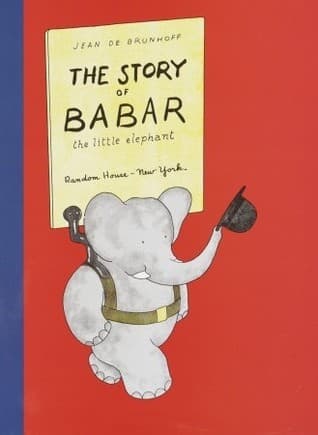
Jean de Brunhoff (1933)
Genre
Fantasy / Children's / Young Adult
Reading Time
15 min
Key Themes
See below
Sign in to track this book
After his mother is killed, a young elephant named Babar flees to the city, learns about human culture, and then returns to the jungle to become the elephants' king.
Babar, a young elephant, lives happily in the forest with his mother and the other elephants. He plays with his cousins Arthur and Celeste, eats grass, and bathes in the river. However, this peaceful life ends when a hunter shoots Babar's mother. Devastated, Babar flees into the jungle, leaving his home and family, unsure of what to do. This event begins his journey and forces him to face a world beyond his forest.
After a long, lonely journey, Babar, still young, arrives at a large city. He is overwhelmed by the sights, sounds, and smells—tall buildings, cars, people, and fashionable clothes. Everything is new and exciting. He is especially interested in a well-dressed old lady he sees in a park. She notices his sadness and his interest in human society, and a connection begins between them, changing Babar's lonely exile.
The kind old lady, seeing Babar's curiosity and distress, takes him in. She buys him a green suit, a bowler hat, and yellow shoes, changing his look. She also gives him a car and a comfortable room in her house. Babar quickly adjusts to his new life, learning to drive, eat at restaurants, and attend parties. The old lady teaches him manners and helps him fit into human society, showing him a world of culture he never knew.
With the old lady's help, Babar thrives in the city. He learns to read and write, takes lessons, and develops a taste for human customs. He enjoys shopping, going to concerts, and visiting museums. He becomes popular among the old lady's friends, who like his gentle nature and elegant clothes. Babar values the old lady's company and the rich experiences the city offers, finding a new sense of belonging after his initial trauma.
One day, while in the park, Babar is happy to find his cousins, Arthur and Celeste, who have left the forest to look for him. They are surprised by his change and his fashionable clothes. Babar is thrilled to be reunited with his family, but his cousins are at first confused by the city's complexities and his new life. This reunion brings joy and a slight tension between Babar's new sophisticated world and his wild origins, setting the stage for future choices.
Babar eagerly shares his city life with Arthur and Celeste. He takes them to shops to buy new clothes, though they are hesitant to wear them. He shows them around the city, explaining the sights and sounds. While Arthur and Celeste are interested in some things, they also find the city overwhelming and miss the freedom of the forest. Babar tries to connect their wild upbringing with his new sophistication, enjoying their company but sensing their desire for home.
Despite the city's comforts, Babar and his cousins feel a strong pull back to their natural home. The old lady, understanding their longing, agrees it is time for them to return to the forest. She helps them prepare for their journey, giving them gifts and supplies. This decision shows Babar's inner conflict between his two worlds and his choice to embrace his origins, while still using what he learned in the city.
Babar, Arthur, and Celeste say goodbye to the old lady and start their journey back to the forest. They travel by train, then on foot, eager to rejoin their herd. The trip back is full of anticipation and a feeling of returning home. When they arrive, the other elephants are amazed to see Babar, alive and elegantly dressed. Their return is a big event, bringing a new dynamic to the elephant community.
Soon after Babar's return, the old King of the Elephants, who had ruled for many years, becomes ill. Despite the other elephants' efforts to comfort him, he dies peacefully. His death leaves a gap in the community, and the elephants mourn their leader. This event creates a need for a new leader, setting the stage for Babar's unexpected rise to power.
After the old King's death, the elephants meet to choose a successor. An old elephant suggests that Babar, having lived among humans and learned so much, would be an excellent king. He is wise, well-dressed, and understands both their world and the human world. The other elephants agree, recognizing his unique skills. Babar, though surprised, accepts the responsibility, and a crown and royal robe are brought for him. He is named Babar, King of the Elephants.
As King, Babar first marries his cousin, Celeste. The wedding is a big celebration, attended by all the elephants, who are happy for their new King and Queen. The old lady, Babar's human friend, also comes to the forest to see the event, bringing gifts and her blessings. This marriage strengthens Babar's leadership and begins a new period for the elephant kingdom, mixing tradition with the ideas Babar brings from the city.
With Celeste as his Queen, Babar starts to govern the elephants. He uses the knowledge and organizational skills he gained in the city to improve their lives. He sets up laws, builds a city for elephants called Celesteville (though this is mainly in later books, his leadership starts here), and introduces new customs that combine the best of both worlds. The elephants do well under his rule, and the forest becomes a more civilized and prosperous place, guided by their wise King.
The Protagonist
From a naive, orphaned elephant, Babar transforms into a cultured and wise leader, bridging the gap between the natural and civilized worlds.
The Supporting
Her story is cut short, serving as the emotional trigger for Babar's transformation.
The Supporting
She facilitates Babar's growth and education, enabling him to become a wise king.
The Supporting
He experiences city life briefly before returning to his natural habitat, supporting Babar's journey.
The Supporting
From a simple forest elephant, she becomes Queen, supporting Babar's vision for their kingdom.
The Antagonist
His single act drives the protagonist's entire journey, without any personal development.
The Supporting
His death allows for the transition of power to Babar, completing Babar's journey to kingship.
The story begins with Babar losing his mother, an event that forces him to leave home. This initial tragedy shows loss, especially for a young creature. However, Babar shows great resilience by adapting to a new environment—the city—and embracing new experiences. His ability to overcome grief and fear, helped by the old lady's kindness, highlights the theme of recovering from hardship and finding new paths. This resilience is key to his eventual success as a leader.
“Poor Babar! He is very sad. He wanders for a long time in the forest, then he meets a kind old lady.”
A main theme is the contrast between the wild world of elephants and the cultured world of humans. Babar's trip to the city, his adoption of human customs (clothes, education, manners), and his return to the forest show the tension and possible harmony between these two 'civilizations.' He does not give up his elephant identity but instead combines human knowledge with it, creating a unique leadership style for his elephant kingdom. This theme explores what 'civilized' means and how different cultures can enrich each other.
“He puts on his fine new clothes and takes a walk. He is very proud.”
Babar changes significantly throughout the story. He starts as an innocent, wild elephant and becomes a refined, educated individual ready for leadership. His city experiences broaden his view and give him skills he could not have learned in the forest. This theme shows the importance of learning, adapting, and embracing new experiences for personal growth. His change is not just external (clothes) but deeply internal, affecting his character and abilities, leading to his wise rule.
“Now Babar has become a very accomplished elephant.”
Babar's journey leads him to become the King of the Elephants. His unique experiences in the human world are why he is chosen for the role, as he brings a new perspective and ability for organization and progress. This theme explores what makes a good leader: wisdom, compassion, the ability to learn, and a vision for the community's well-being. Babar's acceptance of the crown shows his acceptance of responsibility, not just for himself but for his entire herd, promising a new era of leadership.
“He is very intelligent and has learned so much among men that he will make an excellent king.”
Babar's physical and metaphorical journey from innocence to wisdom.
Babar's flight from the forest to the city, and then back again, serves as a classic journey of initiation. He leaves the familiar world (innocence), faces trials (loss, adaptation to the city), gains knowledge and experience, and returns transformed to lead his community. This device allows for his character development and the introduction of new settings and ideas. It's a rite of passage that prepares him for his eventual role as king, symbolizing the transition from childhood to responsible adulthood.
Animals exhibiting human characteristics and societal structures.
The entire premise relies on anthropomorphism, where elephants are depicted with human-like emotions, societal structures, and the ability to learn and adapt to human culture. Babar wears clothes, drives cars, learns to read, and eventually rules a kingdom. This device allows the author to explore themes of civilization, culture, and leadership through the accessible and charming lens of animal characters, making complex ideas understandable for a young audience and adding a layer of fantasy to the narrative.
A wise guide who facilitates the protagonist's growth.
The old lady acts as a crucial mentor figure for Babar. She provides him with shelter, education, and guidance in the human world. Without her intervention, Babar would likely have struggled or failed to adapt to city life. Her role is to impart knowledge, foster his development, and ultimately prepare him for his future responsibilities, even though she is not an elephant. She represents benevolent guidance and the positive influence of an experienced figure on a young, impressionable protagonist.
“In the great forest a little elephant was born. His name was Babar.”
— Introduction of the main character, Babar, and his origin in the forest.
“He was a very happy little elephant.”
— Describing Babar's initial state of contentment in the forest.
“A hunter kills Babar's mother.”
— The tragic event of Babar's mother being shot by a hunter, leading to his escape.
“Babar runs away, far into the forest, until he comes to a big city.”
— Babar's journey of escape and discovery as he flees the forest and finds a city.
“He is very surprised. How different it is from the forest!”
— Babar's initial reaction upon seeing the city for the first time.
“A kind Old Lady sees him. She understands that he is longing for his mother.”
— The Old Lady's immediate empathy towards Babar in the city.
“She gives him money to buy some fine clothes and a motorcar.”
— The Old Lady's generosity, enabling Babar to adopt human customs.
“Babar goes to the best tailor in the city.”
— Babar's first step in adapting to city life by getting new clothes.
“He has grown up. He is no longer a little elephant.”
— Babar's maturation and change in status after living in the city.
“He returns to the forest and finds his cousins Arthur and Celeste.”
— Babar's return to his origins and reunion with his family.
“The Old Lady comes to live with Babar in the forest.”
— The Old Lady joining Babar in the forest, showing their bond.
“Cornelius says, 'Long live Babar the King!'”
— The elephants' decision to crown Babar as their king.
“Babar is married to his cousin Celeste.”
— Babar's marriage, establishing his royal lineage and family.
“They have four children, Pom, Flora, Alexander, and Isabelle.”
— The birth of Babar and Celeste's children, continuing the family line.
Ready to see how well you understood this book? Take our interactive quiz with 10 questions.

Biography coming soon.







