“It is not what we are that hurts us, but what we think we are.”
— Lyndall reflecting on the nature of self-perception and suffering.

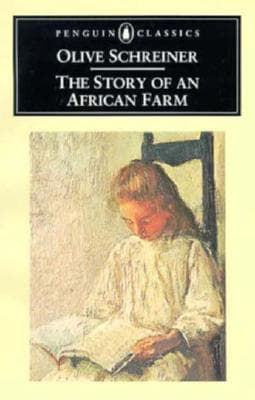
Olive Schreiner (1883)
Genre
Historical Fiction
Reading Time
608 min
Key Themes
See below
Sign in to track this book
In 19th-century South Africa, a young woman dreams of freedom from strict social and religious rules on a desolate farm.
The novel begins on an isolated ostrich farm in the Karoo desert of South Africa. Waldo, a young German boy, works as a shepherd for Tant Sannie, the strict and religious Boer matriarch. Waldo is quiet and thoughtful, spending his days carving figures and thinking about life. He is often neglected by Tant Sannie and her second husband, Piet Vander Walt. He finds comfort in his friendship with Em, Tant Sannie's kind but traditional niece, and Lyndall, Em's clever and rebellious cousin. Lyndall, educated in a boarding school, questions the strict social rules of their conservative community. The children's different personalities and hopes are clear from the start, setting up their separate paths.
Bonaparte Blenkins, a cunning and dishonest Englishman, arrives at the farm. He claims to be a distant relative and a religious man. He quickly impresses Tant Sannie with his exaggerated piety, earning her trust. Blenkins, however, is cruel to Waldo, mocking his intellectual pursuits and burning his carvings. He tries to control the household, disrupting the children's lives and using Tant Sannie's gullibility for his own benefit. His presence highlights the hypocrisy in the community and makes the children question traditional values.
Waldo, despite Blenkins's cruelty, continues his solitary search for understanding, finding peace in nature and his own thoughts. He grapples with complex philosophical and religious questions, often showing them in his allegorical carvings. Meanwhile, Blenkins's true nature becomes clear through his manipulative acts and his attempt to marry Tant Sannie for her money. His schemes are eventually exposed, including a confrontation with Lyndall, leading to his expulsion from the farm by Tant Sannie's brother, Otto. This brings a temporary calm to the farm, but the lessons of hypocrisy and injustice stay with the children.
Lyndall returns from boarding school, more intellectual and rebellious than before. She openly states her feminist views, criticizing the limited roles for women in their society and wanting intellectual and personal freedom. Her sharp mind and independent spirit make her unusual in the conservative farm setting. She often has passionate discussions with Waldo, who, though less outspoken, shares her desire for deeper meaning beyond their world. Lyndall's return sparks new thoughts and discontent among the young people on the farm.
Em, unlike Lyndall, follows the traditional path expected of her and gets engaged to Gregory Rose, a wealthy but uninspiring neighbor. Lyndall, however, firmly rejects marriage, seeing it as a way women are controlled. She refuses proposals from several men, including Gregory Rose, who, drawn to her intelligence, first proposes to her before turning to Em. Lyndall's refusal comes from her belief that marriage would suppress her independence and intellectual growth, showing the sharp differences in the cousins' views on life and society.
Wanting independence and a life away from the farm, Lyndall leaves, promising to return. She later reappears, changed, and tells Waldo she is pregnant by a wealthy, unnamed man she refused to marry. This choice further shows her rejection of social norms and her commitment to living authentically, even if it means being ostracized. She explains her reasons to Waldo, stressing her desire to keep her autonomy rather than be tied to a conventional, loveless marriage. Her decision is a strong statement about female agency and the limits of Victorian morality.
As Lyndall's health declines after childbirth, she travels with Gregory Rose. Despite her earlier rejection, he remains devoted to her and cares for her as she nears death. Gregory, knowing her unconventional situation, still offers her marriage to legitimize her child, but Lyndall refuses, holding to her principles. She eventually dies, her dreams of freedom unfulfilled, but her spirit unbroken. Her death comments on the societal pressures that ultimately crushed her spirit, leaving a lasting impact on Waldo and Em.
After Lyndall's death, Waldo continues his solitary, philosophical journey. He works as a transport rider, traveling through the vast Karoo, observing nature and thinking about life, suffering, and the universe. His intellectual and spiritual growth deepens, but he remains an outsider, unable to fully connect with the conventional world. He eventually returns to the farm, finding quiet peace in his connection with nature. One day, while resting under a tree, he dies peacefully and alone, his journey of contemplation complete, leaving behind his carvings and a legacy of quiet thought.
Em, married to Gregory Rose, settles into a traditional life on the farm. She finds happiness as a wife and mother, embracing the domestic role Lyndall rejected. Gregory, however, is still deeply affected by his experiences with Lyndall. Though he is a loving husband to Em, his encounter with Lyndall's intelligence and spirit has broadened his view, making him less rigid and more understanding than before. His devotion to Lyndall, even in death, shows the deep impact she had on his life, highlighting the quiet change in his character.
Life on the African farm continues, seemingly unchanged by the deaths of Waldo and Lyndall. Tant Sannie grows older, still holding to her strict beliefs. The landscape, a constant background to the human drama, remains indifferent but beautiful. The novel ends with a sense of life's cycles and the lasting power of the natural world. While Em finds her place in the traditional order, the questions Lyndall and Waldo raised about freedom, truth, and society remain, echoing through the vast, silent Karoo, prompting the reader to consider the meaning of their struggles.
The Protagonist
Lyndall's arc is one of radical self-determination, culminating in her tragic death as she refuses to compromise her principles, even when facing social ostracism and illness.
The Protagonist
Waldo's arc is a solitary journey of spiritual and philosophical growth, culminating in a peaceful, solitary death, having found a personal understanding of life's mysteries.
The Supporting
Em's arc is one of finding contentment and happiness within the traditional roles and expectations of her society, achieving a conventional domestic life.
The Antagonist
Tant Sannie's character remains largely static, representing the unchanging, conservative forces of the society, though she is briefly duped by Blenkins.
The Antagonist
Blenkins's arc is one of temporary success through manipulation, followed by his exposure and ignominious expulsion from the farm.
The Supporting
Gregory undergoes a subtle transformation, evolving from a conventional suitor to a more compassionate and understanding man, deeply impacted by Lyndall's unconventional spirit.
The Supporting
Otto's role is largely static, serving as a moral compass and instrument of justice, ensuring the expulsion of Blenkins.
This theme is mainly explored through Waldo. He constantly questions God, existence, and suffering, finding answers not in formal religion, but in nature and his own deep thoughts. His carvings show his philosophical inquiries. Lyndall also embodies this theme through her search for intellectual honesty and her rejection of superficial social truths. Both characters want to understand the world beyond its surface, challenging the rigid beliefs in their community. For example, Waldo's long talks with a stranger about faith and doubt show his endless quest.
“For the soul, when it is hungry, will take any food.”
Lyndall is central to this theme. She strongly criticizes the limited roles and expectations for women in 19th-century South African society. She sees marriage as a form of control, stifling a woman's intellectual and personal freedom. Her refusal to marry, even when pregnant, is a defiant act against male-dominated norms. The novel contrasts Lyndall's intellectual desires with Em's acceptance of domesticity, showing the different paths available (or not available) to women. Lyndall's discussions with Waldo about the 'woman question' are key.
“We are like the spider in the web; we want to catch something, and we don't know what it is. We want to be free, and we don't know what freedom means.”
This theme is clearly shown through Tant Sannie and Bonaparte Blenkins. Tant Sannie's strong religious statements often hide her cruelty, greed, and narrow-mindedness, especially towards Waldo. Blenkins, a self-proclaimed man of God, uses his piety to manipulate others and gain personal advantage, exploiting Tant Sannie's trust. Their characters reveal the superficiality and moral corruption that can hide behind outward religious practice, contrasting sharply with Waldo's sincere spiritual search. The scene where Blenkins burns Waldo's carvings, claiming religious righteousness, is a clear example.
“He always prayed with a loud voice, and he always preached with a loud voice, and he always ate with a loud voice.”
Both Waldo and Lyndall feel isolated from their society. Waldo, with his thoughtful nature, is misunderstood by most, finding true connection only with Lyndall and in nature. Lyndall's radical ideas and independent spirit set her apart from the traditional women around her, leaving her alone in her intellectual and personal struggles. Even Em, despite conforming, feels a certain distance from her more complex cousin and friend. This theme highlights the difficulty of living authentically when social structures are rigid, leading to loneliness despite being near others.
“Life is a long battle, and the end is always defeat.”
The vast Karoo landscape is a powerful background and a source of comfort for Waldo. He finds spiritual connection and intellectual inspiration in nature, observing its cycles and seeing parallels to human existence. The desert's silence and size give him space for deep thought, acting as a sanctuary from the harsh realities of the farm. Nature is presented as a constant, indifferent yet beautiful force, contrasting with the fleeting human drama. Waldo's peaceful moments and his death under a tree highlight nature's role as both inspiration and final resting place.
“The long, long days came and went, and the sun rose and set, and the stars came out, and the moon grew full and waned, and still the Karoo lay there.”
Waldo's carvings and stories serve as symbolic representations of philosophical ideas.
Waldo's allegorical carvings and his stories, such as 'The Hunter,' function as a key plot device for exploring complex philosophical and religious themes. These creations allow Waldo, a character of few words, to articulate his profound thoughts on life, death, truth, and the human spirit. They provide a window into his inner world and his search for meaning beyond the literal. The destruction of his carvings by Blenkins symbolizes the suppression of free thought and spiritual inquiry by dogmatic authority, making them central to the novel's thematic development.
The contrasting personalities of Em and Lyndall highlight different societal paths.
The relationship between Em and Lyndall serves as a classic example of foil characters. Em, kind-hearted and conventional, embraces the traditional roles of womanhood, seeking happiness in marriage and domesticity. Lyndall, on the other hand, is intellectually rebellious, vehemently rejecting societal norms and patriarchal expectations. Their contrasting choices and aspirations illuminate the limited options available to women in their era and underscore the novel's feminist critique. Their dynamic allows the author to explore the complexities of female identity and societal pressure from multiple perspectives.
The remote Karoo farm symbolizes societal constraints and the search for freedom.
The isolated African farm in the Karoo desert is more than just a setting; it functions as a powerful plot device. Its remoteness emphasizes the characters' isolation from broader society and its intellectual currents, intensifying their personal struggles. The vast, unchanging landscape contrasts with the internal turmoil of the characters, particularly Waldo and Lyndall, who yearn for something beyond its confines. This isolation also highlights the rigidity and insularity of the Boer community, making the challenges to its norms, especially Lyndall's, seem even more radical and significant. It embodies both confinement and a space for introspection.
An enigmatic figure who catalyzes Lyndall's ultimate act of defiance.
The unnamed man who fathers Lyndall's child is a crucial plot device, despite his minimal direct appearance. His existence allows Lyndall to make her most radical statement against conventional marriage and societal expectations. By refusing to marry him, even in the face of pregnancy and social ruin, Lyndall asserts her autonomy and redefines motherhood on her own terms. This anonymous figure enables the novel to explore themes of female independence, societal judgment, and the consequences of unconventional choices without romanticizing or over-complicating the partner in the relationship. He is merely the catalyst for her profound act of self-determination.
“It is not what we are that hurts us, but what we think we are.”
— Lyndall reflecting on the nature of self-perception and suffering.
“Every man’s life is a train, and he is the driver, and the train carries a freight.”
— Waldo musing on individual agency and responsibility in life.
“We are all in the power of some other thing; we are all slaves.”
— A character contemplating the lack of true freedom in human existence.
“The soul's highest aspiration is to be free.”
— Lyndall expressing her deep desire for intellectual and personal liberation.
“The world is a great school, and we are all pupils.”
— Waldo's perspective on life as a continuous learning experience.
“There are some people who seem to have been born without a skin; they feel everything.”
— A description of sensitive individuals, possibly referring to Lyndall.
“She had a way of looking at you, as if she knew all about you, and more.”
— A character's observation of Lyndall's perceptive and insightful gaze.
“The greatest sorrow in life is not to have loved, but to have loved in vain.”
— A reflection on the pain of unrequited or unfruitful love.
“No one can judge what another suffers.”
— A statement emphasizing the subjective and private nature of individual pain.
“Life is a dream from which we are all at last awakened by death.”
— A somber view on the transient nature of life.
“It is better to be a human being dissatisfied than a pig satisfied; better to be Socrates dissatisfied than a fool satisfied.”
— Lyndall's argument for intellectual pursuit and striving, even if it brings discontent.
“The world is a great machine, and we are the little wheels in it.”
— Waldo's sense of being a small, perhaps insignificant, part of a larger system.
“Man is a creature that strives, and hopes, and falls, and rises again.”
— A summary of the cyclical nature of human endeavor and resilience.
“To be free, to walk on the bare veld, to hear the wind, to see the stars — that is my heaven.”
— Lyndall's longing for a simple, unencumbered existence in nature.
Ready to see how well you understood this book? Take our interactive quiz with 10 questions.

Biography coming soon.







