““There’s a freedom in being able to choose your own story, even if it’s one you have to fight for.””
— Main character battling past trauma and societal expectations.

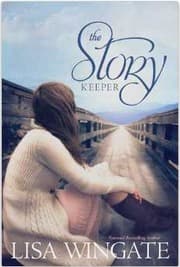
Lisa Wingate (2014)
Genre
Historical Fiction / Mystery / Romance
Reading Time
10-12 hours
Key Themes
See below
Sign in to track this book
A driven New York editor unearths a century-old manuscript detailing the forbidden love and hidden struggles of a mixed-race woman in Appalachia, forcing her to confront the mountain secrets and family ties she abandoned.
Jen Gibbs, an editor at Vida House Publishing in New York City, is trying to escape her difficult Appalachian past. One day, she finds a peculiar, decaying manuscript in the slush pile, written in an old-fashioned script. The story, titled 'The Story Keeper,' immediately captivates her. It details the life of a young mixed-race woman named Sarra, living in the Blue Ridge Mountains around the turn of the 20th century. The manuscript ends abruptly, leaving Jen desperate to find the rest of the story and its author. Her new boss, Mike, is initially skeptical but eventually allows her to pursue the lead, seeing the potential in Jen's passion.
Through the manuscript, Jen enters Sarra's world. Sarra is a bright, resourceful girl, part white and part Lumbee Indian, living in a small, isolated community in the Blue Ridge Mountains. She is raised by her white grandmother, whom she calls Mamaw, after her Lumbee mother died and her white father abandoned them. Sarra faces prejudice and hardship due to her mixed heritage, often feeling like an outsider. Her only comfort comes from her love of stories and her deep connection to nature. She dreams of a life beyond the mountains, fueled by the tales shared by her Mamaw and the few books she can get.
Driven by the incomplete manuscript, Jen begins a search for the author. Her investigation leads her to believe the story's setting, and possibly its author, is connected to her own Appalachian roots, specifically to the fictional community of 'Rootbound,' which strongly resembles her hometown. Despite her reluctance to revisit her past and the strained relationship with her own family, particularly her estranged mother, Jen realizes she must return to the mountains. She convinces Mike that a research trip is necessary, masking her personal quest with professional ambition, and prepares to confront the memories she has long tried to bury.
As Sarra grows older, she falls in love with Clay, a young white man from a more affluent family in a nearby town. Their relationship is dangerous due to the racial prejudices of the time and the disapproval of Clay's family. Meanwhile, land developers, represented by a ruthless man named Mr. Abernathy, begin encroaching on the mountain communities, threatening to displace families and destroy their way of life. Sarra, with her sharp mind and strong will, becomes aware of the injustice and the precarious position of her people. She starts to understand the power of stories not just for entertainment, but as a way of preserving history and identity.
Upon returning to the Blue Ridge, Jen stays with her aunt, who still lives in the area. She begins to research local archives, libraries, and speaks with older residents, looking for clues about 'The Story Keeper' and its author. She finds that many of the stories and characters in the manuscript resemble local legends and real historical figures from her region. Her investigation also forces her to confront her difficult relationship with her mother, who still harbors bitterness and secrets about their family history. Jen starts to suspect that the manuscript might be more than just a fictional tale; it might be a hidden history of her own family.
The conflict between the mountain residents and the land developers intensifies. Mr. Abernathy's tactics become more aggressive, including forced evictions and destruction of property. Sarra, inspired by her love for her community and her growing sense of justice, decides to actively resist. She uses her storytelling abilities and her connection to the land to rally her neighbors. Clay, despite the risks, stands by her, further solidifying their bond. The climax of Sarra's narrative involves a direct confrontation with Abernathy and his men, a desperate attempt to save her home and the sacred places of her ancestors.
Through persistent research, old photographs, and an encounter with an elderly woman who knew her family's history, Jen makes a breakthrough. She discovers that 'The Story Keeper' was written by her own great-grandmother, Sarra. The manuscript is not just a story; it is a family memoir, a record of the strength and struggles of her ancestors. This revelation changes Jen's ideas about her family and her past, revealing a lineage of strong, determined women who faced similar challenges and fought for what they believed in. The missing parts of the manuscript are finally located, completing Sarra's narrative.
Sarra's story reaches its conclusion. While the mountain community ultimately loses some land to the developers, Sarra's efforts ensure that some sacred sites are preserved, and her people's spirit remains unbroken. Her love for Clay endures, despite the societal obstacles. Sarra dedicates her life to preserving the stories and history of her people, becoming a respected elder and 'story keeper' for her community. Her narrative ends with a sense of quiet triumph, showing the lasting power of love, strength, and the importance of remembering one's heritage, even in the face of loss.
The discovery of Sarra's identity and her story gives Jen an understanding of her own family's history and the reasons behind her mother's guarded nature. She confronts her mother, not with anger, but with newfound empathy. This leads to a long-overdue conversation where her mother shares more details about their past, including the difficult circumstances that led to Jen's own abandonment issues. The healing process begins, as Jen starts to reconcile with her estranged family, understanding that their complexities are rooted in generations of struggle and strength.
With the complete manuscript in hand and a renewed sense of purpose, Jen returns to New York. She is no longer running from her past but embracing it. She works to prepare 'The Story Keeper' for publication, recognizing its historical and literary value. Her relationship with Mike, her boss, deepens, as he has witnessed her transformation and supported her journey. Jen's personal and professional lives converge, as she finds a way to honor her great-grandmother's legacy and share a piece of Appalachian history with the world, while also finding peace and a sense of belonging for herself.
The Protagonist
Jen's arc involves a journey of self-discovery, from rejecting her Appalachian past to fully embracing her heritage and reconciling with her family.
The Protagonist (within the manuscript)
Sarra's arc shows her growing from a marginalized girl to a strong, defiant woman who becomes the protector and historian of her people's stories and heritage.
The Supporting
Mike's arc is less about personal transformation and more about his unwavering support for Jen, evolving from a professional colleague to a loving partner.
The Supporting
Mamaw remains a steadfast source of wisdom and love, her character largely consistent as a matriarch and storyteller.
The Supporting
Clay's arc shows his commitment to Sarra strengthening despite external pressures, proving his loyalty and courage.
The Antagonist
Abernathy remains a static antagonist, representing the destructive forces of unchecked greed.
The Supporting
Jen's mother's arc moves from an estranged, enigmatic figure to a character who finally opens up, allowing for reconciliation and healing with her daughter.
The Supporting
Jen's aunt remains a constant, supportive figure, facilitating Jen's reconnection with her past.
Both Jen and Sarra deal with their identities. Jen, having fled her Appalachian roots, must confront her past and heritage to understand herself. Sarra, as a mixed-race woman in a segregated society, constantly navigates her place in the world. The manuscript acts as a mirror for Jen, reflecting her own struggles and ultimately leading her to embrace her lineage. The journey to uncover the author's identity becomes a journey into Jen's own self-discovery; understanding one's past is important to forging a complete identity.
“Perhaps the greatest stories are not those we read, but those we live, and then pass on through the generations.”
Storytelling is central to the novel, both as a narrative device and a theme. Sarra's manuscript preserves the history of her people, giving voice to the marginalized and forgotten. For Jen, the story is a key to unlocking her family's past and understanding the broader historical context of Appalachia. The book shows that stories are not mere entertainment; they are vital for cultural preservation, identity formation, and understanding the human experience across generations. Sarra's role as 'The Story Keeper' shows the importance of remembering and sharing one's heritage.
“Stories are the way we hold on to who we are. They are the memories of our ancestors, the dreams of our children, the very fabric of our souls.”
Jen's journey is deeply intertwined with the need for reconciliation, particularly with her estranged mother and her own painful past. As she learns Sarra's story, Jen gains empathy and understanding for the hardships her ancestors faced, which in turn helps her forgive her mother and herself. The novel suggests that healing comes from confronting past wounds, understanding their origins, and extending forgiveness, allowing for new, healthier relationships to form. This theme is resolved as Jen and her mother begin to mend their fractured relationship.
“Sometimes, the hardest truths are the ones that finally set us free.”
Sarra's narrative clearly shows the prejudice faced by mixed-race individuals and marginalized communities in early 20th-century Appalachia. She endures discrimination due to her Lumbee heritage, and her community is threatened by powerful, exploitative developers. Despite these adversities, Sarra and her people show remarkable strength, fighting to preserve their land, culture, and dignity. This theme shows the human capacity to endure and resist injustice, finding strength in community and heritage, even when facing overwhelming odds.
“We are like the mountain itself, carved by storms and winds, but we stand. We endure.”
Both Sarra and Jen's stories show the connection to the land and the importance of heritage. For Sarra, the Blue Ridge Mountains are not just a home but an integral part of her identity, filled with ancestral memories and sacred places. The threat to her land is a threat to her very being. Jen, initially rejecting her Appalachian roots, gradually understands this deep connection as she investigates her great-grandmother's story. The novel argues that understanding and honoring one's geographical and familial heritage is essential for a complete sense of self.
“The mountains remember. The trees whisper the old stories, if you just listen.”
Alternates between Jen's contemporary search and Sarra's historical story.
The novel employs a dual narrative structure, switching between Jen Gibbs's present-day investigation in New York and Appalachia, and Sarra's historical narrative, which is presented as the manuscript Jen is reading. This device allows the author to build suspense in both storylines while drawing parallels between the characters' struggles. The past informs the present, and the present's quest gradually unveils the full scope of the past, creating a rich tapestry of interconnected events and themes. The interweaving timelines highlight the enduring impact of history on contemporary lives.
A decaying, incomplete manuscript that drives the plot and connects the two protagonists.
The discovery of 'The Story Keeper' manuscript is the central plot device. It acts as a catalyst for Jen's journey, both professional and personal. The manuscript itself is a character in a way, guiding Jen, revealing secrets, and forcing her to confront her past. Its incompleteness creates a mystery that propels the plot forward, making Jen (and the reader) desperate to uncover the rest of Sarra's story and the identity of its author. This device effectively links the two timelines and provides the primary source of historical information.
Represents the preservation of memory, history, and cultural identity.
The title 'The Story Keeper' itself is a powerful symbol. It refers literally to Sarra, who records her family's history, but also to anyone who preserves and transmits cultural memory. The act of keeping stories, whether written or oral, symbolizes resilience against erasure, the importance of heritage, and the enduring power of narrative. For Jen, becoming 'The Story Keeper' means embracing her role in sharing her great-grandmother's legacy, ensuring that the voices of her ancestors are not forgotten. It symbolizes the continuity of history and the responsibility to honor the past.
A character in itself, embodying resilience, heritage, and a source of both beauty and hardship.
The Appalachian setting, specifically the Blue Ridge Mountains, functions as more than just a backdrop; it is a vital character in the novel. It represents the deep roots of heritage, the beauty of nature, and the challenging isolation that shaped the lives of its inhabitants. The mountains symbolize resilience, enduring through generations of hardship and change, mirroring the strength of Sarra and her people. For Jen, returning to the mountains is a confronting but ultimately healing experience, as the landscape itself holds the memories and stories of her ancestors, connecting her to her true self.
““There’s a freedom in being able to choose your own story, even if it’s one you have to fight for.””
— Main character battling past trauma and societal expectations.
““Some stories whisper, some shout, and some just sit there, waiting for the right ears to hear them.””
— Discussing the nature of uncovering hidden histories and family secrets.
““The past isn’t just behind us; it’s woven into the very fabric of who we are today.””
— Reflecting on how historical events and personal histories shape present identities.
““Love isn't always a grand declaration. Sometimes it's the quiet persistence, the steady presence, the hand that never lets go.””
— A character's enduring love through difficult circumstances.
““A story isn't finished until it's told, and sometimes not even then, if it still lives in the hearts of those who remember.””
— Considering the power of oral tradition and shared memory.
““Forgiveness isn't about forgetting; it's about making peace with what happened and choosing not to let it define your future.””
— A character's journey towards healing from past betrayals.
““Sometimes the bravest thing you can do is simply keep going, even when you feel like you can't.””
— A character facing overwhelming challenges and despair.
““The truth has a way of finding its voice, no matter how many layers of silence try to bury it.””
— The central mystery being slowly uncovered.
““Home isn't always a place on a map. Sometimes it's a feeling, a person, a story you carry with you.””
— Characters searching for belonging and a sense of home.
““Every scar tells a story, if you're brave enough to read it.””
— Metaphorical and literal scars representing past experiences and resilience.
““There’s a difference between living a life and simply existing. It’s in the choosing, the fighting, the loving.””
— A character reflecting on the choices that make a life meaningful.
““History isn't just dates and names; it's the heartbeat of humanity, the echoes of countless lives lived.””
— Emphasizing the human element within historical narratives.
““Sometimes the greatest strength comes from admitting your vulnerabilities.””
— A character's moment of emotional breakthrough and honesty.
““The threads of destiny are often woven by the choices we make, not by some grand, predetermined plan.””
— Characters contemplating free will versus fate.
Ready to see how well you understood this book? Take our interactive quiz with 10 questions.

Biography coming soon.







