“We are not quite novels. We are not quite short stories. In the end, we are collected works.”
— A.J. reflects on the nature of life and stories.

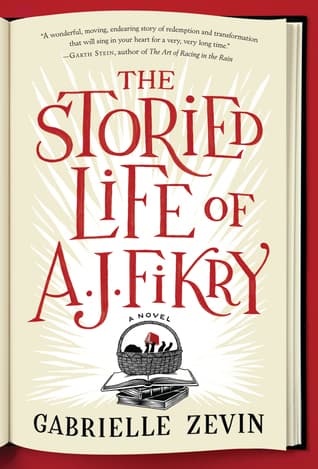
Gabrielle Zevin (2014)
Genre
Literary Fiction / Romance
Reading Time
260 min
Key Themes
See below
Sign in to track this book
A reclusive, grieving bookstore owner on a small island finds his misanthropic world upended and his heart unexpectedly reopened by the mysterious arrival of a baby and the persistent charm of a quirky sales rep.
A.J. Fikry, owner of Island Books, is a widower living a lonely, cynical life. His bookstore struggles, and a rare first edition of Edgar Allan Poe's 'Tamerlane and Other Poems' was stolen from his apartment. The theft makes his bad mood worse. He is dismissive of customers and locals, including Police Chief Lambiase. His sister-in-law, Ismay, tries to help, but A.J. rejects her. He dislikes most modern books, preferring classics, which further separates him from potential customers and the publishing world. His life seems to be falling apart.
Amelia Loman, a sales representative for Knightley Press, visits Island Books often, though usually without success. A.J. is always rude, but Amelia stays positive. She tries to talk about books she loves, but he responds with critical and condescending opinions. A.J. thinks her enthusiasm is naive, but a small bit of interest shows beneath his rough exterior. Their talks are a back-and-forth of his cynicism against her belief in stories, setting the stage for a slow change in A.J.'s isolated world. Each visit, though hard, chips away at his wall of indifference.
One morning, A.J. finds a mysterious package in his bookstore. Inside is a two-year-old girl named Maya. Her mother left a note, explaining she could not care for her daughter and hoped Maya would have a better life with A.J. This event disrupts A.J.'s solitary life. He is overwhelmed and contacts Chief Lambiase, who explains the legal process. Despite his initial hesitation and lack of experience with children, A.J. feels drawn to Maya. He starts to feel a protective instinct he never knew he had.
After thinking it over and completing legal steps, A.J. adopts Maya. Her presence completely changes his life. The bookstore, once a place of grief, becomes a lively home with children's books and toys. Maya's curiosity and love for stories bring back A.J.'s own passion for reading, which had been gone since his wife's death. He reads to her constantly, introducing her to classics and teaching her to love literature. Maya's arrival also softens A.J., making him more approachable to the island community and to Amelia Loman, who notices a big change in him during her visits. His isolation ends as he finds joy and purpose as a father.
As A.J. changes through fatherhood, his talks with Amelia Loman also change. Their conversations go from arguments about books to more personal talks. Amelia sees past A.J.'s grumpy outside, noticing his new warmth and love for Maya. They find they both love books and are surprisingly compatible. Their relationship grows, and A.J. proposes to Amelia. They marry, and Amelia moves to Alice Island, becoming a loving stepmother to Maya and a part of Island Books. Their marriage shows a complete reversal of A.J.'s earlier isolation, bringing him companionship, love, and a family, all centered on their shared love for literature.
With Amelia's marketing skills and A.J.'s knowledge of books, Island Books becomes successful again. Amelia adds new events, author signings, and more types of books, bringing in more customers. The bookstore becomes a lively center for the Alice Island community, a place for people to buy books, connect, and share stories. A.J., now a kinder, more involved person, enjoys recommending books and talking with his customers. The bookstore, once a sign of his sadness, becomes a thriving business that reflects the happiness and stability of A.J.'s personal life.
Years later, A.J. gets an anonymous package with his lost, valuable Poe 'Tamerlane' edition. With the book is a note from the thief, Daniel, Ismay's ex-husband. Daniel explains he stole the book out of desperation for money and later regretted it, returning it when he could. This explains the theft for A.J., removing a lingering worry from his past. The book's return, once a symbol of his isolation, now feels less important compared to the love and family he has found, showing his big personal growth.
Maya grows into a bright, smart, and well-adjusted young woman, shaped by growing up in the bookstore and her parents' love for literature. She shares A.J.'s curiosity and Amelia's warmth. As she gets ready for college, she applies to good universities, planning a future beyond Alice Island, but she stays connected to the bookstore and her family. Her success makes A.J. and Amelia very proud and happy, showing the success of their family and the good effect of a life full of stories and love.
A.J. gets a rare and aggressive cancer, giving him a limited time to live. Facing death, A.J. thinks about his life, recognizing how much he changed thanks to Maya and Amelia. He starts to organize his affairs carefully, making sure Island Books will continue. He also begins writing short, heartfelt notes to Maya, each recommending a book and offering a life lesson, for her to read after his death. These notes are his final message, a way to keep guiding his daughter through literature even after he is gone, showing his deep love and his life's main passion.
A.J. Fikry dies peacefully, with his family around him. His death is a loss for Amelia, Maya, and the Alice Island community, but his legacy continues. Amelia keeps running Island Books, honoring his memory and their shared vision. Maya, now a young woman, values the book recommendations and life advice her father left her, finding comfort and guidance in his words. The bookstore remains a thriving part of the community, showing A.J.'s journey from a solitary, bitter widower to a beloved husband, father, and bookseller whose life was defined by connection, love, and the lasting power of stories.
The Protagonist
A.J. transforms from a bitter, isolated widower into a loving husband and father, finding happiness and purpose through unexpected family and a renewed passion for his bookstore.
The Protagonist/Love Interest
Amelia's persistent optimism and love for books lead her from a challenging professional relationship to a loving marriage and family life, finding her true home on Alice Island.
The Supporting/Catalyst
Maya grows from an abandoned toddler into a beloved, intelligent daughter, becoming the heart of the Fikry family and a testament to A.J.'s transformation.
The Supporting
Chief Lambiase remains a loyal friend and community pillar, eventually finding his own happiness and becoming part of A.J.'s extended family.
The Supporting
Ismay moves from being a concerned sister-in-law to finding her own happiness and becoming part of A.J.'s extended family.
The Supporting/Antagonist (briefly)
Daniel's arc involves a desperate act of theft followed by a later act of remorse and restitution.
The Mentioned/Catalyst
Her death is the catalyst for A.J.'s initial despair, and her memory indirectly motivates his journey toward finding new love and purpose.
The Supporting
Lambis remains a steady and consistent presence, embodying the enduring spirit of the Alice Island community.
The novel explores transformation through A.J. Fikry's journey. At first a bitter, isolated widower, A.J.'s life changes when Maya, an abandoned toddler, arrives. This event makes him open his heart and become a father, which then makes him open to love with Amelia. His entire view on life, books, and human connection changes, showing it is never too late for a new start. Island Books thriving under his and Amelia's care also shows this theme of renewal and hope.
“We are not quite novels. We are not quite short stories. In the end, we are collected works.”
Books are not just a background; they are central to the characters' lives and the story. A.J.'s identity is tied to his bookstore and his literary tastes. The 'story introductions' at the start of each chapter, where A.J. recommends a book and gives a life lesson, show how literature can teach and comfort. Books bring A.J. and Amelia together, give comfort and guidance to Maya, and even help A.J. deal with his grief and eventual death. The bookstore itself becomes a symbol of community, knowledge, and the human need for stories.
“A book is a living thing. We live in it. It lives in us.”
The novel redefines what family means. A.J., a single, reluctant man, becomes a devoted father to an abandoned child. His relationship with Amelia, initially difficult, grows into a deep, loving marriage, forming an unusual but strong family. The Alice Island community, including Chief Lambiase and Ismay, also forms an extended family, offering support and connection. The story shows that love and family are not limited by blood or traditional expectations but are built through shared experiences, commitment, and affection, bringing comfort and meaning to life.
“It is a truth universally acknowledged that a single man in possession of a good fortune, must be in want of a wife. Not true. A single man in possession of a good fortune is in want of nothing.”
Alice Island is important to the story, showing the value of community. Despite A.J.'s initial isolation, the islanders—Chief Lambiase, Ismay, Lambis—do not completely abandon him. They are a persistent presence that eventually helps him rejoin the world. The bookstore changes from a solitary place to a lively community hub, creating connections among island residents. The novel suggests that even the most private people need human connection and that a supportive community can help with personal healing and growth.
“No man is an island, entire of itself; every man is a piece of the continent, a part of the main.”
Chapter introductions featuring A.J.'s personal book recommendations and life lessons.
Each chapter begins with a short, personalized introduction from A.J. Fikry, recommending a specific book and offering a brief, often poignant, life lesson or observation related to the upcoming events. These serve multiple purposes: they characterize A.J. through his literary taste and evolving wisdom, foreshadow thematic elements, and provide a unique narrative voice. They reinforce the central role of books in the story and act as a form of communication between A.J. and his beloved daughter, Maya, even after his death.
A rare Poe collection whose theft symbolizes A.J.'s initial loss and isolation.
A.J.'s prized, rare first edition of Edgar Allan Poe's 'Tamerlane and Other Poems' is stolen early in the novel. This theft exacerbates A.J.'s grief and cynicism, symbolizing his sense of loss and the violation of his sanctuary. The book's eventual, anonymous return by the thief, Daniel, years later, provides closure for A.J. and highlights how far he has come. By that point, the book's monetary value and sentimental importance are overshadowed by the love and family he has found, showing his emotional growth beyond material possessions.
The isolated island setting reflecting and enabling personal transformation.
Alice Island functions as a contained world, a microcosm where the characters' lives are intimately intertwined. Its isolation initially mirrors A.J.'s own emotional solitude. However, the close-knit nature of the island community also provides the consistent, gentle pressure and support that eventually helps A.J. to heal and reconnect. The island setting allows for the intimate focus on character development and relationships, emphasizing that profound changes can occur even in seemingly small, insular worlds. It fosters a sense of belonging and continuity that aids in the characters' transformations.
Island Books as a central setting that reflects and influences character development.
Island Books is more than just a setting; it's a living entity that evolves with A.J. and his family. Initially, it's a reflection of A.J.'s grief and cynicism – dusty, disorganized, and unwelcoming. With Maya's arrival and Amelia's influence, it transforms into a vibrant, inviting community hub filled with children's books and warmth. The bookstore serves as the stage for most major plot points – Maya's abandonment, A.J. and Amelia's romance, and the community's interactions. Its transformation mirrors A.J.'s own, embodying the power of stories and connection to revitalize a life.
“We are not quite novels. We are not quite short stories. In the end, we are collected works.”
— A.J. reflects on the nature of life and stories.
“Sometimes books don't find us until the right time.”
— A.J. explains why a book might not resonate initially.
“A place is not really a place without a bookstore.”
— A.J. defends the importance of bookstores in communities.
“We read to know we're not alone. We read because we are alone.”
— A.J. discusses the dual nature of reading.
“You know everything you need to know about a person from the answer to the question, 'What is your favorite book?'”
— A.J. asserts the revealing power of literary preferences.
“The words you can't find, you borrow. We read to know we're not alone.”
— A.J. reflects on how books help articulate feelings.
“No man is an island, entire of itself; every man is a piece of the continent, a part of the main.”
— A.J. quotes John Donne in a letter to Maya.
“The things we respond to at twenty are not necessarily the same things we will respond to at forty and vice versa.”
— A.J. muses on how tastes change with age.
“We aren't the things we collect, acquire, read. We are, for as long as we are here, only love.”
— A.J. writes in a letter about the essence of life.
“A good marriage, at least in my experience, is one in which each partner appoints the other to be the guardian of his solitude.”
— A.J. reflects on his relationship with Amelia.
“The secret to a happy life is to read a lot and expect little.”
— A.J. offers advice on contentment.
“Sometimes I think my life is a series of losses, but then I remember the things I've gained.”
— A.J. contemplates loss and gain in his life.
“Books are a way to travel without moving an inch.”
— A.J. explains the power of books to transport readers.
“The only thing that you absolutely have to know is the location of the library.”
— A.J. emphasizes the importance of libraries.
Ready to see how well you understood this book? Take our interactive quiz with 10 questions.

Biography coming soon.







