“Let's start with the end of the world, why don't we? Get it over with and move on to more interesting things.”
— Opening line of the novel, setting a reflective and forward-looking tone.

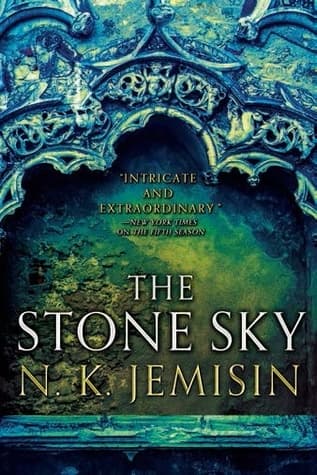
N.K. Jemisin (2017)
Genre
Fantasy / Science Fiction
Reading Time
10-12 hours
Key Themes
See below
Sign in to track this book
With the broken moon threatening cataclysm, a mother with immense power and a daughter embracing destructive godhood race to decide if humanity deserves a future, or if the world needs remaking through fire and stone.
Essun, a powerful Orogene using the Obelisk Gate, travels across the damaged Stillness with Hoa, her Guardian-turned-Stone Eater. They head towards the equatorial region where Nassun is thought to be. Essun wants to find Nassun and, with her power, fix Earth's orbit to bring the Moon back without destroying the world. Meanwhile, Nassun, who left her father and embraced her own great orogenic power, travels with Schaffa, her former Guardian, and the boy, Steel. Schaffa, becoming more transparent and showing his Stone Eater nature, tells Nassun the truth about Guardians: they are Stone Eaters, forced to harvest orogenes for Earth's core, which is sentient and dying. He tells Nassun to use her power to destroy Earth and end its suffering.
Nassun, guided by Schaffa, arrives at Corepoint, a hidden city deep inside Earth that only Stone Eaters and powerful orogenes can reach. Here, she learns more about the Stone Eaters' old conflict with humanity and their goal: to end Earth's suffering by destroying it. Nassun, hurt by the world's cruelty and losing her family, starts to agree with this extreme plan. She sees Earth's constant quakes and its consumption of orogenes as an endless cycle of pain that only complete destruction can stop. Schaffa, seeing her determination, encourages her more. He believes her great power, with the Moon's return, could be the way to finally end the world's torment.
Essun and Hoa eventually reach the ruins of Castrima, their old underground refuge, finding it destroyed. There, they meet the remaining humans trying to survive. Essun's journey includes meeting other Stone Eaters. Some, like Hoa, want to help Essun save the world, while others, like the group led by 'Father Earth,' support Nassun's goal of destruction. Essun learns that Stone Eaters are not united; they are split into different groups with different plans for Earth's fate. This split reflects the larger conflict between Essun's desire to repair and Nassun's decision to destroy.
Through Hoa and her growing connection to Earth's core, Essun starts to understand the Stillness's old history. She learns that humanity, in its arrogance, tried to make Earth's core a weapon, turning it into a sentient being that feeds on orogenes. The Obelisk Gate, a network of floating obelisks, was made to channel power for this process. The Moon, it turns out, was deliberately pushed out of orbit by old orogenes to stop the weaponized Earth from consuming all life. This caused the devastating Fifth Seasons and constant seismic activity. Essun understands that bringing the Moon back without addressing the core's hunger would only restart the cycle of destruction.
Essun finally reaches Nassun at Corepoint. Their reunion is tense; Nassun is cold and distant, hardened by her experiences and committed to her path of destruction. Essun tries to reason with her, explaining her plan to fix Earth, but Nassun is not convinced. She sees Essun's efforts as pointless. During this talk, Earth's core itself starts to talk directly to both Essun and Nassun. It expresses its great pain, its hunger, and its desperate wish for release. It reveals it is a 'child' made by humanity, suffering endlessly. This direct communication from the planet's core makes their conflict more urgent and tragic, forcing both mother and daughter to face the true extent of the world's suffering.
As the Moon quickly nears the planet, its gravity causing damage, Essun and Nassun have a deep battle of ideas and power. Essun wants to heal Earth by feeding it 'clean' energy and restoring its balance, letting the Moon return safely and ending the Fifth Seasons. Nassun, though, believes Earth is beyond healing and must be destroyed to end its torment and prevent future suffering. Their orogenic powers, boosted by the Obelisk Gate and the approaching Moon, are immense. Steel, the young boy with Nassun, plays a role. His innocence and hope influence Nassun at times, reminding her of what could be saved.
At the climax of their confrontation, Schaffa, fully a Stone Eater, makes a final, selfless act. He absorbs the great destructive power Nassun is channeling, sacrificing himself to protect her and let her choose. This act of love and protection from her Guardian, who has always been there for her, deeply affects Nassun. It is a moment of deep emotional realization for her, making her rethink her complete commitment to destruction. Schaffa's sacrifice becomes a turning point, shifting Nassun's focus from pure annihilation to a better understanding of Earth's problems and her part in its future.
Essun, seeing Schaffa's sacrifice and feeling the core's pain, realizes that just repairing Earth is not enough; its pain must be acknowledged. She makes a choice: to merge with Earth's core, becoming its 'heart.' This allows her to talk directly to and comfort the core, giving it the connection and understanding it has wanted since it was made. By becoming part of the planet, Essun becomes Earth's new, kind sentience, guiding its power and ending its destructive hunger for orogenes. This is her ultimate sacrifice, transforming into the essence of the world she wanted to save.
With Essun now merged with Earth's core, Nassun has the great power of the Obelisk Gate. Guided by her mother's new presence within Earth and moved by Schaffa's sacrifice, Nassun chooses to use her power not for destruction, but for creation and repair. She uses her vast orogenic abilities, controlling the strong gravitational forces to gently guide the Moon back into a stable orbit around Earth. This act is delicate and hard, needing great control and accuracy, but she succeeds. The Moon returns, ending the centuries of Fifth Seasons and bringing stability back to the Stillness for the first time in millennia.
Afterward, the world begins to heal. The Fifth Seasons stop, and the constant quakes calm down. Humanity, though greatly reduced, has a chance to rebuild on a stable planet. Hoa, the Stone Eater, is the only one left who saw Essun's sacrifice and Nassun's act of repair. He starts traveling the world, telling the story of Essun, who became Earth, and Nassun, who brought back the Moon. He makes sure their story, the true history of how the world was saved, is remembered, becoming the storyteller of the new era. The ending is bittersweet; the world is saved, but Essun's individual life is gone.
The Protagonist
From a grieving mother seeking revenge and safety, Essun transforms into a selfless entity, sacrificing her individuality to become the Earth's heart and guide it to healing.
The Deuteragonist/Antagonist
From a traumatized child seeking vengeance and destruction, Nassun ultimately chooses a path of restoration, using her power to bring the Moon back to orbit.
The Supporting
From a mysterious companion, Hoa reveals his full history and becomes the primary chronicler of Essun and Nassun's story.
The Supporting
From a seemingly human Guardian, Schaffa reveals his true Stone Eater nature and sacrifices himself out of love for Nassun, breaking his ancient geas.
The Supporting
Remains an innocent bystander, but his presence serves as a constant moral anchor for Nassun, influencing her ultimate decision.
The Antagonist/Setting
From a destructive, suffering entity, it is ultimately transformed and healed by Essun's sacrifice.
The Supporting
Remains steadfast in his belief in destruction, representing the ultimate opposing force to Essun's healing agenda.
The Mentioned/Influential
His arc concluded in the previous book, but his influence and power are paramount in 'The Stone Sky', guiding Essun's actions.
Sacrifice is a theme in 'The Stone Sky.' Essun merges with Earth's core, giving up her individual life to become the planet's kind sentience. This is the clearest example. Schaffa sacrifices himself to protect Nassun, breaking his old geas and showing the power of love. Even the ancient orogenes who pushed the Moon out of orbit made a huge sacrifice to save humanity from Earth's weaponized core. These acts show that real change and healing often require great personal cost. They show that saving many sometimes needs the ultimate gift from a few.
“This is how the world changes: A mother lets go. A daughter finds her way. The Earth, a great beast, finds its heart. And the Moon, a lonely wanderer, comes home.”
This is the main conflict of the novel. Essun wants to heal Earth, and Nassun wants to destroy it. Essun believes the world, despite its pain, can be fixed and brought back to balance. Nassun, hurt by trauma, sees only a cycle of suffering that can only end with complete destruction. The story explores both views, acknowledging the great pain that drives Nassun's choice while supporting Essun's path of empathy and repair. The ending suggests that real healing means understanding the cause of suffering, not just stopping the symptoms.
“Sometimes, what is corrupt cannot be cleansed, only destroyed. And sometimes, what is broken can be mended, if you have the will and the power.”
The complex relationship between Essun and Nassun is at the emotional center of the story. Both are powerful orogenes who have experienced trauma, but they react very differently. Essun's love for Nassun makes her want to save the world, hoping to make a safe place for her daughter. Nassun's anger and pain over her mother's perceived abandonment fuel her destructive impulses. Their reunion is not an easy reconciliation but a clash of wills. It is resolved through mutual understanding and a shared, though different, way to save the world. The theme explores how trauma shapes people and how love, even broken, can last and change.
“You are my heart, my daughter. And I will never abandon you again, not even now.”
The novel looks at the nature of sentience, especially through Earth's core. It is revealed to be a suffering, sentient being made by old human arrogance. This questions common ideas of life and consciousness. Humanity's attempt to weaponize the planet caused its suffering, creating a cycle of destruction that mirrors their own flaws. The Stone Eaters, also sentient beings of rock, expand this theme, showing different forms of life and intelligence. The story suggests that humanity's biggest failure was not recognizing the sentience it created and not empathizing with its suffering.
“We made a child, and then we let it starve, and we let it hurt, and we let it learn to hate.”
The story consistently asks how history is recorded, changed, and remembered. The true story of the Moon's displacement, Earth's core's origins, and the Stone Eaters' role has been lost or altered over thousands of years. Essun and Nassun's journeys involve finding these hidden truths, which completely change how they understand their world and their purpose. Hoa, as the eventual storyteller, stresses the importance of accurate storytelling to ensure future generations understand the sacrifices made and the lessons learned. The theme shows that understanding the past helps shape a better future.
“Stories are how we learn. Stories are how we survive.”
A network of floating obelisks, channeling immense orogenic power.
The Obelisk Gate is a network of floating obelisks that function as a massive power conduit, amplifying and directing orogenic energy. It was originally created by ancient civilizations to control the Earth's core, but later repurposed by Alabaster to initiate the Moon's return. In 'The Stone Sky,' both Essun and Nassun learn to wield its immense power. It acts as a central plot device, enabling their world-altering feats of orogeny. Its connection to the Earth's core and the Moon's orbit makes it the ultimate tool for either destruction or salvation, providing the means for the climax of the story.
A sentient, suffering entity that drives the world's devastation.
Beyond being a physical location, the Earth's core functions as a character and a key plot device. Its sentience and suffering are revealed as the primary cause of the Fifth Seasons and the hunger for orogenes. Its direct communication with Essun and Nassun drives much of the emotional and ideological conflict. The core's existence, created by ancient human hubris, provides the ultimate stakes for the story and necessitates Essun's final, profound sacrifice. It is both the antagonist and the ultimate victim, requiring resolution for the world to heal.
The central impending event, threatening destruction or offering salvation.
The Moon's impending return is the overarching plot driver, creating a ticking clock for the entire trilogy. Its absence caused the Fifth Seasons, and its uncontrolled return threatens to destroy the world entirely. It serves as the catalyst for Essun and Nassun's final confrontation and their monumental decisions. The Moon's gravitational pull and its symbolic significance as a lost piece of the world's balance make its return the ultimate goal, and its successful re-orbiting marks the true end of the apocalyptic cycle and the beginning of a new era.
Ancient, sentient beings of rock, serving various agendas.
The Stone Eaters are sentient beings made of rock, some of whom were once human. They act as guides, protectors, and antagonists, depending on their faction. Hoa, Schaffa, and Father Earth represent different facets of their ancient history and conflicting goals regarding the Earth's fate. They possess immense knowledge of the deep past and the Earth's core, serving as key expository characters. Their unique physiology and long lifespans allow them to witness and influence events over millennia, making them crucial to uncovering the true history of the Stillness and the Earth.
“Let's start with the end of the world, why don't we? Get it over with and move on to more interesting things.”
— Opening line of the novel, setting a reflective and forward-looking tone.
“There is no such thing as a broken system. Only systems that work differently than intended.”
— Essun reflecting on societal structures and their inherent flaws.
“Power is a strange and terrible thing. It can make you a god or a monster, and sometimes both.”
— Nassun contemplating the nature of power and its dualities.
“The earth is not a dead thing. It is alive, and it remembers.”
— Describing the living, sentient nature of the Stillness and its geological memory.
“Sometimes, survival is the only victory you can hope for.”
— Essun's thoughts on enduring in a harsh, post-apocalyptic world.
“You cannot fix a broken world by breaking it further.”
— A cautionary insight about the consequences of destructive actions.
“Love is not a weakness. It is the only thing that makes us human.”
— Essun reflecting on her love for her daughter Nassun amidst conflict.
“The sky is a lie. The earth is a truth.”
— A philosophical statement about reality and perception in the world of the Stillness.
“We are all monsters, in our own way. The trick is to choose what kind of monster you want to be.”
— Nassun grappling with her identity and the choices that define her.
“History is written by the survivors, but it is lived by the broken.”
— Commentary on how narratives are shaped by those who endure.
“The end of the world is not an event. It is a process.”
— Reflecting on the gradual, ongoing nature of apocalyptic change.
“To change the world, you must first understand it. And to understand it, you must listen.”
— Emphasizing the importance of empathy and observation in effecting change.
“There is no justice in the world. Only balance.”
— A grim observation on the natural order and retribution.
“The stone sky is not a prison. It is a promise.”
— Symbolic reference to the moon and its potential for renewal.
Ready to see how well you understood this book? Take our interactive quiz with 10 questions.

Biography coming soon.







