“Time is a drug. Too much of it kills you.”
— A philosophical observation on the nature of existence and mortality.

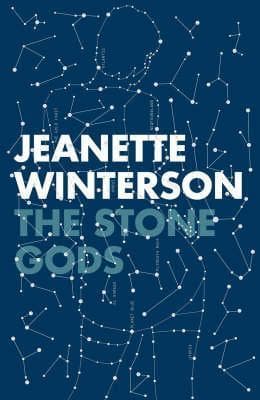
Jeanette Winterson (2007)
Genre
Fantasy / Science Fiction
Reading Time
240 min
Key Themes
See below
Sign in to track this book
As humanity seeks a new Earth, a love story unfolds against our planet's demise, echoing through time and potential futures.
The story begins on Planet Blue, a world near ecological collapse, covered in smog and pollution. People are preparing to leave for a newly found, clean planet, also named Planet Blue. Billie, a data transcriber for Go-Cap Corporation, lives a routine life, processing migration information. She meets Spike, a charming, free-spirited worker who fixes old robots. Their first meetings involve playful talk and a growing attraction. Spike, unlike Billie, seems less concerned with society's rules and more with the beauty of their dying world. Their relationship quickly deepens, becoming central to their lives amidst global anxiety about leaving.
As departure day nears, the planet's condition worsens, with frequent environmental disasters. Billie and Spike, with millions of others, get berths on the 'Ark,' the large spacecraft taking humanity to Planet Blue. The journey is carefully planned, with cryo-sleep pods for most passengers. Billie and Spike spend their last moments on the old world together, making promises for their future. The departure is chaotic but hopeful, as the last people launch into space, leaving behind a world they damaged. The story highlights the travelers' collective hope and individual worries.
Centuries later, the story shifts to a new planet. Billie and Spike are reborn, seemingly through reincarnation or a complex biological process, on a world called Wreck City. This 'new' world is not pristine but already shows damage, like the old Planet Blue. They are now soldiers in a seemingly endless war against 'The Natives,' a mysterious local population. Their memories of past lives are fragmented, appearing in dreams and brief feelings. Spike, now a skilled warrior, keeps his rebellious spirit, while Billie struggles with their harsh life and the conflict's violence. The cycle of destruction seems to be repeating.
During a mission in Wreck City's war-torn areas, Billie and Spike find ancient ruins and strange artifacts, which they call 'The Stone Gods.' These large structures and carvings hint at a civilization that existed before them. Their presence challenges the official story of Wreck City's history. Billie, driven by curiosity, investigates these findings, feeling a deeper connection to them. Spike, though unsure at first, supports her. The Stone Gods symbolize a forgotten past and a possible key to understanding the repeating patterns of destruction and rebirth that seem to affect their lives.
As Billie explores the Stone Gods' mysteries and her fragmented memories, she starts to understand the truth: their civilization is not new to this planet, but a continuation of the one that destroyed the first Planet Blue. The 'Natives' are likely descendants of previous human groups or the planet's original inhabitants, demonized by the current leaders. She realizes that Wreck City is heading for destruction, just like their first home. This discovery is horrifying, as it suggests a repeating pattern of human behavior—migration, exploitation, and environmental collapse—that seems impossible to stop. Spike shares her growing fear.
Knowing their cyclical fate, Billie and Spike decide they cannot do nothing. They begin to question authority and the war, trying to make others see the truth. This makes them targets of the ruling powers, who benefit from the ongoing conflict and people's ignorance. They try to gather a small group of like-minded people, including some 'Natives' who also want peace. Billie and Spike face a choice: continue the cycle or rebel against it, even if their efforts fail. They choose rebellion, driven by their love and a desperate hope for a different future.
In a major confrontation, Billie and Spike make a stand against the forces causing war and destruction. Their actions are not a traditional victory, but a strong act of defiance. The story becomes more abstract here, suggesting a break in the timeline or a shift in consciousness. The 'ending' is not a clear resolution but a new beginning, implying that humanity, or at least Billie and Spike, have learned from their past. The cycle is broken, but the future remains uncertain, depending on the choices of the 'new' humans.
The book's final sections go beyond Billie and Spike's individual story, exploring the nature of time, existence, and the ultimate fate of humanity and the universe. The story suggests that humanity eventually moves past its physical form, becoming pure consciousness or energy. This 'post-human' existence continues to deal with echoes of its past, memories of love and loss, and the desire for meaning. The Stone Gods are more than just artifacts; they might embody collective memory or the universe's basic building blocks, watching the endless cycle of creation and destruction.
Despite vast stretches of time, changes in form, and shifts in planetary existence, the core connection between Billie and Spike lasts. Their love, first formed on a dying world, remains a fundamental part of their being, going beyond physical death and rebirth. This lasting bond acts as a beacon of hope and continuity throughout the cyclical destruction. Their love is not just personal; it represents humanity's ability to connect and its potential to break free from destructive patterns, suggesting that even with cosmic indifference, love can be a powerful, transforming force.
The Protagonist
From a passive observer, Billie evolves into an active rebel and a catalyst for change, ultimately seeking to break the cycle of destruction.
The Protagonist/Love Interest
Spike consistently embodies a spirit of rebellion and deep loyalty, evolving from a personal rebel to a partner in a cosmic struggle against repetitive destruction.
The Antagonist
The Commander remains largely static, representing the unchanging forces of oppression that Billie and Spike continually battle.
The Supporting/Ambiguous
Their role shifts from antagonist to potential ally as Billie and Spike uncover the truth about Wreck City's history.
The Supporting/Symbolic
The robots' function evolves from practical tools to symbolic representations of humanity's repetitive and often unthinking actions.
The Narrator/Philosopher
The narrative voice remains consistent, offering a timeless perspective on the unfolding events.
A main theme is humanity's failure to learn from its past, leading to ongoing cycles of environmental destruction, war, and migration. The story shows two different planets (the original Planet Blue and Wreck City) suffering similar fates because of human actions. The 'Stone Gods' symbolize this repetition, silently observing countless cycles. Billie's realization that Wreck City is a repeat of the first Planet Blue highlights humanity's tendency to colonize, exploit, and destroy, only to move on and do it again.
“History repeats itself, first as tragedy, second as farce, but always as a warning.”
The lasting love between Billie and Spike contrasts with humanity's destructive cycles. Their bond goes beyond physical death, reincarnation, and long periods of time, suggesting that true connection is a basic and perhaps eternal part of existence. Their love is not only romantic but also a spiritual and intellectual partnership, pushing them to seek truth and break free from past patterns. It offers a glimmer of hope that even with cosmic indifference and repeated failures, human connection can last and inspire change.
“We are fragments of a greater whole, but the fragment that found you is complete.”
The novel explores the changing nature of identity through reincarnation or rebirth across different timelines. Billie and Spike keep core parts of their personalities and connection, even as their names, roles, and bodies change. This raises questions about what makes up the 'self' and whether a soul or core essence continues beyond individual lives. Their fragmented memories and recurring dreams link their various lives, suggesting a continuous consciousness trying to remember and understand its journey through time and space. Finding their past selves is important for understanding their current situation.
“We were always us, just differently arranged.”
The novel clearly shows the results of unchecked environmental exploitation, depicting the original Planet Blue as a toxic, dying world and Wreck City as a planet already showing similar decline. This acts as a strong warning about humanity's impact on its environment. The promise of Planet Blue as a clean utopia quickly breaks when Wreck City turns out to be another damaged world. The book critiques the human tendency to look for new 'utopias' instead of fixing the root causes of their destructive behavior, showing that a true utopia must come from within, not just from a change of location.
“The blue planet was a dream, but we brought our nightmares with us.”
Billie's investigation into the 'Stone Gods' and the true history of Wreck City embodies humanity's drive to understand its place in the universe and the meaning of its existence. Facing a seemingly meaningless cycle of destruction, Billie and Spike seek a truth that can break this pattern. This search for meaning extends beyond personal salvation to a collective awakening, suggesting that understanding the past is important for creating a different future. The 'Stone Gods' themselves represent ancient knowledge and a deeper, perhaps cosmic, truth waiting to be found.
“Truth is not a destination, but a journey through the debris of what we thought we knew.”
The story leaps across vast stretches of time, presenting different incarnations of its protagonists.
The novel employs a non-linear narrative structure, jumping between different time periods and locations (the original Planet Blue, the Ark journey, and Wreck City). This device is crucial for illustrating the cyclical nature of history and human behavior. By presenting Billie and Spike in different incarnations, the author emphasizes the recurrence of themes and character traits, rather than a straightforward progression. It forces the reader to piece together the overarching narrative and understand that the 'ending' of one section is often a 'beginning' of another, echoing the book's central theme of repetition.
Characters are reborn across different eras, carrying echoes of their past lives.
The concept of reincarnation or the transmigration of souls is a fundamental plot device. Billie and Spike are presented as recurring figures throughout the different timelines, suggesting that their consciousness or 'soul' persists beyond individual lives. This allows the author to explore the enduring nature of love and identity, as well as the idea that humanity's collective consciousness is trapped in a repeating cycle. Their fragmented memories and inherent connection across lives are key drivers of the plot, as they slowly piece together their shared history and the larger truth of their world.
Ancient artifacts that drive the plot and symbolize forgotten knowledge.
The 'Stone Gods' initially function as a MacGuffin on Wreck City, mysterious artifacts that Billie and Spike discover and which pique their curiosity, driving their investigation into the planet's true history. However, they quickly evolve into a powerful symbol. They represent ancient knowledge, forgotten civilizations, and the persistent, silent witness to humanity's destructive cycles. They are a tangible link to the past and a key to understanding the repeating patterns of existence, embodying the weight of history and the potential for rediscovered truth.
The use of multiple planets to illustrate humanity's repeated mistakes.
The novel presents at least two distinct planets (the original Planet Blue and Wreck City, with the promise of a new, pristine Planet Blue) that serve as parallel settings. This device is used to highlight the cyclical nature of humanity's environmental degradation and societal collapse. The similarities between the dying old world and the rapidly decaying new one underscore the idea that the problem lies not with the planet, but with human behavior itself. These parallel worlds visually and narratively reinforce the theme that humanity carries its destructive tendencies with it, no matter where it goes.
Direct addresses to the reader offering profound insights and questions.
The narrative frequently includes philosophical monologues or direct addresses that transcend the immediate plot, offering profound reflections on time, love, existence, and humanity's place in the cosmos. These intrusions, often delivered by an omniscient or disembodied narrator, elevate the story beyond a simple sci-fi romance into a deeper meditation on universal themes. They serve to guide the reader's interpretation, challenge assumptions, and provide a broader, often melancholic, perspective on the events unfolding, reinforcing the novel's intellectual and thematic depth.
“Time is a drug. Too much of it kills you.”
— A philosophical observation on the nature of existence and mortality.
“The future is a construct of the past, only more so.”
— Reflecting on how history and past actions shape potential futures.
“We are not made for endless life. We are made for this one.”
— Discussing the finite nature of individual lives and the importance of the present.
“Love is a dangerous thing. It can make you forget who you are.”
— A cautionary thought about the transformative and sometimes overwhelming power of love.
“Every end is a new beginning, but not every beginning is a good one.”
— Observing the cyclical nature of events, with a note of realism about new starts.
“The universe doesn't care about your feelings.”
— A stark reminder of the indifference of the cosmos to individual human emotions.
“What is memory but a story we tell ourselves about the past?”
— Pondering the subjective and reconstructive nature of memory.
“We leave traces, even in the void.”
— A poetic reflection on the lasting impact of existence, however fleeting.
“The greatest freedom is to choose your own chains.”
— An ironic take on freedom, suggesting that even in choice, one might bind themselves.
“History repeats itself, first as tragedy, second as farce, third as a video game.”
— A modern, cynical twist on Marx's famous quote, applied to the distant future.
“Sometimes the only way to save something is to let it go.”
— A bittersweet realization about preservation and the necessity of release.
“Fear is a habit. So is love.”
— Suggesting that fundamental human emotions can be learned and ingrained behaviors.
“We are all just echoes of what we once were, or what we will be.”
— A reflection on the continuous transformation of self across time and incarnations.
“The planet doesn't need us. We need the planet.”
— An environmentalist statement emphasizing humanity's dependence on the Earth.
Ready to see how well you understood this book? Take our interactive quiz with 10 questions.
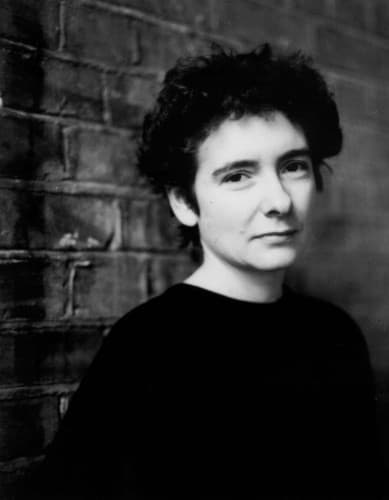
Jeanette Winterson is an English author. Her first book, Oranges Are Not the Only Fruit, was a semi-autobiographical novel about a sensitive teenage girl rebelling against convention. Other novels explore gender polarities and sexual identity and later ones the relations between humans and technology. She broadcasts and teaches creative writing. She has won a Whitbread Prize for a First Novel, a BAFTA Award for Best Drama, the John Llewellyn Rhys Prize, the E. M. Forster Award and the St. Louis Literary Award, and the Lambda Literary Award twice. She has received an Officer of the Order of the British Empire (OBE) and a Commander of the Order of the British Empire (CBE) for services to literature, and is a Fellow of the Royal Society of Literature.







