“The wind carried the smell of salt and fear, a potent mix that clung to the men like the Channel mist.”
— As the Allied invasion fleet approaches Normandy on D-Day.

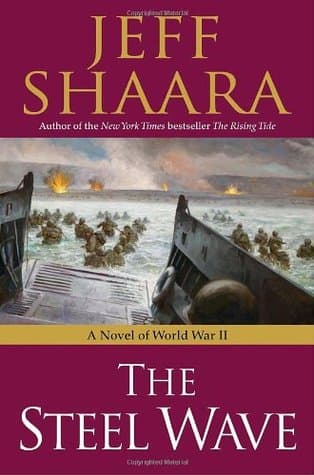
Jeff Shaara (2008)
Genre
Historical Fiction
Reading Time
1245 min
Key Themes
See below
Sign in to track this book
Eisenhower's diverse army prepares to shatter Hitler's European fortress. Rommel's strategic skill is undermined by Hitler, while an 82nd Airborne sergeant drops behind enemy lines, and a 29th Infantry private braces for Omaha Beach. All converge on the D-Day invasion that reshaped history.
In early 1944, General Dwight D. Eisenhower, Supreme Commander Allied Expeditionary Force, bases himself in London. He faces the strategic and logistical challenges of Operation Overlord, the cross-channel invasion of Nazi-occupied France. He must unite the American, British, and Canadian Allied forces and manage political pressures from Winston Churchill and Franklin D. Roosevelt. Eisenhower's main concern is choosing the best invasion date and location, balancing weather, tides, and the need for surprise. He often consults with his subordinates, including General Omar Bradley and Field Marshal Bernard Montgomery, sometimes disagreeing over tactics, especially Montgomery's caution versus Eisenhower's desire for bold action. The high human cost of failure weighs on him, as hundreds of thousands of lives depend on his decisions.
Across the English Channel, Field Marshal Erwin Rommel, commander of Army Group B, inspects the Atlantic Wall defenses along the French coast. He knows the Allies will invade and believes the only way to stop them is to defeat them on the beaches before they can establish a foothold. Rommel orders extensive minefields, anti-tank obstacles, and beach fortifications built, often overseeing the work himself. However, he is constantly frustrated by Adolf Hitler and the OKW (Oberkommando der Wehrmacht), especially General Gerd von Rundstedt, who believe the main invasion will be in the Pas de Calais and insist on keeping armored reserves far inland. Rommel's requests to move these Panzer divisions closer to the coast for immediate counter-attack are denied, leaving him to prepare for an invasion with too few mobile reserves.
Sergeant Jesse Adams, a veteran of the 82nd Airborne Division, prepares with his squad for their part in the invasion: parachuting behind enemy lines in Normandy. Adams, having fought in Sicily and Italy, understands airborne operations' harsh realities. He trains his men strictly, focusing on stealth, quick decisions, and close-quarters combat. Morale among his paratroopers mixes nervous anticipation with grim resolve. They pack their gear, check weapons, and receive briefings on their goals: securing key crossroads, destroying bridges, and neutralizing German artillery positions that could target the landing beaches. Adams feels the weight of leadership, knowing he must keep his men alive while completing their vital, dangerous mission.
Private Tom Thorne, a young, inexperienced soldier in the 29th Infantry Division, is on a transport ship heading for Normandy. He is part of the first wave for Omaha Beach, a sector known to be heavily defended. Thorne's internal struggle is clear; he is terrified but tries to hide it from his fellow soldiers. He thinks of his family back home and questions his courage. Briefings from his officers, meant to prepare them, only increase his anxiety, detailing expected German resistance and high casualty rates. As the ship moves through the choppy English Channel, Thorne tries to mentally prepare for the violence he is about to face, hoping for survival amidst overwhelming dread.
After agonizing over conflicting weather reports, General Eisenhower faces a critical moment. The initial D-Day date of June 5th is canceled due to a severe storm over the Channel. His meteorologist, Group Captain J.M. Stagg, offers a narrow window of better weather for June 6th, followed by another long period of bad weather. The difficulty of recalling the invasion fleet and losing surprise makes further delay almost impossible. After intense discussion with his commanders, Eisenhower makes the momentous and solitary decision to proceed with the invasion on June 6th, famously saying, "Okay, we'll go." This decision starts the largest amphibious assault in history, a gamble with global consequences.
In the pre-dawn hours of June 6th, Sergeant Jesse Adams and his group of paratroopers board their C-47 transport plane. The flight across the Channel is tense and bumpy. As they near the Normandy coast, German anti-aircraft fire lights up the sky, causing planes to scatter and fly off course. Adams's jump is chaotic; he lands far from his intended drop zone, separated from most of his squad in unfamiliar terrain. He quickly gathers a few scattered paratroopers and starts to navigate the dark, hedgerow-filled landscape, encountering confused German patrols and engaging in sporadic, deadly firefights. Their mission to secure a bridge becomes a desperate fight for survival and direction amid the fog of war, deep within enemy territory.
As dawn breaks on June 6th, Private Tom Thorne's landing craft nears Omaha Beach. The scene is a storm of German machine-gun fire, artillery, and mortar shells. Ramps drop, and soldiers are cut down before reaching the water. Thorne plunges into the surf, navigating underwater obstacles and the bodies of fallen comrades. He scrambles across the open beach, a killing field filled with casualties, desperately seeking cover behind shingle and disabled vehicles. The German defenses, stronger than expected, pin down American troops, threatening to turn the invasion into a disaster. Thorne, amidst the terror, sees great bravery and despair as the 29th Division struggles to gain any foothold against the relentless enemy fire.
Field Marshal Rommel is away from his headquarters on June 6th, having gone to Germany to celebrate his wife's birthday and personally ask Hitler for more Panzer reserves. He is woken by a phone call informing him of the Allied landings in Normandy. Rommel initially disbelieves, suspecting a trick, but quickly understands the situation's seriousness. He immediately begins a hurried, dangerous drive back to France, his frustration building over the strategic errors that left the crucial Panzer divisions held back. He knows his only hope is to personally direct the counter-attack, but the delay from his absence and Hitler's complex command structure has already cost the Germans valuable hours, allowing the Allies to strengthen their beachheads.
Throughout June 6th, General Eisenhower receives a continuous stream of grim and conflicting reports from the Normandy beaches, especially from Omaha, where the invasion hangs by a thread. He hears of heavy casualties and troops unable to move inland. The possibility of failure weighs heavily on him, and he even drafts a statement taking full responsibility for the disaster, should it happen. He consults with his generals, urging them to find solutions, but also preparing for the worst. However, as the day goes on, sporadic reports of small groups of Americans scaling the bluffs at Omaha begin to arrive, offering a glimmer of hope that the beachhead might yet be secured, largely due to the sheer determination of the frontline soldiers.
After hours of being pinned down on Omaha Beach, Private Tom Thorne, with the remaining members of his company, finally manages to use a small break in the German defenses. Driven by desperation and the leadership of a few determined officers and NCOs, they begin the difficult climb up the bluffs, engaging in brutal close-quarters combat with the remaining German defenders. The fighting is fierce, house-to-house and hedgerow-to-hedgerow, as they push inland. Thorne, though still terrified, finds a primal courage, firing his rifle and moving forward, helping the slow, painful process of securing the beachhead and linking with other Allied units. The initial goal of penetrating deep inland is far from met, but the beach is finally secured.
Sergeant Jesse Adams, having eventually joined a small, mixed group of paratroopers from different units, secures a vital crossroads near Sainte-Mère-Église. They face relentless counter-attacks from German infantry and some armored vehicles throughout the day and into the night. Adams uses his combat experience to organize their defenses, rationing ammunition, and directing fire. The fighting is chaotic and desperate, but they understand the importance of holding their position to prevent German reinforcements from reaching the beaches. Despite heavy losses and exhaustion, Adams and his men repel multiple assaults, proving vital in disrupting German communications and delaying the German response to the main landings, thus helping the overall Allied effort.
Upon his frantic return to France, Field Marshal Rommel tries to coordinate a decisive German counter-attack against the Allied beachheads. However, he faces a bureaucratic mess. Hitler's direct orders, the fragmented command structure, and Allied air superiority severely hinder German troop movements. Panzer divisions are held back by Hitler's personal command or delayed by relentless Allied air attacks on roads and bridges. Rommel's attempts to bring up reserves are blocked at every turn, and his authority is undermined by the OKW. He watches in despair as the Allies strengthen their positions, realizing that the critical window for a successful counter-invasion has been lost, a direct result of Hitler's strategic errors and his own initial absence.
By the end of June 6th and into the following days, General Eisenhower receives confirmation that all five Allied beachheads—Utah, Omaha, Gold, Juno, and Sword—are secured, though at a heavy cost, especially on Omaha. The initial goals of pushing deep inland were not fully met, but a foothold is established on the European continent. Eisenhower acknowledges the immense bravery and sacrifice of the men on the ground. While the immediate danger of being pushed back into the sea has passed, he knows the battle for Normandy and the liberation of France has only just begun. The successful landings are a monumental achievement, a result of the planning and execution, but also of the Allied soldiers' will.
In the days after D-Day, Jesse Adams continues to fight in the brutal hedgerow country, seeing the relentless grind of the Normandy campaign. He leads his men through fierce engagements, knowing every inch of ground is paid for in blood. Tom Thorne, having survived Omaha, is now a hardened, though still fearful, soldier, facing the reality of sustained combat as his unit pushes inland. Both men are changed by the experience. Rommel, increasingly disillusioned and despairing, sees Germany's inevitable defeat, his warnings ignored and strategies thwarted. Eisenhower, relieved by the landings' success, knows the hardest fighting is still to come, as the Allies must now break out of the Normandy beachhead and confront the German army across France.
The Protagonist
Eisenhower progresses from a strategist grappling with logistics and diplomacy to the decisive commander who takes the ultimate risk, ultimately securing the crucial foothold in Europe.
The Antagonist
Rommel's arc is one of mounting frustration and eventual powerlessness, as his sound strategic advice is ignored, leading to the inevitable failure of his defensive efforts.
The Protagonist
Adams transitions from a seasoned trainer to a leader fighting for survival and mission accomplishment amidst the chaos of the D-Day airborne assault, further solidifying his combat experience.
The Protagonist
Thorne's arc is a classic journey from innocence and terror to a baptism of fire, emerging as a survivor and a soldier, deeply marked by the experience of Omaha Beach.
The Supporting
Bradley's arc is consistent in his role as a reliable and effective ground commander, executing the plans he helps to formulate.
The Supporting
Montgomery remains a consistent strategic voice, often in contrast to Eisenhower, but ultimately a key player in the Allied command.
The Mentioned
Hitler's strategic misjudgments are a driving force behind the German failure, highlighting his detachment from battlefield realities.
The Mentioned
Stagg's role is singular and impactful, providing the critical information that enables the invasion.
The novel shows the great psychological and moral weight carried by commanders at every level, especially General Eisenhower. He struggles with the responsibility for hundreds of thousands of lives, political pressures, and difficult decisions about timing and strategy. Rommel also feels this burden, made worse by his lack of control. This theme is clear in Eisenhower's thoughts as he debates the D-Day launch and in Rommel's despair over Hitler's interference, showing that wartime leadership is often a lonely and terrible experience.
“The responsibility was his, and his alone. The lives of men, the fate of nations, rested on a whispered 'yes' or 'no'.”
The book places the reader in the immediate and terrifying reality of frontline combat, especially through Jesse Adams and Tom Thorne. It shows the disorienting nature of airborne drops, the sheer terror of amphibious landings under heavy fire, and the close-quarters brutality of fighting through hedgerows. The descriptions of Omaha Beach are particularly harrowing, emphasizing random violence, the constant threat of death, and the physical and psychological toll on individual soldiers. This theme highlights the human cost of war and the raw courage needed to endure it.
“The beach was a butcher's bill written in blood and sand, each wave bringing more bodies, more screams.”
This theme is mainly explored through the German perspective, specifically Rommel's constant frustration with Hitler's and the OKW's strategic errors. Hitler's insistence on keeping Panzer reserves far inland, his belief in a feint at Pas de Calais, and his direct interference with Rommel's tactical plans are shown as catastrophic mistakes. Rommel, a practical and experienced commander, understands the need for flexibility and decisive action, but his hands are tied. This shows how rigid command structures and a leader's detachment from reality can lead to military disaster, contrasting sharply with the more unified and adaptive Allied command.
“Hitler's shadow lay heavy over every decision, a paralysis of will that would cost them everything.”
The novel explores courage not as a lack of fear, but as the ability to act despite it. Tom Thorne's journey on Omaha Beach is a prime example; he is constantly terrified but pushes forward, finding inner strength amid overwhelming odds. Jesse Adams, though a veteran, also feels fear but turns it into decisive leadership. This theme is universal across the characters, from generals making life-or-death decisions to privates facing direct fire. It emphasizes that courage is often a desperate, internal struggle that defines the soldier's experience.
“He wanted to run, to bury himself in the sand, but his legs kept moving, one step, then another, towards the impossible.”
Shifts between the viewpoints of key figures across the command hierarchy and battlefront.
The novel employs a multiple third-person limited perspective, alternating between General Eisenhower, Field Marshal Rommel, Sergeant Jesse Adams, and Private Tom Thorne. This device allows the reader to experience the D-Day invasion from the strategic high command, the defending enemy, and the ground-level combatants. It provides a comprehensive and nuanced understanding of the event, showcasing the grand strategic challenges alongside the visceral human experience of war, and highlighting how decisions at the top impact those on the front lines.
The relentless march towards the D-Day invasion date creates intense suspense.
The narrative builds suspense through a pervasive 'ticking clock' device, focusing on the countdown to June 6th, 1944. Eisenhower's agonizing decision-making regarding the invasion date, Rommel's frantic efforts to fortify the Atlantic Wall before the Allies strike, and the soldiers' final preparations all contribute to this sense of impending, unavoidable action. The weather delays and the narrow window of opportunity further intensify the pressure, making every moment count and heightening the drama of the eventual launch.
The reader is aware of information that characters are not, particularly concerning German strategy.
Dramatic irony is frequently used, especially with Rommel's character. The reader knows, through Eisenhower's perspective, the true invasion location and timing, while Rommel and Hitler remain convinced of a feint or a different main landing site (Pas de Calais). This creates a sense of tragic inevitability for the German defense and amplifies Rommel's frustration, as the reader understands the futility of his efforts against the backdrop of Hitler's misjudgments and the Allies' well-guarded secrets.
Extensive use of characters' thoughts and fears to convey psychological states.
The novel heavily relies on internal monologues to delve into the psychological states of its main characters. Eisenhower's anxieties about the invasion's success, Rommel's despair over Hitler's orders, Jesse Adams's quiet determination, and Tom Thorne's overwhelming fear are all conveyed through their private thoughts. This device allows for deep characterization, revealing motivations, fears, and the immense personal toll of the war, making the characters more relatable and their struggles more profound.
“The wind carried the smell of salt and fear, a potent mix that clung to the men like the Channel mist.”
— As the Allied invasion fleet approaches Normandy on D-Day.
“He saw the war not as a grand strategy, but as a million individual acts of courage and terror.”
— Reflecting on the nature of battle from a soldier's perspective.
“The sand was stained with blood, a new, terrible color on the ancient French coast.”
— Describing the immediate aftermath of the landings on Omaha Beach.
“Every man carried his own private war inside him, a battle against despair as much as against the enemy.”
— A soldier's internal struggle amidst the chaos of combat.
“They were not heroes in the storybooks, but men, flawed and afraid, doing what had to be done.”
— Contemplating the reality of the soldiers fighting on the front lines.
“The sound of distant artillery was the heartbeat of the invasion, a relentless, thudding rhythm.”
— Setting the atmosphere of the ongoing battle in Normandy.
“Hope was a fragile thing, easily shattered by a single German machine gun.”
— The precariousness of optimism in the face of overwhelming enemy fire.
“He learned that day that courage was not the absence of fear, but the decision to move forward despite it.”
— A soldier's realization about the true nature of bravery.
“The hedgerows were not just obstacles; they were living walls of death, each one a fortress.”
— Describing the challenging terrain of the Norman bocage.
“The liberation of France began with a storm of steel and blood, a terrible birth.”
— Reflecting on the cost and nature of the D-Day invasion.
“Every explosion was a hammer blow, striking at their resolve, testing their will to survive.”
— The relentless psychological and physical impact of artillery bombardment.
“He saw the ghosts of fallen comrades in every shadow, a constant, heavy presence.”
— A soldier haunted by the memory of those lost in battle.
“The enemy was not just the men in German uniforms, but the cold, the mud, and the endless waiting.”
— Expanding on the multifaceted challenges faced by soldiers beyond direct combat.
“There was no glory in this, only the grim satisfaction of having endured another day.”
— A weary soldier's perspective on the daily grind of the war.
Ready to see how well you understood this book? Take our interactive quiz with 10 questions.

Biography coming soon.







