“He stood on one leg, as steadfast as any other soldier, but he was not made to stand on two.”
— Describing the tin soldier's unique characteristic.

Genre
Fantasy / Children's
Reading Time
20 min
Key Themes
See below
Sign in to track this book
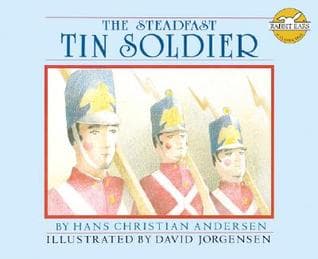
A one-legged tin soldier travels through gutters and fish guts, determined to reunite with the paper ballerina he loves.
A young boy receives twenty-five tin soldiers, all made from the same old tin spoon. Because there wasn't enough tin, one soldier has only one leg. Still, he stands as firmly as his two-legged friends. When placed on the table, the one-legged soldier watches the other toys. He is drawn to a paper ballerina standing in the doorway of a paper castle. He notices she also stands on one leg, like him, and immediately falls in love, believing her to be his soulmate.
The one-legged tin soldier is fascinated by the beautiful paper ballerina. She wears a delicate cambric skirt, a blue ribbon, and a sparkling rosette. He thinks she also has one leg, which makes him feel a strong bond with her. He dreams of being near her, admiring her from afar. As night falls, the other toys come alive, but the tin soldier stays at his post, his eyes fixed on the ballerina. He wants to cross the table and be closer, but his duty keeps him still.
During the night, while everyone sleeps, a small, black goblin in a snuffbox opens his lid and speaks to the tin soldier. The goblin sees the soldier staring at the ballerina and warns him, "Tin soldier, don't look at what doesn't concern you!" The tin soldier ignores the goblin's taunt, remaining steady and silent, his focus still on the ballerina. The goblin, angry at the soldier's defiance, promises revenge, hinting that trouble will soon come.
The next morning, perhaps because of the goblin, the tin soldier falls from the window sill. He lands headfirst on the street below, his bayonet stuck between two paving stones. The boy and the maid search but cannot find him. Soon after, it rains heavily, and two street boys spot him. They decide to make a paper boat and put the tin soldier inside, sending him down the gutter's rushing water. The soldier, still steady, holds his musket and looks straight ahead.
The paper boat, with the tin soldier aboard, sails quickly down the gutter, which has become a strong current from the rain. The soldier remains calm, thinking of the ballerina and wishing she were with him. The boat is eventually swept into a dark, narrow drainpipe, where it is completely black. The soldier feels fear but keeps his steady posture, holding his musket. He wonders what new dangers await him in this underground world, far from the light and his beloved ballerina.
As the paper boat continues through the dark sewer, a large, fierce water rat appears. The rat, with sharp teeth and small eyes, demands a passport from the tin soldier. The soldier, being made of tin, has no passport and stays silent, holding his musket firmly. The rat, angry at the soldier's lack of response and the intrusion, chews at the paper boat, threatening to sink it. The soldier prepares for whatever fate awaits him.
The paper boat, weakened by the rat's attack and the constant water, soon tumbles over a small waterfall in the sewer. The tin soldier, still upright, plunges into the water. Just as he thinks it's the end, a large fish suddenly swallows him whole. Inside the fish's dark stomach, the soldier finds himself in an even tighter, stranger prison. Despite the odd situation, he remains steady, still holding his musket, enduring the new environment.
After some time, a fisherman catches the fish that swallowed the tin soldier. The fish is then taken to market and bought by the same maid who works in the soldier's original house. When the maid cuts open the fish with a large knife, she is surprised to find the familiar one-legged tin soldier inside. She carefully removes him and brings him back into the nursery, placing him on the table. To his great joy, he sees his beloved paper ballerina still standing in her castle doorway.
The tin soldier is happy to be back on the table, and his eyes immediately find the paper ballerina. She is still there, beautiful and steady, just as he remembered her. He feels a strong connection, a silent understanding passing between them across the table. He has endured so much, and now, finally, he is back in her presence. However, this moment of reunion is brief and sad, as an unseen hand is about to intervene, bringing their story to a dramatic and tragic end.
Suddenly, for no clear reason, the little boy grabs the one-legged tin soldier and throws him directly into the burning stove. The soldier feels intense heat and sees the flames consuming him. He stands steadily, still holding his musket, his tin beginning to melt. As he burns, he catches sight of the ballerina across the room, feeling his love for her even in his last moments. He does not cry out, keeping his composure until the very end.
Almost immediately after the tin soldier is thrown into the stove, a gust of wind, perhaps a draft from the open door, sweeps the paper ballerina from the table. She floats gracefully through the air, landing directly in the same burning stove, right beside the melting tin soldier. Her delicate paper skirt instantly catches fire. In their final moments, the two lovers are united in the flames, their forms consumed together.
The next morning, when the maid cleans the stove, she finds the remains of the tin soldier and the paper ballerina. All that is left of the tin soldier is a small, shapeless lump of tin, shaped like a heart. Of the ballerina, only her small, scorched rosette, which she wore on her shoulder, remains. These two remnants, symbols of their lasting love and steadfastness, are the only physical evidence left of their tragic but united fate, forever bound together in the ashes.
The Protagonist
From a simple toy, he endures a hero's journey, maintaining his steadfastness and love until his tragic, fiery union with the ballerina.
The Love Interest
She remains a static symbol of beauty and love, ultimately sharing the tragic fate of her admirer.
The Antagonist/Catalyst
He serves as an initial catalyst for the soldier's journey, his role quickly diminishing after the soldier's fall.
The Supporting
He remains a child, oblivious to the profound emotional journey of his toys, acting as an agent of fate.
The Supporting
She facilitates the soldier's return to the nursery and later uncovers the tragic remnants, remaining a background figure.
The Obstacle/Minor Antagonist
A brief but significant obstacle in the soldier's journey, it quickly disappears after its encounter.
The main theme is the tin soldier's strong determination. Despite having one leg, he stands as tall and firm as his comrades. Throughout his dangerous journey—falling from a window, being swept into a gutter, traveling through a dark sewer, meeting a rat, being swallowed by a fish, and finally being thrown into a fire—he never gives up. He keeps his posture, holds his musket, and, most importantly, keeps his love for the ballerina constant. His steadfastness is not just physical but emotional, enduring all difficulties for his beloved. This is clear when he is burning, yet 'he did not cry out; he only looked at the little dancer.'
“He stood there with his musket on his shoulder and looked straight before him, for he was a soldier.”
The story explores a deep, silent love that overcomes physical limits and problems. The tin soldier falls in love with the ballerina at first sight, believing she also has one leg. His entire journey is driven by this love, even though the ballerina never speaks or directly acknowledges him. Their connection is purely visual and spiritual, ending in their tragic, yet symbolic, union in the fire. The fact that she is swept into the fire right after him suggests their fates are aligned, fulfilling his quiet devotion. Finding the tin heart and the scorched rosette further emphasizes this theme.
“He thought she was like himself, a steadfast soldier, and he fell in love with her.”
The story is greatly influenced by seemingly random events and fate. The tin soldier's fall from the window, the rain, the boys making a paper boat, the fish swallowing him, and even the maid buying that specific fish are all chance occurrences. The final act of fate is the boy throwing him into the fire and a gust of wind sweeping the ballerina in after him. These events are largely beyond the characters' control, showing how fragile existence is and how outside forces can decide one's destiny, often with sad results. The goblin's warning hints at a predestined misfortune, but the actual events happen through a series of coincidences.
“And it was certainly the goblin who did it.”
The story contrasts the tin soldier's steadfastness with the inherent fragility of the toys and their existence. The paper ballerina, beautiful and delicate, is easily swept away by a draft and burned by fire. The paper boat, a temporary vessel, quickly falls apart. Even the tin soldier, though seemingly strong, eventually melts into a shapeless lump. This theme shows how beauty and life, especially innocent and pure forms, can be easily destroyed by outside forces, whether mean (the goblin), uncaring (the boy, the rat), or natural (the rain, the fire). The tragic ending highlights this sad vulnerability.
“She was so delicate, so light, that she seemed to float in the air.”
Giving human qualities and emotions to inanimate objects.
Andersen uses personification extensively to bring the toys to life, allowing readers to empathize with their experiences. The tin soldier feels love, fear, and determination. The goblin expresses jealousy and malice. The other toys come alive at night. This device makes the emotional journey of the tin soldier relatable and profound, transforming what would otherwise be a simple object into a tragic hero. It enables the exploration of complex themes like love, steadfastness, and fate through the perspective of inanimate objects.
The tin soldier's single leg as a symbol of uniqueness, vulnerability, and shared identity.
The tin soldier's one leg is a powerful symbol. Initially, it marks him as imperfect and unique among his brothers. More significantly, it forms the basis of his immediate connection and love for the ballerina, as he believes she shares this 'defect' by standing on one leg. This shared 'vulnerability' becomes a bond, suggesting that true love sees beyond imperfections and finds connection in perceived shared experiences. It also highlights his resilience, as he stands just as steadfastly as his two-legged comrades.
An early warning that hints at future misfortune for the protagonist.
The goblin's warning, 'Tin soldier, don't look at what doesn't concern you!' and his subsequent vow of revenge, 'Just wait till tomorrow, my boy!', clearly foreshadow the misfortunes that befall the tin soldier. While the goblin's direct involvement isn't explicitly proven for every event, his words set a tone of impending doom and suggest that the soldier's journey is a consequence of defying a malevolent force. This creates suspense and prepares the reader for the trials the soldier will face.
The protagonist's miraculous return to his home, only to face his ultimate demise.
The tin soldier's journey inside the fish, followed by the fish being caught and bought by his household's maid, represents a miraculous and highly ironic return to his point of origin. Just when it seems his trials are over and he is reunited with his love, he is thrown into the fire. This device heightens the tragedy, as the brief moment of hope and reunion is immediately snatched away, underscoring the arbitrary nature of fate and the idea that even overcoming immense obstacles doesn't guarantee a happy ending.
“He stood on one leg, as steadfast as any other soldier, but he was not made to stand on two.”
— Describing the tin soldier's unique characteristic.
“He thought it very grand that he should be so near her, and yet he never stirred.”
— The tin soldier's silent admiration for the dancer.
“It was not the wind, for the window was not open.”
— A sudden gust of wind that knocks the soldier over.
“He was carried out into the street, and it rained and blew so fearfully that he almost lost his balance.”
— The soldier's journey after falling from the window.
“He thought of the little dancer, whom he should never see again.”
— The soldier's thoughts while floating in the gutter.
“Down he went, head first, in the midst of the dirt and rubbish.”
— The soldier's descent into the fish's stomach.
“It was quite dark, and the poor tin soldier felt very uncomfortable.”
— The soldier's experience inside the fish.
“He stood there quite as steadfast as before, and looked at the little dancer.”
— The soldier's return to the nursery after being found in the fish.
“He felt very warm, but whether it was from the heat of the fire or from the warmth of his love, he did not know.”
— The soldier being thrown into the fire.
“Then the door flew open, and a gust of wind caught the dancer, and she flew straight into the stove to the tin soldier.”
— The dancer's fateful end, joining the soldier.
“He melted into a lump, and she was burnt to a cinder.”
— The final moments of the tin soldier and the dancer.
“Of the tin soldier, there was nothing left but a small tin heart.”
— The remnant found in the ashes after the fire.
“Of the dancer, there was nothing left but the spangle, and that was as black as a coal.”
— The remnant of the dancer found in the ashes.
“It was a very wonderful journey, but he did not feel proud.”
— Reflecting on the tin soldier's adventures.
Ready to see how well you understood this book? Take our interactive quiz with 10 questions.
Biography coming soon.







