“There are two kinds of people in this world. Those who have a dream and those who don’t.”
— Mata Hari reflecting on ambition and life choices.

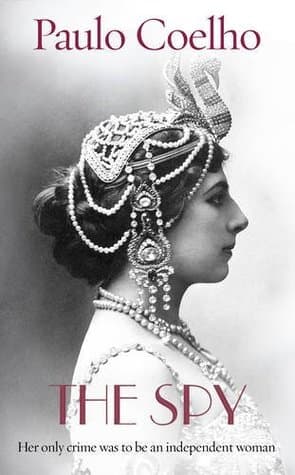
Paulo Coelho (2016)
Genre
Historical Fiction
Reading Time
200 min
Key Themes
See below
Sign in to track this book
Mata Hari's journey, from a penniless dancer to a celebrated Parisian courtesan, led her into a web of wartime suspicion and an accusation of espionage, resulting in her tragic execution.
The story begins on February 13, 1917, when Margaretha Zelle, known as Mata Hari, is arrested in her hotel room at the Elysée Palace Hotel in Paris. French agents, led by Captain Ladoux, accuse her of spying for Germany. Held in Saint-Lazare prison, Mata Hari starts writing a long letter to her lawyer, Maître Clunet, describing her life and declaring her innocence. This letter forms the main structure, allowing her to reflect on her past, her choices, and the events that led to her current situation. She recounts her early life in Holland, her unhappy marriage, and her eventual move to Paris, setting the scene for her transformation into a famous dancer and courtesan.
Margaretha Zelle describes her early life in Leeuwarden, Holland, as the daughter of a rich hat merchant. Despite her father's later bankruptcy and the family's struggles, Margaretha valued her freedom and imagination. At 18, she answered a newspaper ad for a wife and married Rudolf MacLeod, a much older Dutch colonial army officer. Their marriage was unhappy, marked by Rudolf's alcoholism, cheating, and abuse. They moved to the Dutch East Indies (now Indonesia), where Margaretha found comfort in exploring local culture and dance, which laid the groundwork for her future identity.
In the Dutch East Indies, Margaretha experienced a brief cultural awakening. She was fascinated by the local dances and customs, learning Javanese temple dance. This period was a turning point, as she began to shed her European restrictions and embrace a more sensual, spiritual identity. However, her life with Rudolf remained troubled. Their son, Norman-John, tragically died from complications of syphilis, likely from his father, deeply traumatizing Margaretha. This loss, along with continued abuse and Rudolf's obvious affairs, solidified her decision to leave him and seek a new life.
After separating from Rudolf, Margaretha arrived in Paris in 1903, almost penniless and with few opportunities. She struggled at first, working briefly as a circus rider and a painter's model. Using her experiences in the East Indies and her natural theatricality, she created the persona of Mata Hari, an exotic Javanese dancer and princess. She carefully built her backstory, claiming to be born in a sacred Indian temple. Her first performance at the Musée Guimet in 1905 was a sensation, captivating audiences with her daring, sensual, and seemingly authentic Eastern dances, marking her dramatic transformation and rise to fame.
Mata Hari quickly became famous across Europe, performing in grand theaters and private salons. Her appeal came not only from her provocative dances but also from her carefully cultivated mystery and exoticism. She captivated powerful and wealthy men, becoming a highly sought-after courtesan. She lived a luxurious life, supported by her admirers and performances, traveling widely and socializing with diplomats, politicians, and military officials. This period shows the height of her independence and self-creation, as she enjoyed living life on her own terms, free from traditional societal limits.
The start of World War I in 1914 changed Mata Hari's world. As a Dutch national, she was officially neutral, but her constant travels between countries (Spain, France, Holland, Germany) and her relationships with high-ranking officials from various nations made her an object of suspicion. Her lavish lifestyle, which continued even during wartime, further fueled rumors. She describes her increasing isolation and the growing paranoia around her. She recounts how both French and German intelligence services became interested in her, mistaking her desire for freedom and financial stability for political loyalty.
Mata Hari explains how both French and German intelligence approached her. Captain Ladoux of the French Deuxième Bureau offered her money to spy for France, taking advantage of her desperate need for funds and her desire to travel to see her Russian lover, Captain Vadim Maslov, who was injured at the front. At the same time, she admits accepting money from a German diplomat, Major Kalle, during a trip to Holland, believing it was just payment for past favors or a way to ensure her passage. She maintains she never meant to betray France and saw herself as a double agent, working for the French while pretending to cooperate with the Germans.
Mata Hari recounts her mission to Spain for French intelligence. While there, she met with German agents, believing she was gathering information for the French. However, both sides closely watched her actions. The French intercepted coded messages from Madrid to Berlin that implicated her. Unbeknownst to Mata Hari, the Germans were using her as a pawn, deliberately sending messages that would lead the French to believe she was a German spy, thus compromising her and diverting attention from their real agents. This mission proved to be her downfall, providing key 'evidence' for her eventual arrest and prosecution.
Back in Paris, Mata Hari faced increasingly intense interrogations by Captain Ladoux and other French officials. Despite her claims of innocence and her attempts to explain her actions, the evidence against her, largely circumstantial and manipulated by German intelligence, grew. She felt increasingly isolated and betrayed, realizing that her efforts to navigate the dangerous world of wartime espionage had failed. Her past as a courtesan and her unconventional life were used against her, portraying her as immoral and untrustworthy, making it difficult for anyone to believe her claims of loyalty to France.
Mata Hari's trial in July 1917 was quick and largely predetermined. Despite Maître Clunet's efforts, the prosecution presented a convincing, though largely fabricated, case against her. They accused her of causing the deaths of thousands of French soldiers through her spying. The political mood of wartime France needed a scapegoat, and Mata Hari, with her exotic past and morally ambiguous reputation, was the perfect candidate. She was convicted of double espionage and sentenced to death. The trial showed the injustice and desperation of a nation at war, sacrificing an individual for national morale.
Throughout her final letter, Mata Hari reflects on her life choices, her identity, and the cost of freedom. She grapples with the two sides of Margaretha Zelle and Mata Hari, admitting that the persona she created ultimately consumed her. She expresses regret for some actions but never for her desire to live authentically and independently, even if it meant breaking social rules. She sees herself as a woman who sought love and meaning, not a spy, and laments how society judged her based on her sexuality and perceived immorality rather than her true intentions. Her reflections show a deep sense of injustice and a longing for understanding.
On October 15, 1917, Mata Hari faced her execution by firing squad at the Caserne de Vincennes. The letter ends with her preparing for death, showing remarkable calm and dignity. She refused a blindfold, choosing to look her executioners in the eye. Her final moments are shown as a sign of her strength and defiance, maintaining her pride even when completely defeated. She died as she lived, on her own terms, embodying the spirit of the free woman she always aimed to be, solidifying her legend as a tragic figure caught between worlds and conventions.
The Protagonist
From a stifled Dutch girl to a celebrated European courtesan, her arc is one of self-creation and liberation, tragically ending in her unjust conviction and execution for a crime she claims she did not commit.
The Supporting
Remains a static figure, representing the past trauma and societal constraints Mata Hari flees.
The Antagonist
Remains a static figure, representing the unyielding forces of state power and suspicion.
The Supporting
His injury and distance from Mata Hari contribute to her vulnerability and isolation.
The Supporting
His efforts represent the struggle for justice against insurmountable odds.
The Mentioned
His early death serves as a pivotal, tragic event that shapes Mata Hari's trajectory.
This theme is central to Mata Hari's life. From her escape from an abusive marriage and societal expectations in Holland to her reinvention as an uninhibited dancer in Paris, she constantly seeks personal freedom. Yet, this pursuit ultimately leads to her physical imprisonment and execution. The irony is that her independence and defiance of norms, which allowed her freedom for so long, are what ultimately make her a suspect and lead to her death. She is confined by the labels and judgments of a society that cannot understand her liberated spirit.
“My crime, which I am guilty of, is that I am a free woman.”
Mata Hari's life is an example of self-creation. Margaretha Zelle, the Dutch girl, carefully crafts the persona of Mata Hari, the exotic Javanese princess and dancer. This theme explores how she sheds her past, invents a new history, and embodies a character that allows her to succeed. The book explores the blurring lines between the real woman and the fabricated legend, questioning if she ever truly separated from the character she created. Her trial forces her to confront the difference between her true self and public perception, revealing the tragic results of living an invented life in a world that demands authenticity, especially during wartime.
“I was born to be free, not to be a slave to any rules.”
The novel explores the challenges and ultimate cost for a woman seeking independence and agency in early 20th-century patriarchal society. Mata Hari defies conventions by leaving her husband, pursuing a career, and embracing her sexuality as a courtesan. While this brings her freedom and luxury, it also makes her vulnerable to judgment and suspicion. Her unconventional life, rather than her actions as a spy, often condemns her in the eyes of the public and the court. The book highlights how a woman's desire for self-determination can be misunderstood and punished, especially when it challenges established norms.
“I never wanted to be a victim, only to be free.”
A central theme is the conflict between Mata Hari's personal truth and the objective, often manipulated, perception of her by others, especially during her trial. She truly believes she is not a spy, but her actions, her past, and wartime paranoia combine to paint a different picture. The novel questions the nature of truth, especially in a climate of fear and political urgency. The intercepted German messages, designed to frame her, show how external forces can distort reality and create a 'truth' that leads to tragic outcomes, regardless of individual innocence or intent.
“The truth is a lonely road, but it is the only one I know.”
The entire story is told through Mata Hari's final letter.
The novel is structured as a long letter written by Mata Hari to her lawyer, Maître Clunet, from her prison cell. This device provides an intimate, first-person perspective, allowing readers direct access to her thoughts, emotions, and justifications. It fosters empathy and positions her as the primary narrator, giving her agency even in her final hours. This allows for a subjective recounting of events, highlighting the theme of truth versus perception, as we only hear her side of the story, inviting the reader to question her guilt or innocence alongside her.
Mata Hari recounts her life story through memories.
As Mata Hari writes her letter, she frequently delves into detailed flashbacks of her past, from her childhood and unhappy marriage to her rise as a dancer and courtesan. This retrospective narrative allows for a comprehensive exploration of her character development and the events that shaped her. It provides context for her later actions and choices, emphasizing how her past experiences, particularly her desire for freedom and love, led her down a path that ultimately entangled her in espionage. It builds a complete picture of her life, justifying her present plight.
The reader knows Mata Hari's fate, while she recounts her life leading up to it.
The novel opens with Mata Hari's arrest, establishing her ultimate fate early on. This creates dramatic irony as the reader is aware of her impending execution while she, in her letter, recounts the events of her life, often with a sense of hopeful justification or naive self-defense. This device heightens the tragic nature of her story, as every decision she makes, every person she trusts, and every explanation she offers is viewed through the lens of her inevitable doom, underscoring the futility of her efforts to prove her innocence.
“There are two kinds of people in this world. Those who have a dream and those who don’t.”
— Mata Hari reflecting on ambition and life choices.
“The greatest prison people live in is the fear of what other people think.”
— Mata Hari's internal monologue about societal judgment.
“I am not a spy. I am a dancer. I am a woman who loves.”
— Mata Hari's plea during her interrogation, asserting her identity.
“To be truly free, you must be willing to sacrifice everything.”
— Mata Hari contemplating the cost of her unconventional life.
“Every day is a battle. A battle against the world, and a battle against myself.”
— Mata Hari's diary entry about her daily struggles.
“Love is not a cage, but a flight. A flight that takes us to the highest heavens.”
— Mata Hari expressing her philosophy on love.
“The world will always try to put you in a box. It's up to you to refuse.”
— Mata Hari's advice to herself about defying expectations.
“I danced to forget, to remember, to live.”
— Mata Hari describing her motivation for dancing.
“Sometimes, the only way to find yourself is to lose yourself completely.”
— Mata Hari's reflections on her journey and transformations.
“My only crime was to be a free woman in a world that wasn't ready for me.”
— Mata Hari's final thoughts on her accusations and trial.
“The eyes are the mirror of the soul, and in my eyes, you will find only truth.”
— Mata Hari's assertion of sincerity, despite her perceived deception.
“Life is a stage, and we are all actors. But some of us are better at playing the part.”
— Mata Hari reflecting on the performative aspect of her life.
“They say I betrayed my country. I say I only betrayed the idea of what a woman should be.”
— Mata Hari's defiance against the charges of treason.
“Even in the darkest moments, there is always a flicker of light. We just need to find it.”
— Mata Hari's hopeful perspective amidst her despair.
Ready to see how well you understood this book? Take our interactive quiz with 10 questions.

Paulo Coelho de Souza is a Brazilian lyricist and novelist and a member of the Brazilian Academy of Letters since 2002. His novel The Alchemist became an international best-seller and he has published 30 more books since then.







