“The past is a foreign country; they do things differently there.”
— A general reflection on the nature of historical research and the differences between eras.

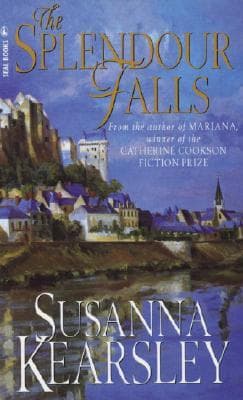
Susanna Kearsley (2012)
Genre
Fantasy / Historical Fiction / Mystery / Romance
Reading Time
9-10 hours
Key Themes
See below
Sign in to track this book
In the ancient French chateau of Chinon, a young woman's search for her missing cousin unearths a dual mystery connecting a medieval queen's hidden jewels with a tragic WWII romance, all while navigating labyrinthine secrets and simmering enmities.
Emily Wilde travels to Chinon, France, for a holiday with her charming but often unreliable cousin, Harry. They planned to explore the historic town and its chateau, particularly interested in the legend of Queen Isabelle, wife of King John, and her hidden jewels. Upon her arrival at the Hotel Le Lys, Emily discovers Harry is nowhere to be found. His room is undisturbed, and no one at the hotel has seen him. This unexpected event immediately turns Emily's vacation into an investigation as she tries to find Harry and understand why he disappeared, drawing her into the local community and its secrets.
As Emily tries to locate Harry, she interacts with the other guests at Hotel Le Lys, including the photographer Charles, the historian Monsieur Dubois, and the elderly Madame Benoit. Through conversations, she begins to uncover the hotel's long history and its residents' connections to past events. She learns about the legend of Queen Isabelle, the child bride of King John, who reputedly hid a casket of jewels within the chateau during a siege centuries ago. This ancient mystery, tied to a historical Isabelle, sets a background for Harry's disappearance and the hotel's more recent past.
Emily soon learns of another Isabelle, a chambermaid at the hotel during the German occupation of World War II. This Isabelle Dubois fell in love with a German soldier, a relationship considered treasonous with tragic consequences for both. The story is known through whispers and partial truths among the long-term residents. Emily discovers that Isabelle Dubois was ostracized and eventually disappeared, her fate unknown. This modern mystery, with themes of betrayal, forbidden love, and wartime secrets, begins to resemble the ancient legend of Queen Isabelle and her hidden treasures, suggesting a deeper connection between past and present.
Driven by Harry's disappearance and the unfolding mysteries of the two Isabelles, Emily explores Chinon with a focused intent. She spends time in the ancient chateau, its crumbling walls, and its network of dungeons and tunnels. These explorations are not just for sightseeing; Emily actively searches for clues, both physical and historical. She studies old maps, examines hidden passages, and tries to imagine the lives of those who walked these grounds centuries ago and during the war. Chinon's physical landscape, with its layers of history, becomes a character, holding the keys to the past.
As Emily continues her investigation, she becomes aware of the tense dynamics among the hotel guests and locals. Old enmities, long-held grudges, and unspoken secrets surface, particularly concerning the wartime period. She feels drawn to Charles, the photographer, who seems to know more than he reveals, and she develops a cautious friendship with Monsieur Dubois, whose quiet manner hides historical knowledge and personal pain. These relationships are complex; while some offer help, others seem to block her search, making her question everyone's motives and loyalties.
Through her research and conversations, Emily starts to see parallels between the historical Queen Isabelle and the wartime chambermaid, Isabelle Dubois. Both women faced difficult choices, societal disapproval, and potential loss due to their situations. The legend of Queen Isabelle's hidden jewels and her vulnerability during the siege seems to echo Isabelle Dubois's forbidden love and her disappearance. Emily suspects that understanding one Isabelle's fate might reveal the truth about the other, and perhaps even Harry's vanishing, suggesting a cyclical nature to Chinon's secrets and tragedies.
Following clues from historical texts and her intuition, Emily eventually uncovers the truth about Queen Isabelle's legendary jewels. She discovers that the 'jewels' were not necessarily a physical treasure, but a symbolic collection—perhaps letters, documents, or personal mementos—hidden for safekeeping or to preserve a legacy. This revelation changes the initial perception of the legend, shifting its focus from material wealth to emotional and historical significance. The true nature of the 'jewels' points to a deeper, more personal secret protected for centuries within the chateau's walls, mirroring the personal secrets of the hotel's residents.
Emily's persistence finally unearths the full, tragic story of Isabelle Dubois. She learns that Isabelle's German lover was a kind man, and their love was genuine. However, post-war retribution against collaborators led to Isabelle's disappearance, not through escape, but through a more grim fate, possibly at the hands of those who judged her. It is revealed that Isabelle Dubois was Monsieur Dubois's mother, and his quiet sadness stems from this unresolved family tragedy. The hotel, in its own way, holds Isabelle's memory, and the secrets of her demise have been guarded by those who knew her.
Just as Emily is about to piece together the mysteries, Harry reappears, much to Emily's relief and frustration. He explains his sudden disappearance was not due to foul play but was a deliberate, if poorly communicated, attempt to pursue his own research into Chinon's past, particularly the legends of hidden treasures. Harry, with his adventurous spirit, had been following a different set of clues, hoping to find tangible wealth. His return allows Emily to confront him, but also confirms that his initial interest in Chinon inadvertently led her to uncover its deeper, more human secrets, rather than just historical relics.
The culmination of Emily's investigation reveals a complex web of wartime betrayals and hidden identities among the Chinon residents. Certain characters, initially appearing benign, are shown to have been deeply involved in either protecting or persecuting Isabelle Dubois. Charles, the photographer, has a personal connection to the wartime events, possibly as a child affected by the occupation or a descendant of someone involved. The 'jewels' of Queen Isabelle become a metaphor for the valuable and dangerous truths hidden within Chinon's history, truths that some have fought to preserve and others to bury, directly impacting the lives of the present-day characters.
As the mysteries resolve, Emily reflects on the enduring themes of love, loss, and sacrifice that fill Chinon's history. The tragic love of Isabelle Dubois and her German soldier, Queen Isabelle's struggles, and even the personal histories of the hotel guests, all show the impact of human connection and its vulnerability to external forces. Emily realizes that while the specific circumstances differ, the emotional core of these stories remains constant. Chinon itself, with its ancient walls and hidden passages, holds these interwoven narratives of human experience, leaving an indelible mark on Emily.
With the mysteries largely resolved and Harry safely accounted for, Emily prepares to leave Chinon. She has not only found her cousin but has also uncovered layers of history, mystery, and human drama that she never anticipated. Her initial holiday transformed into a journey of discovery, forcing her to confront uncomfortable truths and understand the complexities of human nature. Emily departs with a deeper appreciation for the past, the interconnectedness of lives, and the quiet resilience of Chinon, carrying with her the stories of its Isabelles and the lessons learned from their intertwined fates.
The Protagonist
Emily transforms from a holidaymaker into an amateur detective, gaining confidence and a profound understanding of human history and emotion.
The Supporting
Harry remains largely consistent in his adventurous nature, but his reappearance allows Emily to establish her own agency in the narrative.
The Supporting
Charles gradually opens up to Emily, revealing his vulnerabilities and his personal ties to Chinon's past, forming a romantic bond.
The Mentioned
Her story is revealed in fragments, moving from a rumored collaborator to a tragic victim of circumstance and prejudice.
The Mentioned
Her legend is reinterpreted, shifting from a tale of material wealth to one of symbolic and historical significance.
The Supporting
Monsieur Dubois moves from a guardian of historical facts to a figure revealing deep personal loss and familial connection to the wartime tragedy.
The Supporting
Madame Benoit's role remains consistent as a repository of local memory, gradually revealing more as Emily earns her trust.
The novel blends two distinct historical periods—medieval France and World War II—showing how the past influences the present. Emily's investigation into Harry's disappearance quickly expands to include both the legend of Queen Isabelle's jewels and the tragic story of Isabelle Dubois. Chinon's physical landscape, with its ancient chateau and recent war scars, links these eras. The secrets of centuries past, like the hidden 'jewels,' reflect the hidden truths of the wartime occupation, showing that history is a living force that impacts current lives and relationships.
“Chinon held its secrets close, not just in its ancient stones, but in the very air the living breathed, a silent pact between the long-dead and those who remembered.”
A central theme explored through Isabelle Dubois, whose love for a German soldier during WWII leads to devastating consequences. Her story highlights the personal sacrifices made during wartime and the societal condemnation faced by those who defied loyalties. This theme echoes the challenges faced by Queen Isabelle, whose political marriage and vulnerable position also involved personal sacrifices for survival. Both Isabelles experience the pain and loss associated with love deemed unacceptable by their societies, emphasizing the human capacity for connection even in adversity and the tragic outcomes when that connection is denied.
“Love, in times of war, was not a comfort but a dangerous weapon, capable of destroying not just hearts, but lives and reputations.”
The novel explores how individuals and communities remember, protect, and distort the past. Chinon's residents, particularly the older generation, hold fragmented memories and closely guarded secrets about the wartime occupation and Isabelle Dubois's fate. The truth is not easily revealed; it is pieced together from whispers, old records, and personal testimonies, often obscured by shame, fear, or a desire to protect. Emily's journey is one of sifting through these layers of memory and secrecy to uncover the often painful truth, highlighting the subjective nature of historical narratives and the moral complexities involved in revealing long-buried events.
“The past wasn't a story to be told; it was a weight to be carried, a tapestry woven with threads of truth and careful silence.”
Chinon itself is a character in the novel; its ancient chateau, tunnels, and historic streets hold centuries of human drama. The physical environment acts as a repository of memory, its stones telling tales of sieges, royalty, and wartime occupation. Chinon's atmosphere shapes the experiences of its inhabitants and visitors, drawing Emily deeper into its mysteries. The town's rich history provides both the backdrop and the driving force for the narrative, showing how a specific location can hold an indelible imprint of the past, influencing present-day events and revelations, and fostering a sense of continuity across generations.
“The stones of Chinon held more secrets than any book, absorbing the joys and sorrows of centuries, forever echoing the lives lived within their cold embrace.”
Harry's disappearance serves as the initial catalyst for Emily's investigation.
Harry's unexpected vanishing act is the primary inciting incident of the novel. It immediately sets Emily on a quest, shifting her holiday plans into an active search. This device not only creates initial suspense but also forces Emily to interact with the local community and the hotel guests, thus introducing her to the deeper mysteries of Chinon. Without Harry's disappearance, Emily would likely not have delved into the historical and personal secrets that form the core of the narrative, effectively pulling her into the heart of the story.
Two distinct historical mysteries—medieval and WWII—are interwoven to enrich the plot.
The novel employs a dual narrative structure by presenting two parallel historical mysteries: the ancient legend of Queen Isabelle and her hidden jewels, and the more recent tragedy of Isabelle Dubois during World War II. These two stories, though centuries apart, constantly echo and inform each other, creating thematic resonance and hinting at a cyclical nature of human experience within Chinon. This device allows for a multi-layered exploration of themes like forbidden love, sacrifice, and hidden truths, making the historical setting more dynamic and complex.
Queen Isabelle's 'casket of jewels' acts as a MacGuffin, leading to deeper truths.
The legend of Queen Isabelle's hidden 'casket of jewels' initially functions as a classic MacGuffin, a seemingly important object that drives the plot forward but whose true significance is not its material value. Emily (and Harry) are initially drawn to Chinon by this legend. However, the device evolves as the 'jewels' are revealed to be symbolic rather than literal, representing historical documents, personal memories, or the intangible legacy of past events. This transformation underscores the novel's thematic focus on the emotional and historical weight of the past over mere material gain.
Monsieur Dubois, a key character, initially withholds crucial information due to personal pain.
Monsieur Dubois embodies the 'conflicted informant' archetype. He possesses vital knowledge about Isabelle Dubois and the wartime events but is initially reluctant to share it due to deep personal sorrow, shame, or a desire to protect the past. His gradual revelation of information, often prompted by Emily's persistent and empathetic questioning, creates suspense and allows the mystery to unfold organically. This device highlights the human element in historical investigation, where truth is often guarded by personal pain and requires trust to be fully revealed.
“The past is a foreign country; they do things differently there.”
— A general reflection on the nature of historical research and the differences between eras.
“Sometimes the greatest mysteries are not in what happened, but in why.”
— Examining the motivations behind historical events and personal choices.
“Love, it seems, can bridge centuries as easily as it can cross a room.”
— Reflecting on the enduring power of love and its connection across different timelines.
“Every old house has its secrets, and some of them are still breathing.”
— Pondering the hidden stories and lingering presences within ancient buildings.
“The heart remembers what the mind tries to forget.”
— Discussing the lasting impact of emotional experiences, even when consciously suppressed.
“There's a thin veil between what is real and what we wish to be.”
— Exploring the blurred lines between reality, desire, and perception, especially in a magical context.
“To truly understand the present, you must first unravel the threads of the past.”
— Emphasizing the importance of historical context for understanding current situations.
“Some stories are meant to be told, no matter how long they've been buried.”
— Highlighting the compelling nature of certain narratives that demand to be brought to light.
“The greatest treasures are not always gold or jewels, but the truths we uncover.”
— Comparing the value of material wealth to the profound impact of knowledge and revelation.
“Even in the darkest times, hope finds a way to shine through.”
— A sentiment of optimism and resilience in the face of adversity.
“History isn't just dates and names; it's the beating hearts of those who lived it.”
— A reminder that history is fundamentally about human experiences and emotions.
“Sometimes, the answers we seek are found not in grand revelations, but in quiet whispers.”
— Suggesting that important insights can come from subtle clues and introspection rather than dramatic events.
“The world has a way of guiding you to where you need to be, even if you don't know it yet.”
— A reflection on destiny, fate, and the unexpected paths life takes.
“Grief is a landscape you must walk through, not a burden to be carried forever.”
— A perspective on processing loss and the journey of healing.
Ready to see how well you understood this book? Take our interactive quiz with 10 questions.







