“The land was old, and the people were old, and the stones were old, and the faith was old.”
— Describing the ancient and enduring nature of the land and its inhabitants at the tell's base.

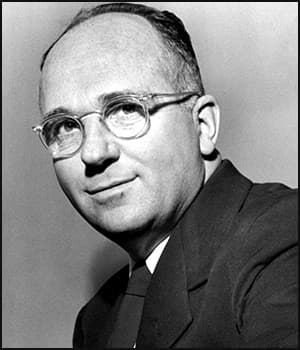
James A. Michener (1900)
Genre
Fantasy / Mystery / Romance
Reading Time
1500 min
Key Themes
See below
Sign in to track this book
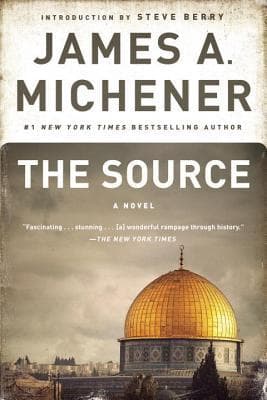
Follow a single archaeological dig in Israel across millennia, revealing the story of the Jewish people from ancient tribal life to the modern struggle for nationhood.
In 1964, an international archaeological team, led by Dr. John Cullinane, begins excavating Tel Makor, a fictional tell in northern Israel. The dig is funded by a wealthy American Jewish philanthropist, Saul Ben-Ezra, and includes a diverse group of scholars: Dr. Jochebed Bar-El, an Israeli historian; Vered Bar-El, her independent niece; and Dr. Karl Braden, a German scholar dealing with his nation's past. Their initial work establishes the grid and methodology, preparing to unearth millennia of human habitation. As they begin to sift through the topsoil, the narrative transitions to the earliest layers of history, setting the stage for the book's expansive historical journey.
The narrative goes into the deepest layer of Tel Makor, reaching back to around 2000 BCE, in the Sumerian city of Ur. Here, we meet Urbaal, a shepherd who struggles with the polytheistic beliefs and human sacrifices common in his society. He has a spiritual awakening, leading him to question the many gods and to perceive a single creator. This new monotheistic conviction sets him apart. Urbaal, with his family, eventually leaves Ur, driven by this new faith and a desire for a land promised by his God. This journey is the first 'aliyah,' establishing the foundational narrative of the Hebrew people's migration and their unique spiritual calling.
Following Urbaal's descendants, the story moves to the Canaanite period, around 1500 BCE. The early Hebrews, now settled in the land, try to maintain their monotheistic faith amidst the widespread influence of Canaanite polytheism, especially the worship of Baal and Asherah, fertility gods often associated with ritual prostitution and child sacrifice. The narrative explores the constant tension between the emerging Hebrew identity and the surrounding pagan cultures. We see the challenges of building a distinct society based on their unique covenant with God, facing both internal temptations to stray and external pressures from powerful Canaanite city-states. This era shows the Israelites' struggles to define their religious and cultural identity.
The story moves to the Iron Age, around 1000 BCE, focusing on the Israelite tribes' consolidation under King David. We see David's early life as a shepherd, his anointing by the prophet Samuel, and his victory over Goliath. His reign marks a golden age for Israel, establishing Jerusalem as its capital and a spiritual center. The narrative explores David's character—his piety, his military skill, his flaws, and his impact on the nation's identity. This period is important for Israel's development as a political and religious entity, laying the groundwork for the First Temple and solidifying the concept of a divinely chosen people and land.
Following David, his son Solomon builds the First Temple in Jerusalem, a central building for Israelite worship and national identity. The narrative explores the grandeur of Solomon's reign, his wisdom, and the eventual seeds of dissent and division. At the same time, the era introduces the Hebrew prophets, such as Elijah, Isaiah, and Jeremiah, who challenge the kings and the people to uphold the covenant with God, condemning idolatry, social injustice, and moral decay. Their messages of repentance, justice, and hope for a future messianic age become part of Jewish theology and ethics, shaping the people's spiritual path even as political turmoil and eventual exile approach.
The narrative depicts the conquest of Judah by the Babylonians, the destruction of the First Temple in 586 BCE, and the subsequent exile of the Jewish people to Babylon. This period of captivity is a crisis of faith and identity, forcing the exiled community to adapt and strengthen their religious practices without a temple or a homeland. We see the resilience of the Jewish spirit, as figures like Ezekiel and Daniel emerge. The story then covers the Edict of Cyrus allowing the Jews to return to Jerusalem, the rebuilding of the Second Temple, and the efforts of Ezra and Nehemiah to re-establish religious law and communal life. This return shows a reaffirmation of their covenant and the enduring hope for restoration.
The story moves to the Hellenistic period, around 200 BCE, as the land of Israel comes under Greek cultural influence after Alexander the Great's conquests. This era challenges Jewish identity, as many are drawn to Greek philosophy, art, and athletic games, while others strongly resist assimilation. The narrative ends with the rule of Antiochus IV Epiphanes, who desecrates the Second Temple and tries to forcibly Hellenize the Jews, leading to the Maccabean Revolt. This struggle for religious freedom and national sovereignty, led by Judah Maccabee, results in a brief period of independence and the rededication of the Temple, celebrated as Hanukkah.
The narrative progresses to the Roman occupation of Judea, around the 1st century CE, a period of political and religious unrest. We see the oppressive Roman rule, the various Jewish sects (Pharisees, Sadducees, Essenes, Zealots), and the messianic expectations common among the people. The story introduces Jesus of Nazareth, showing his life, teachings, and the early formation of Christianity from a Jewish perspective. The conflict between Jewish law and Roman authority grows, leading to the Great Revolt of 66-70 CE and the destruction of the Second Temple, an event that reshapes Jewish history and marks the beginning of the long exile.
After the destruction of the Second Temple and the Bar Kokhba revolt, the Jewish people enter a long period of Diaspora, spread across the Roman Empire and beyond. The narrative shifts focus to the development of Rabbinic Judaism, as scholars and sages, like Rabbi Akiva and Rabbi Judah the Prince, codify Jewish law (Mishnah) and develop the Talmud. Synagogues become the new centers of Jewish life, study, and prayer, replacing the Temple. This era shows the resilience of Jewish culture and religion, adapting to life without a homeland or a central sanctuary, emphasizing study, community, and the preservation of tradition as ways to survive.
The story moves to medieval Europe, specifically during the Crusades (11th-13th centuries). Jewish communities, particularly in the Rhineland, suffer pogroms and massacres by crusaders, who view them as 'Christ-killers.' The narrative portrays the terror, resilience, and martyrdom faced by Jews, often forced to choose between conversion and death. It also explores the relationship between Jews, Christians, and Muslims during this period, including the golden age of Jewish culture in Moorish Spain, which eventually gives way to increasing persecution, blood libels, and expulsions across Europe, leading up to the Spanish Inquisition.
The narrative focuses on the late 15th century in Spain, a center of Jewish life and scholarship for centuries. The Spanish Inquisition, begun in 1478, targets conversos (Jews who had outwardly converted to Christianity but secretly practiced Judaism). We see the interrogations, torture, and auto-da-fés, as the Inquisition seeks to purify Spain of heresy. This culminates in the Edict of Expulsion in 1492, forcing all remaining Jews to leave Spain, leading to a massive exodus and scattering of Sephardic Jewry across North Africa, the Ottoman Empire, and other parts of Europe. This event is a trauma and diaspora within the Jewish experience.
The story leaps to the 18th and 19th centuries, covering the Jewish Enlightenment (Haskalah), which encouraged Jews to integrate into secular society and embrace modern thought, leading to both greater acceptance and new challenges to traditional Jewish life. At the same time, the rise of modern antisemitism in Europe, particularly the Dreyfus Affair in France and renewed pogroms in Eastern Europe, fuels the emergence of Zionism. Theodor Herzl's vision of a Jewish homeland in Palestine gains traction, inspiring a new wave of immigration (Aliyah) and efforts to rebuild a national presence in the ancestral land, setting the stage for the modern state of Israel.
The narrative confronts the Holocaust during World War II. While not depicted with graphic detail, the impact of the Nazi genocide on European Jewry is conveyed through the lens of those who survived or witnessed its aftermath. The systematic murder of six million Jews shows the urgent need for a safe haven and a sovereign Jewish state. The global realization of the Holocaust's enormity energizes international support for Zionism, transforming the dream of a homeland into an imperative for survival and self-determination, shaping the post-war geopolitical landscape and the drive for Israeli statehood.
The story ends in the 20th century with the founding of the State of Israel in 1948, an event fulfilling Jewish aspiration for a return to Zion. The narrative explores the challenges of nation-building, the influx of Holocaust survivors and Jewish immigrants from around the world, and the immediate and ongoing conflicts with neighboring Arab states. The modern archaeological dig at Tel Makor, with its diverse team of Israelis, Americans, and Germans, reflects this complex history, dealing with national identity, religious heritage, and the search for peace in a land scarred by ancient and modern struggles.
As the archaeological dig at Tel Makor progresses, Dr. Cullinane and his team, including Vered Bar-El, discover an ancient, continuously used well, dating back to the earliest human habitation. This well becomes a strong symbol of enduring human presence, the continuity of life, and the persistent spiritual quest in the land. It represents the 'source' of the title – not just a physical water source, but the wellspring of faith, resilience, and identity that has sustained the Jewish people through millennia. The team's shared experience at the well signifies a moment of historical connection and a hopeful outlook for the future, despite unresolved modern conflicts.
The Protagonist
Cullinane evolves from a detached academic to someone deeply moved by the history he unearths, developing a personal connection to the land and its people.
The Supporting
Jochebed remains a steadfast guardian of Jewish history and identity, guiding the team's understanding of the deeper meaning of their discoveries.
The Supporting
Vered grows from a somewhat detached observer to a woman deeply connected to her heritage and open to a future shaped by both history and personal choice.
The Supporting
Ben-Ezra's commitment to Jewish heritage is unwavering, and he serves as a consistent voice for the enduring importance of the past.
The Supporting
Braden seeks to reconcile with his nation's past through scholarly understanding and personal connection to the Jewish people.
The Historical Protagonist
Urbaal pioneers the concept of monotheism, laying the spiritual groundwork for the Hebrew people.
The Historical Protagonist
David rises from humble beginnings to establish a powerful kingdom, becoming a foundational figure in Jewish history and spirituality.
The Historical Protagonist
Akiva transforms Jewish legal tradition, ensuring its continuity and adaptability in the Diaspora.
The Historical Protagonist
Abravanel's life reflects the peak of Jewish influence in Spain and the devastating impact of the Expulsion.
A central theme of 'The Source' is the endurance and power of faith, specifically the monotheistic faith of the Jewish people. From Urbaal's initial revelation in Ur to the modern Israeli's commitment to the land, faith is the foundation of identity, resilience, and survival. It appears in the unwavering belief in a covenant with God, adherence to religious law even in exile, and the persistent hope for a return to Zion. The narrative shows how faith provides meaning, community, and the strength to overcome countless persecutions and challenges, acting as 'the source' that sustains a people through millennia.
“For the Jews, their God was not only a God of power, but also a God of justice, a God of love, and a God of hope. He was a God who remembered His promises.”
The novel explores the continuous search for identity, both individual and collective, within the Jewish experience. Characters throughout history deal with questions of who they are in relation to their faith, their community, and the surrounding cultures. From the early Hebrews defining themselves against Canaanite polytheism, to the challenges of Hellenization, Roman rule, and the Diaspora, the struggle to maintain a distinct Jewish identity is constant. The modern-day dig team, composed of Israelis, Americans, and Germans, further shows this theme, as they each seek to understand their place in the complex history and their connection to Israel. The longing for a homeland is tied to this search for a secure identity.
“To be a Jew was to carry a history, a burden, a glory, a question that never entirely left you.”
A constant theme is the cyclical nature of persecution faced by the Jewish people throughout their history, set against their resilience. The narrative repeatedly shows how Jewish communities, from ancient times through the Crusades, the Inquisition, and the Holocaust, have endured suffering, violence, and attempts at forced assimilation or annihilation. Yet, each period of persecution is met with a spirit of survival, adaptation, and a renewed commitment to their heritage. This theme highlights not just victimhood, but the strength of character, the intellectual and spiritual ingenuity, and the communal bonds that allow the Jewish people to persist and rebuild after every catastrophe, ultimately leading to the establishment of Israel.
“They had learned, through endless generations, that the only way to survive was to bend, to adapt, to absorb, but never to break.”
Michener connects the past and present, showing how deeply history shapes the contemporary world. The archaeological dig at Tel Makor is the framing device, with each uncovered layer linking directly to a historical era. The modern characters' discussions and personal journeys are constantly illuminated by the ancient stories and artifacts they unearth. This theme emphasizes that the conflicts, identities, and spiritual questions of today's Israel are not new but are rooted in millennia of human experience, religious development, and geopolitical struggles. The past is not merely prologue; it is an active force in the present.
“Every stone, every shard, every layer of this tell spoke not just of what was, but of what still is.”
The land of Israel, specifically the area around Tel Makor, is presented not merely as a geographical location but as a sacred entity, a central character itself. For the Jewish people, it is the promised land, a divine inheritance, and the place where their covenant with God is lived out. The narrative illustrates the deep spiritual and emotional attachment to the land, from Urbaal's initial journey to the Zionist movement's return. This theme also explores the complexities and conflicts arising from this attachment, as other peoples also claim the same land. The land is a constant point of return, a source of identity, and a symbol of both hope and conflict.
“This land was not merely soil and rock; it was memory, prophecy, and the very breath of God.”
A modern archaeological excavation that acts as a narrative frame.
The archaeological dig at Tel Makor in 1964 serves as the primary framing device for the entire novel. Each layer of the tell, as it is excavated by Dr. Cullinane's team, triggers a deep dive into a specific historical period and the lives of fictional characters from that era. This device allows Michener to present a chronological history of the Jewish people, moving from the present day back into deep antiquity and then forward again. It provides a tangible, scientific anchor for the vast historical narrative, grounding the epic sweep in a concrete, physical location and a contemporary context, while also allowing for character development in the present-day narrative.
Interconnected fictional families whose descendants reappear through history.
Michener creates several fictional families and their descendants whose stories are told across different historical epochs, from Urbaal's family in Ur to the modern Bar-Els. These lineages, though fictional, provide a sense of continuity and personal connection throughout the vast historical timeline. While the specific names and circumstances change, certain character traits, struggles, or spiritual quests can be seen echoing through generations. This device helps personalize the grand historical narrative, making the abstract sweep of history relatable through the experiences of recurring, albeit evolving, family lines, allowing the reader to trace the development of Jewish identity and culture through individual lives.
An ancient, continuously used well symbolizing life, continuity, and the 'source' of faith.
The discovery of a deep, ancient well at Tel Makor is a powerful symbolic plot device. The well has been continuously used by every civilization that inhabited the tell, representing the enduring human presence, the continuity of life, and the sustenance found in the land. More profoundly, it symbolizes 'The Source' itself – the wellspring of faith, resilience, and spiritual identity that has sustained the Jewish people through millennia of challenges. It is a tangible link between all the historical layers and the modern-day characters, embodying the enduring covenant and the hope for future generations, a life-giving force in a often barren and conflict-ridden landscape.
Self-contained historical narratives within the larger framework.
The novel employs an episodic structure, presenting each major historical period as a relatively self-contained narrative or vignette. While loosely connected by the fictional lineages and the overarching theme of Jewish history, each chapter or section delves deeply into a specific era (e.g., Canaanite period, King David, Roman rule, the Crusades) with its own set of characters and conflicts. This device allows Michener to explore the nuances of different historical contexts and cultural interactions without losing the reader in an overly complex single plot. It provides a comprehensive, encyclopedic overview, akin to excavating distinct layers of a tell.
“The land was old, and the people were old, and the stones were old, and the faith was old.”
— Describing the ancient and enduring nature of the land and its inhabitants at the tell's base.
“For a man to understand his future, he must first understand his past.”
— A recurring theme emphasized by various characters throughout the generations.
“What is a man but the sum of his fathers?”
— Reflecting on the influence of ancestry and heritage on an individual's identity.
“The desert teaches you that you are nothing, and then it teaches you that you are everything.”
— A philosophical observation on the transformative power of the harsh desert environment.
“There are some things so sacred that they must be fought for, even if the fight is lost.”
— Highlighting the unwavering commitment to deeply held beliefs and values.
“A people without a land are a people without a soul.”
— Expressing the profound connection between a people and their homeland.
“The greatest truth is often found in the simplest things, if only we have eyes to see them.”
— A sage piece of advice about finding profound meaning in everyday experiences.
“Love is not a single flame, but many sparks that build a fire.”
— A poetic description of the evolving and multifaceted nature of love through time.
“Every stone has a story, if you only know how to listen.”
— Emphasizing the rich history embedded in the archaeological site.
“To forget is to die a little.”
— Underscoring the importance of memory and historical remembrance.
“The future is always built on the ruins of the past.”
— A cyclical view of history, where new civilizations rise from the remnants of old ones.
“God does not choose a people because they are strong, but because they are willing.”
— A theological reflection on divine selection and the importance of faith and commitment.
“The greatest battles are often fought not with swords, but with ideas.”
— Highlighting the power of intellectual and ideological conflicts over physical ones.
“Life is a journey, not a destination, and the greatest treasures are found along the way.”
— A broader philosophical statement about the value of the journey itself.
Ready to see how well you understood this book? Take our interactive quiz with 10 questions.
Biography coming soon.







