“I give you the mausoleum of all hope and desire; it's rather ugly, but quite indestructible.”
— Quentin Compson reflecting on his family and past.

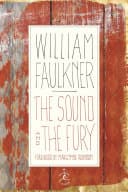
William Faulkner (2021)
Genre
Literary Fiction
Reading Time
360 min
Key Themes
See below
Sign in to track this book
Faulkner's novel explores the decay of a Southern family, the Compsons, through the fragmented thoughts of its siblings, haunted by their past and consumed by their present.
The novel begins on April 7, 1928, from the viewpoint of Benjamin 'Benjy' Compson, a 33-year-old man with a severe intellectual disability. His story is a stream of consciousness, without a clear timeline, moving between current sensory experiences and strong memories, mostly about his sister Caddy. Benjy's caregivers, young Luster and older Dilsey, try to manage him. He is fixated on Caddy's smell, her muddy childhood clothes, and the golf course that now covers the Compson pasture. Key memories include Caddy comforting him, her losing her virginity, and her eventual removal from the family. The story jumps between these moments, often triggered by sounds, sights, or smells, showing the family's decline through his innocent, yet deeply felt, view.
This section, set on June 2, 1910, is told by Quentin Compson, Benjy's older brother, on his last day at Harvard before he dies by suicide. Quentin is obsessed with Caddy's lost virginity and the idea of southern honor and purity, which he believes Caddy and the Compson family have ruined. He tries to confess a made-up incestuous relationship with Caddy to his father, who dismisses it. Throughout the day, Quentin walks around Cambridge, meeting various people, including an Italian girl he tries to protect, and thinking about his father's cynical ideas about time and women. His mind constantly replays talks with Caddy and his father, leading to his decision to drown himself, unable to connect his ideals with the harsh reality of his family's breakdown.
The third section, dated April 6, 1928, is told by Jason Compson III, the most practical and cruel of the brothers. Jason resents his whole family, especially Caddy, for what he sees as a betrayal that cost him a banking job, and his mother, Caroline, for her constant complaints and favoritism. He has taken over as head of the house, managing the family's small finances and using Caddy's illegitimate daughter, also named Quentin, who lives with them. Jason regularly takes the money Caddy sends for her daughter, using it for his own investments. His story shows a cynical, hateful view, full of racist comments and contempt for everyone around him. He is always frustrated by his niece's rebellious behavior and the money she costs, while secretly making money from her.
The last section, set on April 8, 1928, switches to an outside narrator, focusing mainly on Dilsey Gibson, the Compson family's Black cook and head of the Black servants. This day is Easter Sunday, and Dilsey, with her family and Benjy, attends a powerful church service. The story shows Dilsey's strong faith, resilience, and compassion, a sharp contrast to the Compsons' moral decay. Meanwhile, Miss Quentin, Caddy's daughter, finally runs away, stealing the money Jason has saved, including funds Caddy sent for her. Jason discovers the theft and frantically chases her, but fails. The Compson home is left in more disorder, while Dilsey continues her duties, a sign of lasting strength and dignity amid the family's complete collapse.
Throughout Benjy's section, his broken memories often focus on his sister Caddy in their childhood. He remembers times of comfort and safety, especially when Caddy would calm him, even when he was upset by the smell of rain or the sound of the swing. The image of Caddy with her muddy clothes, playing in the stream, appears often, symbolizing her early innocence and her later wrongdoing. These early memories are placed next to later ones where Caddy is more distant or absent, highlighting Benjy's unchanging need for her and the family's inability to give him steady care and affection after she left.
Quentin's section shows his deep mental pain from his sister Caddy's promiscuity and the perceived loss of family honor. He believes in a Southern code of chivalry and purity that he feels Caddy has broken, and he cannot accept this with the truth of her actions. His desperate efforts to make Caddy confess to incest, or to cleanse her through violence, show his inability to handle his family's decay and his own identity. His inner thoughts are full of philosophical ideas about time, morality, and the pointlessness of human effort, all to explain his coming suicide as an escape from an unbearable reality.
Jason's story shows his constant cynicism and his planned cruelty towards his family members. He sees the Compson name as a burden and a shame, and he is determined to get whatever money he can from the situation. His main target is Miss Quentin, whose support money, sent by Caddy, he regularly takes and uses for his own stock market bets. He justifies his actions by saying he is simply getting back money lost due to Caddy's past behavior. His interactions with his mother, his siblings, and the Black servants are all marked by his sharp sarcasm, hatred of people, and a deep-seated resentment that drives all his actions.
Miss Quentin, Caddy's illegitimate daughter, lives under the harsh control of her grandmother, Caroline, and especially her uncle, Jason. She is shown as wild, rebellious, and defiant, often skipping school and having secret relationships. Her escape on Easter Sunday is the peak of her long-held desire for freedom from the suffocating and abusive Compson home. She steals the money Jason has saved, including what was rightfully hers from Caddy, and leaves with a carnival worker. Her flight represents a desperate act of self-preservation and a rejection of the cycles of decay and despair that define the Compson family.
Dilsey's section highlights her role as the moral strength of the Compson home. Despite the constant abuse and neglect from the white family members, she remains steady in her duties and her faith. Her presence at the Easter Sunday service is a powerful moment, contrasting the spiritual renewal she feels with the spiritual emptiness of the Compsons. The sermon, with its message of the first and the last, deeply affects her. She embodies lasting dignity, love, and compassion that stands against the Compsons' self-destruction. Her actions and thoughts suggest a way to redemption, even as the Compsons fall further into ruin.
Across all four sections, the main idea of the Compson family's decline is clearly shown. From their loss of land (the pasture becoming a golf course), to their financial ruin, and most importantly, their moral and spiritual decay, the family is a shadow of its former self. Mr. Compson's cynical ideas, Mrs. Compson's constant complaints and self-pity, Caddy's promiscuity, Quentin's suicide, Benjy's institutionalization, and Jason's greed all add to this irreversible decline. The once-proud Southern aristocratic family becomes a broken, self-destructive group, unable to adjust to or escape changing times, leaving only the lasting strength of Dilsey and her family as a sign of survival.
The Protagonist
Benjy's character does not undergo a traditional arc; he remains static, symbolizing the unchanging past and the family's inability to move forward.
The Protagonist
Quentin's arc is a descent into despair, culminating in his premeditated suicide as an escape from an unbearable reality he cannot change.
The Antagonist
Jason remains largely static, growing only more entrenched in his bitterness and self-serving nature, with his final pursuit of Miss Quentin solidifying his failure.
The Supporting
Caddy's arc, though mostly seen through others' memories, is one of youthful innocence lost to a harsh world and family judgment, leading to her exile.
The Supporting
Dilsey's character is static in her moral strength and faith, serving as an anchor in the chaotic world of the Compsons, witnessing their decline but remaining unbroken.
The Supporting
Miss Quentin's arc culminates in her successful escape from the Compson household, a defiant act that breaks the cycle of family oppression for her.
The Supporting
Mrs. Compson remains static in her self-pity and hypochondria, consistently failing to provide maternal support or acknowledge her role in the family's decline.
The Supporting
Mr. Compson's arc is completed before the novel's present, his influence seen through Quentin's memories and the lasting impact of his cynical philosophy.
The Compson family's decay reflects the post-Civil War decline of the aristocratic American South. Their loss of land, financial problems, and moral breakdown show wider societal changes and the inability of old Southern families to adapt. The Compson pasture being sold for a golf course, for example, symbolizes the loss of old values and the arrival of modern life. Quentin's focus on past honor and his father's cynical acceptance both speak to a society dealing with a lost golden age and a grim future, unable to connect its romanticized past with its harsh present.
“Because no battle is ever won he said. They are not even fought. The field only reveals to man his own folly and despair, and victory is an illusion of philosophers and fools.”
Faulkner's novel explores how time and memory are personal, especially through the stream-of-consciousness narratives. Benjy's section blends past and present, showing how memory is not a straight line but a flowing, sensory experience. Quentin's section is a desperate fight against time, as he tries to stop or undo Caddy's perceived fall, believing that 'the past is never dead. It's not even past.' Jason, in contrast, tries to control and use time for money, while Dilsey exists in a more steady, spiritual time. The novel suggests that for some, the past is a burden that shapes and distorts the present.
“I was in time again, after a long time. I was in time again, after a long time. I was in time again.”
Lost innocence, mainly shown through Caddy, is central to the Compson family's tragedy. Caddy's muddy clothes as a child, followed by her sexual activity and illegitimate pregnancy, symbolize the permanent loss of an ideal purity. Quentin's whole story is a desperate, failed attempt to keep or bring back Caddy's virginity and, by extension, the family's honor. Benjy's constant search for Caddy's comforting smell represents an innocent, unchanging longing for a lost state. The family's inability to deal with Caddy's actions drives much of their internal conflict and ultimately their breakup.
“I could smell the honeysuckle at the gate. My little sister said. She smelled like trees.”
The Compson family shows deep dysfunction and moral decay. The mother, Caroline, is a complaining, self-pitying person who openly favors one child and ignores others. The father, Mr. Compson, is a cynical alcoholic who offers no moral guidance. The children—Benjy's disability, Quentin's suicide, Caddy's banishment, and Jason's greed and cruelty—all show the damaging effects of their upbringing and the problems within the family structure. The novel depicts a family unable to talk, support each other, or escape their inherited burdens, leading to an unavoidable fall into ruin.
“I give it to you not that you may remember time, but that you might forget it now and then for a moment and not spend all your breath trying to conquer it.”
The novel looks at the complex issues of race and class in the early 20th-century American South, mainly through the relationship between the white Compson family and their Black servants, the Gibsons. Despite the Compsons' decline, they still hold a place of racial and social power, which Jason often abuses with his racist comments and treatment of Dilsey and her family. However, the Gibsons, especially Dilsey, are shown to have more moral strength, resilience, and dignity than their employers. They become the lasting force, while the white aristocratic family falls apart, subtly questioning the foundations of Southern society.
“I've seed de first en de last. I seed de beginning en now I see de endin'.”
A narrative technique that mimics the unfiltered thoughts, feelings, and memories of a character.
Faulkner extensively uses stream of consciousness, particularly in the Benjy and Quentin sections. This device allows the reader direct access to the characters' inner minds, blurring the lines between past and present, and presenting thoughts in a non-linear, associative manner. For Benjy, it highlights his sensory-driven perception and his inability to distinguish time. For Quentin, it reveals his tormented, obsessive internal monologues and his struggle with abstract philosophical concepts, making the reader experience their psychological states directly rather than through external narration.
The story is told from the limited, often biased, viewpoints of different characters.
The novel is divided into four sections, each largely told from the perspective of a different character (Benjy, Quentin, Jason) or focused on a specific character (Dilsey). This allows Faulkner to present a multifaceted and often contradictory account of the same events, challenging the reader to piece together the 'truth.' Each narrator is unreliable due to their mental state, personal biases, or limited understanding. This technique underscores the subjective nature of reality and memory, and forces the reader to actively engage in interpreting the Compson family's history.
The use of recurring objects, images, or ideas to represent deeper meanings.
Faulkner employs rich symbolism throughout the novel. Caddy's muddy drawers symbolize lost innocence and moral transgression. The Compson pasture, sold for a golf course, represents the family's loss of land and status, and the encroachment of modernity on the Old South. Clocks and watches symbolize the characters' relationship with time, particularly Quentin's futile attempts to control or escape it. The honeysuckle scent is a recurring motif associated with Caddy and memory, while fire and water are often linked to destruction and purification, respectively. These symbols deepen the thematic resonance of the narrative.
The story is not told in chronological order, jumping between different time periods.
The novel's structure is deliberately fragmented and non-chronological. The first three sections are set on different days and years (1928, 1910, 1928) and are deeply interwoven with flashbacks, particularly in Benjy and Quentin's narratives. This disjointed structure mirrors the fragmented minds of the characters and the dislocated nature of memory. It also forces the reader to actively construct the timeline of the Compson family's decline, emphasizing that the past is constantly intruding upon and shaping the present, making it an inescapable force.
“I give you the mausoleum of all hope and desire; it's rather ugly, but quite indestructible.”
— Quentin Compson reflecting on his family and past.
“Clocks slay time... Time is dead as long as it is being clicked off by little wheels; only when the clock stops does time come to life.”
— Quentin Compson's thoughts on time and his broken watch.
“It was not a crying moment. There was no time for crying. I had to think of my children.”
— Caroline Compson reflecting on her husband's death and her practical concerns.
“I wasn't crying. I wasn't crying. I was just smelling the honeysuckle.”
— Benjy Compson's sensory experience, often linked to his sister Caddy.
“Nonsense. The only thing you can get from a woman is a child or a venereal disease.”
— Jason Compson's cynical view of women and relationships.
“Because no battle is ever won he said. They are not even fought. The field only reveals to man his own folly and despair, and victory is an illusion of philosophers and fools.”
— Quentin Compson's internal monologue, likely influenced by his father's cynicism.
“And so I am not crying because I am not crying.”
— Benjy Compson's simple, direct statement of his emotional state.
“You can't just be a Compson. You have to be a Compson and do something.”
— Jason Compson's pragmatic, resentful view of his family's decline.
“I could smell the bright cold air and the smell of the cloth and the smell of the trees and the smell of the fire.”
— Benjy Compson's vivid, fragmented sensory description.
“It's not when you realize that nothing can help you—religion, pride, anything—it's when you realize that you don't need any aid.”
— Quentin Compson's philosophical musings on self-reliance and despair.
“And then I saw that my shadow was not that of a man but of a boy.”
— Quentin Compson's reflection on his fading youth and impending suicide.
“I have seen the end of it, and it is not a pretty sight.”
— Jason Compson's bleak assessment of his family's future and his own life.
“The past is not dead. It is not even past.”
— Often attributed to Faulkner, though not a direct quote from the novel, it encapsulates a key theme.
“Dilsey, the only one of them that ever had any sense.”
— Jason Compson's grudging acknowledgement of Dilsey's strength and resilience.
Ready to see how well you understood this book? Take our interactive quiz with 10 questions.
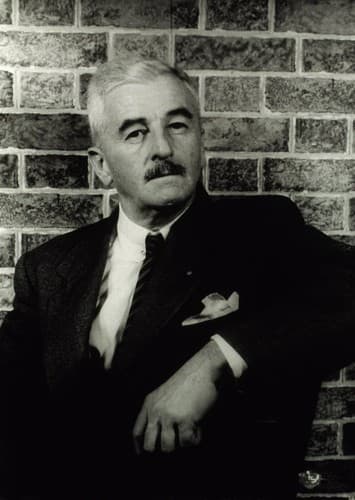
William Cuthbert Faulkner was an American writer known for his novels and short stories set in the fictional Yoknapatawpha County, based on Lafayette County, Mississippi, where Faulkner spent most of his life. A Nobel laureate, Faulkner is one of the most celebrated writers of American literature and often is considered the greatest writer of Southern literature.







