“The world was wide, and there was a great deal of it to see.”
— Thea Kronborg's early aspirations and her sense of the vastness of opportunities beyond Moonstone.


Willa Cather (1915)
Genre
Literary Fiction / Historical Fiction
Reading Time
12-14 hours
Key Themes
See below
Sign in to track this book
From a Colorado desert town to the Metropolitan Opera, Thea Kronborg's spirit and voice turn her Western home into an artistic destiny.
The story begins in Moonstone, Colorado, introducing Thea Kronborg, a sensitive and independent young girl from a large, somewhat busy Swedish immigrant family. Thea's musical talent shows early, especially in her piano playing, which she practices carefully despite her siblings and the limits of her small town. Her first piano teacher, Professor Wunsch, a refined but alcoholic German, sees her gift and helps it grow. He introduces her to classical music and supports her ambition, though his own problems show the artistic isolation of Moonstone. Thea finds comfort and ideas in her music and in the beauty of the nearby canyons, which become a private place for her growing artistic mind.
As Thea grows, her talent draws the notice of others in Moonstone. Dr. Archie, the town doctor, becomes a lifelong fan and gives important emotional and financial help. Mrs. Tellamantez, a Mexican woman who cleans for the Kronborgs, shares her culture and a deeper understanding of the land, influencing Thea's appreciation for natural beauty and old history. Thea's brother, Gus, also encourages her. However, the stifling feel of Moonstone, with its few cultural chances and typical expectations for women, bothers Thea more and more. She wants a bigger world where her art can fully grow. She feels a strong need to leave her small town and follow her musical path.
Wanting to further her music education, Thea moves to Chicago. She lives with the Harsanyi family and studies piano with Mr. Harsanyi, a demanding but brilliant Hungarian teacher. In Chicago, Thea sees a busy art community and a wider world of culture. She attends concerts and operas that deepen her understanding and love for music. She becomes close friends with Fred Ottenburg, a medical student, and has a complex relationship with the wealthy Ray Kennedy, a traveling salesman who secretly loves her. This time in Chicago is filled with artistic growth and self-discovery. Thea begins to understand the hard work needed for a professional musician and the sacrifices she must make.
While studying piano in Chicago, Thea's strong and unique singing voice starts to appear. Mr. Harsanyi, seeing the special quality of her voice, encourages her to switch from piano to vocal training. This change is a key moment, as Thea accepts her true artistic path. She begins to study with a vocal coach, learning the skills needed to develop her natural gift. This time also brings personal challenges, including the death of her admirer, Ray Kennedy, who leaves her a large inheritance. This money allows her to continue her studies without immediate financial worries.
Thea's journey to become a professional singer is hard. She travels to Germany to experience opera culture and improve her voice, facing tough training and strong competition. Her relationship with Fred Ottenburg deepens, and they become lovers, but their connection is complicated by Fred's marriage. Thea struggles with the moral issues of their affair and what society thinks. She also feels self-doubt and loneliness, dealing with the isolation that often comes with intense artistic pursuit. Despite these personal and professional challenges, Thea's steady dedication to her art moves her forward, strengthening her resolve to achieve her opera dreams.
Overwhelmed by her training and personal life, Thea becomes exhausted and her art stalls. Dr. Archie, always her supporter, arranges for her to spend a summer in Arizona, recovering among the ancient cliff dwellings of Panther Canyon. This time alone, connected to the old land, changes her. The canyon's raw beauty and historical feel, with its echoes of ancient people and their struggles, deeply inspire Thea. She finds a deep link between the careful artistry of the ancient inhabitants and her own artistic goals, realizing that true art comes from a deep, real source, much like the pottery and tools left by the cliff dwellers.
Refreshed and inspired by her time in Arizona, Thea returns to her vocal studies with new energy and clear purpose. Her voice matures, and her performances gain more notice. She eventually debuts at the Metropolitan Opera in New York, receiving praise and becoming a rising star. Thea's success has costs; her career's demands mean more sacrifices in her personal life and a greater sense of isolation. She continues to rely on Dr. Archie's steady support. He remains a constant in her life, celebrating her wins and offering comfort during her struggles, linking her to her past and her true self.
As Thea's fame grows, she faces the demands of public life, including busy schedules, critical review, and audience expectations. She keeps her artistic honesty, refusing to change her vision for money or quick popularity. Her relationship with Fred Ottenburg eventually ends, as she realizes her dedication to art is greater than traditional home life. Thea understands that her artistic journey needs a single focus and a willingness to give up some personal comforts. She finds deep satisfaction in her work, knowing her voice is not just her own, but a channel for something larger and more timeless, connecting her to the universal human experience.
Years later, Thea visits Moonstone. The town, though familiar, seems smaller and more distant, a sharp contrast to her vast artistic world. She reconnects with her family and old friends, seeing how much she has changed and how much Moonstone has stayed the same. This visit allows her to reflect. Thea sees the strong influence her childhood had on shaping her character and art. She understands that while she had to leave Moonstone to reach her destiny, the landscape, the people, and her early struggles remain a part of who she is, a basic element of her unique artistic voice.
The novel ends with Thea Kronborg established as a celebrated opera singer, her career doing well on the international stage. She has achieved the artistic freedom and recognition she wanted. Thea's journey shows her steady dedication, strength, and the power of her natural talent. She continues to find strength and inspiration from her deep connection to her childhood land and the honesty of her artistic vision. Her story is one of continuous growth, a constant effort for artistic perfection, and a deep understanding that true art goes beyond personal ambition, becoming a key expression of the human spirit. She is, at last, truly herself, an artist fully realized.
The Protagonist
Thea transforms from a stifled small-town girl into a world-renowned opera singer, realizing her artistic potential while maintaining her authentic self.
The Supporting
Dr. Archie remains a steadfast and selfless supporter, finding purpose in nurturing Thea's genius.
The Supporting
Wunsch's brief but impactful mentorship plants the seeds of Thea's artistic ambition before he fades from her life.
The Supporting
Mrs. Tellamantez provides early cultural and spiritual grounding for Thea, shaping her worldview.
The Supporting
Fred's relationship with Thea evolves from friendship to romance, ultimately concluding as Thea prioritizes her artistic career over conventional love.
The Supporting
Ray's unrequited love and posthumous gift enable Thea's artistic journey, making him a catalyst for her success.
The Supporting
Harsanyi guides Thea through a critical transition in her musical development, directing her towards her true calling as a singer.
The Supporting
The Kronborg family remains largely static, serving as a representation of the societal norms and familial expectations Thea must transcend.
This theme explores the hard and often lonely journey of someone finding and achieving their artistic potential. Thea's growth is shown as an inborn, almost natural drive, starting with her early piano lessons and ending with her opera success. Cather emphasizes that true artistic genius needs not only talent but also great discipline, sacrifice, and a deep connection to an inner source. Thea's journey shows the need to escape typical expectations and find places that help, rather than stop, creative growth, as seen when she moves from Moonstone to Chicago and then to Europe.
“What was any art but an effort to make a sheath, a mould in which to imprison for a moment the shining, elusive element which is life itself... to save it from waste, to make it an eternal possession?”
Cather strongly links Thea's artistic development to her origins and the American landscape, especially the Colorado canyons and the ancient cliff dwellings of Arizona. These natural and historical places give Thea a sense of belonging, inspiration, and a connection to something timeless and real. Her time in Panther Canyon is a key moment of artistic renewal, where she gets strength and understanding from the ancient people who lived there. This theme suggests that an artist's unique voice is deeply shaped by their personal history and the land that formed them, making her art an expression of a deeper, shared human experience.
“She had had to come a long way to find it, but now she knew what she had come for. This was the thing that had made her a singer.”
A novel of education or formation, tracing the protagonist's moral and psychological growth.
The Song of the Lark is a classic Bildungsroman, meticulously charting Thea Kronborg's journey from childhood in a small Colorado town through her artistic and personal development into a celebrated opera singer. The narrative focuses on her formative experiences, her struggles with identity and societal expectations, and her gradual realization of her true calling. Each stage of her life, from her early mentors in Moonstone to her studies in Chicago and Europe, contributes to her education and the shaping of her character, culminating in her self-actualization as an artist.
The natural landscape, particularly the canyons and cliff dwellings, symbolizes artistic authenticity and deep connection to the past.
The canyons and ancient cliff dwellings, especially Panther Canyon in Arizona, serve as powerful symbols throughout the novel. For Thea, they represent a sanctuary from the superficiality of modern life and a source of profound inspiration. The ancient pottery and tools left by the cliff dwellers symbolize the enduring nature of art and the deep human need for creative expression, connecting Thea's contemporary artistic struggles to a timeless human endeavor. The canyon's vastness and silence also reflect the internal space Thea needs for self-discovery and artistic contemplation, helping her to find her authentic voice.
“The world was wide, and there was a great deal of it to see.”
— Thea Kronborg's early aspirations and her sense of the vastness of opportunities beyond Moonstone.
“Every artist makes himself born. It is the real birth, and it is a painful one.”
— Dr. Archie discusses the arduous process of artistic creation with Thea.
“What was any art but an effort to make a sheath for a flame?”
— Thea's reflection on the purpose of art while grappling with her own artistic development.
“The great thing was to find your place and fill it.”
— Thea's realization about the importance of finding one's true calling and committing to it.
“It was as if she had been born for the first time, and had found her own body.”
— Thea's transformative experience while singing in Chicago, feeling fully connected to her voice and self.
“She wanted to be a great artist, and she wanted to be loved.”
— A concise summary of Thea's dual desires and the conflict between them.
“Artistic growth is, more than anything else, a refining of the sense of truth.”
— The narrator's insight into the essence of artistic development, emphasizing authenticity.
“She had to have a world of her own, and a world into which no one else could come.”
— Thea's need for solitude and her private artistic space, essential for her creative process.
“That was what you paid for the privilege of being alive: you had to get over things.”
— Thea's pragmatic acceptance of life's difficulties and the necessity of moving past them.
“The world was full of people who were always waiting for something to happen to them.”
— A contrast drawn with Thea's proactive approach to life and her determination to make things happen.
“She had to make her voice her own, to take it away from all the people who had tried to possess it.”
— Thea's struggle to assert her artistic independence and develop her unique voice.
“It was not a question of talent, but of life.”
— Thea's realization that true artistic success comes from living fully and deeply, not just innate ability.
“The desert had a voice, and it was always telling her that she was not alone.”
— Thea's deep connection to the landscape of her childhood, finding solace and inspiration in nature.
“To be an artist, you have to be a man of courage.”
— A statement reflecting the bravery required to pursue an artistic path and face its challenges.
Ready to see how well you understood this book? Take our interactive quiz with 10 questions.
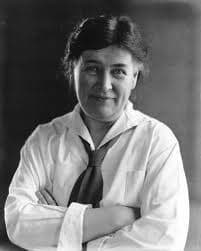
Willa Sibert Cather was an American writer known for her novels of life on the Great Plains, including O Pioneers!, The Song of the Lark, and My Ántonia. In 1923, she was awarded the Pulitzer Prize for One of Ours, a novel set during World War I.







