“By the shores of Gitche Gumee, By the shining Big-Sea-Water, Stood the wigwam of Nokomis, Daughter of the Moon, Nokomis.”
— The opening lines establishing the setting and a key character.

Henry Wadsworth Longfellow (1855)
Genre
Fantasy / Children's / Historical Fiction
Reading Time
180-240 min
Key Themes
See below
Sign in to track this book
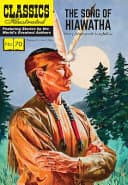
This epic poem follows Hiawatha's life, exploring Native American legends, folklore, and myth. It shows the connection between indigenous cultures and the natural world, with over 400 original Remington illustrations.
The poem begins with Gitche Manito, the Master of Life, calling all Native American tribes to Lake Superior for a great council. He tells them to stop fighting, smoke the peace-pipe, and live in peace, promising a prophet to guide them. The story then moves to Hiawatha's birth and family. His mother, Wenonah, is the daughter of Nokomis, who fell from the moon. Wenonah is tricked by the West-Wind, Mudjekeewis, who later leaves her. Heartbroken, Wenonah gives birth to Hiawatha and dies of sadness, leaving Hiawatha to be raised by his grandmother, Nokomis, by Lake Superior.
Nokomis raises Hiawatha, teaching him about nature and its creatures. He learns the language of birds and animals, understanding their secrets and becoming their friend. He makes his first bow and arrows from an ash branch and deer sinew, with help from Iagoo, the great boaster. Hiawatha's first big achievement is hunting a mighty deer, which gets him his first deer-skin cloak. As he grows, Nokomis tells him about his mother, Wenonah, and how Mudjekeewis cruelly left her. Wanting revenge, Hiawatha goes to find his father, the West-Wind, to fight him.
Hiawatha goes to the land of the West-Wind, where he meets his father, Mudjekeewis. A fierce battle happens, lasting for days, with the earth shaking from their hits. Neither can beat the other. Mudjekeewis eventually says he cannot be killed and that Hiawatha's fate is not to kill him but to be a prophet and helper to his people. Mudjekeewis tells Hiawatha to go back to his people and use his strength and wisdom for their good, promising him immortality if he succeeds. Hiawatha accepts his father's words, returns to Lake Superior, and his desire for personal revenge changes into a decision to serve his tribe.
After returning, Hiawatha goes on a long fast to find out how he can best help his people. During his solitary time, he sees a young man, bright and dressed in green and yellow, who says he is Mondamin (Corn). Mondamin challenges Hiawatha to wrestle him daily during his fast. Hiawatha, weak from hunger but strong in his decision, wrestles Mondamin each day. On the last day, Mondamin tells Hiawatha to defeat and bury him, promising that from his grave will come a great gift for his people. Hiawatha follows these instructions, and from the buried Mondamin grows the first corn, feeding the Ojibway people.
Hiawatha gathers loyal friends around him. Among them are Chibiabos, a sweet singer and musician, and Kwasind, a very strong man. Hiawatha also brings the skill of picture-writing to his people, drawing symbols on birch bark to record their history, laws, and traditions. This new idea lets them communicate over distances and keep their knowledge for future generations, a big step in their cultural growth. He teaches them about the stars, the seasons, and the importance of community and working together, guiding them toward a more developed life and creating a sense of shared history and purpose.
Hiawatha decides to marry. Despite Nokomis's warnings against a foreign wife, he travels to the land of the Dacotahs to find Minnehaha, 'Laughing Water,' the daughter of a famous arrow-maker. He is taken by her beauty and grace. He asks her to marry him, and her father, knowing Hiawatha's fame and wisdom, agrees. Hiawatha brings Minnehaha back to his home, and a big wedding feast is held, with many tribes and Hiawatha's friends, including the loud Iagoo and the strong Kwasind. The feast celebrates unity and love, strengthening Hiawatha's connection to his people and showing hope for peace between tribes.
Hiawatha confronts and defeats the magician, Pearl-Feather (Megissogwon), a sorcerer who causes disease. After a long fight, Hiawatha finds Pearl-Feather's weak spot—a single tuft of hair on his head—and hits it with his magic arrows, killing the sorcerer and bringing peace from his bad influence. Later, a harsh winter brings a terrible famine. Snow falls constantly, and game is hard to find. Many suffer and die, including Chibiabos, Hiawatha's friend, and Minnehaha, who dies from the cold and hunger, leaving Hiawatha sad. This time marks a great loss for Hiawatha and his community.
Hiawatha deeply mourns Minnehaha's death, spending seven days and nights in sorrow by her body, showing his love and grief. After the famine, Hiawatha sees visions of new people, pale-faced and bearded, arriving from the East in big canoes. He understands that their arrival means a big change for his people and the end of their traditional life. These visions make him feel both worried and like it's meant to be, preparing him for the coming change of his world and the problems his people will face.
As Hiawatha's visions predicted, the 'Black-Robe Chief' (a Christian missionary) and other Europeans arrive on the shores of Lake Superior. Hiawatha welcomes them, recognizing their knowledge and the new teachings they bring. He tells his people to listen to the missionaries and learn from them, even with the unspoken threat to their old beliefs. After giving his final wisdom and blessings to his people, Hiawatha steps into his canoe, the 'Birch-Bark Canoe,' and paddles west into the sunset, across Lake Superior. He leaves his people with a hopeful acceptance, sure that he has completed his destiny and prepared them for the future, even if it is one of great change.
The Protagonist
From a vengeful youth seeking his father, Hiawatha transforms into a wise leader and cultural innovator, ultimately accepting the inevitable changes brought by the white man.
The Supporting
She remains a constant, wise presence, embodying the ancestral wisdom and nurturing spirit of the Ojibway people.
The Supporting
She begins as a symbol of love and inter-tribal connection, then becomes a symbol of loss and the suffering of the people.
The Antagonist/Supporting
Initially an object of Hiawatha's revenge, he becomes a catalyst for Hiawatha's understanding of his true purpose.
The Supporting
He serves as Hiawatha's loyal companion and a symbol of cultural richness, his death marking a significant loss.
The Supporting
He is a symbol of raw, untapped power, eventually succumbing to a unique vulnerability.
The Supporting
He remains a consistent figure of boastful storytelling and practical skill, a constant presence in Hiawatha's life.
The Mentioned
He initiates the narrative's central conflict and resolution by calling for peace and foretelling Hiawatha's arrival.
The Supporting
He appears, offers a gift through sacrifice, and transforms into the sustenance for Hiawatha's people.
The poem explores the respectful relationship between Native Americans and nature. Hiawatha, raised by Nokomis, learns the languages of birds and animals, understanding their secrets and living in balance with the environment. This is clear when Hiawatha fasts and gets the gift of Mondamin (corn), showing a spiritual link to the earth's bounty. The story always shows nature not as something to control, but as a living thing to understand, respect, and live with, giving food, wisdom, and spiritual guidance.
“For he heard a voice from the forest, / From the thickets and the meadows: / 'Be not idle, but be active!'”
Hiawatha is a cultural hero who brings important improvements to his people. His introduction of Mondamin (corn) changes their food supply, moving them toward farming. He also invents picture-writing, a key step for recording history, laws, and knowledge, which helps keep their culture and communication alive. These new ideas, along with his teachings on community living and peace, show progress and adaptation in Native American societies, showing their ability to grow and develop beyond just survival, led by a visionary leader.
“And he taught them how to draw them, / How to write them on the birch-bark, / All the secrets of the forest.”
Throughout the poem, Hiawatha faces personal losses, from his mother Wenonah to his friends Chibiabos and Kwasind, and most notably, his wife Minnehaha during the famine. These losses are not just personal sad events; they also show how fragile life is and the problems his people face. The theme ends with the arrival of the 'Black-Robe Chief' and the white man, representing a permanent change in the traditional way of life. Hiawatha's goodbye shows he accepts this unavoidable change, marking the end of an era and the start of a new, uncertain future for his people.
“From the wigwam of Minnehaha / Fell the Spirit of Life immortal, / Through the door-way of the sunset.”
Hiawatha's journey is about accepting his destiny as a leader and taking responsibility for his people's well-being. At first, driven by personal revenge against his father, Mudjekeewis, Hiawatha changes into a selfless guide. He goes on long fasts and fights mythical beings not for personal fame, but to bring important resources like corn and skills like writing to his community. His leadership includes wisdom, compassion, and a forward-looking vision. This leads to him guiding his people to accept the new teachings of the arriving Europeans, showing a strong sense of duty and readiness for the future.
“For I am the friend of mankind, / And I come to you with blessings.”
Mimics Native American storytelling traditions through rhythmic verse.
Longfellow employs a specific trochaic tetrameter without rhyme, which was intended to mimic the rhythm of Native American oral storytelling and chants. This structure gives the poem a distinctive, flowing, almost incantatory quality, making it feel like a sung legend. The repetitive phrases and parallelisms are characteristic of oral traditions, immersing the reader in a narrative style that evokes ancient campfire tales and mythic narratives, thereby honoring the source material's cultural context and reinforcing its legendary feel.
Uses universal character types and narrative patterns common in mythology.
The poem draws heavily on mythological archetypes. Hiawatha himself is an archetypal 'culture hero' or 'divine child,' born of mixed parentage and destined to bring civilization and knowledge to his people. Figures like the trickster (Iagoo, to a lesser extent), the wise elder (Nokomis), and the powerful, ambivalent father figure (Mudjekeewis) are all recognizable mythological archetypes. These archetypes resonate with universal human experiences and make the narrative accessible while grounding it in a rich tapestry of established mythic storytelling patterns.
Objects and events represent deeper cultural or thematic meanings.
The poem is rich in symbolism. The 'Peace-Pipe' symbolizes unity and an end to conflict, as urged by Gitche Manito. Mondamin (Corn) symbolizes sustenance, sacrifice, and the earth's bounty. The 'Birch-Bark Canoe' represents Hiawatha's journey and his eventual departure. The 'Black-Robe Chief' and the arriving Europeans symbolize the inevitable encroachment of a new culture and the end of an old era. These symbols imbue the narrative with layers of meaning, allowing the poem to explore complex themes beyond the literal events of the plot.
Hiawatha's physical and spiritual travels drive the plot and character development.
The journey motif is central to Hiawatha's development and the plot's progression. His journey to seek vengeance on Mudjekeewis transforms into a quest for purpose. His journey to the Dacotah land to find Minnehaha signifies the bridging of tribal divides. His final journey westward into the sunset symbolizes his departure and the passing of an era. Each journey represents a phase of growth, learning, or transition, both for Hiawatha personally and for his people, marking significant shifts in the narrative and thematic landscape of the poem.
“By the shores of Gitche Gumee, By the shining Big-Sea-Water, Stood the wigwam of Nokomis, Daughter of the Moon, Nokomis.”
— The opening lines establishing the setting and a key character.
“All the beasts of field and forest, All the birds of air and water, Knew him and confessed his kinship.”
— Describing Hiawatha's connection with nature and animals.
“Very gracious, very lovely, Was the daughter of the sunshine, Pondering still the words of Hiawatha.”
— Describing Minnehaha, the Arrow-maker's daughter, as Hiawatha considers her.
“From the wigwam of Nokomis, All alone, and with his arrows, Went forth Hiawatha hunting.”
— Hiawatha embarking on a significant hunting trip.
“From the land of the Dacotahs, From the mountains, prairies, rivers, Came the warriors, with their war-paint, Came the chiefs in all their war-gear.”
— The arrival of warriors from various tribes for a council.
“Honour be to Mudjekeewis! You have slain the Bear and eaten! You have slain the Catamount and eaten!”
— The people praising Mudjekeewis, Hiawatha's father, for his hunting prowess.
“Thus was Hiawatha taught, By Nokomis, old and wise one, How to know the birds and beasts, And the secrets of the forest.”
— Nokomis educating young Hiawatha about the natural world.
“As unto the bow the cord is, So unto the man is woman; Though she bends him, she obeys him, Though she draws him, yet she follows.”
— A controversial quote about the relationship between men and women, reflecting societal views of the time.
“For his heart was hot within him, Like a living coal his spirit, When he thought of Waben, the magician, And the wrongs he did his people.”
— Hiawatha's anger and determination to confront Waben.
“Sing, O Song of Hiawatha, Of the happy days hereafter, Of the glory and the triumph, Of the kingdom of the North-wind!”
— The narrator's call to sing about Hiawatha's future deeds and legacy.
“Thus departed Hiawatha, Hiawatha the Beloved, In the glory of the sunset, In the purple mists of evening.”
— The final departure of Hiawatha, sailing into the sunset.
“And the forest, white with winter, Snow-bound and with snow inladen, Stood a silent, spectral army, Waiting for the spring to waken.”
— Describing the winter landscape, setting a somber mood.
“Then he said to Hiawatha: 'Farewell! We meet no longer! But my love I leave behind me, As a blessing on thy people.'”
— Gitche Manito's final words to Hiawatha, blessing his people.
“From the wigwam of the Arrow-maker, Came the Arrow-maker's daughter, Minnehaha, Laughing Water, Handsomest of all the women.”
— Introducing Minnehaha, Hiawatha's future wife, with her descriptive name.
Ready to see how well you understood this book? Take our interactive quiz with 10 questions.
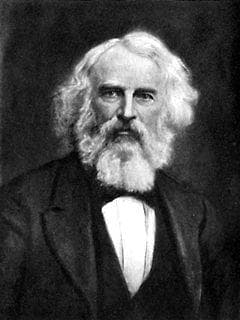
Henry Wadsworth Longfellow was an American poet and educator. His original works include the poems "Paul Revere's Ride", "The Song of Hiawatha", and "Evangeline". He was the first American to completely translate Dante Alighieri's Divine Comedy and was one of the fireside poets from New England.







