“I could recognise him by touch alone, by smell; I would know him blind, by the way his breath came and went. I would know him in death, at the end of the world.”
— Patroclus reflecting on his deep connection with Achilles.

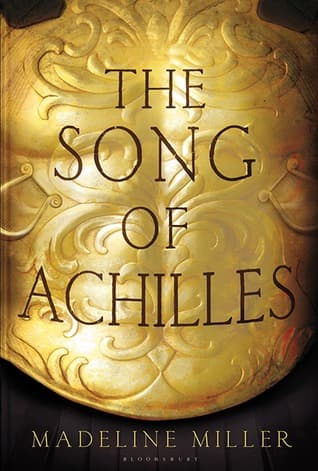
Madeline Miller (2011)
Genre
Fantasy / Historical Fiction / Romance
Reading Time
420 min
Key Themes
See below
Sign in to track this book
An exiled prince's quiet love for the demigod Achilles sparks a tender, tragic story that challenges fate during the Trojan War.
Patroclus, a young prince of Opus, is exiled to Phthia after accidentally killing a boy during a dice game. His father, King Menoitius, sees him as a failure. In Phthia, King Peleus, father of the demigod Achilles, takes him in. Patroclus feels like an outsider among the other boys training at court, but Achilles, known for his beauty, strength, and skill, chooses Patroclus as his companion. Despite their different personalities and backgrounds, a deep friendship starts. Achilles' immortal mother, Thetis, a sea nymph, quietly disapproves, as she foresees her son's glorious but short future.
As Achilles and Patroclus get older, their bond grows beyond friendship. King Peleus sends both boys to Mount Pelion to be taught by the centaur Chiron. There, they learn medicine, music, hunting, and warfare. Living in the wild, away from court and Thetis's watch, their love grows into a physical relationship. Patroclus feels confident and finds purpose with Achilles, while Achilles finds comfort and stability in Patroclus's constant affection and humanity. Chiron, seeing their connection, understands its depth.
News reaches Phthia that Paris of Troy has taken Helen of Sparta, starting a war among the Achaean kings. Odysseus, the king of Ithaca, comes to recruit Achilles, knowing a prophecy says the greatest hero is needed for the war to succeed. Achilles, fated for glory and a short life if he fights, or a long, ordinary one if he doesn't, at first resists. Thetis, wanting to save her son, hides him on Scyros disguised as a girl. Patroclus, sad about the separation, eventually helps Odysseus find Achilles, who is revealed when Odysseus tricks him into reacting to a call to arms.
Achilles, now accepting his destiny, sails with Patroclus and the Myrmidons (Achilles' loyal warriors) to Troy. Patroclus, though not skilled in fighting, insists on going with Achilles, serving as his companion and medic. The Achaean forces gather at Aulis, where Agamemnon sacrifices Iphigenia to please Artemis and allow their fleet to sail. At Troy, the war quickly becomes a stalemate, lasting for years. Achilles shows himself to be a great warrior, leading raids and gaining much spoil and fame. Patroclus, meanwhile, cares for the wounded, both Trojan and Achaean, becoming very aware of the war's suffering.
After a raid on the city of Lyrnessus, Achilles claims Briseis, a Trojan priestess, as his war prize. Patroclus treats Briseis kindly, and she becomes a gentle presence in their tent. However, Agamemnon, the high king, must return his own war prize, Chryseis, to her father to appease Apollo, who has sent a plague on the Achaean camp. Angry about this, Agamemnon demands Briseis from Achilles as compensation. Achilles, feeling his honor insulted, refuses to fight for the Achaeans any longer and takes his Myrmidons from battle, retreating to his ships. Patroclus stays with Achilles, seeing the growing despair in the Achaean camp.
With Achilles and his Myrmidons out of the fight, the war turns greatly in favor of the Trojans. Hector, the greatest Trojan warrior, leads his forces with new strength, pushing the Achaeans back towards their ships. Many Achaean heroes are wounded, and the camp falls into chaos and fear. Patroclus, seeing the suffering and the coming destruction of the Achaean fleet, tries to convince Achilles to return to battle, but Achilles stays stubborn, his pride more important than his comrades. Patroclus's frustration and pain grow as he sees his friends and allies die.
Unable to change Achilles' mind, Patroclus asks to wear Achilles' armor and lead the Myrmidons into battle, hoping to rally the Achaeans and push back the Trojans. Achilles, seeing the bad situation, agrees, but warns Patroclus to only push the Trojans away from the ships and not follow them to the city walls. Patroclus, wanting to save his people and prove himself, goes beyond Achilles' command. He fights bravely, pushing the Trojans back, but Apollo disarms him, Euphorbus wounds him, and Hector then kills him outside the Scaean Gates. His death breaks Achilles.
The news of Patroclus's death causes Achilles great grief. He cries, covers himself in ash, and refuses to eat or sleep. His mother, Thetis, brings him new armor made by Hephaestus, but Achilles is driven only by revenge. He re-enters the battle with terrifying fury, killing Trojans without distinction. His rage is especially against Hector, whom he chases across the battlefield. He finally corners and kills Hector, then desecrates his body by dragging it behind his chariot around the walls of Troy, an act of disrespect from his sorrow for Patroclus.
Days later, King Priam of Troy, disguised and led by Hermes, bravely enters the Achaean camp to ask Achilles for Hector's body. Moved by Priam's request and seeing their shared grief, Achilles gives in, returning Hector's body for proper burial. This moment offers a brief break from the war's brutality. Soon after, Achilles' prophesied death happens. Paris shoots him in the heel, his only weak spot, with an arrow guided by Apollo, outside the Scaean Gates. His death is a great blow to the Achaean forces, though they eventually take Troy using the Trojan Horse.
After Achilles' death, his ashes are placed in a golden urn, but Patroclus's ashes stay in a separate, smaller urn. Patroclus's spirit stays by Achilles' tomb, unable to find peace or go to the Underworld because their ashes are not mixed. He watches the war end, Troy fall, and the Achaean heroes leave. Years pass, and the tomb is forgotten. Finally, Thetis, Achilles' mother, returns to the tomb. Seeing Patroclus's spirit and understanding his love for her son, she overturns the urn holding Patroclus's ashes, mixing them with Achilles's. This allows Patroclus's spirit to finally rest and join Achilles in the afterlife, completing their bond.
The Protagonist
From a shy, exiled boy, he grows into a brave, compassionate man who sacrifices himself for his loved ones, ultimately finding eternal rest with Achilles.
The Co-Protagonist
He grapples with his divine destiny and the human cost of glory, ultimately choosing vengeance over life and finding his greatest love and sorrow in Patroclus.
The Antagonist/Supporting
Initially determined to thwart Patroclus's influence, she eventually acknowledges the eternal nature of his love for Achilles.
The Supporting
A consistent figure of cunning and diplomacy, he remains largely unchanged, focused on his goals.
The Supporting
He serves as a constant, guiding presence for the young heroes, embodying wisdom and acceptance.
The Antagonist/Supporting
He fights valiantly to protect his city and family, ultimately dying a hero's death at the hands of Achilles.
The Supporting
She endures captivity and loss, finding a brief solace in Patroclus's friendship before being taken away again.
The Supporting
His pride and greed remain constant, driving the major conflict with Achilles and contributing to Achaean losses.
The Supporting
He watches his son grow and depart for war, a proud but ultimately sorrowful father.
The main theme is the deep, unconditional love between Achilles and Patroclus. Their bond drives the story, going beyond society's rules, divine disapproval, and the horrors of war. Patroclus's sacrifice, wearing Achilles' armor to save the Achaeans, comes from his love and concern for Achilles' standing and their comrades' lives. Achilles' grief and revenge are a direct result of this love, showing its power. The story suggests that this human love lasts longer than immortal fame.
“We were like gods, after all, and what was a god to do with so much love?”
The novel often compares the pursuit of immortal glory, a goal for Achilles and many Achaean heroes, with the value of human connection, kindness, and a peaceful life. Achilles is torn between his fated destiny for great fame and his wish for a long, loving life with Patroclus. Patroclus, instead, always values humanity, healing, and empathy over fighting skill and fame. The war's tragic events, especially Patroclus's death and Achilles' anger, show the high cost of valuing glory over human lives and love.
“I could recognize the truth, even if I could not live it. Glory was a hollow thing.”
Both Patroclus and Achilles grow as people. Patroclus, at first a shy, exiled prince, finds his purpose and bravery through his relationship with Achilles and his role as a healer. He finds his own strength and moral compass separate from Achilles'. Achilles, born into greatness, struggles with his destiny and his mother's expectations, learning what truly matters to him through his love for Patroclus. Their identities become linked, yet each character also develops a unique self, changed by war and love.
“He was a man, and I was Patroclus. We were two parts of a whole.”
The Trojan War is shown not as a glorious effort but as a long, brutal, and pointless conflict that brings much suffering and loss. Patroclus's view, as a medic and a kind observer, shows the terrible realities of battle, the many dead, and widespread grief. The war's endlessness and the small arguments among Achaean leaders (like Agamemnon and Achilles) show its lack of reason. The theme explores how war takes away humanity, replacing empathy with rage and pride, leading to tragic, avoidable deaths and despair.
“I had seen too much, too many wounds, too many tears. The war was a monster, gorging itself on everything.”
The novel looks at the tension between predetermined destiny and individual choices. Achilles is often reminded of his prophecy – a glorious but short life if he fights, or a long, ordinary one if he doesn't. Thetis actively tries to guide him towards his fated glory. However, Achilles's love for Patroclus and his personal choices, such as leaving battle or returning to avenge Patroclus, show moments of free will that go against fate's path, even if the end result is unavoidable. Patroclus also makes choices that shape his destiny, especially his decision to enter battle in Achilles's armor.
“He was a god, that much was true. But he was also a man, and men can choose.”
The entire story is told from Patroclus's intimate, personal perspective, looking back on his life.
The novel is narrated entirely by Patroclus, recounting his life with Achilles from their first meeting to his own death and beyond. This perspective offers an intensely personal and emotional lens through which to view the epic events of the Trojan War. It allows for deep insight into the characters' inner lives, particularly Patroclus's empathy and Achilles's complexity, humanizing the demigod hero. It also shapes the themes, emphasizing love, loss, and the human cost of war over traditional heroic glory. The retrospective nature allows Patroclus to reflect on the significance of events as they unfold.
The foretelling of Achilles' glorious but short life, influencing his choices and actions.
The prophecy that Achilles will have a choice between a long, unremarkable life or a short, glorious one is a constant presence throughout the narrative. It drives Thetis's efforts to steer Achilles towards glory and shapes Achilles's own internal conflict. This device creates dramatic irony and a sense of impending doom, as readers know Achilles's ultimate fate. It also highlights the theme of fate versus free will, as Achilles's choices, particularly those driven by his love for Patroclus, sometimes seem to defy or delay the prophecy, even as they ultimately lead him to it.
A powerful symbol of identity, glory, and tragic substitution.
Achilles' armor is a potent symbol. Initially, it represents his divine heritage, unparalleled skill, and fated glory. When Patroclus wears it, the armor symbolizes his love and sacrifice, his attempt to embody Achilles's power to save their comrades. However, it also becomes a symbol of mistaken identity and tragic irony, as Patroclus is killed while wearing it, directly leading to Achilles's devastating grief and vengeful return to battle. Later, the new armor forged by Hephaestus further emphasizes Achilles's terrifying, god-like rage and his abandonment of humanity in pursuit of vengeance.
Divine interference in mortal affairs, often to protect Achilles or fulfill his destiny.
Thetis, as an immortal sea nymph, frequently intervenes in the mortal world, often to manipulate events in Achilles's favor or to ensure his fated glory. Her interventions range from hiding Achilles on Scyros to bringing him new armor from Hephaestus and ultimately mingling his ashes with Patroclus's. These divine actions highlight the tension between mortal agency and immortal power, and they underscore Thetis's complex, often ruthless, love for her son. Her presence adds a layer of mythic grandeur and predestination to the human drama.
Achilles' loyal, fierce, and almost interchangeable warriors, reflecting his power and isolation.
The Myrmidons are Achilles' elite, fiercely loyal warriors, depicted as a cohesive, almost inhumanly efficient fighting force. Their unwavering devotion to Achilles underscores his charisma and leadership. They act as a physical extension of Achilles's will on the battlefield. Their unyielding obedience also highlights Achilles's isolation at the top of the hierarchy, and their grief over Patroclus's death emphasizes the collective impact of his loss, even as Patroclus's relationship with them is more personal than Achilles's.
“I could recognise him by touch alone, by smell; I would know him blind, by the way his breath came and went. I would know him in death, at the end of the world.”
— Patroclus reflecting on his deep connection with Achilles.
“We were like gods, living for the touch of our hands, and the feel of our skin, and the taste of our lips. We were like gods, and we did not know it.”
— Patroclus describing an intimate moment with Achilles.
“Name one hero who was happy.”
— Achilles' mother, Thetis, warning him about the cost of glory.
“He was a weapon, a beautiful piece of flesh and bone, honed for battle. He was a god, in all but name.”
— Patroclus observing Achilles' prowess and divine nature.
“I am not a hero. I am a murderer.”
— Achilles' despair after killing Hector.
“And perhaps it is the greater grief, after all, to live, to see all these good men die, and not die with them.”
— Patroclus contemplating the pain of survival amidst loss.
“He is a man, and I am a woman. We are not meant to be.”
— Deidameia's resignation regarding her unrequited feelings.
“It is not a question of if you will die, but when. And how.”
— Thetis speaking to Achilles about his inevitable fate.
“I will never leave him. Not even in death.”
— Patroclus's unwavering loyalty to Achilles.
“He was a storm, and I was the tree he bent. I was the river to his sea. I was the earth to his sky.”
— Patroclus describing his relationship with Achilles in a metaphor.
“Show me a hero, and I will write you a tragedy.”
— A general reflection on the nature of heroism and its outcome.
“In the darkness, two shadows, reaching through the hopeless, shining night.”
— Patroclus and Achilles finding solace in each other during difficult times.
“This is what I will tell you, my son. Your father was the bravest man I ever knew.”
— Thetis, speaking to Achilles about Peleus, highlighting his courage.
“I am made of memories.”
— Patroclus reflecting on his existence after death, sustained by remembrance.
Ready to see how well you understood this book? Take our interactive quiz with 10 questions.

Biography coming soon.







