“The land was not given to us by our fathers, but loaned to us by our children.”
— Eli McCullough reflects on the long-term stewardship of the land.

Genre
Fantasy / Science Fiction / Young Adult / Romance
Reading Time
1500 min
Key Themes
See below
Sign in to track this book
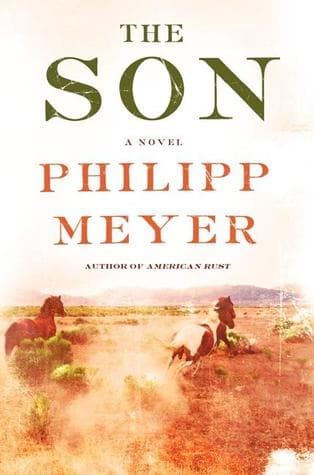
Abducted by Comanches, Eli McCullough builds a brutal dynasty in Texas, forever marking his descendants with the legacy of power and ambition.
In the spring of 1849, thirteen-year-old Eli McCullough's life is shattered when Comanche warriors attack his family's homestead in the Republic of Texas. His mother and sister are killed, and he is taken captive. Eli sees horrific acts, including the scalping of his family, before being dragged away. His father and older brother, Caleb, are hunting at the time. Eli is forced to march with the Comanche, enduring harsh conditions and violence, marking the beginning of his transformation and assimilation into a new, brutal life.
Eli, renamed 'Tiehteti' (Pathetic White Boy) by his captors, initially resists. But driven by a need for survival, he begins to adapt to the Comanche way of life. He learns their language, hunting techniques, and warrior traditions. Under the guidance of the warrior Charges the Enemy and eventually adopted by the chief, Kicking Wolf, Eli transforms from a terrified boy into a Comanche warrior. He participates in raids against other tribes and white settlers, internalizing their culture and blurring his original identity. He experiences loyalty and belonging within the tribe, even as he grapples with the memory of his former life.
Decades later, Eli's son, Peter McCullough, tells his own story, a stark contrast to his father's pragmatism. Peter is a sensitive, moral man deeply troubled by the violent methods his father uses to expand their ranching empire. He witnesses Eli's ruthless dealings, including the killing of Mexican ranchers and the displacement of indigenous people, all for land and power. Peter’s conscience weighs heavily on him, leading to internal conflict and a growing distance from his domineering father. He feels the weight of the blood spilled for the McCullough fortune, struggling to reconcile his values with the family's legacy.
The early 20th century brings increased tensions along the Texas-Mexico border, with raids and skirmishes becoming common. Peter and his family become involved in a violent conflict with a Mexican family, the Garcias, over land and cattle. Peter's wife, Maria, a Mexican woman, becomes a target of prejudice and violence. The escalating feuds end in a horrific event where Peter's own actions, though meant to protect his family, lead to the deaths of innocent people and further alienate him from Eli. Overwhelmed by guilt and unable to live with the consequences of his family's ambition, Peter eventually flees to Mexico, abandoning his life and family.
As the 19th century progresses, disease, starvation, and pressure from American expansion decimate the Comanche tribe. Eli, now a warrior, sees the tragic decline of his adopted people. Eventually, he is forced to leave the dwindling tribe, unable to survive in a world where their way of life is no longer sustainable. He tries to reintegrate into white society, a challenging and often alienating process. He finds himself a man caught between two worlds, neither fully white nor fully Comanche, struggling to navigate the customs of the 'civilized' world he once knew.
Eli McCullough, using his survival instincts and the lessons learned from the Comanche, begins a relentless quest to acquire land and build his fortune. He uses cunning, intimidation, and violence when necessary, becoming a formidable and feared figure in South Texas. He establishes a vast ranching empire, and later, recognizing the potential, moves into the burgeoning oil industry. His ambition is boundless, and he sacrifices personal relationships and moral considerations for power and wealth, laying the foundation for the McCullough dynasty through sheer force of will and an understanding of the land's value.
In the late 20th and early 21st centuries, Eli's great-granddaughter, Jeanne Anne 'J.A.' McCullough, takes control of the vast, but aging, McCullough oil and ranching empire. A shrewd and determined businesswoman, J.A. faces modern challenges, including environmental regulations, fluctuating oil prices, and corporate rivals. She embodies Eli's pragmatism and ambition, often making difficult and morally ambiguous decisions to preserve the family legacy. J.A. is aware of the sacrifices and violence that built her fortune, and she must constantly fight to maintain her power in a male-dominated world, mirroring the struggles of her ancestors in a new context.
J.A. McCullough, as the inheritor of the McCullough empire, constantly confronts the violent and morally questionable history of her family. Through her memories and interactions, the story reveals the lasting impact of Eli's ruthless land grabs and Peter's tragic flight. She understands that the family's immense wealth is built on blood and exploitation, and this knowledge shapes her decisions and worldview. J.A. represents the culmination of generations of McCullough ambition, but also the burden of their legacy, struggling to reconcile the past with the present while ensuring the family's future.
In his advanced years, Eli McCullough looks back on a life defined by survival, violence, and the pursuit of power. He carries the marks of his time with the Comanche and the brutality required to forge his empire. Though wealthy and powerful, he remains an isolated figure, haunted by memories and the consequences of his actions. His reflections offer insights into the motivations behind his ruthlessness and the impact of his early captivity. Eli's legacy, both celebrated and reviled, continues to shape the lives of his descendants and the landscape of Texas.
After fleeing to Mexico, Peter McCullough lives a life of quiet anonymity, forever haunted by the violence and moral compromises of his family. He finds a semblance of peace but is never truly free from the psychological scars of his past. His exile represents a rejection of the McCullough way of life, an attempt to escape the cycle of brutality that defined his father. Peter's story highlights the personal cost of the family's ambition and is a tragic counterpoint to Eli's accumulation of wealth and power, underscoring the enduring burden of their history.
The Protagonist
Eli transforms from a traumatized captive into a ruthless empire-builder, ultimately becoming a powerful but isolated patriarch haunted by his past.
The Protagonist/Supporting
Peter attempts to resist the violent legacy of his family but ultimately succumbs to its burden, choosing self-imposed exile.
The Protagonist
J.A. inherits and fiercely defends the McCullough empire, grappling with its violent origins while ensuring its future in a changing world.
The Supporting
Kicking Wolf maintains his leadership and cultural traditions until the inevitable decline of his people.
The Supporting
Maria suffers the tragic consequences of the border conflicts, serving as a catalyst for Peter's moral awakening and flight.
The Supporting
Charges the Enemy serves as Eli's initial guide into Comanche warrior life.
The Supporting/Mentioned
Caleb is unable to adapt to Comanche life and perishes, contrasting with Eli's survival.
The novel explores the extreme measures individuals take to survive in harsh, unforgiving environments. Eli's transformation from a terrified boy to a Comanche warrior and then to an empire-building patriarch shows this theme. His ability to shed his former identity and embrace new, often violent, ways of life is central. The theme also appears in the McCullough family's ongoing fight for land and power, demonstrating how survival instincts can drive relentless ambition. Peter's inability to adapt to this brutality highlights its cost.
“There was no such thing as good or bad, only living or dying. And if you lived, you lived. If you died, you died.”
The novel traces how violence and trauma pass down through generations, shaping the McCullough family's destiny. Eli's early captivity and the murder of his family instill in him a ruthlessness that informs his land acquisition and business practices. This violence burdens his son Peter with guilt and moral conflict, leading to his exile. J.A., in the present day, inherits not just wealth but also the violent history of her ancestors, forcing her to confront the ethical implications of her family's foundation. The land itself is saturated with the blood of previous conflicts, constantly reminding the characters of the price of their power.
“The land remembers. The land remembers everything.”
Eli's struggle with identity is central to the story. Captured by the Comanche, he sheds his white identity and embraces the warrior culture, only to be forced back into white society later. He exists in a space, neither fully white nor fully Indian, constantly grappling with where he belongs. This theme extends to Peter, who feels alienated by his family's violent identity, and even to J.A., who must forge her own identity as a powerful woman in a male-dominated industry while carrying the weight of her family's past. The search for a true home, both physical and cultural, is a pervasive undercurrent.
“He was a ghost in both worlds, a man with two names and no home.”
The novel examines the expansion of the American West, particularly in Texas, and the human and environmental costs associated with 'progress.' The story exposes the displacement of indigenous peoples, the acquisition of land, and the exploitation of natural resources (cattle, then oil). Eli's empire-building embodies the drive of Manifest Destiny, but the novel depicts the violence, prejudice, and moral compromises required to achieve it. Peter's storyline highlights the ethical dilemmas and tragic consequences of this expansion, questioning whether the 'progress' was worth the human suffering.
“They called it progress, but it was just a new kind of killing.”
The story is told through the alternating viewpoints of three generations of McCulloughs.
The novel employs a non-linear narrative structure, shifting between the first-person accounts of Eli McCullough (19th century) and his son Peter McCullough (early 20th century), and the third-person perspective of his great-granddaughter Jeanne Anne McCullough (late 20th/early 21st century). This allows the reader to witness the evolution of the McCullough family, the enduring impact of historical events, and the generational consequences of their actions. It provides a panoramic view of Texas history and illustrates how the past continuously informs the present, creating a rich tapestry of cause and effect across time.
Eli's early life among the Comanche functions as a brutal coming-of-age narrative.
Eli McCullough's initial chapters, detailing his capture by the Comanche and his subsequent assimilation, serve as a harsh bildungsroman. He is forced to mature rapidly, learning to survive, hunt, and fight in an unforgiving environment. This period is crucial for shaping his worldview, instilling in him the ruthlessness and pragmatism that define his later life as an empire builder. It's not a romanticized coming-of-age but a brutal education in the realities of power, violence, and cultural adaptation, fundamentally altering his identity and setting the course for his future.
Eli's and Peter's first-person narratives lend an intimate, confessional quality to their stories.
The use of first-person narration for Eli and Peter provides an intimate and subjective lens into their experiences, motivations, and moral struggles. Eli's voice is pragmatic and direct, reflecting his survivor's mentality, while Peter's is more introspective and burdened by guilt. This device allows for deep character exploration and direct insight into their psychological states, making their accounts feel like personal testimonies. It grounds the epic scope of the novel in individual human experience, allowing the reader to connect directly with their triumphs and tragedies.
The Texas landscape symbolizes both opportunity and the brutal cost of its conquest.
The vast and unforgiving Texas landscape is more than just a setting; it is a character and a powerful symbol. It represents both the boundless opportunity for wealth and the brutal, often bloody, price of its conquest. The land remembers the violence inflicted upon it—the Comanche raids, the battles with Mexicans, the oil extraction. It embodies the McCullough family's ambition and their connection to it, both as a source of power and a witness to their moral compromises. The land dictates survival, shapes identity, and serves as a constant reminder of the past.
“The land was not given to us by our fathers, but loaned to us by our children.”
— Eli McCullough reflects on the long-term stewardship of the land.
“A man's life is a series of choices, some small, some great, but all leading to who he becomes.”
— Peter McCullough grapples with the consequences of his own moral decisions.
“You can't outrun what's in your blood.”
— Various characters confront the inherited traits and historical burdens of their family.
“Violence begets violence, and the cycle never truly breaks, only shifts.”
— A recurring theme throughout the generations of the McCullough family's history.
“The past isn't dead. It isn't even past.”
— Jeanne Anne McCullough reflects on how historical events continue to influence the present.
“Survival is a brutal art, and the land teaches it best.”
— Eli's early experiences in the wilderness and with the Comanches.
“There are some things a man can't forgive himself for, no matter how long he lives.”
— Peter's internal struggle with his actions and their repercussions.
“Money is a weapon, and the rich know how to wield it better than any rifle.”
— Jeanne Anne observes the power dynamics in the modern era of the family.
“Every man has his breaking point, and sometimes it's the quiet ones who break the hardest.”
— A general observation on human resilience and vulnerability.
“The wind carries the stories, if you just listen.”
— A more poetic reflection on the enduring nature of history and memory.
“You learn more from your enemies than you ever will from your friends.”
— Eli's perspective after living among the Comanches.
“Progress often means destruction for someone else.”
— The expansion of the McCullough empire and its impact on others.
“The weight of a name can be heavier than any physical burden.”
— Characters feel the pressure and legacy of the McCullough family name.
“In the end, all you have is your word and your land.”
— A core value expressed by Eli McCullough regarding integrity and property.
Ready to see how well you understood this book? Take our interactive quiz with 10 questions.

Philipp Meyer is an American fiction writer, and is the author of the novels American Rust and The Son, as well as short stories published in The New Yorker and other places. Meyer also created and produced the AMC television show based on his novel. Meyer won the 2009 Los Angeles Times Book Prize, was the recipient of a 2010 Guggenheim Fellowship and was a finalist for the 2014 Pulitzer Prize. He won the 2014 Lucien Barrière prize in France and the 2015 Prix Littérature-Monde Prize in France. In 2017 he was named a Chevalier (Knight) in France's Ordre des Arts et des Lettres.







