“Every single bird is a someday bird.”
— Charlie's internal thought, realizing the potential in all birds.

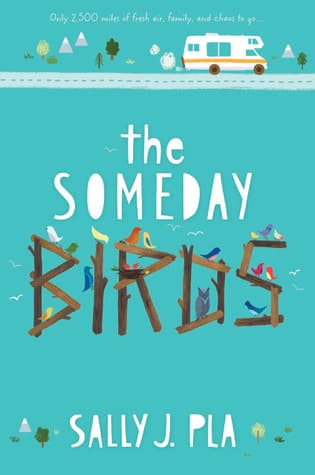
Sally J. Pla (2017)
Genre
Children's / Young Adult
Reading Time
6-7 hours
Key Themes
See below
Sign in to track this book
On a cross-country road trip to reunite with his injured war journalist father, a neurodivergent boy who likes predictability sets out to spot every bird on their shared 'someday' list, hoping to restore order to his changing world.
Ten-year-old Charlie Finch, who has high-functioning autism, likes routine. His world is organized, from his bird books to his art supplies. But his life changes when his father, a war journalist, is severely injured in Afghanistan and needs special medical treatment in Virginia. This news breaks Charlie's sense of security and his family's stability. His older sister, Davis, deals with her own worries and a new interest in boys, while his younger twin brothers, Riley and Joel, are loud and messy, further challenging Charlie's need for order. The family's stable life now faces uncertainty and a long cross-country trip.
With their mother staying behind, Charlie, Davis, and the twins, Riley and Joel, start a road trip from California to Virginia to be with their father. A family friend named Dr. Mindy, a free-spirited woman, drives them. Charlie is uncomfortable with the disrupted routine and the unpredictable nature of car travel. To cope, he focuses on a list of 'Someday Birds' – rare birds he and his father had planned to see. He believes that if he completes this list, his father will recover, and their lives will return to normal.
The first part of the trip through the desert is hard for Charlie. The heat, bright sun, new sounds, and constant closeness to his siblings and Dr. Mindy create sensory overload. He finds comfort in his bird books and drawing, but the chaos of the car and unexpected stops often overwhelm him. Davis tries to help but is often busy with her phone and teenage concerns. The twins, Riley and Joel, are always noisy and mischievous, adding to Charlie's stress. Dr. Mindy, though well-meaning, has an unconventional way of traveling, which further disrupts Charlie's expectations.
A sudden snowstorm makes the family take an unexpected detour, leaving them stuck in a small town. This unplanned stop is upsetting for Charlie at first, but it also creates an opportunity. While indoors, Charlie sees a Bohemian Waxwing, a rare bird on his 'Someday Birds' list, outside their window. This sighting gives him hope and strengthens his belief that finishing the list will help his father. The shared experience of the snowstorm and the bird sighting, despite the initial trouble, brings a brief moment of shared wonder and connection among the siblings and Dr. Mindy, showing Charlie that even unexpected events can bring good things.
The family visits the Grand Canyon, a place that both amazes and overwhelms Charlie. His fear of heights and the vast, open spaces are challenging. While there, he has a difficult encounter with tourists who don't understand his behavior, showing his social anxieties. Davis struggles with her own teenage issues, including a crush on a boy she's texting, and feels the weight of responsibility for her younger brothers. Dr. Mindy encourages Charlie to draw and observe, helping him process the overwhelming experience through his art. This stop highlights the individual struggles each family member faces during their journey.
As the journey continues, Charlie becomes curious about Dr. Mindy. Her unusual behavior and deep knowledge of his father's medical condition make him suspicious. By watching and listening, Charlie learns that Dr. Mindy is not just a family friend, but a military psychologist assigned to his father's case. This news is unsettling for Charlie, as it adds more complexity to his disrupted world and makes him question the adults around him. However, it also clarifies her role and her understanding of his father's specific needs, which begins to lessen his initial distrust.
After weeks of travel, the family arrives in Virginia. The reunion with their father is emotional and complicated. Charlie faces the reality of his father's injuries, which are more severe than he had understood. His father is not the same, and recovery will take a long time. While the physical reunion is a relief, it also brings new challenges as the family begins to adapt to their father's changed condition and the new hospital environment. Charlie realizes that while the journey to get there is over, a new journey of healing and adjustment is just beginning for their family.
Charlie's father is undergoing intensive therapy for his brain injury. He struggles with memory, speech, and emotional regulation, which is hard for Charlie to see. Charlie continues to look for his 'Someday Birds,' but the reason for it starts to change. It is no longer just about a magical recovery, but about a shared connection with his father and a way to cope with uncertainty. He begins to understand that healing is a process, not an instant fix. He also starts to see that his father, despite his injuries, is still the father he loves, and their bond remains strong, even if expressed differently now.
As his father slowly recovers, Charlie finds new ways to interact with him. He shares his bird drawings and observations, which his father responds to, even if subtly. Dr. Mindy helps these connections, guiding Charlie on how to communicate with his father given his injuries. Charlie also starts to open up more to his siblings and Dr. Mindy, realizing they are all navigating this difficult time together. He begins to find comfort in their shared experiences and support, even if their methods differ from his own. The family starts to create a new normal, learning to adapt and support one another through the challenges.
Charlie eventually spots the final bird on his 'Someday Birds' list. By this point, his understanding of what completing the list means has changed. He no longer believes it will magically cure his father. Instead, he sees it as a sign of his strength, his love for his father, and the journey they have all taken. The list becomes a symbol of hope, not for a return to the past, but for a future where they can adapt and find joy together. He learns that sometimes, the best things are found in unexpected places, and that love and connection are stronger than any routine.
The Protagonist
Charlie learns to adapt to unpredictability, embrace new experiences, and understand that healing is a process, not a magical fix, redefining his understanding of hope and family connection.
The Supporting
Undergoes a difficult physical and cognitive recovery, symbolizing the challenges of healing and the enduring power of family love.
The Supporting
Learns to balance her personal desires with family responsibilities, growing in empathy and understanding for her brothers.
The Supporting
Remain largely consistent in their energetic personalities but contribute to the evolving family dynamic.
The Supporting
Reveals her true identity and becomes a crucial guide, helping Charlie and his family process their challenges and connect with their father.
Charlie's life starts with strict routines due to his autism. The road trip forces him into constant change. While challenging, this journey teaches him the importance of adapting. He learns that while routines offer comfort, life's best experiences often come from unexpected detours, as seen when a snowstorm leads to a rare bird sighting. This theme shows the balance between finding comfort in order and growing by accepting the unknown.
“My brain liked things to be predictable. Smooth. Like chicken nuggets. But life wasn't chicken nuggets right now.”
The main conflict is about the family's journey toward healing, both physical and emotional, after the father's injury. Charlie's 'Someday Birds' list is a clear sign of his hope for his father's recovery. At first, this hope is based on a magical belief that finishing the list will fix everything. As the story goes on, and Charlie sees his father's slow, hard recovery, his understanding of hope grows. It changes from wanting instant restoration to accepting a new normal and believing in the lasting strength of family love, even with ongoing challenges. The birds become symbols of perseverance and shared connection, not a magical cure.
“Maybe the birds weren't a magic spell after all. Maybe they were just... birds. And maybe that was enough.”
The Finch family, though loving, struggles to communicate, especially with Charlie's autism and the trauma of their father's injury. The road trip forces them together, highlighting how each person copes and where they misunderstand each other. Through shared experiences, difficulties, and Dr. Mindy's help, they learn to communicate better and support each other. Charlie, in particular, finds new ways to express himself and connect with his family, realizing that love can be shown and understood in many ways, even without perfect verbal communication, especially with his injured father.
“Sometimes, the biggest things weren't said with words. They were said with drawings, or with a shared look, or just being there.”
The book explores the challenges and rewards of understanding others, especially for Charlie as he lives in a neurotypical world. He struggles to understand social cues and others' emotions, while his family and Dr. Mindy learn to understand his unique perspective and needs. The journey is a continuous lesson in empathy for all characters. Davis learns to be more patient with Charlie, and Charlie begins to see his siblings and Dr. Mindy not just as sources of chaos or mystery, but as people with their own struggles and strengths. This mutual understanding strengthens their family and allows for deeper, more meaningful connections.
“It was hard to understand people sometimes. But maybe they were trying to understand me too.”
A symbolic list of rare birds Charlie hopes to spot.
The 'Someday Birds' list serves as Charlie's primary coping mechanism and a central symbol of hope. Initially, it functions as a magical thinking device, where Charlie believes completing the list will miraculously heal his father. As the plot progresses, its meaning evolves, becoming a symbol of shared dreams, perseverance, and a tangible way for Charlie to process his grief and maintain a connection with his father. Each bird sighting marks a small victory and a step in Charlie's emotional journey, reflecting his growth and changing understanding of hope and healing.
A cross-country journey serving as a physical and emotional catalyst.
The road trip from California to Virginia is more than just a means of transport; it's a classic literary device that forces the characters into close proximity and out of their comfort zones. It provides a series of diverse settings and challenges that accelerate character development and reveal underlying family dynamics. The constant change and unpredictability of the journey directly challenge Charlie's need for routine, pushing him to adapt and grow. Each stop and detour introduces new obstacles and opportunities for the family to interact, confront issues, and ultimately strengthen their bonds.
Tools for understanding, expression, and comfort.
Charlie's detailed bird drawings and his extensive collection of bird books are crucial plot devices. They serve as his primary means of processing information, expressing himself when words fail, and finding comfort amidst chaos. The drawings allow readers into Charlie's unique perspective, showing how he observes and interprets the world. The bird books are a source of predictable knowledge and a link to his father, providing him with a sense of control and purpose. They are also a way for him to communicate with his father post-injury, as his father can connect with the familiar images and shared interest.
A source of initial intrigue and later, a guiding force.
Dr. Mindy's enigmatic presence and true identity function as a plot device that adds an element of mystery and gradually unfolds to reveal her crucial role. Her initially unclear relationship to the family and her unconventional methods keep Charlie (and the reader) guessing. This mystery eventually resolves into her being a military psychologist, which not only provides clarity on her expertise regarding his father's condition but also establishes her as a knowledgeable and empathetic guide. Her presence allows for exposition about brain injury and provides a catalyst for Charlie's emotional and social development.
“Every single bird is a someday bird.”
— Charlie's internal thought, realizing the potential in all birds.
“The world was a big, noisy place, and sometimes it felt like it was shouting at him.”
— Charlie reflecting on his sensory sensitivities.
“It was like the world was a giant puzzle, and he just couldn't find the right piece to fit in.”
— Charlie's feeling of not belonging or understanding social cues.
“Sometimes, the quietest things make the most noise inside you.”
— Charlie's internal experience of emotions and observations.
“Even when things are scary and uncertain, there's always a new bird to find.”
— A hopeful thought as Charlie faces new challenges.
“Grief was a strange bird, sometimes loud and squawking, sometimes silent and heavy.”
— Charlie's understanding of his family's grief for his father.
“Everyone had their own kind of special. You just had to look for it.”
— A realization about individuality and unique strengths.
“Being different wasn't a flaw, it was just... different.”
— Charlie accepting his own neurodiversity.
“Adventures often started when you least expected them, and sometimes, they were the best kind.”
— Charlie reflecting on his unexpected road trip.
“The best way to see the world was through the eyes of someone who saw it differently.”
— A lesson learned by the siblings about Charlie's unique perspective.
“Sometimes, you just had to trust that the path would appear, even if you couldn't see it yet.”
— A moment of faith during their uncertain journey.
“Birds didn't care if you were different. They just were.”
— Charlie finding solace and acceptance in nature.
“Even the smallest acts of kindness could make a big difference, like a tiny seed growing into a strong tree.”
— Reflecting on help received from strangers.
“Home wasn't just a place; it was the people you loved, wherever they were.”
— Charlie's evolving understanding of home during their travels.
Ready to see how well you understood this book? Take our interactive quiz with 10 questions.

Biography coming soon.

Dan Gemeinhart
4.5

Kate O'Hearn
4.4

Jeanne Birdsall
4.4

Jen Wang
4.4
Wendelin Van Draanen
4.3

John Marsden
4.3

Chris Van Allsburg
4.3
Jennifer A. Nielsen
4.2