“The hardest part of playing the cello is not just hitting the right notes, but making them sing, making them human.”
— Reflecting on the emotional depth required in music.

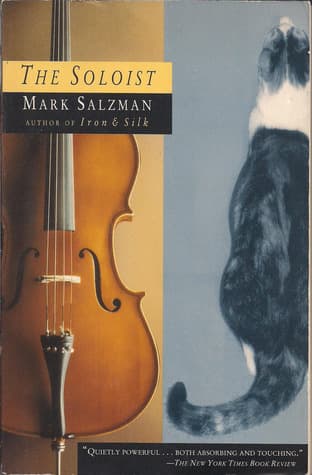
Mark Salzman (1994)
Genre
Literary Fiction
Reading Time
360 min
Key Themes
See below
Sign in to track this book
A former cello prodigy, now a drifting man, watches his world unravel as he navigates a murder trial's moral complexities and rediscovers his lost brilliance through a gifted young student.
Renne, a cellist living a quiet life in Los Angeles, receives a jury summons. Once a child prodigy compared to Yo-Yo Ma, he now teaches a few students and practices diligently, his grand ambitions having faded. The summons pulls him from his routine of music, solitude, and occasional visits from his sister, Sarah. He sees it as an annoyance mixed with civic duty, unaware of how deeply this trial will affect his views on justice, art, and his own unused potential. His inner world, usually focused on his instrument, is about to face the harsh realities of the legal system.
Renne is chosen for the jury in a high-profile murder trial. The victim is Master Li, a respected Buddhist monk, brutally beaten and stabbed in his temple. The accused is David, a young, troubled man with a history of mental illness and drug abuse. The prosecution, led by Ms. Chen, presents a strong case, claiming David committed the act in a drug-fueled rage, possibly for theft. The defense, handled by Mr. Peterson, tries to create doubt about the evidence and highlight David's mental state. Renne, with the other eleven jurors, must sort through the disturbing details and conflicting stories, a sharp contrast to his world of musical beauty.
During the trial's growing intensity, a new student enters Renne's life: Ko, a young Korean boy with amazing musical talent. Ko's mother, Mrs. Kim, brings him to Renne for lessons, convinced of his potential. From their first meeting, Ko shows an natural understanding of the cello and a skill that immediately reminds Renne of his own early genius. Teaching Ko becomes a mixed experience for Renne; while he is impressed and inspired by the boy's talent and dedication, it also makes him face his past as a child prodigy and the path he ultimately chose. The boy's presence provides a poignant contrast to the dark murder trial.
After weeks of testimony, the jury begins deliberations. The first discussions are filled with differing opinions and emotions. Renne, at first hesitant to speak strongly, finds himself drawn into the debate, applying the same careful thought to the evidence as he would to a musical score. Some jurors are sure of David's guilt, while others have doubts, pointing to the lack of clear motive and the defendant's fragile mental state. The jury room becomes a small version of society, with each member bringing their own biases, experiences, and interpretations. The heavy responsibility to deliver justice for Master Li and David weighs on them all.
Ko's cello progress is remarkable. Under Renne's guidance, he quickly masters complex pieces, showing not only technical skill but also a deep musicality beyond his young age. Renne pours his teaching knowledge and artistic passion into Ko, treating him not just as a student but as a way for pure musical expression. He gives Ko challenging music, pushes him to explore the emotional depths, and even arranges for Ko to try a better cello. The lessons become a refuge for Renne, a place where music's order and beauty offer a temporary escape from the trial's moral questions.
As days turn into weeks, the jury remains deeply divided. The main argument is about David's intent and whether he truly planned the murder, or if his actions resulted from a psychotic break. Renne, initially leaning toward guilt, starts to question the prosecution's story, finding inconsistencies and gaps in the evidence. He struggles with the idea of justice in a system that often fails to account for mental illness and complex human reasons. Tension in the jury room grows, with heated arguments and emotional outbursts, as jurors feel pressure to reach a unanimous decision, knowing a young man's life depends on it.
The long jury duty and the trial's difficult details force Renne into deep self-reflection. He constantly compares the search for absolute truth in court to the search for perfect beauty in music. He re-evaluates his artistic journey, why he stepped back from a potentially world-famous career, and the compromises he made. The harsh reality of David's situation, and the potential for a wasted life, deeply resonates with Renne's own feelings of unfulfilled potential. He sees in Ko the raw talent he once had, and the potential for both triumph and deep loss, depending on choices made and outside forces.
After what feels like a very long time of arguments, re-examining evidence, and emotional pleas, the jury finally reaches a verdict. The decision is not easy, and Renne plays a significant role in persuading some undecided jurors, carefully dissecting evidence and offering other interpretations. The jury ultimately finds David guilty of a lesser charge, not first-degree murder, acknowledging his fault while also considering his mental state and the unclear facts. The verdict brings a sense of tired relief, but also a lingering unease and the recognition that true justice is often hard to find and imperfect, leaving no one fully satisfied.
After the trial, Renne focuses more on Ko's development. He enters Ko into a local junior music competition, an important step for the young prodigy. Ko performs with amazing maturity and technical brilliance, impressing the audience and judges. His performance is a triumph, confirming Renne's belief in his talent and the potential for a remarkable career. For Renne, watching Ko perform is a shared experience, a glimpse into the future he might have had, and a confirmation of music's lasting power and beauty, a sharp contrast to the ugliness he saw in court. Ko's success gives Renne immense pride and renewed purpose.
As Ko's talent gains recognition, Renne starts to see the familiar pressures and expectations grow. Mrs. Kim, Ko's mother, becomes more ambitious for her son, pushing him toward more competitions and a demanding schedule. Renne recognizes the same patterns that shaped his own childhood – the intense focus, the sacrifice of normal childhood, and the huge burden of being a 'prodigy.' He feels protective of Ko, wanting to nurture his talent without crushing his spirit, and struggles with how best to guide him through the difficult world of professional music, a world he knows well to be both beautiful and harsh.
Despite outside pressures, Renne and Ko form a deep, unspoken bond through their shared love for the cello. Their lessons are more than just technical instruction; they become musical conversations, where Renne shares not only technique but also the emotional depth and philosophical meaning he finds in art. Ko, in turn, inspires Renne with his pure passion and fresh perspective. Renne sees a reflection of his younger self in Ko, but also a unique individual with his own voice. Their connection allows Renne to revisit his own relationship with music, finding new meaning and perhaps a sense of redemption through his mentorship.
Even after the trial ends, its effects echo in Renne's life. He often thinks about the moral questions, life's fragility, and justice's imperfect nature. At the same time, his work with Ko forces him to confront his own past as a prodigy – the sacrifices, the immense pressure, and why he ultimately chose a different path. He struggles with regret and acceptance, understanding that his journey, though different from what was once predicted, has led him to a place where he can deeply affect another's life through music. The intertwining experiences of the trial and Ko's mentorship lead Renne to a deeper understanding of himself and his place in the world.
As Ko nears adolescence, the demands on his time and talent increase. Opportunities for advanced study and international competitions arise, pushing him toward a path that will require huge dedication and sacrifice. Renne observes this with a mix of pride and worry, knowing the toll such a life can take. He sees Ko at a crossroads, similar to where he once stood. Renne offers guidance, drawing from his own experiences, but ultimately understands that Ko must make his own choices about how to pursue his gift, whether to embrace the relentless pursuit of virtuosity or to find a more balanced, perhaps less public, relationship with his music.
Ko gives an important performance, perhaps at a major recital or competition, showing the peak of his work with Renne. His playing is technically perfect and deeply moving, a testament to his talent and Renne's guidance. This performance marks a turning point, signaling Ko's readiness to move to the next stage of his musical education, likely with a more famous teacher or institution. Renne watches with a mix of pride and a quiet sense of farewell. He understands that his role as Ko's main mentor is ending, and while bittersweet, it shows Ko's growth and the successful passing of knowledge. Renne reflects on Ko's deep impact on his own life.
Renne continues his own musical practice and teaching, but with a renewed sense of purpose and a deeper understanding of life's complexities. The murder trial and his mentorship of Ko have changed him deeply. He has learned that justice is rarely absolute, and that human nature holds both deep beauty and terrible darkness. He finds comfort and meaning in music's lasting power, recognizing its ability to express the inexpressible and to bring order to chaos. He understands that while life will always have discord, there is also the potential for harmony, and that his role is to contribute to that harmony, through his own playing and by nurturing it in others.
The Protagonist
Renne moves from a state of quiet resignation and artistic introspection to a more engaged understanding of the world, reconciling his past ambitions with his present realities and finding renewed purpose through mentorship.
The Supporting
Ko develops from a raw talent into a refined young musician, guided by Renne's mentorship, and begins to face the external pressures of a prodigious career.
The Antagonist/Catalyst
David's arc is largely external, as he remains a figure for the jury to interpret rather than an active agent of change, though the verdict shapes his future.
The Mentioned/Catalyst
Master Li's arc is primarily symbolic, representing innocence, peace, and the tragic disruption of order.
The Supporting
Mrs. Kim remains a consistent force, representing the external pressures and ambitions placed upon a prodigious child.
The Supporting
Sarah remains a stable, supportive presence in Renne's life, largely unchanged by the narrative's events.
The Supporting
Ms. Chen's role is primarily functional, driving the legal argument for the prosecution.
The Supporting
Mr. Peterson's role is primarily functional, presenting the legal argument for the defense.
The novel explores the complexities of justice, especially within the legal system. Renne, as a juror, must grapple with conflicting evidence, subjective views, and the moral weight of deciding someone's fate. The contrast between the absolute truths sought in court and the messy realities of human behavior (like David's mental illness and unclear motives) highlights the system's flaws. The verdict, a compromise rather than a clear answer, shows that justice is often hard to find and rarely satisfies everyone. This theme is central to the entire jury duty storyline.
““The law, he was learning, was less a precise instrument for extracting truth than a blunt tool for managing human affairs, a series of compromises and conventions that, when applied, often left a residue of doubt.””
This theme contrasts the orderly, beautiful world of music with the chaotic realities of human existence. Renne, a cellist, finds comfort and meaning in his art, which demands precision, discipline, and emotional depth. However, the murder trial forces him to confront extreme violence, moral ambiguity, and life's fragility. The novel questions whether pursuing artistic perfection can truly protect one from the world's harshness, and how to reconcile the two. Renne's journey with Ko also explores the sacrifices and pressures inherent in striving for artistic greatness, reflecting Renne's own past decisions.
““How could the beautiful logic of a Bach suite coexist with the illogical brutality of a human crime?””
The relationship between Renne and Ko explores mentorship, the transfer of knowledge, and artistic legacy. Renne, having stepped back from a world-class career, finds new purpose and a measure of redemption in guiding Ko. He shares his knowledge, technique, and passion with the young prodigy, seeing in Ko a reflection of his own past potential. This theme examines a teacher's responsibility, a mentor's impact on a student's development, and how one generation's dreams can find new life through the next. It highlights the deep connection formed through shared artistic passion.
““To teach was to pass on a piece of oneself, a living tradition, a breath of the past into the future.””
Renne's character is deeply shaped by his past as a child prodigy who did not achieve the world-renowned career predicted for him. Ko's arrival, a young talent mirroring Renne's youthful brilliance, forces Renne to confront his choices, his regrets, and why he stepped away from the spotlight. This theme explores the psychological weight of unfulfilled potential, the paths not taken, and the process of accepting one's life choices. It is about the complex mix of ambition, pressure, and personal fulfillment that shapes an artist's journey.
““Ko was a mirror, reflecting a younger Renne, a Renne who had once believed in infinite possibilities, before the world had taught him limits.””
The novel subtly explores the importance of compassion and empathy in understanding others, especially during the murder trial. Renne, initially focused on facts, gradually opens himself to understanding David's troubled background and mental state. This allows him to move beyond simple judgment to a more nuanced view of human responsibility. Similarly, his deep empathy for Ko's artistic journey makes him an effective mentor, understanding the boy's struggles and triumphs on a deep level. The book suggests that true understanding often requires seeing beyond surface appearances and connecting with the human experience.
““It was easy to judge a monster; it was far harder to judge a broken human being.””
Two distinct storylines, the murder trial and Ko's cello lessons, run concurrently.
The novel expertly employs parallel narratives, interweaving the grim, morally ambiguous events of the murder trial with the beautiful, ordered world of Renne's cello lessons with Ko. This device creates a powerful contrast, highlighting the core themes of justice vs. art, discord vs. harmony, and the outside world's chaos vs. the inner world's refuge. The two storylines often comment on each other metaphorically; the search for truth in the courtroom mirrors the search for perfect expression in music, and the fragility of David's life reflects the delicate nature of Ko's budding talent and Renne's own past. This structure allows for a rich exploration of Renne's internal state as he navigates these disparate experiences.
The cello represents order, beauty, discipline, and emotional expression.
The cello itself is a potent symbol throughout the novel. It represents the pinnacle of artistic expression, embodying order, discipline, and the ability to convey profound emotion. For Renne, it is both his refuge and a reminder of his past ambitions. Its precise construction and the harmony it produces stand in stark contrast to the chaos and violence of the murder trial. The act of playing and teaching the cello symbolizes the pursuit of perfection, the passing of knowledge, and the enduring power of art to bring meaning and beauty into a often-harsh world. Ko's mastery of the instrument symbolizes pure, unadulterated talent and potential.
Renne's past as a prodigy is revealed through recollections and his inner thoughts.
The novel uses Renne's internal monologues and occasional flashbacks to reveal his past as a child prodigy and the reasons behind his current, more reclusive life. These glimpses into his history are triggered by his interactions with Ko and the introspective nature of jury duty. This device allows the reader to understand Renne's motivations, his regrets, and the immense pressures he faced, thereby deepening his character and providing context for his present choices and emotional responses. It also helps to establish the theme of unfulfilled potential and the cyclical nature of artistic ambition.
The jury room functions as a miniature representation of society's diverse views and conflicts.
The jury room serves as a powerful plot device, acting as a microcosm of society. Within its confines, twelve individuals from different backgrounds, with varying beliefs and biases, are forced to interact, debate, and ultimately come to a collective decision. This highlights the challenges of achieving consensus, the impact of individual prejudices, and the difficulty of discerning objective truth. The heated arguments, emotional appeals, and logical deductions within the jury room reflect broader societal conflicts and the imperfect nature of human judgment, forcing Renne to confront diverse perspectives beyond his own artistic world.
“The hardest part of playing the cello is not just hitting the right notes, but making them sing, making them human.”
— Reflecting on the emotional depth required in music.
“There are times when the only thing that makes sense is the music itself. It’s a language that speaks directly to the soul.”
— Considering the power and universality of music.
“Practicing is not about perfection; it’s about transformation. It’s about becoming more of who you are through the discipline.”
— Discussing the philosophical aspects of musical practice.
“Every note has a story, every phrase a journey. To play is to tell that story, to embark on that journey, with every fiber of your being.”
— Emphasizing the narrative quality inherent in musical performance.
“The cello, in many ways, is like a voice. It can whisper, it can shout, it can weep, it can rejoice. It holds the full spectrum of human experience.”
— Describing the expressive range of the cello.
“Silence is not the absence of sound, but the canvas upon which music is painted.”
— Reflecting on the importance of silence in musical composition and performance.
“The true soloist isn't just someone who plays alone, but someone who finds their unique voice within the grand symphony of life.”
— A broader interpretation of the term 'soloist' beyond just music.
“Fear is a terrible conductor. It makes you rush, it makes you falter. But passion, passion is a maestro.”
— Contrasting the effects of fear and passion on performance and life.
“Sometimes, the most profound lessons are learned not from what you achieve, but from what you struggle with.”
— Considering the value of challenges and difficulties.
“To surrender to the music is not weakness; it is the ultimate strength. It is to let go of self and become a vessel.”
— Describing the immersive and almost spiritual aspect of playing music.
“The journey of a thousand notes begins with a single, perfectly placed bow stroke.”
— A musical analogy for starting any significant endeavor.
“We are all trying to find our own melody in the cacophony of the world.”
— A metaphorical reflection on searching for purpose and identity.
“The beauty of music is that it doesn't need to be understood intellectually to be felt deeply.”
— Highlighting the emotional and intuitive power of music.
“Every performance is a conversation, not just between the musician and the instrument, but between the musician and the audience, and even with the composer across time.”
— Defining the multi-layered interaction involved in a musical performance.
Ready to see how well you understood this book? Take our interactive quiz with 10 questions.







