“No. Not crazy. I am... a curiosity.”
— Auri's self-reflection on her unusual nature and way of life.

Patrick Rothfuss (2014)
Genre
Fantasy
Reading Time
90 min
Key Themes
See below
Sign in to track this book
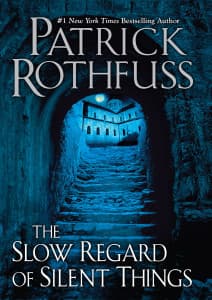
Auri, a damaged girl, navigates the silent, orderly, and beautiful hidden world of the Underthing, honoring forgotten things.
Auri wakes in her sanctuary, the 'Sweetest Deep,' a hidden room in the Underthing. Her morning routine is a precise dance of small tasks: lighting a candle, tending to her few things, and making sure everything is in its place. She thinks about the world's 'brokenness' and the delicate balance she keeps in her secluded life. Her thoughts center on order and the subtle changes in her surroundings, which she interprets with extreme sensitivity. She gathers a few items, including a broken gear and a piece of soap, preparing for her day of finding new homes for lost things.
Auri remembers Kvothe is due to visit in seven days. This prompts her to take on a major task: finding seven perfect, specific gifts for him. This mission is immense for her, requiring great focus and adherence to her internal rules about what is right and balanced. She begins her search, carefully moving through the dangerous, forgotten passages of the Underthing. Her journey is not just physical; it is deeply emotional and spiritual, as she gives deep meaning to every object and location. Her quest is driven by her affection for Kvothe and her wish to bring him comfort and order in his own chaotic life, mirroring her own need for stability.
Her search leads her to a forgotten laundry room where she finds a simple hairpin. This small object becomes a challenge for Auri. She carries it, thinking about its 'true' nature and where it belongs. The hairpin, at first a possible gift, proves too hard to place perfectly, causing her distress. She moves through various rooms, trying to sense the hairpin's proper home, a task that takes considerable time. In the end, she decides it is not right for Kvothe and must find its own place within the Underthing, a decision made with great care and relief.
Deep inside a forgotten workshop, Auri finds a broken gear, its teeth chipped. This object immediately connects with her, as she sees its inherent 'rightness' despite its damage. She takes it back to her sanctuary, the Sweetest Deep, and carefully begins the painstaking process of mending it. Using her limited tools and great patience, she files and polishes the gear, restoring its shape. This act of repair is not just physical; it is an act of love and a reflection of her own desire to mend what is broken. The mended gear becomes the first official gift for Kvothe, a symbol of her careful attention.
Auri decides Kvothe needs light, but a special, contained light. She finds a small, empty glass bottle and begins the process of filling it with 'Foxen,' a subtle, almost magical light she sees in certain places. This involves careful travel through the Underthing to gather the essence of light from specific, 'right' spots. She performs this delicate task with reverence, making sure the light she captures is pure and stable. The sealed bottle of Foxen becomes the second gift, a light against the darkness she knows Kvothe often faces.
Continuing her quest, Auri looks for a specific 'breath' for Kvothe. She journeys to a place where a particular draft of clean, cool air flows, a spot she judges perfect. With a small, empty bottle, she carefully 'captures' this breath, sealing it inside. This act is symbolic, representing her wish to give Kvothe a moment of purity and relief from the world's heavy atmosphere. The captured breath, an ephemeral gift, shows her unique view of reality and her belief in the power of the unseen.
Auri's journey takes her to a hidden stream in the Underthing, where she finds a small, smooth stone. This stone is perfect in its simplicity, texture, and weight. She holds it, feeling its inherent 'rightness' and knowing it is for Kvothe. The stone represents grounding and solidity, qualities she hopes to give him. She cleanses it carefully, making sure it is free of impurities before adding it to her collection of gifts. This gift, like the others, is chosen with an intuitive understanding of Kvothe's unspoken needs.
In a neglected corner, Auri finds a tarnished copper penny. Though it seems ordinary, Auri sees its potential. She cleans and polishes it until it gleams, turning it from a forgotten coin into something precious. For Auri, the penny represents value and fortune, a small token of prosperity she wishes for Kvothe. This act of transformation shows her ability to find beauty and meaning in the ordinary, elevating it through her unique perspective and care.
The seventh and final gift is the most challenging: silence. Auri understands Kvothe's need for peace, but how to capture such an abstract idea? She searches for a place of absolute quiet, a 'stillness' that can be contained. This leads her to the deepest, most secluded parts of the Underthing, where the air itself seems to hold its breath. After much effort and thought, she finds a small, plain box and, through a ritual known only to her, fills it with the essence of deep silence, a sanctuary from the world's noise.
With all seven gifts found and prepared, Auri awaits Kvothe's arrival. She carefully arranges them in her sanctuary, making sure each item is perfectly placed and ready for him. The anticipation is clear, a mix of excitement and worry. She cleans her small space, tidying and ordering everything, preparing not just for a visitor, but for the sacred exchange of gifts and understanding. When Kvothe finally arrives, she greets him with her usual reserved tenderness, and the exchange of gifts, though not detailed, implies a moment of deep connection and quiet understanding between them.
The Protagonist
Auri's arc is less about dramatic change and more about a deepening of her internal world and her capacity for care, culminating in her successful quest for Kvothe's gifts.
The Mentioned
Kvothe's arc is not depicted in this novella, but his presence through Auri's thoughts reinforces his role as a grounding figure in her life.
The Supporting
The Underthing remains largely unchanged, serving as a constant backdrop and a reflection of Auri's internal state.
This theme is central to Auri's life. Her entire existence in the Underthing is a careful effort to bring order to a chaotic, forgotten world. She sees things as 'broken' and tries to set them 'right,' whether mending a gear, finding the perfect place for a hairpin, or arranging her few possessions. This is clear from her morning rituals in the 'Sweetest Deep' to her painstaking search for Kvothe's gifts, where each object must match its perceived 'true nature' and purpose. Her inner peace depends on the external order she creates.
“She was learning the names of things. Not their true names, not yet, but the names of their places. The names of their uses. The names of their needs.”
Auri gives everyday objects and actions deep spiritual meaning. A simple hairpin, a broken gear, a breath of air, or a tarnished penny are not just things; they are entities with 'needs' and 'true natures' that Auri must understand and respect. Her acts of cleaning, mending, and placing are rituals, turning the ordinary into the sacred. This is shown when she carefully polishes a penny or captures 'Foxen' light in a bottle, demonstrating that even the smallest, most overlooked items hold great value and meaning in her world.
“Auri knew the world was a vast and complicated machine, and every piece of it had its proper place.”
Auri lives in deep isolation within the Underthing, her only regular contact being Kvothe. This isolation is both a sanctuary and a result of her unique view of the world. Her deep care for Kvothe, shown by her week-long search for seven perfect gifts, highlights her need for connection and her capacity for empathy despite her reclusiveness. Her gifts are not just objects; they express her understanding of his needs and her wish to bridge the gap between their two worlds. Her solitude allows her to maintain her delicate balance, but her connection to Kvothe provides a vital anchor.
“She had to prepare. She had to be ready. Because he was coming. In seven days.”
The novella explores how reality is subjective through Auri's eyes. What others see as abandoned tunnels and junk, Auri sees as a living, breathing world filled with subtle energies, 'true names,' and inherent 'rightness.' Her alchemical practices, like capturing light or silence in bottles, are not magic in a traditional sense, but her unique way of interacting with and ordering the world as she sees it. Her reality is deeply personal and intuitive, often different from conventional understanding, suggesting truths beyond what we can observe.
“She knew all the secret ways the world worked. The names of things, and the names of their places. The names of their needs.”
The story is told entirely from Auri's subjective, internal perspective.
The novella employs a stream of consciousness narrative, immersing the reader directly into Auri's unique and often fragmented thought processes. This device allows the reader to experience the world through her highly sensitive, intuitive, and ritualistic perception, where objects have 'true names' and 'needs.' It eschews traditional plot structure, focusing instead on her internal monologue, observations, and the meticulous details of her daily life and quest, making her subjective reality the central driving force of the story.
The physical setting is imbued with personality and significance, acting as an active force.
The Underthing is more than just a backdrop; it functions as a character itself. Auri interacts with it as a living entity, interpreting its 'moods,' navigating its dangers, and striving to bring order to its 'brokenness.' Its forgotten passages, hidden rooms, and subtle sounds guide Auri's actions and reflect her internal state. The Underthing's vastness and mystery are integral to Auri's identity and her unique worldview, making it a constant, influential presence throughout the narrative.
A structured, symbolic journey that drives Auri's actions.
The seven-day quest to find seven perfect gifts for Kvothe serves as the primary structural device for the novella. While the overarching narrative lacks a conventional external conflict, this internal quest provides Auri with a clear purpose and drives her exploration of the Underthing. Each gift represents a specific quality or need that Auri perceives in Kvothe, making the quest a symbolic expression of her affection and her unique way of caring. It gives a sense of progression and culmination to an otherwise episodic narrative.
“No. Not crazy. I am... a curiosity.”
— Auri's self-reflection on her unusual nature and way of life.
“And the world was a marvelous place, full of things that might be broken.”
— Auri's perspective on the fragility and potential of objects in the Underthing.
“She knew the shape of things. The true shape, not the one they wore for practical purposes.”
— Describing Auri's unique ability to perceive the essence and proper place of objects.
“It was a thing of moon-kissed silver, and it sang a song of secrets.”
— Auri interacting with a particularly significant object she finds.
“Some things are too precious to be used, and some things are too precious not to be.”
— Auri contemplating the inherent value and purpose of certain items.
“But a name was more than a sound. A name was a thing. It was a place and a person and a quality.”
— Auri's understanding of the profound significance of names.
“It was the sort of sound that felt like a secret, spoken just for her.”
— Auri experiencing a subtle sound in the quiet of the Underthing.
“She was learning to be a good thing. A careful thing. A thing that knew the names of all the little things.”
— Auri's internal journey of self-improvement and meticulous observation.
“The world was full of things that were almost right, and it was her task to make them truly so.”
— Auri's sense of duty to bring order and perfection to her surroundings.
“She was a whisper of a thing, a shadow of a thought, a fragment of a dream.”
— Describing Auri's ethereal and elusive nature.
“Every day was a gift. Every day was a puzzle. Every day was a chance to make things right.”
— Auri's daily routine and philosophy in the Underthing.
“She knew the secret heart of the world, and it beat in time with her own.”
— Auri's profound connection to the hidden rhythms and truths of her environment.
“Some things are too important to be rushed. Some things are too beautiful to be seen all at once.”
— Auri's patient approach to life and appreciation for gradual discovery.
“She was the quiet, the still, the small, the secret.”
— A concise summary of Auri's defining characteristics.
Ready to see how well you understood this book? Take our interactive quiz with 10 questions.

Biography coming soon.







