“The world has been like this for a long time, and you, my queen, are the only one of us who is not afraid of it.”
— The dwarves speaking to the queen about the sleeping kingdom.

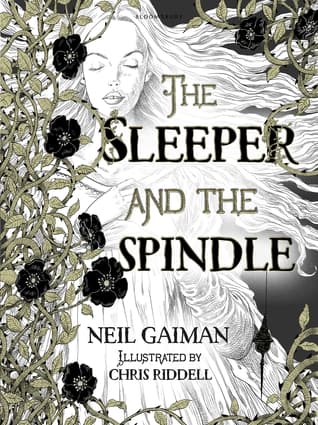
Neil Gaiman (2014)
Genre
Fantasy / Children's / Young Adult
Reading Time
30 min
Key Themes
See below
Sign in to track this book
On her wedding day, a warrior queen trades her gown for armor and a sword, journeying with her dwarf companions into a cursed kingdom to rescue a princess, only to find that neither the spell nor the maiden are what they seem.
Three old dwarfs return from the town of Zomb with news: a sleeping sickness has spread through the neighboring kingdom. Everyone, including the King and Queen, has fallen into an enchanted sleep, and the illness is now moving towards the young Queen's own lands. This news arrives just as the Queen is preparing for her wedding. Instead of focusing on her upcoming marriage, the Queen, who saw the sleeping sickness before in her youth, feels a strong sense of duty. She decides to postpone her wedding and ride out with her dwarf companions to investigate the sleeping kingdom and confront the source of the enchantment, despite her royal advisors' protests.
The Queen puts on her chainmail and sword, skipping her wedding gown, and sets out with her three loyal dwarfs, whose names are not given but are referred to collectively. Their journey takes them through dark, winding tunnels beneath the mountains that separate her kingdom from the sleeping one. The dwarfs, skilled miners and warriors, lead the way, protecting the Queen from unseen dangers and the heavy silence of the underground passages. They are determined and brave, serving their Queen faithfully as they venture into the unknown, understanding the mission's seriousness and the potential threat to their own people.
After days of travel through the mountain's depths, the Queen and her dwarfs emerge into the sunlight, finding themselves in the fabled sleeping kingdom. The sight is strange and unnatural: people are frozen mid-action, animals are still, and everything is coated in a fine layer of dust, as if time itself has paused. The silence is deep, broken only by the Queen's and her dwarfs' footsteps. They carefully navigate the deserted streets, passing sleeping guards, merchants, and common folk, all trapped in the same unmoving sleep. The dwarfs confirm the magic's power, noting its insidious spread and the complete lack of resistance from those affected.
The group makes their way to the grand castle, which stands silent and imposing. Inside, the enchantment is even stronger. They find the King and Queen of the land asleep on their thrones, and the entire court in a deep slumber. As they explore, they come across a young prince, also deeply asleep. The Queen, remembering tales of a prince waking a sleeping beauty, feels a pang of recognition, but also a sense of unease. The dwarfs remain watchful, checking for any signs of danger or a magical source within the castle walls, their experienced eyes scanning for anything wrong in the unnaturally still environment.
The dwarfs, having explored the castle, decide that the enchantment's origin must be at its highest point. They lead the Queen up a winding staircase to the tallest tower, a place of mystery and legend. As they climb, the air grows heavier, and the silence becomes almost suffocating. At the top, they find a small, dusty room. In the center of the room is a spinning wheel, its spindle still and ominous. The Queen recognizes the object from old tales, understanding its role in the curse. The dwarfs prepare for a confrontation, sensing they are close to the core of the magical illness.
Beside the spinning wheel, on a simple bed, lies a young woman of striking beauty, seemingly the princess from the well-known fairy tale. She is deeply asleep, her skin pale, her hair spread out like a dark halo. The Queen approaches her carefully, observing the classic scene of a sleeping beauty. However, the Queen's past experiences with magical sleep make her cautious; she senses that this situation is not as simple as the legends suggest. The dwarfs remain on guard, their expressions grim, focused on protecting their Queen from any unexpected magical backlash or hidden dangers within the tower room.
Recalling the stories, the Queen leans down and kisses the beautiful sleeping princess. Instead of the princess awakening, the Queen feels a sudden, deep change. The kiss is not one of true love, but one that transfers a hidden essence. The princess's eyes open, but they are not the eyes of an innocent victim. Her gaze is ancient and cold, and a dark, powerful magic comes from her. The princess, now revealed to be a malevolent witch, begins to stir, her long, dark hair starting to move with a life of its own, signaling a terrifying awakening.
The 'princess' sits up, her beauty now tinged with a sinister aura. She reveals herself to be an ancient witch, the true source of the sleeping sickness. She explains that she has been using the enchantment to drain the life force from the kingdom's inhabitants, maintaining her own long life and power. She mocks the Queen's naivety in believing the old tales, revealing that she set up the entire scenario, including the spreading rumors, to lure a suitable 'sleeper' to her. The dwarfs, realizing the grave danger, prepare for battle, their weapons drawn, ready to defend their Queen against this unexpected and powerful enemy.
As the witch speaks, the Queen remembers her own childhood, specifically her encounter with a similar sleeping sickness when she was a young girl, which had also been attributed to a beautiful, sleeping woman. She realizes that she herself was once a victim, touched by the same magic. This memory strengthens her resolve. She understands that this witch is not just a fairy tale villain but a pervasive evil that preys on others. Drawing her sword, the Queen prepares to fight, not just for her kingdom, but to end a cycle of enchantment that has touched her own life.
A brutal fight breaks out in the small tower room. The witch uses her dark magic, summoning strands of her hair to ensnare and attack. The dwarfs, with their combat skills, bravely engage the witch, using their axes and swords to cut through her magical defenses. The Queen, remembering her own strength and lessons from her youth, fights with fierce determination. One of the dwarfs, in a moment of selfless bravery, sacrifices himself to create an opening, allowing the Queen to strike a decisive blow against the witch. The battle is a desperate struggle for survival against a powerful, ancient evil.
With the sacrifice of her dwarf, the Queen manages to plunge her sword into the heart of the witch. As the witch dies, her ancient magic fades, and the sleeping sickness begins to lift. Throughout the kingdom, people stir from their slumber, confused but alive. The spell is broken, and life slowly returns to the land. The Queen, though victorious, is weary and saddened by the loss of her loyal companion. The remaining dwarfs, though grieving, are relieved that the immediate danger has passed and their Queen is safe, and the curse undone.
The Queen returns to her own kingdom, her wedding still waiting. However, her experiences have changed her deeply. She realizes that her true calling is not to be a traditional queen, bound by marriage and courtly duties, but to be a protector of her people, free to act and defend them from threats. She decides to postpone her wedding indefinitely, or perhaps even call it off, choosing a life of independence and responsibility as a warrior queen. Her journey has shaped her into a leader who understands the true nature of evil and the importance of self-determination.
The Protagonist
She transforms from a queen preparing for a traditional marriage into a self-reliant warrior who chooses her own destiny and defines her role as a protector.
The Supporting
They remain steadfast in their loyalty and bravery, demonstrating the ultimate sacrifice for their Queen.
The Antagonist
Revealed to be a powerful, ancient evil, she is ultimately defeated by the Queen, ending her reign of terror.
The Mentioned
He remains a static character, serving as a symbol rather than an active participant in the plot.
The Mentioned
They remain static, illustrating the witch's power until the spell is broken.
The story actively takes apart and reinterprets classic fairy tale elements. The 'Sleeping Beauty' is a malevolent witch, the 'Prince Charming' remains asleep and unimportant, and the 'Princess' (the Queen) is a warrior who saves herself and others. This theme challenges the traditional damsel-in-distress narrative, empowering the female protagonist and showing a more complex, darker reality behind the seemingly innocent tales. The Queen's decision to skip her wedding for battle, and her kiss that transfers evil rather than true love, are prime examples of this subversion.
“She was a woman who had been a princess, who had been a girl playing in the woods, and she had seen sleeping sickness before. So she had an idea of what was happening. And she knew what she had to do.”
The Queen shows female agency, making her own choices and defining her own destiny. She rejects the passive role expected of her, choosing action over domesticity and self-determination over an arranged marriage. Her strength, courage, and leadership are central to the story. This theme is clear in her decision to wear chainmail instead of a wedding dress, her leadership of the dwarfs, and her ultimate choice to remain an independent protector of her kingdom rather than a traditional wife. Her ability to face and defeat a powerful magical threat highlights her inherent power.
“She was not going to be a princess who waited for a prince. She was a queen. She would make her own choices.”
The story explores how evil can be beautiful and deceptive, hiding behind an alluring facade. The witch, disguised as a beautiful princess, uses her appearance to lure victims and spread her insidious magic. This theme warns against superficial judgments and highlights the dangerous power of enchantment and illusion. The Queen's ability to see the true nature of the 'princess' through her own past experience is crucial. The sleeping sickness itself is a deceptive form of evil, appearing peaceful but slowly draining life.
“She was beautiful, yes, but her beauty was like a mask, an ancient, polished thing behind which something cold and hungry lurked.”
The Queen struggles with the conflict between her personal desire for a wedding and her duty to her kingdom. She ultimately prioritizes her people's safety over her own upcoming marriage, showing a strong sense of responsibility and selflessness. This theme highlights the sacrifices leaders must make and the importance of civic duty. Her initial hesitation about leaving her wedding preparations, followed by her firm decision to go, illustrates this internal conflict and its resolution.
“Her wedding could wait. Her people could not.”
The story consistently plays on reader expectations derived from classic fairy tales.
Gaiman masterfully uses familiar fairy tale tropes (the sleeping princess, the kiss, the prince) only to twist them. The 'sleeping beauty' is revealed to be the villain, the kiss transfers evil, and the prince is irrelevant. This device keeps the reader engaged by constantly surprising them and forcing them to re-evaluate their preconceived notions about the narrative, making the story feel fresh and unpredictable while still referencing its source material.
A childhood encounter with a similar sleeping sickness gives the Queen unique insight.
The Queen's memory of having been affected by a sleeping sickness in her youth is a crucial plot device. It provides her with foreknowledge and a deeper understanding of the magical threat, allowing her to approach the situation with caution and insight that a typical fairy tale hero might lack. This personal connection to the curse fuels her resolve and ultimately helps her identify the true nature of the witch, making her victory more earned and less reliant on external magic.
A classic fairy tale object that serves as a focal point for the curse.
The spinning wheel and its spindle are iconic symbols from the Sleeping Beauty tale. In this story, they serve as a potent magical artifact, not just a means of inflicting a curse but also a focal point for the witch's power. Their presence in the tower reinforces the connection to the original myth while subtly hinting at the subversion to come. It acts as a physical manifestation of the enchantment that has gripped the kingdom.
Loyal companions who provide practical skills and unwavering support.
The three dwarfs serve as more than just sidekicks; they are essential guides and protectors. Their knowledge of underground tunnels, combat skills, and unwavering loyalty enable the Queen's journey and ensure her safety through dangerous territories. They represent the practical, grounded aspects of adventure and the importance of reliable allies, contrasting with the magical and deceptive elements of the antagonist. Their sacrifice underscores the gravity of the mission and the bonds of loyalty.
“The world has been like this for a long time, and you, my queen, are the only one of us who is not afraid of it.”
— The dwarves speaking to the queen about the sleeping kingdom.
“There are some journeys that you have to take alone.”
— The queen deciding to go to the sleeping kingdom herself.
“Sometimes you have to step outside your comfort zone to find out what you are truly capable of.”
— The queen leaving her wedding preparations to investigate the sleeping sickness.
“A good story is a journey, not a destination.”
— A general observation on the nature of tales.
“It was not a kiss that woke the sleeping beauty. It was something else entirely.”
— The queen's discovery about how the sleeping beauty was 'woken'.
“The world is not always what it seems, and sometimes, the things we believe to be true are merely stories we tell ourselves.”
— Reflecting on the nature of common beliefs versus reality.
“Sleep is a gentle thing, a kind thing. But sometimes, it can be a trap.”
— Contemplating the nature of the magical sleep affecting the kingdom.
“Gold is a fine thing, but sometimes, a sharp blade is finer.”
— The queen's practical approach to problems, preferring action over wealth.
“There are many kinds of courage. Some are loud, and some are quiet. Some are fierce, and some are gentle.”
— Observing the different forms of bravery shown by characters.
“The most dangerous things are often the most beautiful.”
— The allure and peril of the sleeping beauty and the spindle.
“Sometimes, the right thing to do is the hardest thing to do.”
— The queen making a difficult choice for the greater good.
“A queen must be many things. A warrior, a diplomat, a scholar. But above all, a queen must be wise.”
— Reflecting on the responsibilities and qualities of a good ruler.
“The past is a story we tell ourselves. The future is a story we are about to write.”
— Considering the impact of choices on destiny.
Ready to see how well you understood this book? Take our interactive quiz with 10 questions.
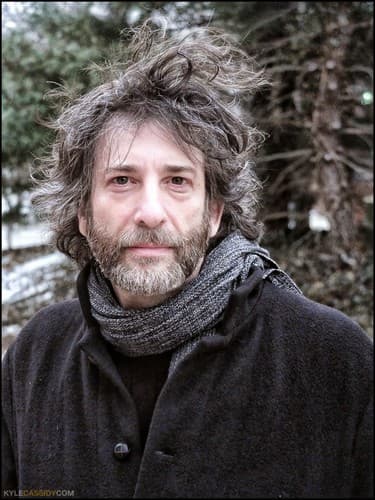
Neil Richard MacKinnon Gaiman is an English author of short fiction, novels, comic books, graphic novels, audio theatre, and a screenwriter. His works include the comic book series The Sandman and the novels Good Omens, Stardust, Anansi Boys, American Gods, Coraline, and The Graveyard Book. He has won numerous awards, including the Hugo, Nebula, and Bram Stoker awards, as well as the Newbery and Carnegie medals. He is the first author to win both the Newbery and the Carnegie medals for the same work, The Graveyard Book (2008). In 2013, The Ocean at the End of the Lane was voted Book of the Year in the British National Book Awards. It was later adapted into a critically acclaimed stage play at the Royal National Theatre in London.







