“The world is a beast of many heads, and each head has its own hunger.”
— Jacob's reflection on the harsh realities of the world he lives in.

Isaac Bashevis Singer (1971)
Genre
Historical Fiction
Reading Time
360 min
Key Themes
See below
Sign in to track this book
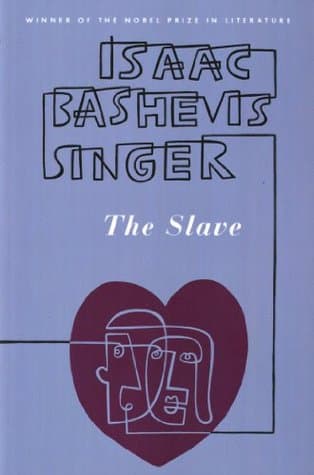
After massacres, a ransomed Jewish slave and a Polish woman fall in love, risking everything to escape societal judgment and their own consciences in a fight for survival and identity.
Jacob, a young Jewish man from Josefov, is enslaved by Polish peasants in the village of Pisk after the Chmielnicki massacres. He herds cattle for a crude master, enduring hardship and isolation. Jacob holds onto his faith, studying the Torah from memory. Villagers often mock and mistreat him as an outsider. His only companions are animals and his own thoughts, and he struggles to keep his sanity and hope.
During his enslavement, Jacob meets Wanda, his master's daughter. She is a kind young woman, an outcast because of a limp and an underdeveloped arm. Wanda is drawn to Jacob's intelligence and dignity. She secretly brings him food and offers kindness, a contrast to the brutality he faces. Despite religious and social barriers, Jacob and Wanda develop a deep, forbidden love, finding comfort and understanding in each other.
After four years, Jacob is ransomed by his former community, specifically by Gedaliah. Before leaving Pisk, Jacob secretly meets Wanda. They confirm their love, and Jacob, despite the risks and religious prohibitions, promises to return for her. He knows marrying a Gentile is a sin, but his love for Wanda is so strong he feels he cannot live without her. The separation is painful, and Jacob carries the weight of his promise and the coming transgression.
Jacob returns to the Jewish town of Frampol, welcomed as a survivor and scholar. He tries to rejoin Jewish society, but his mind is on Wanda. He feels a spiritual crisis, torn between his faith and his forbidden love. He struggles with guilt and fear of divine punishment, yet cannot abandon Wanda. He cannot marry a Jewish woman, even when suitable matches appear, because his heart is with Wanda.
Driven by an urge, Jacob secretly returns to Pisk and finds Wanda. They plan their escape. Wanda, disguised as a mute Jewish woman named Sarah, travels with Jacob to a distant Jewish community. They face dangers like bandits and suspicious villagers. Jacob worries constantly about their safety and the secret of Wanda's identity, which, if found out, would shame him and endanger Wanda.
Jacob and Wanda (now Sarah) settle in the Jewish village of Kreshev. Jacob becomes a respected teacher and scribe, known for his piety. Wanda, maintaining her disguise as a mute, is accepted, though her foreign look and silence bring curiosity and some suspicion. They live in constant fear of discovery, and the deception burdens Jacob, who feels he lives a lie before God and his community. Despite the stress, their love deepens.
Wanda becomes pregnant, bringing both joy and renewed worry to Jacob. The pregnancy is hard, and during a harsh winter, Wanda falls ill. She goes into premature labor and dies during childbirth. In her last moments, she tries to speak and reveal her identity to Jacob, but her words are unclear, and she dies without her secret being fully known. Her death is a devastating blow to Jacob, who feels great loss, guilt, and the irony of her silent passing.
After Wanda's death, community suspicions about 'Sarah' grow. Her unusual burial, without traditional Jewish rites, fuels gossip. Jacob is consumed by grief, isolating himself and struggling with his faith. Some, especially community leaders, accuse him of marrying a Gentile, but without proof, the accusations remain. Jacob mourns Wanda in secret, burdened by his unconfessed sin and loneliness.
Jacob dedicates himself to raising his son, Benjamin, who is sickly. He sees Benjamin as a sign of his love for Wanda and a way for his own spiritual redemption. Jacob continues his scholarly work, becoming more respected in Kreshev. He finds comfort in his studies and in caring for his son, believing his suffering and devotion will atone for his wrongs. He teaches Benjamin about the Torah and Jewish tradition, securing his son's place in the community.
Decades later, Jacob, now an old man, returns to Pisk, the village of his enslavement. He finds the graves of Wanda's family and, to his surprise, a tombstone with Wanda's name next to them. This confirms her identity to the Polish villagers who knew her. Jacob, now free from secrecy, openly acknowledges his love for Wanda, sharing their story with the villagers. This gives him peace and closure, finally honoring Wanda publicly.
After his discovery in Pisk, Jacob stays in the village for a short time, finding acceptance among the peasants. He dies peacefully and is buried next to Wanda, fulfilling a silent wish to be reunited. His life, marked by suffering, forbidden love, and faith, becomes a legend. His story, bridging two worlds, speaks of the power of love and the complex nature of faith and human connection in a time of division and prejudice. His son, Benjamin, continues his scholarly legacy.
The Protagonist
Jacob transforms from a scholar focused solely on religious texts to a man whose love for a Gentile woman forces him to redefine his faith and find a deeper, more compassionate understanding of God's will. He finds redemption through suffering and fatherhood.
The Love Interest/Supporting
Wanda begins as a lonely outcast in her village, finds profound love and acceptance with Jacob, and sacrifices her identity to live with him, ultimately dying with her secret largely intact but leaving a lasting legacy through her son.
The Supporting
Benjamin's arc is less about personal development and more about his symbolic role as the product of a forbidden love, carrying the legacy of both his parents.
The Supporting
Gedaliah's role is primarily functional, representing the community's obligation to its members.
The Supporting
The Rabbi's arc is static, serving as a symbol of religious law and communal judgment.
The Mentioned
This character is static, serving as an initial antagonist.
The main theme explores the conflict between Jacob's love for Wanda, a Gentile woman, and the laws of his Jewish faith. Jacob is tormented by the sin he believes he commits, yet his love for Wanda is so strong he cannot leave her. This tension runs through their lives, from their secret meetings to their deceptive life in Kreshev. The novel asks if love can go beyond religious and social expectations, and at what cost to one's soul and community. Jacob's internal struggle is a battle between his heart and his spiritual beliefs.
“He knew that what he was doing was a sin and that he would have to pay for it in this world and the next, but he could not help himself. Wanda was his life, his very breath.”
The novel shows suffering as a common part of human life, especially for Jewish people after the Chmielnicki massacres. Jacob endures physical enslavement, isolation, and the burden of his secret. His suffering is not just punishment; it leads to a deeper understanding of himself and his faith. Through his devotion to Wanda and later to his son Benjamin, and his acceptance of his fate, Jacob finds a form of redemption, not necessarily in his community's eyes, but within his own soul. His eventual public acknowledgment of Wanda's identity in Pisk is a final act of spiritual freedom.
“Jacob knew that his suffering was a punishment, but also a test. He would not break.”
Identity is explored through both Jacob and Wanda. Jacob, a scholar, loses his identity as a free Jew and becomes a slave. He then tries to balance his Jewish identity with his love for Wanda. Wanda must shed her Polish identity to become 'Sarah,' a mute Jewess, living a life of silence and deception. Both characters are outsiders looking for a place to belong, whether in a community or with each other. The novel highlights how fragile and fluid identity is, especially when faced with love, persecution, and the need to survive. Their son, Benjamin, also has a complex identity, being of mixed heritage but raised in one tradition.
“She was Sarah now, a Jewish woman, mute and alone in a strange land. But in her heart, she was still Wanda, Jacob's Wanda.”
Jacob's deep faith in God and the Torah is central to his character, but his experiences constantly challenge it. His love for Wanda brings him deep doubt, questioning God's mercy and his own piety. He grapples with sin and atonement, wondering if his love can be forgiven. The novel does not offer easy answers but explores the complexities of keeping faith during personal and historical tragedy. Jacob's faith eventually changes, becoming more personal and less rigid, including his love for Wanda as part of his spiritual journey.
“How could God demand such a sacrifice? How could love be a sin?”
Wanda's pretense of being mute to conceal her Polish identity.
Wanda's disguise as a mute Jewish woman, 'Sarah,' is a crucial plot device. It allows her to live undetected within the Jewish community of Kreshev, circumventing the immediate suspicion that her Gentile origins would provoke. However, it also creates immense tension and isolation for her, as she cannot speak her true thoughts or reveal her past. This device heightens the sense of secrecy and danger for Jacob and Wanda, as a single spoken word could expose their entire deception and bring ruin upon them both. It also symbolizes Wanda's profound sacrifice and her inability to fully integrate.
The historical backdrop of violent persecution that initiates Jacob's suffering.
The Chmielnicki massacres of the 17th century serve as the foundational historical context and a powerful plot device. They are not merely background but the catalyst for Jacob's enslavement, the destruction of his community, and the pervasive suffering and fear that permeate the entire narrative. This historical event establishes the brutal reality of the era, the precariousness of Jewish life, and the deep-seated prejudice that makes Jacob and Wanda's relationship so forbidden and dangerous. It underscores the themes of persecution, survival, and the enduring trauma of historical violence.
The discovery of Wanda's true tombstone in Pisk decades later.
The discovery of Wanda's tombstone bearing her true name in Pisk, decades after her death, is a powerful and climactic plot device. It provides Jacob with a final, public validation of Wanda's identity and his love for her, bringing closure to his long-held secret and grief. This revelation allows Jacob to finally speak openly about his past and his beloved, liberating him from the burden of his deception. It serves as a moment of reconciliation, both for Jacob with his past and with the memory of Wanda, and symbolically, between their two worlds.
Jacob's ability to recall vast portions of religious texts from memory.
Jacob's exceptional memory for the Torah and Talmud is a significant character trait that functions as a plot device. During his enslavement, it is his only source of spiritual sustenance and mental preservation. Later, it allows him to become a respected melamed and scribe in Kreshev, providing him with a livelihood and a place within the community, despite his secret. His scholarship also highlights his deep piety, which is constantly at odds with his forbidden love, intensifying his internal conflict and making his choices more profound.
“The world is a beast of many heads, and each head has its own hunger.”
— Jacob's reflection on the harsh realities of the world he lives in.
“Where there is no freedom, there is no God.”
— A profound statement on the connection between liberty and faith.
“Silence is also a language, and it can speak volumes.”
— Jacob observing Sarah's quiet nature and understanding her unspoken communication.
“A man without a past is like a tree without roots.”
— Jacob pondering his identity and the importance of his heritage.
“Love is a fire that burns even in the snow.”
— A metaphor for the enduring nature of Jacob and Sarah's love amidst hardship.
“God's ways are not our ways, and His thoughts are not our thoughts.”
— Jacob grappling with divine providence and the inexplicable nature of suffering.
“Every man carries his own hell within him.”
— Jacob's internal struggle with his past and present circumstances.
“The truth is a seed that sprouts even in the hardest ground.”
— A reflection on the eventual emergence of truth despite attempts to conceal it.
“Fear makes us do things we would never imagine.”
— Jacob observing the impact of fear on people's actions during troubled times.
“To forget is to die a second death.”
— Jacob's determination to remember his past, his faith, and his loved ones.
“Hope is a small candle that never goes out, even in the darkest night.”
— Jacob clinging to hope in the face of immense despair.
“There is no greater prison than the one we build for ourselves.”
— Jacob's realization about self-imposed limitations and guilt.
“The greatest miracles are often the ones we don't even notice.”
— A subtle observation on the overlooked blessings and small wonders of life.
“A man can lose everything but his soul.”
— Jacob's ultimate understanding of what truly matters, even in the depths of adversity.
Ready to see how well you understood this book? Take our interactive quiz with 10 questions.
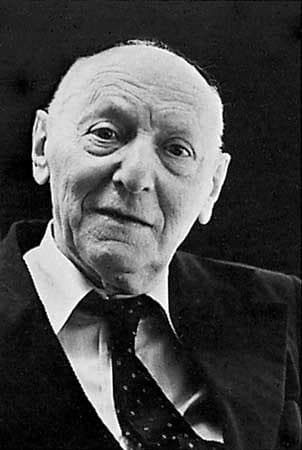
Isaac Bashevis Singer was a Polish-born Jewish-American novelist, short-story writer, memoirist, essayist, and translator. Some of his works were adapted for the theater. He wrote and published first in Yiddish and later translated his own works into English with the help of editors and collaborators. He was awarded the Nobel Prize for Literature in 1978. A leading figure in the Yiddish literary movement, he was awarded two U.S. National Book Awards, one in Children's Literature for his memoir A Day of Pleasure: Stories of a Boy Growing Up in Warsaw (1970) and one in Fiction for his collection A Crown of Feathers and Other Stories (1974).







