“The truth is a powerful thing, young man. Sometimes it's the only thing.”
— Heard by Charlie during his journey.

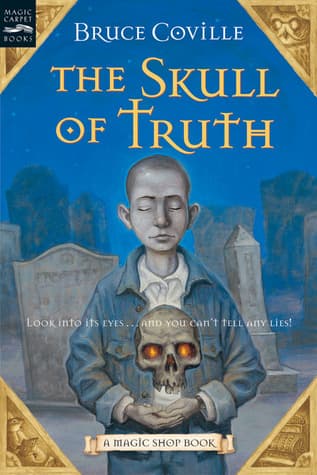
Bruce Coville (1997)
Genre
Fantasy / Children's / Young Adult
Reading Time
120 min
Key Themes
See below
Sign in to track this book
Haunted by a magical skull that forces him to speak only the truth, a compulsive liar named Charlie must navigate a world that no longer believes a word he says, even when he's finally being honest.
Charlie Eggleston is a known liar in his hometown of Plumfield. He tells small exaggerations and complex stories, often to avoid trouble or get attention. One afternoon, after making up a story about a runaway dog to skip a chore, he is cornered by the school bully, Blackie. Blackie, tired of Charlie's lies, threatens to beat him. To escape, Charlie runs into Tucker's Swamp, a place most people avoid because it is dangerous and mysterious. He hopes to hide until Blackie leaves, but he soon gets lost.
Deep inside Tucker's Swamp, away from any roads, Charlie finds an old, run-down house that looks like a magic shop. This is Mr. Elives's shop, known for its strange and powerful magical items, though Charlie doesn't know this. The shop is full of interesting and slightly unsettling objects. Mr. Elives, the shopkeeper, is a mysterious old man who seems to know more about Charlie than he lets on. Charlie is immediately drawn to the shop's odd feel and the promise of something special.
Among the many strange items in Mr. Elives's shop, Charlie notices a human skull on a velvet cushion. The skull, which Mr. Elives calls 'The Skull of Truth,' has an unsettling but strong pull. Mr. Elives explains that the skull can make its owner tell only the truth, an idea that bothers Charlie, given how much he lies. Despite Mr. Elives's warnings about the skull's magic and its dangers, Charlie feels an undeniable connection to it.
Driven by curiosity, a desire for something special, and perhaps a hidden wish to change, Charlie decides to steal The Skull of Truth. He waits for Mr. Elives to be busy, then grabs the skull and runs back into the swamp. Almost immediately after taking the skull, Charlie feels a strange sensation, a tightness in his throat, and he cannot lie. The Skull's magic begins, forcing him to speak only the truth, which will change his life and relationships.
The Skull's curse immediately makes Charlie's life difficult. When he gets home, he tries to explain to his parents where he's been and why he's late, but his forced honesty sounds so unbelievable that they think he's making up another story. He truthfully tells them he stole a skull from a magic shop in the swamp, but they laugh, believing it's just another one of his tales. This happens with everyone he meets; his truthful confessions about his actions and the skull are met with disbelief, because he is known for lying.
Frustrated and alone, Charlie tries to go back to Mr. Elives's shop, but he can't find it. He then seeks out his friend, Lucy, hoping she might understand, but even she struggles to believe his story about the skull. He also tries to tell his teachers and the principal, but his truthful statements about his past lies and the skull's curse only get him into more trouble. His honesty, once a way to protect himself, now isolates him more. He realizes he needs to find a way to break the curse himself, as no one else seems able to help or believe him.
Living with the Skull of Truth is very hard. Charlie accidentally offends people by blurting out harsh truths about how they look or what they do. He truthfully admits to past wrongs, like cheating on tests or breaking things, which only earns him more punishment and distrust. His parents are frustrated, thinking he's being deliberately defiant. His classmates avoid him, finding his unfiltered honesty rude. Charlie begins to understand the real impact of his lies, not just on others, but on his own trustworthiness, as his current truthfulness is now seen as his biggest deception.
Through overheard talks and his own library research, Charlie learns more about the Skull of Truth's history. He discovers that a powerful wizard made the skull to punish frequent liars and that its curse can only be broken when the person under its spell tells a truth so deep and convincing that everyone believes it without question. This gives Charlie a new goal and a way forward, though he knows it will be very hard to achieve given his reputation.
An opportunity for Charlie to try and break the curse comes during the annual school play. He has a small part, but he sees it as his chance to tell a truth that everyone will feel. He struggles with his lines, as the skull makes him speak only the truth, even when acting. During a key moment in the play, Charlie changes the script, giving an emotional, heartfelt speech about the importance of truth and the pain of not being believed. He speaks from his own experience, putting his real feelings into his words.
Charlie's performance is so genuine that it captures the audience. His words, from his own hard experience with the Skull of Truth, connect deeply. For the first time, people truly listen and believe him. His parents, teachers, and classmates see the real regret and understanding in his eyes. As the audience believes his truth, Charlie feels the skull's magic finally let go. The curse is broken. He can tell a small, harmless lie again, but he chooses not to. He has learned the value of truth and the importance of earning trust.
After the play, with the curse gone, Charlie looks for Mr. Elives's shop again. This time, he finds it easily, as if his journey had changed his view. He returns the Skull of Truth to Mr. Elives, who greets him with a knowing smile, recognizing Charlie's growth and understanding. Charlie has learned to appreciate the power of truth and the responsibility that comes with it. He leaves the shop a changed boy, no longer forced to lie, and with a new commitment to honesty, ready to rebuild trust with those he had upset.
The Protagonist
Charlie transforms from a compulsive liar who uses falsehoods as a shield to a boy who understands and values the power of truth, earning back the trust he'd lost.
The Supporting
Mr. Elives remains largely unchanged, serving as a wise, static mentor figure who facilitates the protagonist's journey.
The Supporting
Lucy's arc involves moving from skepticism and frustration with Charlie to understanding and belief in his genuine change.
The Supporting/Mentioned
Blackie's character remains static, serving primarily as a plot device to initiate Charlie's journey.
The Supporting
Their arc involves moving from frustration and disbelief to understanding and accepting Charlie's genuine transformation.
The main theme looks at how truth and lies shape how people see things, relationships, and who they are. Charlie's early reliance on lies makes him isolated and untrustworthy, even when he tries to be honest. The Skull of Truth forces him to face the harm his lies caused, not just to others but to his own credibility. Ironically, when he can only tell the truth, no one believes him, showing that trust is built over time, not just by stating facts. The ending, where his genuine truth breaks the curse, shows the strong power of real honesty to heal and connect.
““The truth is a powerful thing, boy. More powerful than any lie, no matter how clever.””
Charlie's story is one of deep redemption. He starts as a boy who uses lies to protect himself, but the Skull of Truth forces him into a period of difficult self-reflection. Because he cannot lie, he experiences the pain and isolation his own lies caused others. This hard time helps him understand the real value of honesty and the importance of rebuilding trust. His success in breaking the curse is not just a magical event but shows his inner growth and his discovery of a more genuine self, no longer needing to hide behind falsehoods.
““Sometimes, the only way to truly understand the truth is to be forced to live it.””
The novel explores the complex nature of belief and how trust is built and lost. Because of Charlie's past, even his clear truths are dismissed as lies, showing that how people see things is strongly shaped by past behavior. The story shows that belief is not just about facts; it is about the credibility of the source. Charlie's struggle to be believed, despite speaking only the truth, highlights how hard it is to regain trust once it is lost. His final act of truthfulness in the play finally earns him back the belief of his community, proving that consistent, heartfelt honesty can overcome a damaged reputation.
““A liar is not believed even when he speaks the truth.””
Charlie's experience with the Skull of Truth is a major challenge that leads to his personal growth. Being forced to tell the truth, even when it causes him pain or embarrassment, pushes him out of his comfort zone and makes him face his flaws. The difficulties he faces—not being believed, upsetting friends, and facing punishment—all help him change. Without the Skull's curse, Charlie might never have truly understood the impact of his actions or found the desire to change. His journey shows how hard experiences can be important for character development and learning life lessons.
““It was the hardest lesson he had ever learned, but it was also the most important.””
The magical object that drives the protagonist's journey and conflict.
The Skull of Truth serves as the central MacGuffin of the story. It is the object Charlie steals and which subsequently places him under its curse, forcing him to tell only the truth. While the skull itself has a magical property, its primary function is to propel Charlie's character arc. Its existence creates the central conflict – Charlie's inability to lie – and his subsequent quest to break the curse. The skull's power is specific and directly impacts the protagonist's core flaw, making it more than just a simple plot driver but a tool for character development.
A consequence that is the opposite of what is intended or expected.
Charlie's punishment is deeply ironic: a chronic liar is cursed to tell only the truth, yet because of his reputation, no one believes him. This irony highlights the core theme of trust and the consequences of past actions. He is forced to live in a world where his most genuine statements are dismissed as his greatest deceptions. This device effectively amplifies Charlie's struggle and forces him to understand the impact of his past lies from a new, painful perspective, ultimately leading to his transformation.
A character who provides guidance or catalysts for the hero's journey.
Mr. Elives embodies the archetype of the wise old man. He is mysterious, knowledgeable about magic, and indirectly guides Charlie's journey. He doesn't offer direct solutions but rather provides the means (the Skull) and subtle hints, allowing Charlie to learn through his own experience. His cryptic warnings and understanding smile at the end suggest he knew all along what Charlie needed to learn. He serves as a static mentor figure whose presence facilitates the protagonist's growth without actively interfering.
The protagonist's journey to reverse a magical affliction or solve a problem.
After realizing the full extent of the Skull's curse, Charlie embarks on a quest to find a way to break it. This quest is not just physical (returning to the shop, researching) but also internal, as he must understand the conditions for breaking the spell (making a universally believed truth). This narrative device provides structure to the middle and end of the story, giving Charlie a clear objective and allowing for his character development as he works towards achieving it.
“The truth is a powerful thing, young man. Sometimes it's the only thing.”
— Heard by Charlie during his journey.
“It is not the telling of the truth that hurts, but the truth itself.”
— A lesson Charlie learns from the Skull.
“You can run from the truth, but you can never hide from it. Not forever.”
— The Skull's persistent wisdom.
“The first step to wisdom is admitting you don't know everything.”
— A piece of advice offered to Charlie.
“Fear is a powerful master, but it can be overcome.”
— Charlie confronts his fears.
“Sometimes the hardest truths are the ones we need to hear the most.”
— Reflecting on uncomfortable revelations.
“A lie can travel halfway around the world while the truth is still putting on its shoes.”
— An old saying that resonates with the book's theme.
“The greatest magic is the truth, for it can change everything.”
— Understanding the transformative power of truth.
“You cannot truly know yourself until you face the truths you wish to avoid.”
— Charlie's journey of self-discovery.
“Even a small truth, when spoken, can have great consequences.”
— Considering the impact of honesty.
“The world is full of things you don't understand, and that's okay. The important thing is to keep looking.”
— Encouragement for curiosity and learning.
“Trust is a fragile thing, easily broken, but hard to mend.”
— Reflecting on relationships and honesty.
“Sometimes, the most valuable treasure is not gold, but understanding.”
— Charlie's change in perspective.
“To truly forgive, you must first acknowledge the truth of what happened.”
— A step towards healing and resolution.
Ready to see how well you understood this book? Take our interactive quiz with 10 questions.

Bruce Coville is a prolific American author known for his engaging middle-grade fantasy and science fiction novels. He is celebrated for popular series like "The Unicorn Chronicles," featuring "Into the Land of the Unicorns," and "The "Aliens" series, including "My Teacher Is an Alien." His accessible writing style and imaginative storytelling have made him a beloved figure in children's literature.







