“I can only imagine that the most awful thing about being a ghost is that you can't get drunk.”
— Eli musing on the afterlife and his own vices.

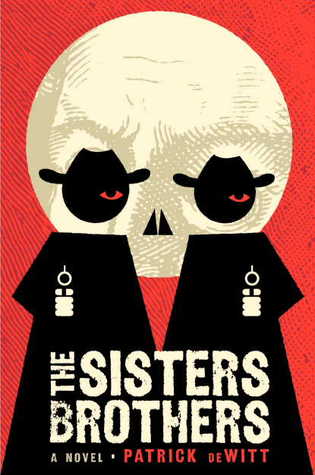
Patrick dewitt (2011)
Genre
Literary Fiction / Historical Fiction
Reading Time
360 min
Key Themes
See below
Sign in to track this book
Two hitman brothers, Eli and Charlie Sisters, travel through the 1850s Old West, dealing with their violent job and their changing relationship while tracking a mysterious prospector.
The story begins with Eli and Charlie Sisters getting an order from their boss, the Commodore. They must travel from Oregon City to California to kill a prospector named Hermann Kermit Warm. Eli, who thinks more and is more sensitive, rides his horse, Tub, which has been bitten by a spider, making its face swell. Charlie, the older and more ruthless brother, ignores Eli's worries, telling him to focus on their mission. Their journey south starts with a bad feeling, as Eli struggles with his growing tiredness of their violent job and Charlie's strong dedication to it. They meet a group of men they think are Warm's associates, leading to a brutal shootout that shows their violent reputation.
During their hard journey, the brothers camp for the night. A bear attacks Eli, biting his arm badly. The wound is deep and painful, leaving him weak and sick. Charlie, though annoyed by the delay at first, cares for his brother's injury with surprising attention. While recovering, Eli becomes interested in personal hygiene after finding a discarded toothbrush. He becomes focused on having clean teeth, a small detail that shows his desire for a more civilized life in the middle of their brutal one. This event further separates the brothers, with Eli finding comfort in small, everyday things while Charlie stays focused on their grim task.
The brothers arrive at a town where they hear rumors about the Mayfield Gang, who are also reportedly looking for Hermann Kermit Warm. Eli and Charlie decide to confront the gang, hoping to learn where Warm is. A tense standoff happens, ending in a violent shootout where the Sisters brothers show their deadly skill. They capture a gang member, who, under pressure, reveals that Warm is in California and is known for being clever and hard to find. This meeting confirms the Sisters' reputation and gives them a clearer direction for their search, but it also highlights the dangers of their work.
As they continue their journey, Eli and Charlie meet Morris, a refined and educated man who says he is a private detective also tracking Hermann Kermit Warm. Morris explains that Warm has a chemical formula that helps prospectors easily find gold in rivers, a discovery he plans to patent and share for a fee. Morris, first hired by the Commodore to find Warm, has become interested in Warm's idea and believes his invention could change gold mining. He proposes a partnership to the Sisters brothers: instead of killing Warm, they should help him, Morris, and Warm work together on this project. Eli is interested in Morris's proposal, seeing a possible escape from their violent lives, while Charlie remains doubtful and focused on their original mission.
Morris explains the details of Warm's gold-finding formula, how it works, and its potential to make them all rich. He describes Warm as a visionary, not a criminal, who wants to help common prospectors. Eli is drawn to the idea of a life without bloodshed and imagines a future where he can settle down and perhaps open a store. Charlie, however, is not convinced, suspicious of Warm's reasons and Morris's sudden change of loyalty. The talk about the formula shows the different paths the brothers are considering, with Eli drawn to the promise of a better life and Charlie sticking to the familiar, brutal world of contract killing. This news about Warm's invention drastically changes how the brothers see their target.
After a long and hard journey, Eli, Charlie, and Morris finally arrive at Hermann Kermit Warm's hidden gold-mining claim in California. The camp is small and simple, by a river, and Warm is working on his experiments. He is not the tough criminal Eli and Charlie expected, but an intelligent and somewhat odd inventor. Warm greets them carefully but without fear, having been warned by Morris. The tension in the air is clear as the brothers, especially Charlie, deal with the reality of their target, who is far from the villain they imagined. Eli is relieved, seeing this as a chance to avoid violence and accept Morris's plan.
The four men — Eli, Charlie, Morris, and Warm — decide to test Warm's gold-finding formula. They gather by the river, with Warm explaining the exact mixture and use of his chemical solution. However, during the process, a terrible accident happens. Charlie, eager to prove the formula's effectiveness, mishandles the dangerous chemicals, causing a huge explosion. The blast badly injures all four men, leaving them disfigured and in great pain. Warm is especially upset, as his life's work is destroyed, and his dream for shared wealth crumbles. This event is a turning point, shattering their hopes for a peaceful solution and forcing them to face the results of their actions and choices.
In the chaotic aftermath of the explosion, the badly injured men struggle to live. Morris, the most hurt, dies at the scene. Eli, Charlie, and Warm, all badly burned and confused, realize they must leave the area to avoid being found and possibly blamed. They stumble away from the ruined camp, their faces and bodies disfigured, their hopes of fortune and a new life gone. The clear purpose of their journey is now completely lost, replaced by a desperate fight for survival. Eli, especially, feels the weight of their choices and the pointlessness of their violent past, as their current situation is a direct result of their pursuit of Warm.
Eli and Charlie, now permanently disfigured by the explosion, manage to return to Oregon City, no longer chasing Warm, who had gone his own way. Their faces are scarred and their bodies show the chemical burns. Most people do not recognize them, a symbol of the destructive path they have taken. Eli, especially, feels a deep sense of loss and regret, not just for his appearance but for the life he could have had. Charlie, too, is changed, his usual boldness replaced by a quiet acceptance. Their return is not a victory but a sad homecoming, forcing them to face their past and what they have become.
Upon their return to Oregon City, Eli and Charlie, still showing their disfiguring injuries, decide to confront the Commodore. They want answers and a final reckoning for the life he forced on them. The Commodore, an old and weak man, is surprised by their appearance and their defiance. He reveals little, keeping his mysterious air, but the confrontation marks a symbolic break from their past service. Eli, in particular, finds a sense of closure, realizing that the Commodore no longer has real power over them, and that their future is now theirs to make, free from his influence. This meeting marks the final end of their ties to their old violent lives.
After confronting the Commodore, Eli and Charlie go to their childhood home, a place they haven't seen in years. They find their aging mother, weak and in poor health. Despite their disfigured appearance, she recognizes them, and the reunion is filled with a quiet, sad love. Eli feels a deep sense of relief and belonging, realizing the importance of family and the simple comforts of home. Charlie, too, shows a rare gentleness towards their mother. This reunion means a return to their origins and a chance for healing, a strong contrast to the violence and rootlessness of their lives on the road. It offers a small hope for a more peaceful future for the brothers.
With their mother's blessing and a new sense of purpose, Eli and Charlie decide to leave their violent past for good. They use their remaining money to open a general store in Oregon City. Eli, whose dream of a settled, respectable life has always been there, can finally pursue it. Charlie, despite his initial hesitation, slowly adapts to this new, peaceful life, finding surprising happiness in daily routines. The brothers, though physically scarred, begin to heal emotionally, forming a new bond based on shared home life rather than shared violence. The story ends with them working together in their store, showing a quiet, hopeful new beginning, far from the bloodshed and lawlessness of the frontier.
The Protagonist
Eli begins as a reluctant participant in violence but gradually finds his voice, questioning his path and ultimately choosing a life of peace and domesticity.
The Protagonist/Antagonist (to Eli's sensibilities)
Charlie starts as an unrepentant killer but is forced to confront the consequences of his actions, eventually accepting a quieter, more domestic life.
The Target/Supporting
Warm transforms from a mysterious target into a sympathetic figure whose revolutionary ideas lead to his own tragic disfigurement.
The Supporting
Morris's initial pursuit of Warm evolves into an alliance, but his aspirations are tragically cut short.
The Antagonist
The Commodore remains a static, powerful figure, but his influence over the brothers is ultimately broken.
The Supporting
She provides a stable anchor for the brothers' return, symbolizing home and the possibility of a new beginning.
The Supporting
Tub endures physical suffering, mirroring Eli's own journey of hardship and resilience.
The Mentioned
The Mayfield Gang serves as a temporary obstacle, reinforcing the brothers' violent reputation.
The novel explores the mental and physical cost of a violent life. Eli, in particular, questions the morality of his actions and wants to escape the endless cycle of killing. His inner conflict is clear from the start, as he doubts their missions and finds comfort in small domestic acts, like his focus on the toothbrush. The disfigurement the brothers suffer after the explosion is a strong physical sign of the scars left by their violent past, forcing them to face the results of their choices. Their eventual decision to stop being contract killers and open a store shows their attempt at redemption and finding a peaceful life.
“What do you suppose we will do when we are through with this, brother? Do you suppose we will simply live, as other men do? Or will we find ourselves in search of more trouble?”
The novel's center is the complex relationship between Eli and Charlie Sisters. Despite their shared job and strong brotherly bond, they have very different personalities and desires. Charlie embraces violence and chaos, while Eli wants a more settled and civilized life. This conflict drives much of the story, as Eli's growing disappointment clashes with Charlie's strong dedication to their work. Their loyalty to each other is clear, yet their different views create constant tension. Ultimately, their shared trauma from the explosion forces them to work through their differences and create a new path together, one that includes parts of both their desires.
“I often think that the best thing about Charlie is his dependability, and the worst thing about him is his dependability.”
DeWitt shows the Old West as a brutal, often silly, and unglamorous place, rather than a romanticized image. The characters are not heroic cowboys but flawed, often sad people driven by greed, fear, or a desperate search for meaning. The violence is raw and ugly, without any glory. The journey itself is hard and uncomfortable, filled with everyday difficulties rather than grand adventures. The gold rush, often shown as a place of opportunity, is presented as a dangerous and often useless pursuit. The novel's cynical tone and dark humor remove the heroic facade, revealing the harsh realities of frontier life, where survival often comes at a high price.
“The West was a place where men went to escape their pasts, to shed their names and start anew. But some pasts were too heavy to shed, and some names clung like burrs.”
Throughout the story, the characters, especially Eli and Charlie, believe they control their futures, carrying out orders and shaping events. However, their plans are repeatedly ruined by unexpected events, accidents, and the unpredictable nature of others. The spider bite on Tub, the bear attack on Eli, and especially the terrible explosion of Warm's formula, all show how easily their careful plans can fall apart. The Commodore's seemingly all-powerful control is also shown to be less absolute than it seems. This theme suggests that in the chaotic world of the frontier, people are often at the mercy of fate and circumstance, and true control is an illusion. Their final escape from their violent lives is less a conscious choice and more a result of their injuries.
“It was a strange thing, to find yourself suddenly without a purpose, without a direction. It was like being a boat cut loose from its moorings, drifting.”
The story is told entirely from Eli Sisters' perspective.
The novel is narrated in the first person by Eli Sisters. This device allows the reader direct access to Eli's thoughts, feelings, and moral struggles, making him a highly sympathetic character despite his profession. His introspective and often melancholic voice provides a counterpoint to the brutal events unfolding around him, highlighting the psychological toll of violence. It also creates a sense of immediacy and intimacy, drawing the reader into his personal journey of disillusionment and eventual redemption. The reader experiences the Old West through his unique lens, filtering the harsh realities through his evolving conscience.
Hermann Warm's chemical invention that promises easy gold extraction.
The gold-finding formula developed by Hermann Kermit Warm serves as the central MacGuffin of the plot. It is the object that drives the Commodore's initial order for Warm's death, and later, the catalyst for Morris's change of allegiance and the brothers' potential shift in purpose. This seemingly miraculous invention represents the allure of instant wealth and a shortcut to a better life, a common fantasy during the gold rush era. However, it ultimately becomes the instrument of their collective downfall and disfigurement, symbolizing the dangers of greed and the unpredictable consequences of tampering with nature.
A mundane object that symbolizes Eli's yearning for civilization.
Eli's discovery and subsequent obsession with a toothbrush is a recurring motif and a significant plot device. In the brutal, unsanitary world of the frontier, the toothbrush represents cleanliness, refinement, and a yearning for a more civilized, domestic existence. It highlights Eli's sensitive nature and his growing dissatisfaction with his violent life, serving as a stark contrast to the bloodshed and grime he is accustomed to. It's a small, personal detail that underscores his internal conflict and his desire for a life beyond the reach of the Commodore and their violent past, hinting at his eventual transformation.
The severe burns suffered by the brothers and Warm from the explosion.
The permanent physical disfigurement of Eli and Charlie (and Warm) due to the chemical explosion is a powerful plot device. It serves as a literal and symbolic scarring, marking them forever with the consequences of their violent pursuit and their entanglement with the gold formula. Their altered appearances force them to confront their pasts and prevent them from easily returning to their old lives. It signifies a definitive break from their former identities as anonymous killers, forcing them into a new existence where their faces reflect the internal damage they've sustained. This trauma is the ultimate catalyst for their decision to seek a peaceful life.
“I can only imagine that the most awful thing about being a ghost is that you can't get drunk.”
— Eli musing on the afterlife and his own vices.
“The world is full of things that can kill you. It's a wonder any of us survive.”
— Eli reflecting on the dangers of their journey and life in general.
“I do not think I shall ever be a gentleman, nor do I want to be. I am a killer, and I am good at it.”
— Charlie's blunt self-assessment of his identity and profession.
“A man’s character is his fate.”
— A philosophical observation made by Eli.
“We were not men of the world, but men in the world.”
— Eli distinguishing their practical, violent existence from more refined lives.
“It is a rare man who can look at the world and not find himself wanting.”
— Eli reflecting on human dissatisfaction and self-perception.
“There are some things that cannot be undone, no matter how much you wish they could.”
— Eli contemplating the irreversible consequences of their actions.
“Life is a series of adjustments.”
— A simple, pragmatic statement about adapting to circumstances.
“The feeling of being alive is often accompanied by the feeling of being in danger.”
— Eli connecting vitality with the constant threat of their profession.
“I had always believed that a man could change his ways, if he truly wanted to. But now I was not so sure.”
— Eli questioning the possibility of fundamental change in people.
“There is a certain honor among thieves, they say. But I have never seen it.”
— Charlie's cynical view on the supposed ethics within their criminal world.
“The future is a blank page, and we write upon it with our actions.”
— Eli's perspective on free will and the impact of choices.
“Sometimes, the only way to get through a thing is to keep moving.”
— A practical philosophy for enduring hardship and difficult situations.
“It is a strange thing, to kill a man. And stranger still, to do it for money.”
— Eli reflecting on the morally complex nature of their profession.
Ready to see how well you understood this book? Take our interactive quiz with 10 questions.







