“The heart is a strange and unpredictable thing, capable of both great love and terrible sin.”
— Reflection on the dual nature of human emotions in the fantasy world.

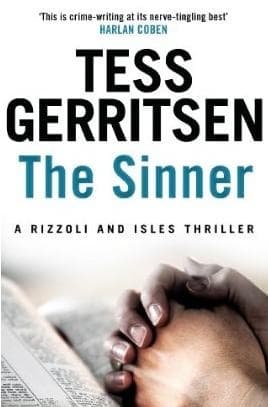
Tess Gerritsen (2003)
Genre
Fantasy / Romance
Reading Time
500 min
Key Themes
See below
Sign in to track this book
A brutal convent murder unravels a chilling secret when a nun's autopsy reveals she recently gave birth, forcing a medical examiner and detective to confront an ancient horror linked to the crime and Maura Isles's own past.
The novel opens with medical examiner Maura Isles and homicide detective Jane Rizzoli at a horrific scene at the cloistered convent of Our Lady of Divine Light in Boston. Two nuns have been attacked: Sister Camille, twenty years old, is dead, and Mother Superior Myra is badly injured. Sister Camille's body is found with her throat slit and her hands mutilated. During the autopsy, Maura discovers Sister Camille recently gave birth. This revelation immediately complicates the investigation, as the convent is strictly cloistered, raising questions about the baby's father and how the pregnancy happened unnoticed. The convent's strict rules and the nuns' vows make the crime even more confusing for the investigators.
Maura and Jane investigate Sister Camille's past, trying to understand her pregnancy and who the father might be. They learn that Sister Camille, whose secular name was Julianna, was a recent arrival at the convent after a difficult youth. The focus quickly shifts to finding the baby, as it is not at the crime scene. Their investigation leads them to Dr. Daniel Brophy, a former priest and now a doctor who ran a clinic for troubled youth where Julianna had spent time. Brophy is initially evasive, but the team eventually finds a hidden burial site on the convent grounds, where the body of a newborn infant is found, murdered. This discovery deepens the mystery and suggests a more sinister plot than a simple crime of passion.
As the investigation continues, Father Bernard, a mysterious and seemingly knowledgeable priest, appears. He approaches Maura and Jane, hinting at an ancient evil and a prophecy linked to the convent. Father Bernard speaks of a secret society, the 'Guardians of the Grail,' and their long history of protecting sacred relics and fighting demonic forces. He suggests the murders are not random violence but part of a ritualistic pattern, possibly linked to the convent's history and a dark secret it holds. His cryptic warnings and knowledge of obscure religious texts initially seem unlikely to Jane, but Maura, with her more open mind, is interested in the possibility of a deeper, older horror.
Another victim is discovered: a young woman named Mary, found brutally murdered and mutilated in a way similar to Sister Camille. Her body also shows ritualistic injury, specifically the removal of her hands, mirroring Sister Camille's injuries. This second murder confirms the investigators' fears that they are dealing with a serial killer, and the ritualistic nature points to Father Bernard's warnings. Jane Rizzoli, remembering an old unsolved case from years ago involving similar mutilations and a vanished baby, starts to connect them. The similarities are too strong to be coincidence, suggesting the current murders might be a return of an older, hidden horror, or that the killer has been active for a long time.
Maura Isles gets a shocking phone call from her estranged biological mother, Amalthea Lank. Amalthea, a notorious serial killer known as 'The Magician,' is in prison. She cryptically warns Maura about the case, hinting at her own involvement in a similar past crime and having knowledge that could help Maura. This unsettling event forces Maura to confront her difficult personal history and the dark legacy of her parentage. Amalthea's insights, though delivered in her disturbing, manipulative style, are surprisingly relevant, giving Maura important pieces of the puzzle that link the current murders to a much older, unsolved series of crimes that Amalthea was accused of, and for which she believes she was wrongly implicated for certain aspects.
Following leads from Father Bernard and Amalthea, Maura and Jane look into the historical and religious aspects of the case. They find evidence of a dangerous cult known as the 'Cult of the Serpent,' which believes in maintaining a 'sacred bloodline' through ritualistic practices and human sacrifice. This cult, it appears, has roots stretching back centuries, and its members are obsessed with purity and getting rid of perceived 'sinners.' The murders, especially the mutilations and the targeting of young women and their infants, are part of a twisted ritual meant to cleanse or protect this bloodline. The convent itself has a long, hidden history connected to this cult, serving as a front or a place to hide its activities.
Dr. Daniel Brophy, who first seemed like a helpful but cautious witness, is eventually revealed to be much more involved. He was not only aware of Sister Camille's pregnancy but was also the father of her baby. Brophy, a former priest who left the church due to disillusionment, had a complex relationship with Julianna/Sister Camille, based on his past efforts to help troubled youth. His motives are a mix of genuine affection, misguided protection, and a deep fear of the cult. His confession clarifies the immediate circumstances of Sister Camille's pregnancy but also involves him in the cover-up and further complicates the search for the true killer, who is targeting the babies of this 'sacred bloodline.'
Driven by the clues from Father Bernard and Amalthea, Maura, with Jane's help, explores the hidden parts of the convent. They discover secret passages, hidden rooms, and ancient texts within the convent walls, revealing its long and disturbing connection to the Cult of the Serpent. These discoveries confirm the convent was not just a place of worship but a site steeped in the cult's history and rituals. They learn about the cult's belief in a 'Chosen One,' a child born with a specific lineage who they believe has great power, and how far they will go to protect or eliminate such a child, depending on their interpretation of prophecy. The architecture of the convent holds the keys to understanding the cult's ongoing operations and their targets.
The investigation reveals that the true mastermind behind the murders is Mother Superior Myra, the seemingly innocent and badly injured nun from the initial attack. Myra, far from being a victim, is a zealous leader of the Cult of the Serpent, controlling events from within the convent. She planned Sister Camille's murder and the baby's death, believing she was cleansing the bloodline and fulfilling ancient prophecies. Her injuries were self-inflicted to avoid suspicion. Her motive is a fanatical devotion to the cult's beliefs and a desire to maintain the 'purity' of their sacred lineage, eliminating any perceived threats or 'unworthy' offspring. She is the true 'sinner' of the title, hidden by piety.
The climax happens as Maura and Jane confront Mother Superior Myra within the hidden parts of the convent. Myra, now fully revealed as the ruthless cult leader, tries to carry out a final ritual, believing it will secure the future of her 'sacred bloodline.' A desperate struggle occurs, with Maura in danger. Jane Rizzoli arrives just in time to stop Myra, ending the terror. Afterward, Maura deals with the disturbing revelations about her own mother's connection to similar cult activities and the dark legacy of her genetic heritage. She finds a fragile sense of peace in understanding her past and confirming her commitment to justice, despite the shadows of her family history.
The Protagonist
Maura grapples with the shocking truth of her biological mother's identity and her connection to a dark cult, ultimately finding a stronger sense of self and purpose despite her troubled heritage.
The Protagonist
Jane navigates a complex case, balancing her pragmatic approach with the increasingly bizarre revelations, and solidifies her bond with Maura through shared peril.
The Antagonist
From a perceived victim, Mother Superior Myra is unmasked as the primary antagonist, revealing her true, fanatical nature and her central role in the cult's atrocities.
The Victim/Supporting
Her tragic death and the discovery of her secret pregnancy ignite the central mystery, exposing the hidden darkness within the convent and the cult.
The Supporting
Initially a cautious witness, Brophy's true involvement as the father of Sister Camille's baby and his attempts to protect them are revealed, highlighting his moral complexities.
The Supporting
Amalthea's involvement forces Maura to confront her dark lineage and provides vital, albeit disturbing, insights into the cult's history and motives.
The Supporting
Father Bernard introduces the ancient, mystical dimension of the case, guiding Maura and Jane towards understanding the cult's historical roots and motivations.
The Victim/Mentioned
Her murder serves as a critical plot point, confirming the serial nature of the crimes and the ritualistic pattern of the killer.
This theme is central to Maura Isles's journey as she confronts the truth of her biological mother's identity, Amalthea Lank, a notorious serial killer. Maura worries about inheriting her mother's darkness, questioning her own nature. The theme extends to the Cult of the Serpent's obsession with 'bloodlines' and genetic purity, showing the destructive power of ancestral legacy and the struggle to create one's own identity apart from it. Maura's inner conflict and her eventual acceptance of her past, while choosing her own path, are key to this theme.
““Genes are not destiny. You are more than just the sum of your biological parts.””
The novel explores the dark side of religious devotion, contrasting genuine faith with the destructive power of fanaticism. The cloistered convent, a symbol of piety, is a place for an ancient, murderous cult led by Mother Superior Myra, who uses religious doctrine to justify horrific acts. The theme examines how strong beliefs can be twisted into reasons for violence and control, and how outward appearances of sanctity can hide profound evil and hypocrisy. Father Bernard's character, a man of true faith, contrasts with the cult's misuse of spiritual teachings.
““Sometimes the greatest evil hides behind the holiest of masks.””
'The Sinner' looks into the many sides of evil, from the calculated, ritualistic violence of the Cult of the Serpent to the more personal, disturbing evil of Amalthea Lank. The book questions if evil is inherent (as Maura fears about herself), learned, or a result of extreme ideology. It asks how individuals can commit such terrible acts, especially those who appear normal or even righteous. The ritualistic mutilations and the targeting of infants point to a particularly chilling and ancient form of malice, suggesting some evils go beyond simple human psychology.
““Evil isn't always obvious. Sometimes it wears a gentle face, speaks in soft tones.””
The past strongly influences the present in 'The Sinner.' The ancient history of the Cult of the Serpent, its prophecies, and its long-dormant rituals return to drive the current murders. Jane Rizzoli's memory of an old, unsolved case with similar mutilations directly connects to the present, showing how unresolved horrors can affect generations. For Maura, her past is personal, as her biological mother's history and the cult's legacy directly affect her current investigation and sense of self. The book shows how historical events and personal traumas continue to shape lives and destinies.
““The past is never truly dead. It isn't even past.””
A seemingly sacred and isolated space that conceals dark secrets.
The convent of Our Lady of Divine Light serves as a critical plot device. Its cloistered nature, meant to signify purity and separation from the secular world, ironically becomes the perfect environment for concealing the ancient, evil activities of the Cult of the Serpent. The isolation and strict rules allow the cult to operate undetected for centuries, using the convent as a front and a hiding place for their rituals and secrets. The contrast between its holy facade and the horrors within amplifies the suspense and thematic elements of hypocrisy and hidden evil, making the setting itself a character in the narrative.
The protagonist's biological mother is a key figure, intertwining personal and professional stakes.
Maura Isles's biological mother, Amalthea Lank, a notorious serial killer, becomes a pivotal plot device. Her calls from prison provide cryptic clues and insights that link the current murders to historical cult activities, effectively moving the plot forward. This device not only deepens the mystery but also raises the personal stakes for Maura, forcing her to confront her own genetic heritage and fears of inheriting her mother's darkness. It adds a layer of psychological complexity and emotional vulnerability to the protagonist, making the investigation a journey of self-discovery as much as a search for a killer.
Historical texts and prophecies guide the investigation and reveal the killer's motives.
The introduction of ancient prophecies, the 'Guardians of the Grail,' and the detailed lore of the Cult of the Serpent, primarily through Father Bernard, acts as a crucial plot device. These elements provide the historical and mythological framework for the seemingly inexplicable ritualistic murders. They explain the killer's motives, the significance of the mutilations, and the obsession with bloodlines. This device elevates the crime from a simple murder mystery to a deeper, more ancient conflict, adding layers of intrigue and horror as the investigators piece together centuries of dark history to understand the present-day atrocities.
Specific injuries on victims provide clues to the killer's identity and cult affiliation.
The recurring detail of the victims' hands being mutilated (specifically removed) is a significant plot device. This specific ritualistic injury immediately signals that the crimes are not random acts of violence but are part of a deliberate, symbolic pattern. It serves as a signature of the killer and a direct link to the ancient practices of the Cult of the Serpent, as explained by Father Bernard and Amalthea. The mutilations are a gruesome but vital clue that guides the investigation, allowing Maura and Jane to connect disparate cases and eventually understand the cult's twisted beliefs and the deeper meaning behind their sacrifices.
“The heart is a strange and unpredictable thing, capable of both great love and terrible sin.”
— Reflection on the dual nature of human emotions in the fantasy world.
“In a realm where magic flows like rivers, the greatest power lies not in spells, but in the choices we make.”
— A character discusses the ethical use of magic in the fantasy setting.
“To love a sinner is to see the beauty in their flaws, and to forgive what others cannot.”
— A romantic moment between characters grappling with past mistakes.
“The shadows of our past are not chains to bind us, but lessons to guide us toward the light.”
— Advice given to a character haunted by their history in the fantasy realm.
“In this world of enchantment, the truest magic is found in the quiet moments of connection.”
— Observation on the subtle, romantic aspects of the fantasy environment.
“A heart that has known darkness can still learn to beat with hope, if given the chance.”
— Encouragement to a character who feels unworthy of love due to their sins.
“The line between hero and villain is often drawn by perspective, not by deeds alone.”
— Philosophical discussion on morality in the context of the fantasy plot.
“Love does not ask for perfection; it whispers to the broken parts and makes them whole.”
— A tender declaration in a romantic scene, emphasizing acceptance.
“In the tapestry of fate, every thread of sin is woven with a strand of grace.”
— Metaphorical insight into the interconnectedness of good and evil in the fantasy world.
“To wield power is to dance with temptation, and only the strong of heart can avoid the fall.”
— Warning about the dangers of magic and ambition in the story.
“The most dangerous spells are not those that destroy, but those that deceive the soul.”
— Commentary on magical threats that target inner truths rather than physical harm.
“In the silence between heartbeats, love finds its voice, speaking truths that words cannot.”
— Poetic reflection on the unspoken depth of romantic feelings.
“A life without risk is a story without pages, and I choose to write mine in bold ink.”
— A character's defiant statement about embracing adventure and love despite dangers.
“The past may be a ghost, but it is our choices in the present that give it shape or set it free.”
— Advice on moving forward from guilt and sin in the fantasy narrative.
Ready to see how well you understood this book? Take our interactive quiz with 10 questions.

Biography coming soon.







