“I'm not proud. I'm sixteen, and soon to be homeless.”
— Billy, the protagonist, reflecting on his decision to leave home.

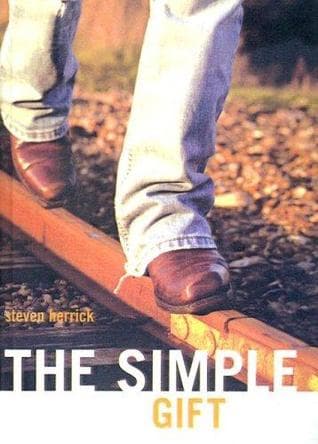
Steven Herrick (2000)
Genre
Young Adult / Romance
Reading Time
120 min
Key Themes
See below
Sign in to track this book
On the run from an abusive home, sixteen-year-old Billy finds an unexpected family and first love in an abandoned train carriage, showing that good things often arrive in unexpected places.
Sixteen-year-old Billy, tired of his alcoholic and abusive father, decides to leave his home in Longlands. He packs a small bag with a toothbrush, a book of poems by Ted Hughes, and a few clothes. He walks away, feeling a mix of fear and freedom. He catches a bus to the next town, Bendarat, with no real plan except to escape his current life. He spends his first night sleeping on a park bench, feeling the cold and the uncertainty of his new existence, but also a sense of freedom from the constant tension and violence he endured at home. He wants to make a new life for himself, even if he doesn't know what that means.
When he gets to Bendarat, Billy walks around town and finds an old, abandoned freight train carriage in a secluded railway siding. He explores it and decides it's a good place to live, offering shelter and privacy. He cleans it up, making it as comfortable as possible with discarded blankets and a crate for a table. His daily routine involves finding food, often from supermarket dumpsters, and reading. He establishes a simple existence, finding a strange peace in the solitude and the absence of his father's presence. The train carriage becomes his safe place, a symbol of his new independence and strength.
One day, looking for books, Billy visits the local library. He meets the caretaker, an older man named Bill, who is initially gruff but observant. Old Bill notices Billy's worn clothes and his interest in books, especially poetry. He offers Billy small kindnesses, like letting him read after hours and later offering him a simple job cleaning the library. This job gives Billy purpose and a small income, allowing him to buy proper food. Old Bill becomes a mentor, sharing his wisdom and slowly revealing parts of his own past, creating an unexpected bond with the young runaway.
While working at the library, Billy meets Caitlin, a girl his age from a wealthy family. She is intrigued by Billy's quiet manner and his unusual living situation, which she quickly figures out. Despite their very different backgrounds—Caitlin lives in a large, comfortable home and goes to a private school—they are drawn to each other. Caitlin, feeling restless and misunderstood by her own family, finds Billy's independence and honesty refreshing. Their conversations often focus on their shared feelings of being outsiders, despite their differing circumstances. Their friendship begins to deepen, challenging Billy's solitary existence.
Billy and Caitlin spend more and more time together, often meeting at the train carriage or exploring the town. Their connection grows into a sweet, innocent romance. They share their dreams, fears, and observations about the world. Caitlin introduces Billy to parts of her life, like her home, though he remains wary of its opulence, and Billy shares his simple existence. Their relationship is marked by mutual respect and a shared understanding, giving both of them a much-needed emotional connection. Caitlin's presence brings light and hope into Billy's previously bleak world, and she finds a genuine connection she lacks with her peers.
As their friendship deepens, Old Bill begins to share parts of his past with Billy. He reveals that he once had a family—a wife, Sarah, and a daughter, Grace—but lost them both in a tragic accident years ago. Sarah died in a car crash, and Grace, unable to cope with the loss, later took her own life. Old Bill's grief and guilt have haunted him ever since, leading him to a solitary existence. He confides in Billy that his daughter, Grace, loved poetry, much like Billy, and this shared interest strengthens their bond. Billy listens with empathy, recognizing the deep pain Old Bill carries, and offers comfort.
Caitlin, despite her privileged upbringing, feels a deep sense of loneliness and disconnection from her parents. She tells Billy that her parents are often busy with their own lives and expectations, and she feels misunderstood and unappreciated. She wants more authentic connections and a life not dictated by societal expectations. Her dissatisfaction with her family life mirrors, in a different way, Billy's own reasons for leaving home. This shared experience of family strain further strengthens the bond between Billy and Caitlin, showing their mutual desire for genuine understanding and belonging.
After some time, Old Bill, moved by Billy's resilience, kindness, and his own thoughts on his past, makes an important offer. He tells Billy about a small, run-down house he owns on the outskirts of Bendarat, which has been empty since his family's tragedy. He offers to let Billy live there, rent-free, and even helps him clean it up. This generous act is a turning point for Billy, giving him a stable home, something he has wanted. It is the 'simple gift' that changes his future, giving him a foundation to build a new life, free from the uncertainty of the train carriage.
Billy accepts Old Bill's generous offer and moves into the small house. He begins to make it into a proper home, finding a sense of belonging and stability he's never known. He continues to work at the library, saving money, and starts to consider his options for further education or a career. Caitlin remains a constant presence in his life, and their relationship deepens with this new stability. The house becomes a symbol of hope and the possibility of a normal life. Billy, no longer a runaway, is now an independent young man making his own path, surrounded by Old Bill's kindness and Caitlin's love, ready to embrace his future.
The Protagonist
From a lonely, abused runaway, Billy transforms into a hopeful, independent young man who finds love, friendship, and a stable home.
The Supporting
Initially isolated by grief, Old Bill finds renewed purpose and connection by helping Billy, gradually healing from his past.
The Supporting
From a restless and somewhat isolated rich girl, Caitlin finds true connection and emotional fulfillment through her relationship with Billy.
The Mentioned
Does not have an arc within the narrative, serving as the antagonist and the 'past' Billy is fleeing.
The Mentioned
Does not have an arc, as she is deceased, but her memory drives Old Bill's character.
The Mentioned
Does not have an arc, as she is deceased, but her memory is a catalyst for Old Bill's actions and connection with Billy.
The Mentioned
No discernible arc, as they are not active participants in the main narrative.
The novel explores the idea that 'family' extends beyond biological ties. Billy leaves an abusive biological family to find a surrogate family in Old Bill and a loving connection with Caitlin. Old Bill, who lost his own family, finds a new sense of purpose and connection through his mentorship of Billy. The train carriage and later the small house represent Billy's search for a stable, safe place to belong, showing that true family is built on kindness, support, and shared understanding, not just blood.
“And I learnt that family isn't just about blood, it's about the people who care enough to give you a home.”
Billy's journey shows the hard realities of homelessness for a young person, from sleeping on park benches to living in an abandoned train carriage and finding food. Despite these challenges, Billy shows remarkable resilience and resourcefulness, cleaning his living space, finding work, and keeping his dignity. His ability to adapt and survive shows the strength of the human spirit in bad conditions. The novel portrays homelessness not as a defining characteristic, but as a temporary state overcome through inner strength and external kindness.
“I was sixteen, and soon to be homeless. But I wasn't scared. Not really. I was free.”
The 'simple gift' of Old Bill's house is central to this theme, but acts of kindness are throughout the story. Old Bill's offers of work, a place to read, and eventually a home change Billy's life. Caitlin's acceptance and love give emotional support. These gestures, often small but important, show how human compassion can change lives and create hope. The novel suggests that even in a world of hardship, simple acts of generosity can create deep positive change and build strong bonds.
“It was just a house. But it was more than that. It was a promise. A simple gift.”
Old Bill's character story is rooted in themes of grief and healing. He carries the deep sorrow of losing his wife and daughter, which has isolated him for years. Through his relationship with Billy, Old Bill begins to process his grief, finding a new purpose and a way to honor his daughter's memory by helping someone who shares her love of poetry. Billy, too, carries the trauma of his abusive past, and the kindness he receives helps him to heal from his emotional wounds and build a new, healthier life.
“He carried his grief like a heavy coat, but I saw a chink in the armour, a small light trying to get out.”
Poetry, especially the works of Ted Hughes, is an important motif and source of comfort for Billy. It gives him an escape, a way to process his emotions, and a connection point with both Old Bill and Grace. The library itself is a safe place. Literature is shown as a way to understand the world and oneself, offering comfort and intellectual stimulation amidst physical hardship. The shared love for poetry strengthens the bond between Billy and Old Bill, bridging their age and experiences.
“I read Ted Hughes. He understood things. Things about the dark and the light.”
The story is told through the alternating voices of Billy, Old Bill, and Caitlin.
The novel employs a unique narrative structure where the story is told through the first-person perspectives of Billy, Old Bill, and Caitlin. Each character's voice is distinct, presented in free verse poetry. This allows the reader to gain deep insight into their individual thoughts, feelings, and motivations, providing a comprehensive and empathetic understanding of their experiences. It highlights how their paths intersect and how their inner worlds shape their interactions, creating a multi-faceted view of the same events and relationships.
The entire novel is written in unrhymed, unmetered poetic lines.
The novel is entirely written in free verse poetry, rather than traditional prose. This stylistic choice contributes significantly to the book's emotional impact. The concise, evocative language and irregular line breaks create a sense of immediacy and intimacy, allowing the reader to experience the characters' raw emotions and observations directly. It also lends itself to the themes of simplicity and honesty, reflecting the unvarnished realities of the characters' lives. The poetic form makes the narrative flow quickly and powerfully.
A symbolic setting representing Billy's transition and independence.
The abandoned freight train carriage serves as a powerful symbol in Billy's journey. Initially, it represents his independence, his ability to create a home from nothing, and his escape from his abusive past. It is a place of solitude and self-sufficiency. As the story progresses, it becomes a meeting point for Billy and Caitlin, symbolizing the beginning of his connections with others. Ultimately, leaving the train carriage for Old Bill's house signifies Billy's transition from a temporary, uncertain existence to a stable, hopeful future, marking his growth and acceptance of help.
A central symbol representing kindness, hope, and new beginnings.
The 'simple gift' of Old Bill's small house is the central symbolic act and plot device of the novel. It represents far more than just shelter; it embodies kindness, generosity, trust, and the possibility of a new beginning for Billy. It is the tangible manifestation of the human connection and acceptance that Billy has been searching for. This gift allows Billy to move beyond survival to building a life, symbolizing the profound impact that a single act of selfless giving can have on another person's fate, and the true meaning of family and belonging.
“I'm not proud. I'm sixteen, and soon to be homeless.”
— Billy, the protagonist, reflecting on his decision to leave home.
“Sometimes you just have to get away, to find out who you are.”
— Billy explaining his reasons for leaving his abusive father.
“A home isn't always a house. It's where you feel safe.”
— Billy realizing the meaning of home while living in an abandoned train carriage.
“Old Bill taught me that kindness doesn't cost a thing.”
— Billy reflecting on the homeless man who becomes his mentor.
“We're all just passing through, trying to find our place.”
— Old Bill sharing his wisdom with Billy about life's journey.
“Love isn't about having everything. It's about sharing what you've got.”
— Caitlin, Billy's love interest, expressing her feelings about their relationship.
“The best gifts are the ones you can't wrap in paper.”
— Billy thinking about the intangible gifts of friendship and love he receives.
“You don't need money to be rich. You just need someone who cares.”
— Billy realizing the value of human connection over material wealth.
“Every day is a chance to start over, to be someone new.”
— Billy embracing his new life and the possibilities it brings.
“Sometimes the bravest thing you can do is ask for help.”
— Billy learning to accept support from others despite his pride.
“We're all broken in some way. It's how we put ourselves back together that matters.”
— Old Bill offering perspective on personal struggles and resilience.
“The simple things—a warm meal, a good book, a friend—they're what make life worth living.”
— Billy appreciating the small joys in his difficult circumstances.
“You can't run from your past, but you can learn from it.”
— Billy coming to terms with his history and using it to grow.
“Home is where the heart is, and my heart is here with you.”
— Billy expressing his love and sense of belonging with Caitlin.
Ready to see how well you understood this book? Take our interactive quiz with 10 questions.