“The wind was a living thing, cold and sharp, tearing at their cloaks and hair.”
— Describing the harsh weather on a journey.

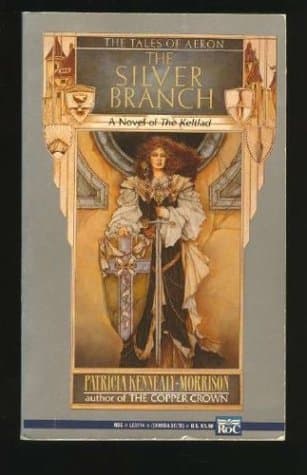
Patricia Kennealy-Morrison (1988)
Genre
Fantasy / Science Fiction / Romance
Reading Time
10-12 hours
Key Themes
See below
Sign in to track this book
In a pre-Earth contact Keltic world, the powerful heir Aeron must master her destiny-altering magic to navigate alliances and enmities threatening her throne.
Aeron, the spirited heir to Keltia's High Kingship, manages her duties and growing magical abilities. She is a Priestess of the Great Mother and has considerable power, often clashing with traditional, patriarchal factions in court. Her father, High King Cei, wants her to marry Prince Niall of the Fir Bolg for political advantage and stability. Aeron, however, is independent and resists a marriage not based on love, feeling her destiny is larger than a dynastic arrangement. Her inner conflict grows with visions and a sense of coming change.
A major event ends Keltia's long isolation: the arrival of advanced starships carrying beings from another world, the 'Star Lords.' These beings, first seen as invaders or divine messengers, are revealed to be Keltia's lost kin, descendants of the same ancient Earth culture that settled Keltia millennia ago. Their arrival fulfills a Keltian prophecy, foretelling a time when the 'Children of the Stars' would return. This event disrupts Keltian society, challenging their beliefs, political structures, and understanding of their place in the cosmos. Aeron, with her strong magical connection and open mind, is in a unique position to bridge the two cultures.
Aeron is among the first Keltians to meet the Star Lords and their leader, Llyr. From their first meeting, there is a powerful connection between Aeron and Llyr, a sense of recognition that goes beyond their cultural differences. Llyr is drawn to Aeron's strength, wisdom, and potent magical abilities, which he sees as a form of psionic power. Aeron, in turn, is captivated by Llyr's intelligence, his advanced understanding of the universe, and a deep, fated resonance she feels with him. This immediate bond sparks both hope and suspicion among their peoples, as it threatens existing political arrangements, especially Aeron's coming marriage to Niall.
Through technological data from the Star Lords' archives and Keltian oral traditions and magical insights, the two peoples begin to uncover their shared history. It is revealed that Keltia was a colony world, settled by advanced humans from Earth millennia ago, who then lost contact and developed their own culture, incorporating psionic abilities into their daily lives and religion. The Star Lords, also descendants of Earth, represent a different branch of this lineage, having maintained technological advancement and interstellar travel. This discovery is monumental, forcing both societies to re-evaluate their identities and the broader implications of their reunion. Aeron and Llyr help facilitate this understanding, acting as cultural ambassadors.
Prince Niall, Aeron's betrothed, sees Llyr's arrival and his growing connection with Aeron as a direct threat to his political ambitions and his claim to Keltia's throne. He represents the conservative, isolationist faction within Keltia that distrusts the Star Lords and their technology. Niall tries to undermine Aeron's authority and discredit Llyr, using political maneuvering and subtle manipulation. He sees Aeron as a prize to be won, not a partner, and his possessiveness fuels his anger towards Llyr. This creates tension in the Keltian court, as factions form around supporting or opposing integration with the Star Lords, and around Aeron's choice of consort.
As Aeron and Llyr's bond deepens, Aeron has a powerful and disturbing vision. This vision shows not only the ancient history of their shared ancestors but also a grave, external threat that endangers both Keltia and the Star Lords' people. This threat is a destructive, ancient force that has been dormant but is now reawakening, an enemy their common ancestors once faced. The vision emphasizes that both cultures' survival depends on their unity and the combined strength of Keltian magic and Star Lord technology. This revelation raises the stakes beyond internal politics, pointing to a cosmic danger that requires immediate cooperation.
Recognizing the urgency of the threat in Aeron's vision, Aeron and Llyr begin a collaboration to blend Keltian psionic magic with the Star Lords' advanced technology. This involves Llyr's scientists studying Keltian magic and Aeron's mages learning about Star Lord energy manipulation and instrumentation. They discover that Keltian magic, especially Aeron's powerful abilities, can amplify and interface with Star Lord technology in unexpected ways, creating new defensive and offensive capabilities. This fusion of ancient power and future science becomes their main hope against the coming danger, solidifying their strategic alliance and personal bond.
Driven by jealousy, ambition, and a fear of change, Prince Niall makes a desperate move. Believing he can take control and eliminate Llyr, he tries to manipulate ancient Keltian magical artifacts or alliances, accidentally creating a vulnerability or directly helping the reawakening ancient enemy. His actions cause an attack on Keltia, surprising many. This betrayal shows the depth of his resentment and the dangers of internal division, forcing Aeron and Llyr to speed up their plans and unite their forces under extreme pressure. The attack serves as a stark reminder of the prophecy's urgency and the consequences of disunity.
In the face of the direct attack, Aeron and Llyr lead their combined forces in a desperate defense of Keltia. Keltian warriors fight alongside Star Lord security personnel, using a blend of Keltian magic and Star Lord weaponry. Aeron's personal power is crucial, as she uses her abilities to shield, attack, and coordinate forces, often working with Llyr, whose strategic genius and technological skill are equally vital. The battle is fierce, testing their alliance and their people's courage. It is a moment of true unity, where old prejudices are set aside for the common goal of survival, solidifying the new partnership between their worlds.
Against great odds, Aeron and Llyr's united forces win, repelling the ancient threat and securing Keltia's future. The battle, though costly, strengthens the bond between the Keltians and the Star Lords. Niall's fate is sealed, his betrayal exposed and his ambitions thwarted. With the immediate danger gone, Aeron and Llyr can fully embrace their destiny, both as leaders and as partners. Their relationship, forged in crisis, blossoms into a deep love and a powerful alliance. Keltia, no longer isolated, steps onto the galactic stage, ready to forge a new era of cooperation and exploration with its rediscovered kin, under the joint leadership of Aeron and Llyr.
The Protagonist
Aeron evolves from a resistant heir to a confident leader, embracing her destiny and finding love and partnership that transcends cultural boundaries.
The Protagonist
Llyr leads his people to a new home and finds a fated partner, integrating his advanced society with Keltia's unique culture.
The Antagonist
Niall's ambition and jealousy lead to his downfall and betrayal.
The Supporting
Cei transitions from a traditional ruler concerned with dynastic politics to accepting a broader, galactic destiny for Keltia.
The Supporting
Rhiannon supports Aeron through her trials and embraces the changing world.
The Supporting
Morwen guides Aeron toward her destiny, bridging ancient wisdom with new realities.
The Supporting
Kaelen spearheads the scientific understanding and integration of Keltian magic with Star Lord technology.
The Antagonist
The Ancient Enemy's reawakening forces the protagonists to unite for survival.
A main theme is that 'magic' and advanced 'science' are not separate but different expressions of the same universal principles. Keltian psionic abilities, first seen as mystical, are recognized by the Star Lords as a powerful, untapped form of energy manipulation. The story shows how combining Keltian magical traditions with Star Lord technology creates a stronger force, essential for survival. This is seen when Aeron's psionic shields interface with Star Lord energy projectors, or when Keltian mages amplify technological devices through their powers in the final battle.
“What you call 'magic,' we recognize as a profound manipulation of energy fields, a natural psionic ability honed over millennia. It is not so different from our own science, only a different path to understanding the universe.”
The story often explores the tension between destiny and individual choice, especially through Aeron's journey. Keltian prophecies foretell the Star Lords' return and a great destiny for Aeron, yet she constantly struggles against political marriages and expectations, asserting her free will. Her connection with Llyr feels fated, yet their choices in leadership and their willingness to unite their peoples are acts of free will. The story suggests that while destiny may set the stage, characters' choices shape their path and fulfill, or defy, that destiny, as Aeron chooses Llyr over Niall and embraces her role as a galactic leader.
“The stars may write our names, but it is our hearts that sign the deeds.”
The Star Lords' arrival presents a cultural clash for the isolated Keltians, challenging their beliefs, social structures, and understanding of their place in the universe. The theme explores the difficulties and rewards of integrating different societies—one rooted in ancient traditions and psionic abilities, the other in advanced technology and interstellar travel. Initial mistrust and prejudice, shown by Niall and his group, must be overcome for survival. The successful integration, led by Aeron and Llyr, demonstrates the strength found in diversity and shared heritage, creating a new, hybrid culture that embraces both its past and its future.
“We are two branches of the same tree, long separated, but now rejoined. Our roots are one, and our future lies in growing together.”
At its heart, the novel is a romance, emphasizing the power of love and true partnership, both personal and political. The deep, fated connection between Aeron and Llyr is central, transcending their different backgrounds and driving the story. Their love is not just romantic; it is a partnership of equals, intellectually, spiritually, and in leadership. This personal bond mirrors and helps the political alliance between their peoples. The contrast with Niall's possessive and ambitious view of marriage highlights that true partnership, based on respect and mutual understanding, is essential for overcoming challenges and building a prosperous future.
“It was more than love; it was a recognition, a completion, as if two halves of a single soul had at last found their way home.”
A potent Keltian magical artifact and symbol of destiny.
The Silver Branch is a recurring symbolic and sometimes literal magical artifact in Keltian lore, often associated with quests, divine favor, and the path to the Otherworld or significant destiny. In 'The Silver Branch,' it symbolizes Aeron's unique heritage, her psionic power, and her destined path as a bridge between worlds. It may manifest as a physical object used in rituals or as a metaphorical representation of her connection to the Great Mother and her role in fulfilling ancient prophecies. Its imagery reinforces the mystical and fated aspects of Aeron's journey and her connection to her heritage.
Keltian foretelling of the Star Lords' return and a coming crisis.
The Keltian people hold ancient prophecies that foretell the return of the 'Children of the Stars' (the Star Lords) and a period of great upheaval or a significant challenge. This device serves multiple functions: it explains the initial, albeit cautious, acceptance of the Star Lords, gives Aeron a sense of predetermined purpose, and raises the stakes by hinting at a larger cosmic conflict. The prophecy provides a framework for the unfolding events, guiding the characters and giving their actions a sense of epic scale and inevitability, while still allowing for individual choices within that framework. It foreshadows the external threat and the need for unity.
Keltia's long-standing separation from its galactic kin, ending with the Star Lords' arrival.
Keltia has existed in cultural isolation for millennia, developing its unique blend of psionics and ancient traditions without contact with other advanced civilizations. This isolation sets the stage for the dramatic impact of the Star Lords' arrival, who represent a technologically advanced, rediscovered branch of their own human lineage. This device allows for the exploration of themes of cultural clash, the shock of new knowledge, and the challenge of integrating vastly different worldviews. It creates a 'lost world' scenario that is then brought into a larger galactic context, forcing Keltia to redefine its identity.
Keltian innate mental powers, understood as 'magic' by Keltians and 'psionics' by Star Lords.
The Keltians possess inherent mental powers, including telepathy, precognition, and energy manipulation, which they understand and practice as 'magic' through the lens of their spiritual traditions. This device highlights the novel's genre blending of fantasy and science fiction. The Star Lords, with their scientific perspective, recognize these abilities as advanced 'psionics' that can be studied and potentially integrated with technology. This reinterpretation of magic as a scientific phenomenon is crucial for the plot, enabling the fusion of Keltian 'magic' and Star Lord technology to combat the common enemy, bridging the conceptual gap between the two cultures.
“The wind was a living thing, cold and sharp, tearing at their cloaks and hair.”
— Describing the harsh weather on a journey.
“There are some things, my lady, that even the High King cannot command. The heart is one.”
— A character speaking about the power of love over royal decree.
“Magic is not a parlor trick, but the very breath of the world.”
— A mage explaining the true nature of magic to an apprentice.
“He moved like a shadow, and yet left light in his wake.”
— Describing the enigmatic and compelling presence of a key male character.
“To forget one's past is to lose a part of one's soul.”
— A wise elder imparting wisdom about memory and identity.
“Duty is a heavy cloak, but honor makes it light.”
— A warrior reflecting on the burdens and rewards of their calling.
“The stars themselves sing of ancient battles and forgotten loves.”
— A character gazing at the night sky, feeling a connection to history.
“Sometimes the greatest strength lies not in fighting, but in enduring.”
— A character facing a difficult personal trial.
“The scent of pine and rain, a promise of wildness and freedom.”
— Sensory description of a natural, untamed setting.
“Love, like magic, must be nurtured, or it will fade.”
— A character reflecting on the fragility and power of relationships.
“A queen's crown is not merely gold, but the weight of her people's trust.”
— A queen contemplating her responsibilities.
“The future is a tapestry woven from countless threads of choice.”
— A character discussing destiny and free will.
“Even in the darkest of times, hope is a flicker that can ignite a blaze.”
— A moment of despair being overcome by a surge of optimism.
“He spoke of worlds beyond their knowing, of stars that were suns to other races.”
— Introducing elements of science fiction and cosmic wonder.
Ready to see how well you understood this book? Take our interactive quiz with 10 questions.

Biography coming soon.







