“The past is a foreign country; they do things differently there.”
— Robin thinking about the past and its influence on present events.

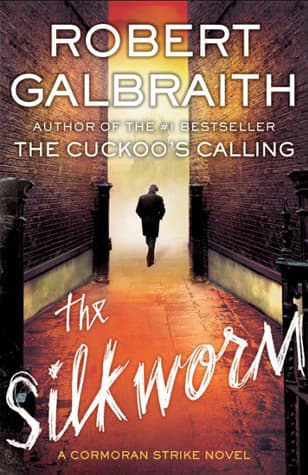
Robert Galbraith (2014)
Genre
Thriller / Mystery
Reading Time
9-10 hours
Key Themes
See below
Sign in to track this book
Private investigator Cormoran Strike must navigate a venomous literary world to unmask a killer who brutally silences a novelist whose latest manuscript exposes the darkest secrets of everyone he knows.
Private investigator Cormoran Strike is approached by Leonora Quine, the seemingly downtrodden wife of controversial novelist Owen Quine. Leonora explains that Owen often disappears for days, but this time feels different, and she worries. She wants Strike to find him. Strike and his assistant Robin Ellacott begin by visiting the Quine's chaotic London home and interviewing Leonora, who describes a difficult, unpredictable husband prone to dramatic exits. Strike learns Owen had recently completed a highly inflammatory manuscript, 'Bombyx Mori' (Latin for silkworm). This book was circulating among his literary acquaintances and was rumored to contain thinly veiled, damaging caricatures of almost everyone in his professional and personal life.
Strike and Robin begin to look into Owen Quine's world, a nest of literary ambition, jealousy, and betrayal. They learn about 'Bombyx Mori,' a manuscript so libelous and personally devastating that its potential publication could ruin careers and lives. The novel features thinly disguised versions of his agent, Elizabeth Tassel; his editor, Daniel Chard; his former lover, Kathryn Kent; his mentor, Jerry Waldegrave; and even his protégé, Michael Fancourt. Each character in 'Bombyx Mori' suffers a grotesque, often symbolic, demise, mirroring medieval torture methods described in the text. This discovery immediately broadens the suspect pool to include almost everyone in Quine's circle, as many would have a strong motive to prevent the book's release or seek revenge.
Cormoran Strike methodically interviews the various individuals who had access to Owen Quine's manuscript and were depicted within it. He speaks with Elizabeth Tassel, Quine's long-suffering agent, who expresses frustration with Quine's erratic behavior and the difficulty of finding a publisher for 'Bombyx Mori.' Daniel Chard, Quine's editor at Roper Chard, appears dismissive and concerned only with damage control. Kathryn Kent, a former lover and literary critic, reveals a complicated, often bitter, history with Quine. Michael Fancourt, a younger novelist Quine had mentored, shows a mix of admiration and resentment. Jerry Waldegrave, an older, respected author, offers a more detached but still critical perspective. Each interview uncovers deeper layers of animosity, professional rivalry, and personal grievances against the missing author.
The investigation takes a horrific turn when Owen Quine's body is discovered in a derelict house. The scene is meticulously staged to replicate a gruesome torture sequence from 'Bombyx Mori.' Quine has been ritualistically murdered, disemboweled, and his body arranged in a grotesque tableau, mirroring the fate of the 'Silkworm' character in his own novel. The police, led by Inspector Wardle, quickly become involved, and Leonora Quine is immediately arrested as the prime suspect, largely due to her history of domestic disputes with Owen and the convenience of the evidence. Strike, however, is not convinced of her guilt, finding the staging too elaborate and deliberate for Leonora.
Following the discovery of Owen Quine's body, Leonora Quine is arrested by the Metropolitan Police. The evidence against her seems compelling: a history of arguments, her initial call to Strike, and the fact that Quine's death seems to fulfill a dark fantasy of hers. However, Cormoran Strike has serious doubts about her culpability. He believes the murder is too sophisticated and the staging too theatrical for Leonora, who appears simple and lacks the intellectual capacity to conceive such a complex revenge plot. Strike is convinced that the killer is someone intimately familiar with 'Bombyx Mori' and the intricate literary world Quine inhabited, someone using the manuscript as a blueprint for murder.
With Leonora in custody, Strike and Robin intensify their efforts to understand the true nature of 'Bombyx Mori' and its connection to Owen Quine's murder. They meticulously analyze the manuscript, searching for hidden meanings, allegories, and clues that might point to the real killer. Strike realizes that the killer is not just replicating the novel's events but is also manipulating perceptions, using the book as a weapon and a smokescreen. Robin, with her keen eye for detail, proves invaluable in deciphering the complex literary allusions and identifying the real-life inspirations behind Quine's fictional characters, which helps Strike piece together the intricate web of relationships and resentments surrounding the deceased author.
Strike turns his attention to Roper Chard, Owen Quine's publishing house, and its editor, Daniel Chard. He discovers that Roper Chard was in significant financial trouble, and Quine, despite his controversial nature, was one of their few authors with a guaranteed readership. The disappearance of 'Bombyx Mori' and Quine's subsequent death could have significant implications for the struggling publisher. Strike suspects that the motivations behind the murder might extend beyond personal vendettas to include financial gain or the desire to suppress a damaging truth about the publishing industry itself. He questions Daniel Chard more rigorously, sensing a hidden agenda behind his seemingly professional demeanor and his evasiveness regarding Quine's final manuscript.
Through diligent investigation, Strike uncovers the existence of a second manuscript, a much milder, less inflammatory version of 'Bombyx Mori' that Owen Quine had been working on. This discovery is important. Strike realizes that the highly offensive 'Bombyx Mori' that circulated among Quine's associates was not his final work but a cleverly crafted forgery, designed to incriminate and enrage. This 'false' manuscript served as the perfect red herring, directing suspicion towards numerous individuals and providing a blueprint for the murder. The real killer, Strike deduces, must have had access to Quine's home, his work, and the means to create such a convincing literary fabrication, all while possessing a deep understanding of Quine's writing style.
Cormoran Strike, piecing together the subtle clues and contradictions, eventually identifies Owen Quine's agent, Elizabeth Tassel, as the true killer. He confronts her, revealing her intricate plan. Tassel, a frustrated writer herself, had meticulously crafted the inflammatory 'Bombyx Mori' manuscript, imitating Quine's style, to frame his literary rivals and ensure his murder would be attributed to one of them. Her motive was a complex blend of revenge for Quine's past slights, a desire to destroy the people she believed had wronged her and Quine, and an ambition to be recognized for her literary cunning, even if it meant through murder. She had orchestrated the entire elaborate deception, including the staging of the body.
Cornered by Cormoran Strike's relentless logic and evidence, Elizabeth Tassel finally confesses to the murder of Owen Quine. She explains in chilling detail how she murdered Quine, making it appear as though he was a victim of the very plot he had supposedly written. Tassel reveals the depth of her resentment towards the literary establishment and her bitter jealousy of Quine's talent, despite his flaws. She admits to fabricating the incendiary 'Bombyx Mori' manuscript, using it as a blueprint for the murder and a tool to frame Quine's enemies. With Tassel's confession, Leonora Quine is released from prison, and justice is finally served, albeit through a harrowing investigation that leaves a lasting impression on Strike and Robin.
The Protagonist
Strike further hones his investigative skills, navigating a complex literary world and proving his intuition even when the police doubt him.
The Supporting
Robin gains significant experience and confidence in her investigative abilities, becoming an increasingly active and crucial partner to Strike.
The Victim
Quine's character arc is posthumous, as Strike reconstructs his life and personality through interviews, revealing a man who sowed the seeds of his own destruction.
The Supporting
Leonora endures false accusation and imprisonment, ultimately being exonerated when the true killer is revealed, highlighting her resilience.
The Antagonist
Tassel is revealed as the mastermind behind the murder and the intricate literary deception, her carefully constructed facade crumbling under Strike's scrutiny.
The Supporting
Chard's character remains largely static, primarily serving as a suspect and a window into the cutthroat publishing world.
The Supporting
Kent's arc primarily involves revealing her past with Quine and her reaction to 'Bombyx Mori,' showcasing the damage Quine inflicted on others.
The Supporting
Fancourt's character remains largely static, serving as another victim of Quine's literary malice and a red herring in the murder investigation.
The novel explores how art, specifically Owen Quine's 'Bombyx Mori,' can be used as a weapon, inflicting deep personal and professional damage. The manuscript itself, filled with venomous caricatures, becomes the blueprint for a real-life murder, blurring the lines between fiction and reality. The killer, Elizabeth Tassel, uses the novel for her own elaborate revenge, not only against Quine but against the entire literary establishment she resents. This theme highlights how creative expression, when fueled by malice, can lead to catastrophic consequences, transforming artistic endeavor into a tool for destruction.
““Nobody writes a book to get rich. They write books because they are human beings, and because they are human beings they have to write.””
A central theme is constant deception and misdirection. Nothing and no one is quite as they seem. Leonora Quine, initially appearing simple and guilty, is revealed to be innocent. Owen Quine's 'Bombyx Mori' is not his final, authentic work but a forgery designed to mislead. The murderer, Elizabeth Tassel, expertly crafts an elaborate illusion, using the fictional world of the manuscript to stage a real-life crime and deflect suspicion. Strike's investigation is a continuous process of peeling back layers of lies and carefully constructed facades to uncover the hidden truths beneath, emphasizing that initial impressions and presented narratives can be unreliable.
““The truth, it turns out, is a dirty, complicated business, and not always worth the pain of finding.””
The novel paints a cynical and unflattering portrait of the publishing industry, depicting it as a nest of jealousy, backstabbing, professional rivalries, and unfulfilled ambitions. Authors, agents, and editors are shown to be driven by ego, greed, and resentment, often at the expense of genuine artistic merit. Quine's 'Bombyx Mori' is a direct product of this environment, a retaliatory strike against those he felt had wronged him. The killer's motives are deeply rooted in the frustrations and perceived injustices of this cutthroat world, suggesting that the literary sphere, despite its intellectual veneer, can be as brutal and corrupting as any other.
““The publishing industry was a feeding frenzy of desperate, pretentious people, all trying to steal each other’s ideas.””
Relationships in 'The Silkworm' are often defined by shifting loyalties and deep betrayals. Owen Quine betrays virtually everyone he knows in 'Bombyx Mori,' using his art to settle scores. This act of literary betrayal then triggers a cycle of real-world revenge. Elizabeth Tassel, as Quine's agent, betrays her professional duty and personal trust by murdering him and framing others. Conversely, Strike's unwavering loyalty to Leonora Quine, despite the police's conviction of her guilt, shows a steadfast commitment to justice. Robin's loyalty to Strike, even when her personal life suffers, highlights the importance of trust in a world full of deceit.
““Betrayal, I found, was a kind of alchemy, transforming affection into the basest metal.””
Owen Quine's 'Bombyx Mori' serves as both the motive and the guide for his murder.
The fictional manuscript 'Bombyx Mori' is the central plot device. Initially, it appears to be the motive for murder, enraging those it caricatures. However, it is revealed to be a fabricated document by the killer, Elizabeth Tassel, designed to mimic Quine's style and provide a detailed blueprint for his ritualistic murder. The novel's gruesome descriptions of torture and death are directly mirrored in Quine's actual demise, making the manuscript an integral part of the crime itself and a key to solving it. Strike's analysis of the text is crucial for understanding the killer's elaborate plan and uncovering the deception.
Multiple characters with strong motives are presented to mislead the investigation.
The novel masterfully employs red herrings through the numerous individuals depicted unflatteringly in 'Bombyx Mori.' Almost everyone in Owen Quine's circle — his agent, editor, former lover, protégé, and mentor — has a plausible motive for wanting him dead or silenced due to the damaging nature of the manuscript. This broadens the suspect pool considerably and distracts both the police and the reader from the true culprit, Elizabeth Tassel, who carefully orchestrates these misdirections. The initial arrest of Leonora Quine further serves as a significant red herring, allowing the real killer to remain hidden for a longer period.
Analysis of the 'Bombyx Mori' manuscript to determine authorship and intent.
Strike and Robin's investigation heavily relies on forensic linguistics and textual analysis of 'Bombyx Mori.' They scrutinize the writing style, allusions, and character portrayals within the manuscript to determine its true authorship and purpose. This device is crucial for uncovering the fact that the circulating manuscript is a forgery, not Quine's original work. By comparing the 'fake' Bombyx Mori with Quine's known writing and the 'real' manuscript, Strike deduces that the killer had a deep understanding of Quine's literary voice and used it to create a convincing, yet deceptive, piece of evidence, ultimately leading him to Elizabeth Tassel.
Character testimonies and initial perceptions are often misleading, requiring Strike to uncover the true sequence of events.
While the novel is told from a third-person perspective focused on Strike, the information he receives from characters initially creates an unreliable narrative of events surrounding Quine's disappearance and murder. Characters like Elizabeth Tassel and Daniel Chard present carefully constructed versions of events or omit crucial details, leading Strike and the reader down false paths. The initial belief that Leonora Quine is the obvious suspect is also part of this device, challenging Strike to look beyond the surface and piece together the true story from contradictory accounts and subtle clues. This device highlights Strike's skill in discerning truth from deception.
“The past is a foreign country; they do things differently there.”
— Robin thinking about the past and its influence on present events.
“A book is a magical thing, a gateway to other worlds, other lives.”
— Stated by Owen Quine, reflecting his love for literature.
“The truth, like a cat, will always find its way home.”
— Cormoran Strike's musing on the inevitability of truth emerging.
“People always want to be told they’re special, that their suffering is unique.”
— Strike's cynical observation about human nature.
“There are no secrets in a small world, only carefully constructed illusions.”
— Reflecting on the interconnectedness of the publishing world.
“Every writer is a vampire, feeding on the lives of others.”
— A dark metaphor used in Owen Quine's controversial manuscript, 'Bombyx Mori'.
“Grief is a peculiar thing. It can make you do the most illogical things.”
— Strike considering the motivations behind irrational actions.
“The greatest trick the devil ever pulled was convincing the world he didn't exist.”
— A quote Strike references, highlighting the deceptive nature of the killer.
“Nobody owns the dead, but everyone wants a piece of them.”
— Strike's reflection on how a deceased person becomes public property.
“Fear is a powerful motivator, capable of driving people to extreme lengths.”
— Robin's insight into the pressures influencing characters' actions.
“The line between genius and madness is often blurred, especially in the creative arts.”
— Discussing the eccentricities of writers and artists.
“Sometimes, the most obvious answer is the one staring you in the face, yet you refuse to see it.”
— Strike's frustration with overlooked clues in the case.
“A good story, no matter how dark, always has a kernel of truth at its heart.”
— Reflecting on the power and origin of fiction.
“Every secret eventually finds its way out, usually at the most inconvenient time.”
— A recurring theme about the difficulty of keeping things hidden.
Ready to see how well you understood this book? Take our interactive quiz with 10 questions.

Biography coming soon.







