“A man is not a man until he has walked alone in the woods and faced the wilderness.”
— Attean's grandfather teaching Matt about survival and independence.

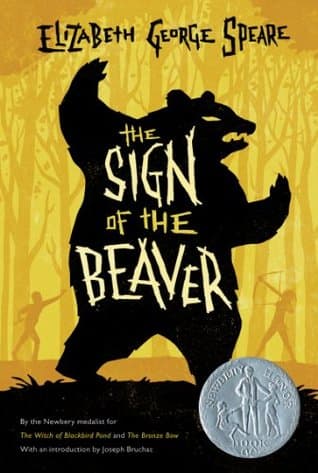
Elizabeth George Speare (1944)
Genre
Children's / Historical Fiction / Young Adult
Reading Time
180 min
Key Themes
See below
Sign in to track this book
Stranded in the vast Maine wilderness, a young pioneer boy must choose between the uncertain hope of his family's return and the unexpected kinship of a Native American tribe offering him a new home.
In the spring of 1768, twelve-year-old Matt Hallowell and his father arrive in the Maine wilderness to build a cabin and clear land for their family. They construct a small log cabin near a stream, working tirelessly. Matt's father teaches him survival skills, including hunting, fishing, and how to use a rifle. After several weeks, the cabin is complete, and a small plot of land is cleared. Matt's father then prepares to leave, promising to return in about seven weeks with Matt's mother, baby sister, and the new baby they are expecting. He leaves Matt with the rifle, a watch, and specific instructions to keep the fire going, protect the cabin, and continue clearing land. Matt feels a mix of apprehension and pride at being left in charge.
Left alone, Matt diligently follows his father's instructions, fishing, checking snares, and maintaining the fire. One day, he encounters a bear near his cabin. Terrified, he attempts to scare it away, but the bear charges, forcing him to retreat into the cabin. He manages to shoot the bear, but in his fear, he accidentally leaves the cabin door open. A few days later, a rough-looking white man named Ben, a trapper, appears at the cabin. Ben is friendly at first, sharing stories and food with Matt. However, after Ben leaves, Matt discovers that his father's rifle, a tool for survival and protection, has been stolen. This leaves Matt feeling exposed and helpless.
Desperate for food and feeling the lack of his rifle, Matt begins to explore the woods more cautiously. He stumbles upon a bee tree, filled with honey, a source of sustenance. Eager to collect the honey, he climbs the tree, but the bees swarm out and sting him relentlessly. Matt falls from the tree, blinded and in pain. He stumbles back to his cabin, his face swollen and his eyes nearly shut. His condition is severe, and he fears he might not survive. This incident is a turning point, showing his vulnerability and lack of experience in the wilderness.
While Matt lies suffering in his cabin, an old Indian man, Saknis, and his grandson, Attean, discover him. Saknis, a chief of the Beaver tribe, recognizes Matt's dire condition and brings him medicinal herbs to treat his bee stings. Under their care, Matt slowly recovers. Saknis then makes a proposition: if Matt will teach Attean to read English, Saknis will provide Matt with food and help, recognizing Matt's helplessness without his rifle. Matt, grateful for their intervention and desperate for help, agrees to the arrangement, despite his initial apprehension about interacting with Native Americans.
The lessons begin, with Matt teaching Attean from his most treasured possession: a copy of 'Robinson Crusoe.' Attean is initially reluctant and often frustrated by the English words and concepts. However, as they spend more time together, a bond slowly forms. Attean, in turn, teaches Matt wilderness skills: how to hunt silently with a bow and arrow, track animals, identify edible plants, make snares, and fish without a hook. He also teaches Matt about the customs, legends, and respect for nature central to his tribe. Through this exchange, Matt gains confidence and a deeper understanding of the forest and its inhabitants.
One day, while hunting with Attean, they encounter a young bear caught in a trap. Attean insists on dispatching the bear with a single, clean shot from his bow, demonstrating his skill and adherence to tribal hunting ethics. This act is part of Attean's journey toward becoming a man and earning his hunting rights. Matt observes Attean's bravery and precision, realizing the depth of his friend's connection to the wilderness and his people's traditions. This experience further solidifies Matt's respect for Attean and the Beaver tribe's way of life, bridging the cultural gap between them.
Attean's dog goes missing, causing him great distress. Matt, using the tracking skills he's learned from Attean, helps him search for the dog. They eventually find the dog caught in a steel trap, likely set by white trappers like Ben. Matt, remembering his father's advice about caring for animals, carefully frees the injured dog. Attean is grateful for Matt's compassion and quick thinking. This incident strengthens their friendship, as Matt demonstrates his learned skills and his kindness, proving himself a trustworthy companion in Attean's eyes.
As the summer draws to a close, Attean invites Matt to a tribal feast, a significant honor. Matt attends, observing the customs and interactions of the Beaver people. He feels a growing sense of belonging and community. During the feast, Saknis formally offers Matt the opportunity to join their tribe and move north with them to their new hunting grounds. This invitation presents Matt with a dilemma: abandon his hope of his family's return and embrace a new life, or remain loyal to his father's promise and risk being left alone forever in the wilderness.
Despite the warmth and security offered by the Beaver tribe, Matt ultimately decides to stay and wait for his family. He feels a responsibility to his father's promise and a longing for his own kin. Attean understands and respects Matt's decision. Before leaving, Attean gives Matt a pair of snowshoes and his dog, a gesture of friendship and practical survival. The Beaver tribe departs for their winter hunting grounds, leaving Matt alone once more, but this time he is better equipped, both physically and emotionally, for the challenges ahead.
Winter arrives, bringing bitter cold and heavy snow. Matt, using the skills Attean taught him and relying on Attean's dog for companionship, struggles to survive. He builds a lean-to inside his cabin for warmth, hunts diligently with his bow, and keeps the fire burning. He begins to lose hope as the weeks turn into months, well past his father's promised return. Just as he is at his lowest point, on Christmas Day, he hears a sound. His family, delayed by illness and the birth of a new baby, finally arrives. Matt is overjoyed, and his father expresses pride in his son's resilience and survival.
The Protagonist
Matt transforms from a dependent boy into a self-reliant and skilled frontiersman, deeply respectful of the wilderness and its original inhabitants.
The Supporting
Attean grows to respect and befriend Matt, learning about another culture while reaffirming his own identity.
The Supporting
Saknis serves as a consistent source of guidance and wisdom, facilitating the cultural exchange between Matt and Attean.
The Supporting
His arc is primarily off-page, but his return signifies the successful completion of Matt's trial.
The Antagonist
Ben serves as an early antagonist, his actions driving Matt's plot forward without significant personal development.
The Supporting
The dog's role shifts from a symbol of Attean's hunting prowess to a symbol of friendship and Matt's survival.
The Mentioned
Marie remains a static, minor character, primarily serving to illustrate tribal family life.
The Mentioned
She is a static character, representing the foundational wisdom of the Beaver tribe.
Matt grapples with his identity throughout the story. Initially, he identifies strongly with his pioneer family and their mission. However, his prolonged isolation and immersion in the Beaver tribe's culture force him to question where he truly belongs. The invitation to join Attean's tribe presents a choice between his inherited identity as a white settler and a newly formed identity within the Native American community. Ultimately, he chooses to maintain his original identity, but his experiences broaden his understanding of self and community, forever changing him.
“He knew that he would not go with Attean. He would stay, because of the cabin and the land, and because of the promise.”
The novel explores the theme of cultural exchange through the relationship between Matt and Attean. Matt teaches Attean English and introduces him to reading, while Attean teaches Matt wilderness survival skills, tribal customs, and respect for nature. This reciprocal learning breaks down initial prejudices and creates mutual respect and friendship between individuals from different backgrounds. It shows the value of learning from other cultures and the potential for harmony despite historical tensions.
“He had learned more from Attean about living in the woods than he could have learned in a lifetime on his own.”
From the moment Matt's father leaves, survival is the central challenge for the protagonist. Matt is forced to quickly learn and apply skills to hunt, fish, build shelter, and protect himself against the dangers of the wilderness. His initial struggles, like the bee attack and the theft of his rifle, show his vulnerability. However, through the guidance of Attean and his perseverance, Matt develops self-reliance, transforming from a dependent boy into a capable frontiersman. This theme emphasizes the realities of pioneer life and human resilience.
“He had proved to himself that he could manage, that he could keep a fire going and catch fish, and even shoot a bear.”
Loyalty is a driving force for Matt. His commitment to his father's promise—to wait for the family's return—is the primary reason he endures the harsh winter alone and ultimately declines the invitation to join the Beaver tribe. This theme explores the strength of familial bonds and the importance of keeping one's word, even when lonely and facing tempting alternatives. It highlights Matt's moral steadfastness and his connection to his family's future.
“He had promised his father he would wait. He would keep his promise.”
The Maine wilderness is a powerful force throughout the story, presenting Matt with constant challenges. From bears and bees to the cold of winter, nature tests Matt's limits and forces him to adapt. The theme explores humanity's relationship with the natural world, contrasting Matt's initial struggle to conquer it with Attean's harmonious existence within it. Matt learns to respect nature's power and to live in balance with it, rather than attempting to dominate it, ultimately leading to his survival.
“The forest was not a friendly place, not yet. It was a place of hunger and danger.”
A literary foil and symbolic object representing civilization and self-reliance.
Matt's treasured copy of 'Robinson Crusoe' serves multiple purposes. It is the textbook for his reading lessons with Attean, providing a common ground for their cultural exchange. Symbolically, it mirrors Matt's own isolation and struggle for survival in the wilderness, making him feel a kinship with Crusoe. It also represents the world of civilization, learning, and home that Matt longs for, contrasting with the primal world of the forest. The book's presence underscores Matt's connection to his own culture and his intellectual pursuits amidst physical challenges.
A symbol of security, power, and the vulnerability of colonial presence.
The rifle is initially Matt's primary means of defense and food acquisition, entrusted to him by his father as a symbol of his responsibility and capability. Its theft by Ben leaves Matt utterly vulnerable and forces him to seek help from the Beaver tribe, thus initiating his cultural exchange. The rifle represents the technology and perceived superiority of the white settlers, but its loss reveals the fragility of that power in the untamed wilderness, highlighting Matt's dependence on traditional Native American skills for survival.
A symbol of time, civilization, and the passage of hope.
Matt's father leaves him a watch, which Matt diligently winds each day. The watch is a constant reminder of the passage of time and the promised return of his family. It symbolizes the structured, civilized world Matt comes from, contrasting with the timeless, natural rhythms of the wilderness. As the weeks turn into months, and his family's return is delayed, the watch becomes a source of both hope and increasing despair, marking the agonizing wait and testing Matt's resolve against the relentless flow of time.
A symbol of home, family, and the encroaching frontier.
The cabin is the physical manifestation of Matt's family's claim on the wilderness and his father's promise of a new life. It represents the safety and comfort of home, becoming Matt's sanctuary and his primary responsibility. Throughout his isolation, the cabin is the focal point of his loyalty and hope. It also symbolizes the encroachment of white settlers onto Native American lands, a tension subtly present in the background of the story, as it transforms the wilderness into a settled space.
“A man is not a man until he has walked alone in the woods and faced the wilderness.”
— Attean's grandfather teaching Matt about survival and independence.
“You white men think you own the land. You mark it off and say 'this is mine.' But the land belongs to no man.”
— Attean explaining the Penobscot perspective on land ownership to Matt.
“A man does not run from his troubles. He faces them.”
— Matt reflecting on his decision to stay at the cabin rather than abandon it.
“The beaver is a wise animal. He works hard and prepares for winter. A man should do the same.”
— Attean teaching Matt about the symbolic meaning of the beaver.
“Words on paper are like tracks in the snow. They tell a story if you know how to read them.”
— Matt trying to explain the value of reading and writing to Attean.
“My people have lived on this land for many generations. We know its secrets.”
— Attean sharing his cultural heritage with Matt.
“Hunger is a good teacher. It makes you remember what you have learned.”
— Matt realizing the importance of the survival skills Attean taught him.
“A true friend does not ask for payment. He gives freely.”
— Attean refusing payment for teaching Matt survival skills.
“The forest has many voices. You must learn to listen.”
— Attean teaching Matt how to be aware in the wilderness.
“Sometimes the hardest thing is to wait when you want to act.”
— Matt struggling with patience while waiting for his family's return.
“Your book tells of a man who walked on water. My people tell of a man who walked with the animals.”
— Attean comparing biblical stories with Penobscot legends.
“A man's word should be as strong as oak.”
— Matt promising to care for the cabin until his family returns.
“The sign of the beaver is not just an animal. It is a reminder to be wise and work hard.”
— Attean explaining the deeper meaning behind the novel's title symbol.
“We are different, you and I. But different does not mean enemy.”
— Attean addressing the initial tension between him and Matt.
Ready to see how well you understood this book? Take our interactive quiz with 10 questions.

Biography coming soon.
Dan Gemeinhart
4.5

Kate O'Hearn
4.4

Jeanne Birdsall
4.4

Jen Wang
4.4
Wendelin Van Draanen
4.3

John Marsden
4.3

Chris Van Allsburg
4.3
Jennifer A. Nielsen
4.2