“The past is never dead. It's not even past.”
— Reflecting on the historical mysteries surrounding Sherwood Hall.

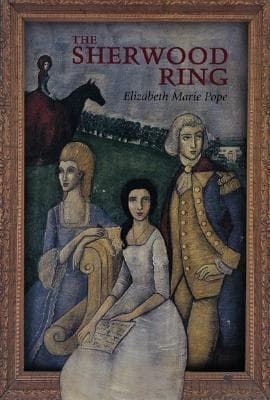
Elizabeth Marie Pope (1948)
Genre
Fantasy / Children's / Historical Fiction / Mystery / Young Adult
Reading Time
360 min
Key Themes
See below
Sign in to track this book
Orphaned Peggy Grahame uncovers a centuries-old romance, espionage, and Revolutionary War intrigue through the ghostly visits of her ancestors at her eccentric uncle's estate.
Sixteen-year-old Peggy Grahame, recently orphaned, arrives at The Towers, her family's ancient ancestral home in upstate New York. She meets her eccentric and reclusive uncle, Enos, a history professor. Soon after her arrival, a handsome young British scholar named Pat Ransom appears, claiming to be researching the American Revolution. Pat and Peggy are drawn to each other, but Uncle Enos, suspicious, dismisses Pat. Peggy feels isolated in her new, strange surroundings, alone in the sprawling, old house, which holds an unsettling quiet and hidden histories.
Left on her own, Peggy explores The Towers. She soon finds a hidden room behind a tapestry, furnished as it would have been in the 18th century. In this room, she experiences vivid visions of her ancestors. She first sees the spirits of young Anne Sherwood and her brother, Philip, during the American Revolution. These are detailed, interactive scenes that transport her into their lives. She observes their conversations and activities, slowly piecing together a story of espionage and romance from the past, centered on the Sherwood family.
Through her visions, Peggy meets Captain John Paulding, a charming and seemingly loyal British officer stationed in the area during the Revolutionary War. He visits The Towers often, seemingly for social calls, but his presence soon shows a deeper intrigue. Peggy observes his growing affection for Anne Sherwood, her beautiful and spirited ancestor. However, it becomes clear that Paulding's visits and the Sherwood family's activities connect to a world of spies and counter-spies. The family secretly supports the American cause while pretending to be loyal to the Tories to protect their estate and their lives.
Peggy witnesses Anne's emotional struggle as she falls in love with Captain Paulding, despite her family's loyalty to the American cause and the danger of her affections for an enemy officer. Meanwhile, the Sherwood family, including Anne's parents and her brother Philip, spy for General George Washington. They plan to intercept British dispatches. Philip, in disguise, must carry important information, putting him in danger. Anne, though conflicted, helps her family, even as her feelings for Paulding grow.
To Peggy's surprise, Pat Ransom reappears at The Towers, having secured a research grant that lets him stay nearby. His return happens as Peggy gets more involved in the past. Uncle Enos, who was hostile towards Pat, starts acting even stranger, muttering to himself and seeming to interact with unseen presences. He gives Peggy old letters and journals, hinting at the historical events around her. Through these clues and his behavior, Peggy begins to suspect that Uncle Enos is not just eccentric but also aware of, and perhaps interacting with, the same historical spirits she sees.
The historical narrative builds as Peggy observes the Sherwood family's plan to intercept British dispatches. Philip Sherwood is captured, and it is revealed that Captain Paulding arranged his capture, showing him to be a British spy. Anne is devastated by this betrayal, confirming her earlier fears and Paulding's true intentions. The revelation shatters her trust and love, showing the harsh realities and personal sacrifices of war. Peggy witnesses the impact of this event on Anne and the entire Sherwood family, feeling their pain and despair.
After Philip's capture, the Sherwood family, despite their heartbreak, plans his escape. Peggy learns the 'Sherwood Ring' is a family heirloom with a hidden compartment for secret messages. Anne, heartbroken but determined, uses her knowledge of the British camp and her past relationship with Paulding to help Philip escape. The ring helps pass information to Philip, letting him escape his captors and continue his work for the American cause. This act shows Anne's commitment to her family and country, despite her personal grief.
Peggy witnesses Anne's healing and her eventual romance with Jonathan, a steady American officer who had been a loyal friend to the Sherwood family. Jonathan represents stability and true patriotism, a contrast to Paulding's deception. Their courtship develops during the ongoing war, and Anne finds renewed hope and happiness in a genuine and trustworthy relationship. This part of Anne's story provides a sense of resolution and lasting love, showing that new beginnings are possible after heartbreak, and true loyalty lasts.
Uncle Enos, increasingly frail, finally tells Peggy that he has known about the ancestral spirits and historical events all his life, acting as a custodian and observer of the family's past. He explains he is a 'watcher,' a term meaning a special connection to the ancestral spirits, and that Peggy shares this gift. Soon after, Pat Ransom reveals his true identity: he is not just a scholar but also a descendant of Captain John Paulding. He has been researching his family's history, trying to understand his ancestor's actions during the war and seeking to atone for the past, especially the betrayal of Anne Sherwood.
With the full truth known, Peggy and Pat understand their intertwined destinies. The spirits of Anne and Jonathan, now at peace, seem to guide them. Peggy's insights from witnessing the past help Pat understand his ancestor's complex motivations and the impact of his betrayal. Pat, in turn, helps Peggy process her experiences. Their shared journey through the past strengthens their bond, allowing them to form their own romance. The novel ends with Peggy and Pat, now connected, embracing their shared heritage and looking forward to a future together, having brought peace to the restless spirits of The Towers and found their own place in its long history.
The Protagonist
From an orphaned, bewildered girl, Peggy grows into a confident young woman who understands and embraces her psychic connection to her ancestors, finding love and belonging.
The Supporting
Initially a reclusive and mysterious figure, Uncle Enos gradually reveals his true nature as a 'watcher' and mentor to Peggy, finding peace in passing on his legacy.
The Supporting
From a seemingly ordinary scholar, Pat is revealed to be a descendant seeking to understand his family's past, eventually finding love and reconciliation with Peggy.
The Supporting
Anne experiences the joy of first love, the devastation of betrayal, and ultimately finds true, lasting love and peace.
The Antagonist/Supporting
Paulding's character arc reveals his true nature as a British spy, leading to a profound betrayal.
The Supporting
Jonathan moves from a loyal friend to Anne's loving and devoted husband, providing her with stability and happiness.
The Supporting
Philip demonstrates courage and resilience as he participates in dangerous espionage, surviving capture and continuing to serve the American cause.
The Mentioned
N/A
The novel's central theme is how the past influences the present. Peggy's ability to 'witness' her ancestors' lives directly shows this. The setting of The Towers allows the emotional and historical echoes of the Revolutionary War to appear. This theme explores how historical events and personal stories shape identity, relationships, and destiny across generations, affecting Peggy's future and her relationship with Pat.
““The past isn't dead. It isn't even past. You can touch it, if you know how.””
This theme is shown through Anne Sherwood's story. Her love for Captain John Paulding conflicts with her family's loyalty to the American cause. Paulding's betrayal shows the painful choices and deceptions in war, where personal feelings often give way to political allegiances. The contrast between Paulding's deceit and Jonathan's loyalty shows different aspects of love and commitment. Peggy witnesses the emotional cost of such betrayals and the lasting power of true, honorable love that ultimately heals.
““Sometimes, my dear, in war, the heart must be secondary to duty, no matter how much it aches.””
Peggy's journey is one of self-discovery. Orphaned and in an unfamiliar place, she initially feels lost. Her experiences with the ancestral spirits make her confront her lineage, her psychic abilities, and her place in a long family history. By understanding her ancestors' struggles and triumphs, especially Anne's, Peggy begins to understand herself. Her connection with Pat, who is also dealing with his ancestral past, gives her a sense of belonging and purpose she lacked at the start of the novel.
““I'd found myself not by looking forward, but by looking back, into the very heart of my family.””
The novel questions traditional understandings of history as only written records. Through Peggy's visions, history becomes a living experience, showing that memories and events can persist and be re-experienced. Uncle Enos's role as a 'watcher' further emphasizes this, suggesting that some individuals are attuned to these historical echoes. The book suggests that history is not static, but a dynamic force that continues to resonate and influence the present, offering lessons and connections that go beyond time. It shows the personal experience of historical events.
““History isn't just dates and names, Peggy. It's people. It's feelings. It's alive.””
A physical space that acts as a portal to the past.
The hidden room at The Towers, concealed behind a tapestry and furnished in 18th-century style, serves as the primary catalyst for Peggy's psychic experiences. It is not merely a setting but a plot device that facilitates her immersion into the past. Its preserved state and historical artifacts create an atmosphere conducive to the visions, blurring the lines between past and present. The room acts as a sacred space where the energies of the ancestors are most potent, allowing Peggy to directly witness and interact with their lives, rather than just reading about them.
Peggy's ability to directly experience events from the past.
This is the core fantastical element of the novel. Peggy's unique ability to 'witness' and almost participate in the lives of her ancestors is the main engine of the plot. These are not mere dreams or daydreams but vivid, immersive experiences that feel as real as her present. This device allows the author to present a dual narrative—Peggy's contemporary story and the historical romance—simultaneously and interactively. It provides a highly personal and emotional connection to historical events, making them immediate and impactful for both Peggy and the reader.
A family heirloom used for secret communication.
The Sherwood Ring is a significant symbolic and practical plot device in the historical narrative. It is a family heirloom with a hidden compartment, used by the Sherwood family to pass secret messages during the American Revolution. Its use during Philip's escape highlights its importance in the espionage efforts and underscores the resourcefulness and risks taken by the family. The ring symbolizes the family's enduring legacy of courage and commitment to the American cause, and its continued presence in the house connects the historical events to Peggy's present.
A hereditary psychic ability passed down through the Grahame/Sherwood family.
The concept of the 'watcher' lineage explains Peggy's and Uncle Enos's unique abilities. It is not just random psychic phenomena but a hereditary gift passed down through the family, connecting certain members directly to the ancestral spirits and their stories. This device provides a mystical explanation for the supernatural occurrences and establishes a special bond between Peggy and Uncle Enos. It frames their experiences as a shared responsibility to the past, giving purpose to their unusual gift and ensuring the family history is not forgotten.
“The past is never dead. It's not even past.”
— Reflecting on the historical mysteries surrounding Sherwood Hall.
“A house is not a home until it has a ghost.”
— Discussing the eerie atmosphere of Sherwood Hall.
“Sometimes the most ordinary things can be made extraordinary, simply by doing them with the right people.”
— Peggy's realization about her adventures with the ghosts.
“The truth is rarely pure and never simple.”
— Unraveling the complex history of the Sherwood family.
“We are all fools in love.”
— A ghost's wry comment on romantic entanglements in the past.
“History is not just about dates and battles; it's about people and their stories.”
— Peggy learning from the ghosts' tales.
“Courage is not the absence of fear, but the triumph over it.”
— Encouraging Peggy to face the mysteries of Sherwood Hall.
“A secret kept too long becomes a burden.”
— Revealing hidden truths about the family's past.
“The world is full of obvious things which nobody by any chance ever observes.”
— Noticing clues in the historical mystery.
“Home is where your story begins.”
— Peggy finding her place at Sherwood Hall.
“Love is the only thing that we can carry with us when we go, and it makes the end so easy.”
— A ghost reflecting on enduring bonds beyond life.
“Adventure is worthwhile in itself.”
— Embracing the unexpected journey at Sherwood Hall.
“The best way to predict the future is to understand the past.”
— Learning from historical events to solve present mysteries.
“A little nonsense now and then is relished by the wisest men.”
— Light-hearted moment among the ghosts and Peggy.
Ready to see how well you understood this book? Take our interactive quiz with 10 questions.

Biography coming soon.







