“There is no death. The stars go down to rise upon some other shore.”
— Reflecting on the cycle of life and nature in the Ozarks.

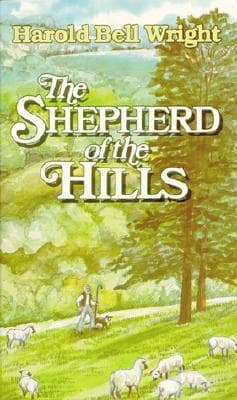
Harold Bell Wright (1982)
Genre
Historical Fiction / Spirituality / Romance
Reading Time
360 min
Key Themes
See below
Sign in to track this book
An old shepherd, seeking peace in the Ozark hills, becomes involved in the lives of its inhabitants, finding peace among their successes and failures.
An elderly, educated man, later known as the 'Shepherd,' arrives in the remote Ozark region of Mutton Hollow. He seeks peace and solitude away from the city. He likes the beauty of the hills, especially the area around Old Matt's cabin. Old Matt, a respected and kind leader of the community, and his wife, Aunt Mollie, let the stranger stay in a cabin on their land. The Shepherd, who carries a deep sadness and a mysterious past, begins to watch the lives of the hill folk. These include the strong Young Matt, the angry Jim Lane, and the beautiful Sammy Lane, Old Matt's granddaughter. His presence, at first met with curiosity and some suspicion, slowly starts to affect the close-knit community.
The Shepherd learns about the long-standing feud between Jim Lane and Wash Gibbs, caused by past wrongs and present anger. He also learns about Pete, a young man with a mental disability who is often misunderstood and mistreated by some, but protected by Sammy Lane. A big concern for the community is the Baldknobbers, a vigilante group that sometimes goes too far. Amidst these local problems, the Shepherd's own sorrow is clear. His frequent visits to a spot overlooking the valley, where he thinks about a past tragedy involving a son who went astray and a woman he loved, hint at this. He tries to offer advice and wisdom, often subtly, to those around him.
Sammy Lane, known for her beauty and independent spirit, is courted by two different men: Young Matt, her childhood friend and a good community member, and Grant Matthews, a sophisticated city man who comes to the hills to paint. Sammy is at first charmed by Grant's manners, which are very different from Young Matt's simple, honest nature. Young Matt, though in love with Sammy, patiently deals with her interest in Grant, believing in his own feelings and that true love will win. The Shepherd watches this romantic triangle with interest, seeing the possibility for both joy and sadness.
Grant Matthews, despite his charm, is less honorable than he seems. He takes advantage of Sammy's innocence and the hill people's trust, especially in his pursuit of Sammy. He makes promises he does not intend to keep, and his true, selfish nature starts to show. Sammy, at first blinded by her feelings for him, gradually begins to see through his facade, helped by the Shepherd's quiet wisdom. Her disappointment grows as Grant's actions become more deceitful, leading to heartbreak and a painful realization about love and trust. This experience makes Sammy rethink her values and the kind of man she wants.
The Baldknobbers, a local vigilante group, become more active and aggressive. A theft happens, and Pete, because of his simple mind and past misunderstandings, is wrongly accused of the crime. This accusation makes the community protective, especially Sammy, who defends Pete. Jim Lane, still consumed by his feud with Wash Gibbs, becomes involved in the Baldknobber's activities. This makes the tense situation worse. The Shepherd, understanding the injustice to Pete, tries to help. He uses his wisdom to guide the hill folk toward a fairer solution and to prevent more violence. The incident shows the dangers of mob mentality and the need for compassion.
The Shepherd's true identity is slowly revealed. He is James Howitt, a preacher whose life was broken by his son's actions. His son seduced and abandoned a young woman from the hills. This woman was Jim Lane's sister, and the child born from that union was Grant Matthews. The Shepherd realizes that he is Grant's grandfather and the father of the man who caused so much pain in the Lane family. This revelation connects him deeply and sadly to the people he has come to live among, explaining his deep sorrow and his desire to make amends. The weight of his past, and its direct impact on the present lives of his new neighbors, becomes clear.
The full truth of Grant Matthews's parents and the Shepherd's identity comes out. Jim Lane, filled with years of bitterness and a desire for revenge against the man who wronged his sister, discovers that the Shepherd is the father of that man and Grant's grandfather. This revelation brings Jim face-to-face with the object of his anger. Yet, the Shepherd's quiet dignity, deep sorrow, and commitment to doing good in the community begin to soften Jim's hardened heart. The Shepherd, in turn, faces his past and the results of his son's actions. He seeks forgiveness and a way to make amends for the family's pain. Sammy, hurt by Grant, finds comfort in Young Matt's steady love and honesty.
The tensions reach a peak, especially between Jim Lane and Wash Gibbs. The Baldknobbers' presence increases the chance of violence. In a confrontation, Jim Lane, still wanting revenge against the Howitt family, is about to take drastic action. However, the Shepherd, through his quiet strength, compassion, and ultimate act of self-sacrifice (though not death), intervenes. The revelation of his shared sorrow and his willingness to bear the burden of his son's wrongs deeply affects Jim. This moment of truth and vulnerability leads to a breakthrough, as Jim finally begins to let go of his long-held anger and accept the possibility of forgiveness and healing.
With the conflicts resolved and the truth revealed, peace slowly returns to Mutton Hollow. Sammy Lane, having matured through her painful experience with Grant, sees the true depth of Young Matt's love. She chooses to marry him, embracing a life of honest affection and shared values in the hills. The community, though marked by past events, begins to heal and strengthen. They are united by the lessons learned about forgiveness, compassion, and the lasting power of good. The Shepherd, having found peace and redemption through his service to the hill folk and the acceptance of his past, continues to be a guiding presence, a true 'shepherd' to his new flock.
The Shepherd, James Howitt, finds peace and purpose in the Ozarks. He has confronted his past and worked to make up for his son's wrongs and to heal the community. His wisdom, patience, and faith have changed lives, especially Jim Lane's, leading him away from vengeance. He sees the happiness of Sammy and Young Matt and the renewed harmony in Mutton Hollow. His time in the hills might end, but his legacy of quiet strength, spiritual guidance, and the power of forgiveness remains in the community. It influences generations to come and shows that redemption is possible.
The Protagonist
He transforms from a man burdened by guilt and sorrow to one who finds peace and redemption through service and acts of compassion.
The Protagonist
She matures from a somewhat naive girl enchanted by superficial charm to a discerning woman who chooses true love and honest values.
The Supporting
He remains steadfast in his love and values, eventually being rewarded with Sammy's affection and a life built on integrity.
The Supporting
He remains a consistent source of wisdom and stability, embodying the enduring spirit of the Ozarks.
The Supporting
She remains a consistent source of comfort and maternal care throughout the narrative.
The Supporting
He transforms from a man consumed by vengeance to one who begins to embrace forgiveness and reconciliation.
The Antagonist
He is exposed as a deceiver and leaves the hills, having caused heartbreak and revealed the painful truths of the past.
The Supporting
He remains a vulnerable figure, serving as a catalyst for community conflict and the demonstration of compassion.
The Mentioned
His rivalry with Jim Lane contributes to the plot's rising action, though his personal arc is not central.
This theme is central to the Shepherd's journey. Burdened by his son's past wrongs, he seeks to make up for the pain caused, for himself and for the community. His quiet acts of wisdom and compassion, especially towards Jim Lane, slowly break down years of bitterness. Jim's decision to let go of his vengeful desires, though hard, shows the powerful nature of forgiveness, both given and received. The novel suggests that redemption is not escaping one's past, but facing it and working toward healing.
“"He who would be greatest among you, let him be servant of all."”
The novel contrasts the purity and honesty of the Ozark hills with the corruption of city life. The Shepherd seeks refuge from the 'buzzing restlessness of the city,' while Grant Matthews shows its deceitful charm. The hill folk, though they have flaws and feuds, are generally shown as having a more authentic character, as seen in Young Matt. This theme explores the idea that virtue and peace are often found away from urban complexities. It also acknowledges that human passions and struggles exist even in peaceful settings.
“"Here and there among men, there are those who pause in the hurried rush to listen to the call of a life that is more real."”
This theme is explored through Sammy Lane's romantic journey. Her initial attraction to the charming but deceitful Grant Matthews leads to disappointment. This teaches her about superficiality versus genuine character. In contrast, Young Matt's steady, honest love and loyalty show true affection. The novel supports a love built on integrity, patience, and shared values over fleeting passion. It affirms the strength of steady devotion within the close-knit community.
“"There's a love that makes a man strong, Sammy, and a love that makes him weak."”
The long-standing feud between Jim Lane and the Howitt family, fueled by Jim's desire for vengeance for his sister's ruin, is a central conflict. The Baldknobbers, a vigilante group, also show a flawed form of justice. The Shepherd's presence and his revelation force the community to confront the destructive cycle of revenge. The story supports a higher form of justice based on compassion, understanding, and forgiveness. It shows how vengeance only causes suffering, while absolution can lead to healing and peace.
“"There is a law greater than the law of man, Jim, and it is the law of love."”
The novel shows the power of stories. The history of the characters and their interconnected fates are gradually revealed through dialogue and narration. The 'story' of the Shepherd's past, Jim Lane's grievance, and the community's history is passed down and revealed, shaping their present. The Ozark setting, with its folk traditions, shows how stories define identity and community. The unfolding of the truth, often through the Shepherd's subtle guidance, shows how narratives can both cause conflict and help understanding and healing.
“"The story is not of the present altogether, but of the past that has made the present."”
A common trope where an unknown figure enters a community, acting as a catalyst.
The Shepherd arrives in Mutton Hollow with an undisclosed past, immediately piquing the curiosity of the hill folk. His wisdom and quiet observation slowly begin to influence the community, and his true identity is gradually revealed, connecting him directly to the central conflicts. This device allows for the slow unveiling of exposition and provides an outsider's perspective on the community, while also making the protagonist a catalyst for change and revelation.
A literary contrast between an idealized country setting and the corrupting influence of the outside world.
Wright establishes the Ozark hills as a place of natural beauty and inherent goodness, a 'pastoral fantasyland' where life is 'more real.' This idyll is threatened by external forces, primarily personified by Grant Matthews, a character from the city who brings deceit and heartbreak. This device highlights the author's moral commentary on the purity of nature versus the moral decay associated with modernity, though it also acknowledges that human flaws exist even in the most beautiful settings.
The protagonist's title represents spiritual guidance and protective care.
The very title 'Shepherd' is symbolic of the protagonist's role. He is not just an observer but a spiritual guide, offering wisdom, compassion, and a steady hand to the 'flock' of Mutton Hollow. Like a shepherd guiding his sheep, he leads characters like Jim Lane away from paths of destruction and helps the community navigate moral dilemmas. This symbolism reinforces the novel's spiritual undertones and the protagonist's journey of redemption through service.
A plot twist where a character's true parentage is revealed, connecting past and present.
The revelation that Grant Matthews is the illegitimate son of the Shepherd's son and Jim Lane's sister serves as a crucial plot device. This hidden paternity directly links the Shepherd's tragic past to Jim Lane's deep-seated vengeance and Grant's current actions, bringing the novel's various narrative threads together. It intensifies the emotional stakes and drives the climactic confrontation, forcing characters to confront uncomfortable truths and paving the way for forgiveness and resolution.
A historical vigilante group used to represent mob mentality and flawed justice.
The Baldknobbers, a real-life vigilante group from the Ozarks, are used in the novel to represent the dangers of mob rule, prejudice, and flawed forms of justice. Their wrongful accusation of Pete and their general threatening presence escalate tensions within the community. This device allows Wright to explore themes of justice versus vengeance and the importance of due process and compassion, contrasting their actions with the Shepherd's moral guidance.
“There is no death. The stars go down to rise upon some other shore.”
— Reflecting on the cycle of life and nature in the Ozarks.
“A man's life is what his thoughts make of it.”
— Discussing personal growth and mindset in the wilderness.
“The only real failure in life is the failure to try.”
— Encouraging courage and action among the characters.
“Love is the only thing that we can carry with us when we go, and it makes the end so easy.”
— A romantic moment between characters in the hills.
“The hills do something to a man. They make him bigger or they break him.”
— Describing the transformative power of the Ozark landscape.
“It's not the years in your life that count. It's the life in your years.”
— Advice on living fully despite hardships.
“The past is gone; the future may never come; but the present is here, and it is ours.”
— Emphasizing mindfulness and living in the moment.
“A man's heart is his own, and when he gives it, he gives all.”
— A declaration of deep romantic commitment.
“The silence of the hills speaks louder than the noise of the world.”
— Contrasting rural peace with urban chaos.
“We are all shepherds in our own way, guiding something or someone through life.”
— Metaphorical reflection on responsibility and care.
“The simplest things are often the truest.”
— Commenting on the wisdom found in rural life.
“In the heart of the hills, we find the heart of God.”
— Spiritual insight gained from the natural setting.
“To love is to understand, and to understand is to forgive.”
— Resolving conflicts through empathy and romance.
“The trail may be rough, but it leads home.”
— Symbolizing the journey of life and return to roots.
“Every soul has its own melody, and the hills teach us to listen.”
— Poetic observation on individuality and nature.
Ready to see how well you understood this book? Take our interactive quiz with 10 questions.

Biography coming soon.







