“Because we don't know when we will die, we get to think of life as an inexhaustible well. Yet everything happens only a certain number of times, and a very small number, really.”
— Port reflects on mortality and the illusion of endless time.

Paul Bowles (2019)
Genre
Literary Fiction / Lifestyle / Historical Fiction
Reading Time
360 min
Key Themes
See below
Sign in to track this book
An American couple's desperate flight to the desolate beauty of post-WWII North Africa unravels their already fractured marriage, exposing the terrifying void within and the indifferent, vastness of the desert sky.
The story begins with Port and Kit Moresby, a rich, bohemian American couple, arriving in Oran, Algeria, with their acquaintance, George Tunner. They are traveling without a clear plan, looking to escape their dull lives and what they see as the decline of Western society. From the moment they arrive, the intense heat, unfamiliar sounds, and cultural gap start to affect them. Port, an intellectual and musician, is restless and distant, often wandering off alone. Kit, more sensitive and anxious, feels increasingly alone, seeing the world through a sense of worry. Tunner, a more typical American, often tries to ease the Moresbys' unspoken tensions while having an attraction to Kit. The first few days show their inability to connect with the local culture or with each other, setting a tone of deep isolation.
Leaving Oran, the trio takes a train deeper into the Algerian interior, their destination unclear, their reasons unstated. They stop in various towns, each one more remote, and the feeling of isolation grows. Port's wish to get rid of the shallow parts of his past life drives their journey, pushing them further from any comfort or familiarity. Kit, despite her growing unease, follows Port, hoping for some renewal in their relationship. Tunner, meanwhile, becomes more frustrated by their aimless travels and the Moresbys' emotional distance. The stark, uncaring beauty of the Sahara desert begins to have a powerful, almost overwhelming effect on them, making their personal dramas seem unimportant against its timeless expanse. They hire a private car and driver, going off the main roads, purposely seeking a 'real' experience.
In a small desert town, the Moresbys and Tunner meet Mrs. Lyle and her adult son, Eric, a strange and rather unpleasant English pair. Mrs. Lyle is a bossy, gossipy woman, while Eric is effeminate, always ill, and too dependent on his mother. Their presence contrasts sharply with the Moresbys' own search for authenticity, showing a different, more stagnant kind of expatriate life. Port dislikes them, while Kit finds them unsettling but also a temporary distraction from her worries. Tunner, always practical, tries to be polite. The Lyles represent the lingering, somewhat decayed presence of colonial Europeans, further emphasizing the Moresbys' status as outsiders and their struggle to find a place in this foreign land. Their paths briefly cross before the Moresbys and Tunner continue their journey south.
After some time, Tunner, tired of the Moresbys' emotional distance and the lack of a clear plan, decides to return to Oran, leaving Port and Kit alone. His departure is a turning point, removing the last buffer between the couple and the harsh realities of their journey. Kit feels a surge of anxiety and a sense of dread, her dreams becoming more vivid and disturbing, filled with images of danger and death. She tries to tell Port her fears, but he dismisses them as neuroses, staying focused on his own internal struggles and his desire to fully experience the desert. The vast, empty landscape begins to feel less like an escape and more like a trap for Kit, who feels increasingly vulnerable and exposed.
As they travel further into the desert, Port gets typhoid fever. At first, he ignores his symptoms, but his condition quickly worsens. Kit, despite her limited medical knowledge and the lack of resources, tries to care for him. They are in a remote oasis town, far from any proper medical help. Port's fever leads to delirium, and he has vivid hallucinations, his mind wrestling with questions about existence, death, and the meaning of their journey. In his feverish state, he thinks about his life, his relationship with Kit, and his fear of the 'sheltering sky' closing in. Kit is overwhelmed by the responsibility and the grim reality of Port's coming death, feeling completely alone and helpless in the face of his suffering.
Port Moresby dies in the remote desert, his last moments marked by a struggle against the darkness and his own philosophical anxieties. His death is a stark, unromantic event, showing the indifference of the desert. Kit is left in deep shock and grief, her world completely broken. The 'sheltering sky' that Port had theorized about, the comforting idea of human reason and order, now seems to have vanished, leaving her exposed to the terrifying vastness of existence. She is alone in a foreign land, without money, papers, or any clear direction. Her immediate reaction is a dazed, almost numb state, unable to fully process the size of her loss and her desperate situation. The desert, once a place of escape, now symbolizes her complete desolation.
After Port's death, overwhelmed by grief and the oppressive atmosphere of the town, Kit flees. She wanders aimlessly into the desert, her mind in a state of semi-delirium and shock. A caravan of Tuareg tribesmen soon finds and picks her up. What follows is a period of her complete subjugation. The tribesmen, especially the leader Belqassim, treat her as property, sexually abusing her and forcing her to travel with them. Kit, stripped of her identity, possessions, and will, enters a state of deep dissociation, letting herself be carried along by the circumstances. Her former life and personality seem to disappear, replaced by a basic instinct for survival and a deep, almost catatonic indifference to her situation. She wears their traditional dress, further blurring her identity.
For weeks or months, Kit lives as a captive within the Tuareg caravan. She is passed between men, subjected to their desires, and forced to do menial tasks. Her memories of Port, her past life, and her identity as a sophisticated American woman slowly fade, replaced by a raw, animalistic existence. She becomes a passive observer of her own degradation, her mind retreating into a protective shell. The harsh desert, the constant movement of the caravan, and the complete lack of control over her body and fate contribute to her deep change. She is no longer Kit Moresby but a silent, anonymous woman, a shadow of her former self, completely taken over by the foreign culture and her traumatic experiences. Her hair is cut short, and she wears the traditional veil, further erasing her individuality.
One day, Kit manages to escape from the Tuareg caravan during a stop in a town. Her escape is more instinct than a planned action, a desperate dash for freedom. She wanders through the town in her disheveled state, still wearing the traditional clothing, her mind still fragmented. By cruel irony, Eric Lyle, who is traveling with his mother, spots her. Eric recognizes her, despite her changed appearance, and is both horrified and fascinated. He takes her in, at first with concern mixed with a voyeuristic interest in her ordeal. Kit is brought back to Mrs. Lyle, who, despite her superficial concern, is more interested in the scandalous details of Kit's capture and degradation. This encounter marks Kit's forced return to the 'civilized' world, though she is far from recovered.
The Lyles bring Kit back to Oran, where they try to care for her, though in their own self-serving way. Kit, however, remains deeply traumatized and disconnected from reality. Her experiences in the desert have changed her completely; she can no longer function as her former self. She is silent, withdrawn, and often wanders off, her mind still lost in the vastness of her trauma. Despite their efforts to 'normalize' her, Kit remains a stranger in her own skin. One day, she slips away from the Lyles and disappears into the bustling streets of Oran, completely vanishing into the anonymity of the crowd. Her ultimate fate is left unclear, suggesting that she has found a final, silent escape from the world that shattered her, or perhaps has simply become another lost soul in the indifferent landscape. The novel ends with Tunner's fruitless search for her, emphasizing her complete disappearance.
The Protagonist
Port begins as a seeker of authenticity and freedom from Western constraints, but his journey ultimately leads to his physical and philosophical demise, proving the desert's indifference to human desires.
The Protagonist
Kit starts as a somewhat fragile, dependent wife seeking connection, but through extreme trauma, she is stripped of her identity, becoming a symbol of human vulnerability and ultimate detachment.
The Supporting
Tunner begins as an awkward third wheel, gradually becoming disillusioned with the Moresbys' journey, and ends as a concerned but ultimately helpless observer of their tragic fates.
The Supporting
Mrs. Lyle remains static, a symbol of colonial insularity and social judgment, serving as a foil to the Moresbys' more existential struggles.
The Supporting
Eric remains largely static, a figure of weakness and dependence, but acts as a crucial catalyst in Kit's return to 'civilization'.
The Mentioned
Belqassim serves as a catalyst for Kit's ultimate trauma and transformation, representing the alien, indifferent forces of the desert.
The Antagonist/Setting
The desert remains a constant, indifferent force throughout the novel, progressively revealing its power to expose and destroy human illusions and lives.
The novel explores various forms of alienation: from Western society, from the self, from one's partner, and from the natural world. Port and Kit arrive in North Africa already disconnected from their lives, looking for an escape, but only find deeper isolation. Their inability to truly connect with each other, even when facing death, shows the gap between them. Kit's psychological breakdown and loss of self after Port's death and her abduction represent the most extreme form of alienation, where she becomes a stranger even to herself, completely removed from her former identity. The vast, indifferent desert makes this feeling of being utterly alone and unimportant worse.
“''We don't know where we're going, but it's a long way from the world.''”
A central theme, stated by Port, is the concept of the 'sheltering sky' – the idea of order, meaning, and protection that humanity creates for itself. The journey into the desert tries to remove this idea, but it ultimately shows the terrifying reality of an 'unsheltered sky,' where humanity is alone, vulnerable, and without inherent meaning. Port's fear of death and his philosophical struggles reflect this dread. Kit's experience after Port's death, when she is left completely exposed to the raw forces of nature and human cruelty, shows this theme most clearly. The desert itself symbolizes this indifferent, vast, and ultimately meaningless universe.
“''How many more times will you remember a certain afternoon, a certain day, that is so much a part of your own life that you can't even think of it without a certain amount of agony? Probably four or five times more. And then it will be completely yours.''”
The journey into the desert, especially for Kit, becomes a process of identity erosion. Stripped of her societal roles, possessions, and eventually her control, Kit's sense of self dissolves. Her abduction and later life with the Tuareg caravan lead to a complete psychological breakdown, where she loses her memories, her personality, and her will. This theme explores how fragile identity is when faced with extreme trauma and a completely foreign environment. Her final disappearance into the crowd in Oran symbolizes the ultimate self-annihilation, where the individual is completely absorbed and lost to the indifferent world, having shed all parts of their former self.
“''She had no idea where she was, or in which direction she was going... It was as though all her life she had been hurrying towards this moment, which was the moment of her death.''”
The novel is set in post-colonial North Africa, and while not political, it explores the clash between Western and indigenous cultures. The Moresbys and Tunner, as Westerners, are outsiders, unable to truly understand or fit into the local society. Their interactions with locals are often superficial, marked by misunderstanding and detachment. The Lyles represent a more settled, yet equally alienated, form of colonial presence. Kit's abduction by the Tuareg is the most extreme example of this cultural clash, where she experiences a reality completely beyond her Western understanding, showing the vast, unbridgeable gap between their worlds and the vulnerability of the 'civilized' when faced with the 'primitive.'
“''The difference between him and Port, she thought, was that Port had never been able to take the world for granted.''”
The Sahara Desert is a strong force in the novel, showing nature's indifference to human concerns. It is not an active enemy but a vast, timeless entity that simply exists, unmoved by the characters' desires, fears, or suffering. It shows their vulnerability, removes their illusions, and ultimately takes Port's life. Kit's experiences after Port's death further emphasize this, as she is left to the elements and the raw, unfeeling aspects of survival. The desert is a constant reminder that humanity's dramas and philosophies are unimportant against the natural world's vast, impersonal scale.
“''The sky here is not like the sky in Europe. Here it is hostile. It is a world of its own, and it does not care if you live or die.''”
A central metaphor representing humanity's self-created illusions of order and meaning.
The 'sheltering sky' is a key metaphor, primarily articulated by Port, referring to the protective illusion of meaning, order, and control that humanity constructs to shield itself from the terrifying vastness and indifference of the universe. The characters' journey into the desert is an attempt to move beyond this 'shelter.' When Port dies, the sky becomes 'unsheltered' for Kit, revealing the raw, terrifying reality of existence without this comforting illusion. This device encapsulates the novel's central existential theme, marking the transition from a perceived ordered world to a chaotic, meaningless one, particularly for Kit as she loses her identity and sanity.
The Sahara acts as a powerful, transformative, and indifferent entity.
The Sahara Desert functions beyond a mere setting; it is a powerful symbol and almost a character in itself. Its vastness, harshness, and indifference reflect the existential themes of the novel. It represents a stripping away of all human artifice and comfort, forcing the characters to confront their raw, vulnerable selves. For Port, it is a place of intellectual quest and eventual demise. For Kit, it is a crucible of trauma that leads to the complete dissolution of her identity. The desert is a silent, unyielding force that ultimately triumphs over human endeavors and illusions, embodying the 'unsheltered sky' and the ultimate insignificance of human life.
Kit's unsettling dreams and premonitions hint at impending doom and loss of self.
Kit's character is often characterized by her sensitivity and her unsettling dreams and premonitions. These serve as a significant plot device, subtly foreshadowing the tragic events to come. Her dreams of danger, death, and disorientation begin early in the narrative, creating a growing sense of dread and unease. They hint at Port's illness and death, and later, at her own loss of identity and subjugation. This device not only builds suspense but also emphasizes Kit's intuitive connection to the deeper, more primal forces at play in the desert, contrasting with Port's more intellectual and often dismissive approach to such feelings.
A detached, observational narrator provides insight into internal states and external events.
The novel employs a third-person omniscient narrator, which allows for deep dives into the internal thoughts and philosophical musings of Port and Kit, while also maintaining a somewhat detached, objective tone when describing the harsh realities of the desert and the characters' suffering. This narrative perspective enhances the sense of alienation and existential dread, as the narrator often observes the characters' fates with a cool, almost indifferent gaze, mirroring the indifference of the landscape itself. It allows the reader to understand the characters' inner turmoil without necessarily sympathizing or judging, reinforcing the novel's philosophical core.
“Because we don't know when we will die, we get to think of life as an inexhaustible well. Yet everything happens only a certain number of times, and a very small number, really.”
— Port reflects on mortality and the illusion of endless time.
“Death is always on the way, but the fact that you don't know when it will arrive seems to take away from the finiteness of life. It's that terrible precision that we hate so much.”
— Port contemplates the uncertainty of death and its impact on life.
“He did not think of himself as a tourist; he was a traveler. The difference is partly one of time, he would explain. Whereas the tourist generally hurries back home at the end of a few weeks or months, the traveler, belonging no more to one place than to the next, moves slowly, over periods of years, from one part of the earth to another.”
— Port distinguishes between tourists and travelers, reflecting on his own identity.
“The sky hides the night behind it and shelters the people beneath from the horror that lies above.”
— A metaphorical description of the sky's protective yet illusory nature.
“How many more times will you remember a certain afternoon of your childhood, some afternoon that's so deeply a part of your being that you can't even conceive of your life without it? Perhaps four or five times more. Perhaps not even that.”
— Port reflects on the fleeting nature of memories and experiences.
“The soul is the weariest part of the body.”
— A brief, poignant observation on spiritual exhaustion.
“He felt the silence weighing upon him, and he knew that he was alone in a way he had never been before.”
— Port experiences profound isolation in the desert.
“It's a very American idea that people should be happy, and if they're not, there's something wrong with them.”
— A critique of cultural attitudes toward happiness and suffering.
“The wind blew the sand across the plain, and the sky was a pale, empty blue.”
— Descriptive passage evoking the harsh, barren landscape of North Africa.
“She had the impression that her life was a series of events that had already happened, and that she was merely going through the motions of living.”
— Kit reflects on her sense of detachment and predestination.
“The world is not with us enough. O taste and see.”
— A poetic call to engage fully with sensory experience and the present moment.
“He had always been afraid of something, but he had never known what it was.”
— Port's introspection on his underlying, undefined fears.
“In the desert, the only thing that matters is the next step.”
— A reflection on survival and focus in the harsh desert environment.
“She felt as if she were living in a dream from which she could not wake.”
— Kit's experience of disorientation and unreality in a foreign land.
Ready to see how well you understood this book? Take our interactive quiz with 10 questions.
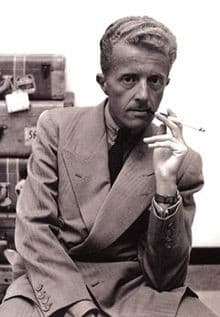
Paul Frederic Bowles was an American expatriate composer, author, and translator. He became associated with the Moroccan city of Tangier, where he settled in 1947 and lived for 52 years to the end of his life.







