“It was as if the world were a huge, intricate machine, and he was the only one who knew how to operate it, but he had forgotten the manual.”
— About the protagonist's feeling of being out of sync with society after his illness.

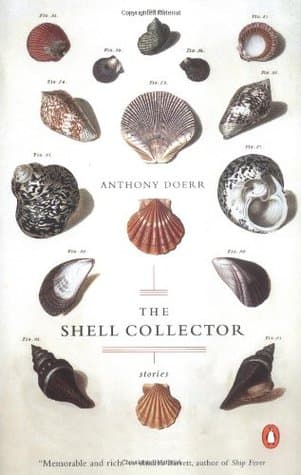
Anthony Doerr (2001)
Genre
Literary Fiction
Reading Time
240 min
Key Themes
See below
Sign in to track this book
From a blind man who sees the world through the shells he collects to a young woman who discovers a rare butterfly, Doerr's characters navigate the beauty and indifference of the natural world, each seeking a fragile connection amid life's mysteries.
Mr. George, a retired, blind shell collector living on a remote Kenyan beach, spends his days identifying shells by touch. One day, while wading in the ocean, he is stung by a rare, bioluminescent jellyfish. The sting, instead of killing him, gives him a miraculous ability: he can heal people by touching them with his hands, which now glow faintly. News of his gift spreads quickly, and soon, sick people arrive at his home, seeking his touch. George, initially overwhelmed and skeptical, feels he must help, even as his peaceful solitude is shattered.
As more visitors arrive, George's small hut becomes a makeshift clinic. He is aided by Miriam, a young, practical local woman who translates, cares for him, and manages the crowds. George struggles with the moral weight of his power, questioning if he truly heals or just offers false hope. He becomes exhausted by the constant demands and the emotional toll of seeing so much suffering, often feeling like a channel rather than an active healer. The once calm rhythm of his life is replaced by an unending parade of human misery.
A woman named Nuru arrives, pleading with George to heal her husband, a hunter gravely injured by a leopard. George, after much hesitation, agrees to try. He touches the hunter, but the man's wounds are too severe, and he shows no sign of recovery. This failure deeply shakes George, forcing him to face the limits of his gift and the fact that he cannot save everyone. The experience is a blow to his growing sense of purpose, showing the arbitrary nature of his healing and the immense responsibility he bears. He withdraws further, questioning the true source and purpose of his ability.
In a remote, unspecified location, two young brothers, Caleb and Jude, discover a strange, dying creature in a shallow riverbed. The creature is unlike anything they have ever seen, having both mammalian and reptilian characteristics. Fascinated and disturbed, they try to understand what it is and where it came from. Their attempts to help it fail, and they watch as it slowly dies. The encounter leaves a lasting impression on the boys, particularly Caleb, who is more sensitive and imaginative, sparking a fascination with the unknown and the fragility of life, hinting at a connection to nature's hidden wonders.
Following her husband's death, Nuru's grief is clear, and the community's view of George shifts slightly. While many still believe in his power, the incident with the hunter introduces a note of caution and a recognition that his gift is not absolute. George feels the weight of Nuru's sorrow and the unspoken questions from the villagers. This event strengthens his understanding that his healing is not a guarantee and that death is an inevitable part of life, even for those he touches. He begins to feel the burden of his reputation more acutely, struggling with the expectations placed upon him by both himself and those who seek his aid.
Dr. Nishimura, a Japanese marine biologist, studies a newly discovered species of giant squid that lives in the deepest parts of the ocean. His research is careful and solitary, driven by a desire to understand the mysteries of the deep. He uses advanced submersibles and remote cameras, spending years alone, often feeling more connected to the unseen creatures of the abyss than to other humans. His quest for knowledge reflects an isolation similar to George's initial life, showing the human drive to explore the unknown and the sacrifices made to understand nature's secrets.
Miriam, George's practical caretaker, sees the toll the healing takes on him. She acts as a buffer between George and the demanding crowds, often making difficult decisions about who can see him. She witnesses both the joy of those who are healed and the disappointment of those who are not. Miriam, while respecting George's gift, stays grounded in reality, understanding the practicalities of their situation and the need to protect George from exploitation and exhaustion. Her role highlights the human side of managing such an extraordinary phenomenon within a community.
Overwhelmed by constant demands, George seeks comfort in his old routine of collecting shells, trying to reconnect with the peace he once knew. He begins to feel a deeper, almost spiritual connection to the ocean, believing the jellyfish sting was more than just a biological event. He tries to understand the true nature of his gift, not just as a power, but as a link to nature's unseen forces. This introspective journey leads him to question the meaning of healing and his place in the vast, mysterious universe, suggesting a deeper, symbiotic relationship between himself and the sea that granted him this ability.
Dr. Nishimura finally achieves a breakthrough in his research, capturing footage of the giant squid in its natural habitat. However, even with all his technology, he recognizes the limits of human perception and understanding when faced with the alienness of the deep ocean. He accepts that some mysteries will always remain beyond complete comprehension, reinforcing the theme of humanity's respect for nature's vastness and inscrutability. His discovery, while monumental, also shows the solitude and intellectual humility required in such scientific pursuits.
A severe epidemic sweeps through the village, bringing more sick people than George can attend to. He is pushed to his physical and emotional limits. In a moment of exhaustion and clarity, George realizes he cannot save everyone, and that his gift, while powerful, is also a burden. He decides to choose when and whom he heals, prioritizing those he feels he can truly help and recognizing the need to preserve himself. This marks a turning point where he takes ownership of his power, accepting both its blessings and its limitations, rather than being passively consumed by it.
Miriam, seeing George's struggle, helps him establish a more structured and sustainable routine for his healing. She sets up a system to manage the influx of people, ensuring George gets rest and privacy. This allows George to continue using his gift without being completely overwhelmed, finding a balance between helping others and preserving his own well-being. Their partnership strengthens, with Miriam becoming an essential guardian of George's peace and his ability to continue his extraordinary work, ensuring his gift can be used effectively without consuming him.
George eventually finds peace, understanding that his gift is a part of him, but not all of him. He continues to heal, but with a new wisdom and a deeper appreciation for the interconnectedness of life and death, health and illness. He returns to his shell collecting, finding solace and meaning in the natural world, even as he continues to touch the lives of others. His blindness, once a limit, now seems to enhance his other senses, allowing him to perceive the world and his place in it with clarity, ultimately finding a harmonious balance between his extraordinary ability and his simple, natural existence.
The Protagonist
George transforms from a solitary, passive recipient of a gift to a wise, albeit burdened, healer who learns to manage his power and find a new balance in his life.
The Supporting
Miriam develops from a helpful assistant into a crucial partner, establishing order and sustainability for George's healing work.
The Supporting
Nuru experiences the raw power of hope and the crushing reality of loss, serving as a catalyst for George's understanding of his limitations.
The Supporting
Nishimura achieves scientific breakthroughs but ultimately comes to terms with the inherent limitations of human understanding when faced with nature's vast mysteries.
The Mentioned
Caleb's encounter with the creature sparks a lasting fascination with nature's mysteries.
The Mentioned
Jude shares a formative experience with his brother, witnessing nature's mysteries.
The natural world is a source of immense, often inexplicable power, both beautiful and terrifying. George's healing gift comes from a jellyfish sting, an act of nature. Dr. Nishimura studies the mysteries of the deep ocean and its creatures. Even the young boys, Caleb and Jude, find an unknown, dying creature in a river, showing nature's hidden wonders and its indifference to human understanding. The book constantly reminds readers that humanity is ultimately subject to the vast forces of the earth and sea.
“What he felt was the planet itself, breathing, a huge, slow engine moving under him, its gears grinding, its great wet heart pulsing.”
George's healing ability is both a miraculous blessing and an immense burden. While it helps him ease suffering, it also shatters his solitude, exhausts him, and forces him to confront the limits of his power and the ethics of his role. He struggles with expectations and the emotional toll of seeing so much pain. The theme explores how extraordinary abilities come with responsibilities and often lead to isolation, forcing the gifted person to live a life far from ordinary human experience.
“The gift, he realized, was not a blessing for him, but for those he touched. For him, it was a constant, draining demand.”
Many characters experience deep solitude: George in his blindness and isolated life, Nishimura in his deep-sea research. However, this solitude is often broken or challenged by the human need for connection and aid. George's gift forces him into connection with countless strangers, while Miriam provides a vital human link and partnership. The narrative explores the tension between the desire for peace and isolation and the reality of human interdependence, especially in times of suffering and hope. Even in isolation, there is an underlying current of connection to the larger world.
“He had sought solitude for decades, but now it was a luxury he could no longer afford.”
Both George and Nishimura confront the limits of what can be known or understood. George's healing is mysterious, its source and mechanism unknown, and its effectiveness not absolute. Nishimura, despite his scientific rigor and advanced technology, recognizes the vastness of the ocean's mysteries that remain beyond human comprehension. The book suggests that some aspects of existence, whether mystical or scientific, will always remain just beyond our grasp, fostering humility in the face of the universe's complexity and the arbitrary nature of life and death.
“The deep was a place of secrets, and he, a man, was only a visitor, peering through a small window.”
The integration of a fantastical element (healing touch) into a realistic setting.
The central plot device is Mr. George's miraculous healing ability, which is introduced without extensive explanation or disbelief within the narrative. This magical element is treated as a natural, albeit extraordinary, occurrence within an otherwise realistic depiction of life on a Kenyan coast. It allows the story to explore profound themes of faith, suffering, and human connection without resorting to outright fantasy, grounding the fantastical in the everyday and making its implications feel more tangible and immediate.
Interweaving seemingly disparate stories to highlight thematic connections.
The collection employs parallel narratives, most notably between Mr. George's story and Dr. Nishimura's. While geographically and contextually distinct, these stories are thematically linked by their exploration of human encounters with the vast, mysterious, and powerful aspects of the natural world, the pursuit of understanding, and the experience of solitude. This device enriches the overall thematic resonance of the book, showing how different human endeavors can lead to similar profound insights and challenges, creating a cohesive emotional landscape despite diverse settings and characters.
The sea and its inhabitants as metaphors for life, mystery, and connection.
The ocean is a pervasive symbol throughout the collection, representing the source of life, profound mystery, and uncontrollable power. Mr. George's gift comes from the sea (a jellyfish), and his solace is found in shells, which symbolize the intricate beauty and enduring nature of life's forms. Shells, collected and identified by touch, represent George's intimate, sensory connection to the world beyond sight. The deep ocean, explored by Dr. Nishimura, symbolizes the vast, unknown, and often terrifying aspects of existence that defy human comprehension, reinforcing the theme of humanity's small place in a boundless universe.
Use of heightened non-visual senses to describe the world.
Given Mr. George's blindness, the narrative frequently employs vivid sensory imagery that emphasizes touch, sound, and smell rather than sight. This device immerses the reader in George's unique perception of the world, highlighting the richness and detail available through other senses. It also underscores how his blindness, while a disability, has perhaps honed his other faculties, making him more attuned to the subtle energies of the natural world and potentially enabling him to perceive the 'glow' of his healing hands in a non-visual way, creating a deeper connection to his environment and his gift.
“It was as if the world were a huge, intricate machine, and he was the only one who knew how to operate it, but he had forgotten the manual.”
— About the protagonist's feeling of being out of sync with society after his illness.
“All those years he had spent studying shells, not realizing he was studying himself.”
— Reflecting on the protagonist's deep connection to his scientific work.
“The world was full of invisible things, and he was learning to see them.”
— Describing the protagonist's heightened senses and perceptions after his illness.
“There were a thousand things he could have done, but he did the one thing he knew how to do: he waited.”
— Highlighting the protagonist's patience and observational nature.
“Every shell was a story, every pattern a language he was only beginning to decipher.”
— Emphasizing the intricate beauty and scientific wonder of shells.
“He understood then that the world was not a series of discrete objects, but a vast, interconnected web.”
— A moment of profound realization about the interconnectedness of nature.
“What good was knowing if you couldn’t share it?”
— The protagonist grapples with the value of solitary knowledge.
“He felt like a man who had been given a new set of eyes, only to find that everyone else was blind.”
— Describing his unique perspective after his illness, setting him apart.
“The quietest things, he thought, often held the most profound secrets.”
— Reflecting on the subtle wonders of the natural world.
“Loss, he was learning, was a kind of gain. It cleared away the clutter.”
— A philosophical reflection on the impact of personal loss.
“He saw that the world was not just beautiful, but also terribly, terribly fragile.”
— A realization about the delicate balance of ecosystems.
“To be truly alone, he found, was to be utterly free.”
— Paradoxical feeling about his isolation.
“The ocean, he knew, held more secrets than all the libraries in the world.”
— Expressing the vast, unexplored mysteries of the natural world.
“Perhaps the greatest discoveries were not those that revealed something new, but those that helped you see the old things differently.”
— A reflection on the nature of discovery and perspective.
Ready to see how well you understood this book? Take our interactive quiz with 10 questions.
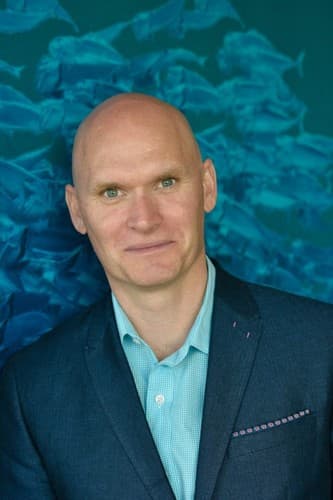
Anthony Doerr is a Pulitzer Prize-winning author celebrated for his evocative prose and compelling storytelling. His novel "All the Light We Cannot See" earned him widespread acclaim, including the Pulitzer Prize for Fiction. Doerr's other notable works include "The Shell Collector" and "Memory Wall," showcasing his mastery of historical fiction and intricate character development.







