“Perhaps that was the best way to get rid of a monster. Not with a sword or a magic spell, but with a simple act of kindness.”
— Gretel reflects on her interaction with a creature.

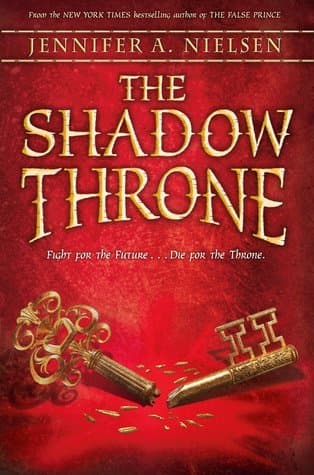
Jennifer A. Nielsen (2014)
Genre
Fantasy / Children's / Young Adult / Romance
Reading Time
336 min
Key Themes
See below
Sign in to track this book
As war engulfs Carthya, King Jaron must outwit a ruthless enemy and go on a dangerous quest to rescue his kidnapped love and fractured kingdom, even if it means sacrificing his own life and throne.
The war against Avenia has begun, and Carthya is under siege. King Jaron, despite his youth, is determined to protect his kingdom. King Vargan of Avenia kidnaps Imogen, Jaron's love interest and a loyal servant. Vargan uses her to force Carthya's surrender. Jaron, driven by duty and personal affection, plans a daring, almost suicidal, mission to infiltrate Avenia and rescue Imogen himself. Ignoring his advisors, particularly Fink and Mott, Jaron sets out with a small, reluctant group, knowing the immense risks. His first attempt to enter Avenia is dangerous, immediately showing the overwhelming odds against him and King Vargan's ruthless nature.
Jaron's rescue attempt quickly fails. He is separated from Fink and Mott, who must find their own ways to help defend Carthya. Jaron, always resourceful, disguises himself and goes into Avenia alone, determined to find Imogen. He navigates the hostile territory, using his wits and stealth, while the war continues. His journey through Avenia tests his resolve and shows his ability to blend in and gather information, even in extreme danger. He learns of Vargan's brutal methods and Carthya's desperate situation, which further strengthens his determination to save Imogen and return to lead his people.
Jaron eventually finds Imogen, who is held captive in a remote Avenian stronghold. He learns of her mistreatment and the psychological torment King Vargan inflicts on her. Vargan wants to break her spirit and use her as a pawn. Just as Jaron tries to free her, Vargan's soldiers ambush and capture him. This capture is a devastating blow, putting both Jaron and Imogen in extreme danger and seemingly ending any hope of a quick rescue or a favorable turn in the war. Vargan, now holding both the King of Carthya and his beloved, believes he has won.
While imprisoned, Jaron endures brutal questioning by King Vargan. Vargan seeks to get information about Carthya's defenses and demoralize Jaron. Vargan also reveals his understanding of the 'Shadow Throne' prophecy, believing it refers to a mythical seat of power that will give him ultimate control over Carthya if Jaron is eliminated. Jaron, despite his pain, uses his quick wit and cunning to resist Vargan, subtly manipulating his captor and buying time. He understands that Vargan's obsession with this prophecy is a key weakness he might use, even in his terrible situation. Imogen, also imprisoned, worries Jaron constantly.
Jaron's ingenuity and a stroke of luck allow him and Imogen to make a harrowing escape from Vargan's stronghold. During their flight, they meet Tobias, Jaron's former rival for the throne. Tobias has been working with Vargan, seemingly against Carthya. It becomes clear that Tobias has been forced and manipulated, with his family held hostage. A tense reunion occurs. Jaron must decide whether to trust Tobias, whose loyalty is now unclear. This encounter complicates their escape and forces Jaron to confront the moral compromises made by those under pressure, showing how widespread Vargan's tyranny is.
As Jaron, Imogen, and Tobias make their dangerous way back towards Carthya, they face many challenges, including pursuing Avenian soldiers and difficult terrain. Meanwhile, back in Carthya, Fink, having escaped his own ordeal, returns to Drylliad and reports to the Carthyian regents and war council. The council is in despair, believing Jaron to be dead or lost, and thinking about surrendering to Vargan. Fink, however, maintains hope and provides important information about Avenian movements, urging them to keep fighting. His return brings a glimmer of hope amidst the overwhelming despair, but the kingdom remains close to collapse.
During their difficult journey, Jaron puts together information about the 'Shadow Throne' prophecy. He realizes Vargan's interpretation is wrong. He figures out that the Shadow Throne is not a physical object or a seat of power, but a concept representing Carthya's true, hidden strength: its people, their loyalty, and their willingness to fight for their freedom and their rightful king. This revelation is a turning point for Jaron. It shifts his focus from a single object to his nation's collective spirit. He understands that his task is not just to defeat Vargan, but to inspire his people to reclaim their own strength.
Jaron, Imogen, and Tobias finally reach Drylliad, arriving just as Vargan's forces launch a final, decisive attack on the capital. Jaron, though tired, immediately takes command, rallying the demoralized Carthyian soldiers. In the chaotic battle, Tobias proves his loyalty, fighting bravely alongside Jaron against Vargan's forces, earning Jaron's trust and respect. The battle is fierce and bloody, with many casualties on both sides. Jaron uses his unusual tactics, using the city's layout and his knowledge of Vargan's arrogance to gain an advantage, even as the odds remain against them.
In the battle's most important moments, Jaron confronts King Vargan directly. Their duel is a clash of wills and swords. Jaron uses his agility and cunning against Vargan's brute force. During this confrontation, Jaron reveals his understanding of the Shadow Throne and exposes a shocking betrayal: a high-ranking Carthyian noble, Lord Conner, has secretly worked with Vargan, causing much of the kingdom's downfall. Conner's treachery, motivated by a desire for power, is a devastating blow to Carthya. It also clarifies the true extent of the internal threats Jaron has been facing, beyond just Avenia.
With Conner's betrayal exposed and King Vargan defeated, the war turns in Carthya's favor. Jaron, though wounded, wins. He has not only saved his kingdom but also inspired his people. The immediate threats are gone, and Carthya begins the difficult process of rebuilding. Jaron, now an experienced king, strengthens his reign, earning the loyalty of his subjects and advisors. He ensures justice for Conner and begins to address the needs of his war-torn nation, looking towards a future of peace and stability, with Imogen by his side and a renewed sense of purpose for Carthya.
The Protagonist
Jaron transforms from a reckless prince to a battle-hardened, strategic king, fully embracing his leadership while maintaining his unique, unconventional approach.
The Supporting
Imogen endures immense hardship and manipulation but emerges stronger, her loyalty to Jaron unwavering, solidifying her place by his side.
The Antagonist
Vargan's arc is one of escalating ambition and cruelty, culminating in his defeat and the destruction of his tyrannical rule.
The Supporting
Mott remains a pillar of loyalty and strength, his faith in Jaron growing ever stronger despite the king's unconventional methods.
The Supporting
Fink grows from a loyal page into a more independent and resourceful operative, proving his bravery and dedication to Carthya.
The Supporting
Tobias moves from being a coerced adversary to a redeemed and loyal ally, proving his true character under pressure.
The Supporting
Rodrick maintains his steadfast loyalty and leadership, proving instrumental in the defense of Carthya.
The Antagonist
Conner's arc is one of hidden treachery revealed, leading to his exposure and ultimate downfall.
Jaron's journey is about taking on the heavy role of kingship. He learns that true leadership is not just about cunning or bravery, but about making difficult decisions, inspiring loyalty, and understanding his people's needs. His reckless bravery becomes strategic leadership. He puts the kingdom's survival over personal glory. The theme is shown by the contrast between Jaron's unusual methods and his advisors' more traditional expectations. This ultimately proves that effective leadership can come in many forms, especially when facing overwhelming odds.
“"A king fights for his people, not just for his own life. My life is theirs to command."”
This theme is central to the war, appearing in various ways. Mott and Fink's loyalty to Jaron contrasts with Lord Conner's betrayal, who conspires with Vargan from within Carthya's council. Tobias's forced 'betrayal' and eventual redemption further explore the complexities of loyalty when under pressure. Jaron's ability to tell true loyalty from deception is important for his survival and Carthya's victory. This shows that trust is a powerful, yet fragile, weapon in war.
“"Some betrayals are born of fear, others of greed. Both can kill a kingdom."”
King Vargan's misguided obsession with the 'Shadow Throne' as a literal object of power drives much of his ambition. Jaron, however, eventually discovers that the true 'Shadow Throne' is not a physical item but a metaphor for the collective strength, resilience, and spirit of Carthya's people. This theme questions the usual understanding of power, stating that real authority comes from a nation's loyalty and unity, rather than from conquest or mystical objects. Jaron's triumph shows this deeper understanding of power.
“"The Shadow Throne isn't a chair, Vargan. It's the hearts of my people, beating as one."”
Throughout the book, Carthya faces overwhelming odds. Its capital is under siege, its king is missing, and its people are demoralized. Yet, characters like Imogen, Fink, and the Carthyian soldiers show resilience, refusing to give up hope. Jaron himself embodies this theme. He endures capture, torture, and the constant threat of death, yet never loses his resolve or his cunning. The story shows that even in the darkest moments, the human spirit's ability to resist and the belief in a better future can be the strongest weapons against tyranny.
“"Hope is a dangerous thing for those who cling to it, but a necessary one for those who would defy despair."”
A mysterious prophecy that drives the motivations of both protagonist and antagonist.
The Shadow Throne prophecy is a central plot device, initially misunderstood by King Vargan as a literal, powerful artifact that will grant him dominion over Carthya. This misinterpretation fuels his war and his actions against Jaron. Jaron's eventual realization that the 'Shadow Throne' represents the collective spirit and loyalty of Carthya's people provides a crucial turning point. It shifts the focus from a physical object to a metaphorical understanding of national strength, highlighting the theme of true power and serving as a symbolic representation of Carthya's resilience.
Jaron's use of disguises to infiltrate enemy territory and gather intelligence.
Jaron frequently employs disguises and assumes different identities, harkening back to his days as 'Sage.' This device allows him to move undetected through Avenia, gather critical information, and approach situations from unexpected angles. His ability to blend in and manipulate perceptions is key to his survival and his efforts to rescue Imogen. It underscores Jaron's cunning nature and his unconventional approach to kingship, contrasting with the more direct, brute-force tactics of his enemies. It also creates dramatic tension as he navigates dangerous situations while concealing his true identity.
Tobias's forced collaboration with the antagonist leading to his eventual redemption.
The plot device of Tobias being forced to work with King Vargan, due to threats against his family, introduces moral complexity and a compelling redemption arc. This device not only raises the stakes for Jaron, who must decide whether to trust a former rival, but also explores the theme of loyalty under duress. Tobias's eventual decision to fight alongside Jaron, proving his true allegiance, reinforces the idea that even those who appear to be enemies can be swayed by honor and justice, adding depth to the narrative and strengthening Carthya's forces.
Jaron being separated from his trusted advisors, forcing independent action.
Early in the narrative, Jaron is separated from Mott and Fink, forcing each character to act independently and face their own challenges. This device allows for multiple perspectives on the war effort and showcases the individual strengths and resilience of Jaron's loyal companions. It heightens the sense of peril for Jaron, as he must rely solely on his wits, while also demonstrating Fink and Mott's unwavering dedication to Carthya in their own separate struggles. Their eventual reunions are moments of relief and reinforcement, highlighting the strength of their bonds.
“Perhaps that was the best way to get rid of a monster. Not with a sword or a magic spell, but with a simple act of kindness.”
— Gretel reflects on her interaction with a creature.
“Sometimes the greatest power lies not in what you can do, but in what you choose not to do.”
— A philosophical thought about restraint and power.
“Every lie, no matter how small, casts a shadow. And enough shadows can obscure the sun.”
— Gretel considers the impact of deceit.
“The world was not a storybook, and happy endings were not guaranteed, but they were worth fighting for.”
— Gretel's determination amidst adversity.
“Fear was a tool, like any other. It could be used to control, or it could be used to protect.”
— A character's perspective on the nature of fear.
“Even a small light can banish a great deal of darkness.”
— A message of hope in a bleak situation.
“A crown does not make a king; character does.”
— A lesson about true leadership.
“Sometimes the bravest thing you can do is admit you're afraid.”
— A moment of vulnerability and strength.
“Secrets were like seeds; once planted, they grew, sometimes into something beautiful, often into something thorny.”
— Reflecting on the nature of secrets.
“The most dangerous chains are the ones you cannot see.”
— A thought on unseen forms of bondage or control.
“Loyalty is a gift, not a right. It must be earned, and cherished.”
— Discussing the value of loyalty.
“The greatest battles are often fought within oneself.”
— An internal struggle faced by a character.
“Love, even in its simplest form, could be a powerful weapon against despair.”
— Gretel finds strength in her affections.
“History is written by the victors, but truth has a way of finding its own voice.”
— A reflection on historical narratives and hidden truths.
“A true home is not a place, but a feeling shared with those you love.”
— Gretel contemplates the meaning of home.
Ready to see how well you understood this book? Take our interactive quiz with 10 questions.

Biography coming soon.







