“The place was a fishing town, and doubtless in its time had seen the landing of many a cargo from far places; but now it was sadly decayed, and the harbour displayed few signs of life.”
— The narrator's first impression of Innsmouth upon arrival.

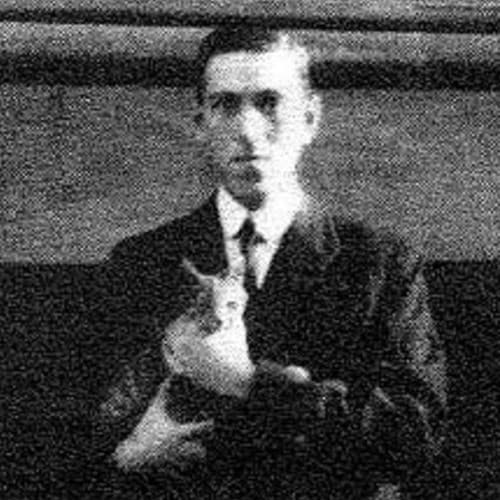
H.P. Lovecraft (1936)
Genre
Fantasy / Mystery / Science Fiction
Reading Time
120 min
Key Themes
See below
Sign in to track this book
A college student's genealogical quest to a decaying, isolated New England fishing village unearths a horrifying family secret and the monstrous, aquatic truth behind Innsmouth's inbred inhabitants.
The unnamed narrator, a student touring New England, decides to visit the decaying, avoided seaport town of Innsmouth after hearing disturbing rumors in Newburyport. Locals warn him against going, describing the inhabitants as strange, deformed, and reclusive, with peculiar 'Innsmouth look' features. They also speak of a terrible plague that struck the town years ago and the subsequent rise of the Obed Marsh family, who established a profitable but unsettling trade with mysterious islanders. Despite the warnings, the narrator's curiosity is strong, and he arranges for a bus to take him to Innsmouth, determined to uncover its secrets.
Upon arriving in Innsmouth, the narrator is immediately struck by the town's deep decay and the constant smell of fish. The buildings are crumbling, the streets are empty, and a heavy silence hangs in the air. He observes the few inhabitants he meets, noting their peculiar physical characteristics: narrow heads, flat noses, bulging unblinking eyes, and a strange walk—the infamous 'Innsmouth look.' These observations disturb him, confirming the unsettling descriptions he heard in Newburyport. He finds the local grocery store owner, who is clearly one of the deformed inhabitants, particularly unnerving, and struggles to find anyone willing to speak about the town's history.
Wanting information, the narrator meets Zadok Allen, a very old, decrepit, and always drunken Innsmouth resident, who is one of the few 'normal' humans left. For some whiskey, Zadok tells the town's true, horrifying history. He explains that Captain Obed Marsh, an important figure, made a pact with the Deep Ones—amphibious, fish-like humanoids from an undersea city called Y'ha-nthlei. In exchange for gold and abundant fishing, the Deep Ones demanded human sacrifices and, later, interbreeding with the townspeople. Zadok describes the grotesque transformations of the Innsmouth residents into Deep Ones, their eventual move to the ocean, and the town's worship of Dagon and Hydra.
After Zadok's chilling confession, the narrator returns to his hotel, deeply disturbed. He tries to sleep but has nightmares. Around midnight, strange noises wake him, and he realizes that the town's hybrid inhabitants are looking for him. He overhears their guttural speech and the sounds of their peculiar shuffling walk. Fearing for his life, he tries to escape his room, only to find the hotel full of the grotesque creatures. He hides, seeing their horrifying forms and behavior up close, which confirms Zadok's story and the full extent of the town's corruption. He realizes he is trapped and hunted.
The narrator, hiding from the hybrids, eventually finds a chance to escape the Gilman House hotel. He moves through the deserted, decaying streets of Innsmouth under cover of darkness, constantly alert to the sounds of his pursuers. He sees more of the Deep Ones and their hybrid offspring, their forms becoming more monstrous and their numbers seemingly endless. He heads towards the railroad track, hoping to reach a nearby town and safety. The pursuit is constant, and he narrowly avoids capture many times, the chilling sounds of the creatures echoing behind him as he flees the town, his sanity barely holding on.
Months after his terrifying escape, the narrator, now safe from Innsmouth, begins to research his own family history. He discovers a branch of his family, the Waite family of Newburyport, had connections to Innsmouth. Through old records and a diary, he learns that his great-grandmother, Eliza Orne, was a member of the Marsh family of Innsmouth, directly descended from Obed Marsh. This revelation chills him, suggesting a horrifying inherited link. He becomes increasingly paranoid, plagued by nightmares and a growing physical illness, fearing that the 'Innsmouth look' and its transformation might be his own inherited fate.
As time passes, the narrator begins to notice subtle, then clear, physical changes in himself. His skin becomes scaly, his eyes bulge and become unblinking, and his ears begin to recede—the very signs of the 'Innsmouth look.' He also has increasingly vivid and disturbing dreams of an ancient, cyclopean undersea city, identifying it as Y'ha-nthlei, the home of the Deep Ones. He feels a growing urge to return to the sea, a primal longing that terrifies him. The truth of his lineage becomes horrifyingly clear: the transformation into a Deep One is not just a story, but his own inescapable destiny, a genetic curse passed down through generations of the Marsh family.
Driven by his increasing transformation and the terrifying dreams, the narrator learns of another distant relative, his cousin, 'Cousin Obed' (named after Captain Obed Marsh), who has been institutionalized in an asylum due to similar physical changes and mental decline. Upon visiting him, the narrator finds his cousin already significantly transformed, showing clear Deep One features and a growing desire for the sea. Rather than despair, the narrator finds a strange sense of kinship and morbid acceptance. Together, they decide to accept their heritage. The narrator plans to break his cousin out of the asylum, and they will journey to Innsmouth, and then descend into the ocean to join their Deep One kin in Y'ha-nthlei, accepting their monstrous fate.
The Protagonist
From an inquisitive tourist to a terrified fugitive, and finally to a resigned, transforming hybrid accepting his oceanic fate.
The Supporting
Remains largely static, a static oracle of doom, but his revelations propel the narrator's journey.
The Mentioned/Antagonist (posthumous)
His arc is historical; he represents the origin of Innsmouth's corruption.
The Antagonists
They are a static, ancient, and malevolent force, representing primal, cosmic horror.
The Supporting
His arc parallels the narrator's, serving as a foreshadowing and a companion in their shared doom.
The Supporting
Static, serves to transport the narrator and emphasize Innsmouth's isolation.
The Supporting
Static, serves as an early visual manifestation of the Deep One curse.
The most prominent theme is an inherited curse that shows up as physical and mental degeneration. The 'Innsmouth look' is not just a deformity but a sign of an inescapable, predetermined transformation into a Deep One. This is shown by the narrator's discovery of his Marsh ancestry and his subsequent physical changes, as well as the fate of Cousin Obed. The story suggests that bloodlines can carry ancient, monstrous legacies that eventually appear, trapping individuals in a horrifying destiny beyond their control. This theme explores the terrifying implications of ancestral sin and the power of genetics.
“It was the H. P. Lovecraft 'Shadow Over Innsmouth' look, of course — that of the hybrid Deep One, which was slowly claiming me.”
Lovecraft uses the unknown to create fear. The initial rumors about Innsmouth are vague and unsettling, letting the reader's imagination fill in the gaps. The Deep Ones themselves are utterly alien—neither fully human nor animal, but an ancient, aquatic race with incomprehensible motives and a horrifying biology. The terror grows because of their slow, subtle infiltration of human society through interbreeding, blurring the lines between 'us' and 'them.' The story constantly emphasizes the alienness of the Deep Ones and their world, contrasting it with human norms and thereby increasing the sense of dread.
“And the worst thing was the way they talked—they didn’t talk like humans; they had a kind of gurgling, croaking voice that was simply horrible.”
The physical state of Innsmouth itself reflects moral and spiritual decay. The crumbling buildings, empty streets, and constant stench show a town that has turned its back on humanity and embraced something monstrous. Its isolation, both geographical and social, allows the horror to grow unchecked. The town is a small example of decay, showing how a community can become corrupted and shunned when it deviates from accepted human norms. This theme shows the consequences of unnatural pacts and the slow, inevitable decline that follows.
“The place was a nightmare of decay and desertion, of rotting fish and rotting woodwork, of a ghastly, unhuman emptiness and a smell that I could not quite place.”
As the narrator changes, he deals with the terrifying loss of his human identity. The physical changes come with a psychological shift, a growing acceptance and even longing for his Deep One heritage. This theme explores the fragile nature of self and the horrifying possibility of being taken over by an alien identity. The residents of Innsmouth, by interbreeding, willingly gave up their humanity, and the narrator's ultimate decision to join his kin shows the complete loss of his former self, embracing a monstrous new existence.
“Then I knew the truth, and was glad. My cousin and I would be together, always, in the cyclopean city of Y'ha-nthlei.”
The narrator's deteriorating mental state and eventual transformation color his perception.
The unnamed narrator's perspective is crucial, yet becomes increasingly unreliable as the story progresses. Initially, he is a rational observer, but his encounters in Innsmouth and the subsequent discovery of his heritage slowly erode his sanity. His final decision to embrace his Deep One identity suggests a complete shift in his moral and psychological framework, making his 'acceptance' of the monstrous fate deeply unsettling and potentially a symptom of his transforming mind. This device heightens the horror by questioning the very nature of reality and the narrator's perception of it.
A physical manifestation of the Deep One hybridity and an escalating sign of decay.
The 'Innsmouth Look' is a recurring physical characteristic—narrow head, flat nose, bulging unblinking eyes, receding forehead, peculiar skin texture, and gait—that marks the town's inhabitants as Deep One hybrids. It serves as a visual motif for the town's corruption and the gradual transformation of humans into Deep Ones. For the narrator, it initially signifies external horror, but later becomes a terrifying personal omen as he recognizes it in himself. This device externalizes the internal horror of genetic mutation and the loss of humanity.
A drunken old man's rambling account provides crucial backstory and exposition.
Zadok Allen's lengthy monologue serves as the primary means of revealing Innsmouth's horrifying history, the pact with the Deep Ones, and the details of their interbreeding. His account, delivered in a rambling, drunken manner, adds a layer of verisimilitude and a sense of forbidden knowledge being reluctantly shared. This device allows Lovecraft to deliver extensive exposition in a dramatic and character-driven way, making the revelations feel more organic and chilling than a straightforward historical account.
Visions that foreshadow the narrator's transformation and connect him to the Deep Ones' world.
Dreams and nightmares are used to signal the narrator's internal psychological state and his genetic connection to the Deep Ones. Initially, they are vague and disturbing, reflecting his anxieties. Later, they become increasingly vivid, featuring the cyclopean undersea city of Y'ha-nthlei, and function as a direct communication from his Deep One heritage, drawing him towards his ultimate fate. This device blurs the line between conscious reality and subconscious horror, suggesting a deeper, primal connection to the monstrous entities.
“The place was a fishing town, and doubtless in its time had seen the landing of many a cargo from far places; but now it was sadly decayed, and the harbour displayed few signs of life.”
— The narrator's first impression of Innsmouth upon arrival.
“I could not help feeling that they were evil beings—malign and grotesque apprentices who had become a little too much like their masters.”
— The narrator observes the strange inhabitants of Innsmouth.
“They worshipped, so they said, the great old ones who lived ages before there were any men, and who came to the young world out of the sky.”
— Zadok Allen describes the esoteric beliefs of the townspeople.
“That is the real secret of the deep—it is old, so monstrously old that it has forgotten its own beginning.”
— Zadok Allen hints at the ancient origins of the Deep Ones.
“Do not call up that which you cannot put down.”
— A warning given to the narrator about prying into Innsmouth's secrets.
“The shadow of the hill and the ruins of the mill were always over the town, and the shadow of the sea was over the hill.”
— Describing the oppressive atmosphere of Innsmouth.
“It was the eldritch scurrying of those fiend-born things, and the damnable manner in which they regarded me.”
— The narrator's terror upon being pursued by the townsfolk.
“There are things in this world that are better left unknown, and Innsmouth is one of them.”
— A local warns the narrator to stay away from the town.
“The ocean is more ancient than the mountains, and freighted with the memories and the dreams of Time.”
— Reflecting on the primordial nature of the sea.
“I saw them in a limitless stream—flopping, hopping, croaking, bleating—surging inhumanly through the spectral moonlight in a grotesque, malignant saraband of fantastic nightmare.”
— The narrator witnesses the horrific transformation of the townspeople.
“We shall swim out to that brooding reef in the sea and dive down through black abysses to Cyclopean and many-columned Y'ha-nthlei.”
— The narrator's dream-vision of joining the Deep Ones.
“The true epicure in the terrible, to whom a new thrill of unutterable ghastliness is the chief end and justification of existence, will esteem most of all the ancient, lonely farmhouses of backwoods New England.”
— Lovecraft's musing on the appeal of rural horror.
“I have looked upon all that the universe has to hold of horror, and even the skies of spring and the flowers of summer must ever afterward be poison to me.”
— The narrator reflects on how his experience has permanently scarred him.
Ready to see how well you understood this book? Take our interactive quiz with 10 questions.
Biography coming soon.







