“The past is a shadow, but it is a shadow that shapes the present.”
— A reflection on how history influences current events in the world of Andarra.

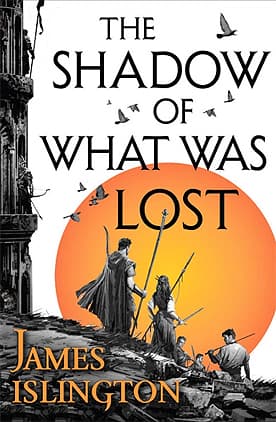
James Islington (2014)
Genre
Fantasy
Reading Time
15-20 hours
Key Themes
See below
Sign in to track this book
After a war that wiped out god-like Augurs, a student with minor magic discovers he has forbidden power, which awakens old enemies and an amnesiac stranger whose fate is tied to his.
Davian, a student at the Academy for the Gifted in Caladel, struggles with his lessons. Society fears his kind because of the Augur War twenty years ago. Gifted people are marked with the Four Tenets, which magically force obedience. During an exam, Davian accidentally uses Augur abilities, a power thought to be gone and forbidden. This gets the attention of Headmaster Aelric, who sees the serious problems. At the same time, Asha, from a secret group called the Shadow, watches Davian. To the west, a young man named Wirr wakes in a forest with no memory and blood on his hands. He soon meets an old man named Taeris. Davian's power appearing happens as there are rumors of a threat from the North, an old enemy called the Venerate, suggesting a larger prophecy is coming true.
Headmaster Aelric sees the great danger Davian faces from the government and the returning Augurs. He arranges for Davian and Wirr (who has arrived at the Academy, still without memory) to escape Caladel. Asha helps them, revealing she works for the Shadow, a group that protects the world from the Venerate. Asha gives them a mysterious box and tells them to go to Tol. Their escape is dangerous as the Assembly, the ruling body that fears Augur power, and other forces chase them. During their journey, Davian carefully tries out his Augur abilities, trying to understand and control them while fearing being found out.
As Davian, Wirr, and Asha travel to Tol, they face many problems, including wild animals and the constant threat of capture. Asha tells them more about the world's history, the Augurs, and the old war against the Venerate. She explains that the Augurs were protectors, not tyrants as history says, and their powers were not evil. Wirr struggles with his memory loss, having flashes of violent and upsetting memories. Davian's control over his Augur abilities slowly gets better, though he still fears their destructive power. They learn the box Asha gave them holds important information or an item needed to stop the Venerate, making their mission more urgent.
When they reach Tol, Davian, Wirr, and Asha are led to a hidden sanctuary of the Shadow. Here, Davian starts getting more formal training in his Augur abilities from Shadow members, learning to control magic more effectively. Wirr also gets a place to rest, but his memory does not return. They meet other Shadow members who fight the Venerate. They learn more about the old prophecy that foretells the Venerate's return and the Augurs' role in their defeat. The Shadow reveals that the Augurs were not truly destroyed but went into hiding or were suppressed, and Davian's appearance is an important event.
While at the Shadow's sanctuary in Tol, the Venerate attack, showing their power and how much they have returned. Davian must use his Augur abilities in combat for the first time against these old enemies, struggling with the power and the moral questions of using it. Wirr, despite his memory loss, also shows surprising skill in battle, suggesting a forgotten past. The Shadow suffers losses, showing how serious the threat is. This fight confirms to Davian that the Venerate are a real and immediate danger, and that his Augur powers are necessary, though frightening, for their world's survival. The attack also shows the Venerate's specific interest in Davian.
After the Venerate attack, the Shadow reveals the full ancient prophecy. It foretells the Venerate's return and the need for a 'Sightless' and a 'Gifted' to defeat them, implying Davian and Wirr are key figures. They also learn more about Augur power and how the Venerate used it in the past. During this time, Wirr's memories return in more clear and disturbing pieces, suggesting he is more than he seems. He remembers being a soldier, fighting in a faraway land, and having skills not from this time. This shows how his memory loss and unexpected fighting ability are connected to the old conflict.
Guided by the prophecy and new information from the Shadow, Davian, Wirr, and Asha travel north, to the Venerate stronghold. Their mission is to find a powerful artifact—perhaps the one in the box Asha gave them—that is needed to defeat the Venerate. The journey is hard, with fights against Venerate followers and harsh nature. Davian keeps improving his Augur abilities, understanding more about 'seeing' and controlling magic. Wirr's memories become clearer, showing he is a soldier from the Augur War, somehow moved through time. This realization greatly changes their understanding of the prophecy and their roles in it.
Davian, Wirr, and Asha get into a Venerate stronghold, leading to a direct fight with the old enemy. During the battle, Davian fully uses his Augur powers against strong Venerate leaders. Wirr's past as a skilled warrior from the Augur War is fully shown, and he helps greatly in their fight. They find out the Venerate's plan is not just conquest but to control time and magic itself, aiming to change history. The artifact they sought is a key part of this plan, able to either seal the Venerate or make them stronger. The truth about the Augur War, its real causes, and what happened to the original Augurs is slowly put together.
Just as they are about to succeed, a betrayal within the Shadow is revealed, making their situation more dangerous. This forces Davian to make a desperate choice, using his Augur abilities in a new way. He tries to control time or create a rift to stop a disaster or get an important item. In a key moment, Davian accidentally sends himself and Wirr through a time anomaly, separating them from Asha and the immediate fight. This leaves them stuck in a different time, adding another problem to their difficult mission and fulfilling part of the prophecy in an unexpected way.
Davian wakes up confused and alone in a strange place, realizing he has been moved to a different time—specifically, to the time of the original Augur War, twenty years in the past. He is hurt and without Wirr, who was also caught in the time anomaly. Davian now faces the hard task of navigating a world that sees Augurs as tyrants, even as the war against the Venerate continues around him. He understands that his accidental time jump is a critical, though frightening, part of the prophecy. Wirr is implied to have landed somewhere else, possibly back in the 'present' but with his memories finally restored, setting up their continuing linked destinies across different timelines.
The Protagonist
From a fearful, insecure student, Davian grows into a powerful Augur who accepts his destiny and responsibilities, even if it means altering time itself.
The Protagonist/Supporting
Wirr evolves from an amnesiac wanderer to a warrior who reclaims his past and destiny, embracing his role in the ancient conflict.
The Supporting
Asha remains a steadfast and knowledgeable guide, revealing the true history and her dedication to fighting the Venerate.
The Supporting
Aelric's arc involves revealing his true identity and sacrificing his safety to protect Davian and the secrets of the Augurs.
The Supporting/Mentioned
Taeris's arc is brief, serving to guide Wirr at the beginning of his journey.
The Antagonist
North remains a relentless antagonist, driven by fear and ambition to control or destroy Augur power.
The Antagonist
The Venerate return from dormancy, growing in power and actively working to fulfill their ancient plans of domination.
The Supporting
Eliza's arc is less prominent, serving to show the impact of the world's prejudice on the Gifted and her concern for Davian.
The novel explores identity, especially through Davian and Wirr. Davian deals with being an Augur, a power hated by society, and must accept using a force he was taught to fear. Wirr's journey is about finding his identity as he slowly gets back his memories and understands his true self and past. Both characters must match who people think they are with who they truly are, challenging societal biases and personal fears. Their self-discovery helps them fulfill their roles in the unfolding prophecy.
“"The world told him his Gift was a curse, but the truth was a power far greater and more terrifying than any curse."”
The society in the book is biased against the Gifted, and especially the Augurs, because of lies about the Augur War. Gifted people are marked with the Four Tenets and treated as second-class citizens, feared by the 'un-Gifted.' This fear comes from a changed history and controls those with power. Davian experiences this bias, which makes him unsure about using his Augur abilities. The theme shows how fear of the unknown and changing history can lead to oppression and unfairness, twisting the truth about people and groups.
“"We are despised because of what we can do, not because of what we are."”
A main theme is how history is changed and the difference between accepted truths and what actually happened. Everyone believes the Augurs were cruel rulers who were rightly overthrown, but the story slowly shows this is a lie. The Shadow group works to find and keep the real history of the Augur War and the Venerate threat. This theme shows the danger of believing official stories without question and the importance of finding the truth, even if it challenges strong beliefs. It affects Davian's view of his own powers and the entire world he lives in.
“"History is written by the victors, and the truth often dies with the vanquished."”
Prophecy and destiny play a big role, with Davian and Wirr seemingly meant to fight the Venerate. However, the characters often make choices that either follow or go against these prophecies, raising questions about how much free will they have. Davian's actions, especially his accidental time jump, show that while a path might be set, the specific way things happen and the results are often decided by individual choices and unexpected events. This theme looks at whether characters are just puppets of fate or if their actions truly shape their future and the world's.
“"The threads of fate are not always straight, Davian. Sometimes, we must weave our own path through them."”
The novel examines power, specifically Augur and Gifted abilities. It looks at how power can be used for good or bad, and how fear and ignorance can change how it is seen. Davian struggles with the great, dangerous power he has, fearing its destructive potential and corruption. The story compares the good intentions of the real Augurs with the cruel image created by lies, and the evil, manipulative power of the Venerate. It explores the responsibility that comes with great power and the moral problems faced when using it.
“"Power is not good or evil, Davian. It is how you choose to wield it that defines its nature."”
Magical inscriptions that enforce obedience on the Gifted.
The Four Tenets are magical laws inscribed into the flesh of all Gifted individuals, compelling them to absolute obedience and preventing them from using their powers against the Assembly. This device serves as a physical manifestation of societal control and prejudice, highlighting the oppression faced by the Gifted. It also creates a significant internal conflict for characters like Davian, who must find ways to circumvent or break free from these restrictions as his Augur powers emerge, symbolizing a rebellion against established order and false truths. The Tenets are a constant reminder of the war's aftermath.
A narrative technique used to gradually reveal a character's critical past.
Wirr's amnesia is a key plot device that allows for a slow, intriguing revelation of his true identity and his critical role in the ancient Augur War. It creates mystery around his character, drives his personal quest for identity, and allows the author to drip-feed crucial historical information to both Wirr and the reader. The fragmented and often violent nature of his returning memories adds tension and foreshadowing, building towards the shocking reveal of his true origins as a soldier displaced in time, directly connecting the past and present conflicts.
An ancient foretelling of future events, guiding the protagonists' actions.
An ancient prophecy serves as a guiding force throughout the narrative, hinting at the return of the Venerate and the roles of key individuals (specifically a 'Sightless' and a 'Gifted') in defeating them. This device provides a framework for the plot, giving the characters a sense of destiny and urgency. It allows for exposition about the world's history and the true nature of the Augur War. However, the prophecy is often vague or misinterpreted, creating suspense and allowing for character agency as they navigate their fated roles, sometimes fulfilling it in unexpected ways, such as Davian's accidental time travel.
The accidental movement of characters between different time periods.
The accidental temporal displacement experienced by Davian and Wirr at the end of the book is a significant plot device. It not only creates a cliffhanger but also fundamentally alters the narrative structure for future installments, introducing a dual timeline or a past-focused perspective. This device allows for a direct exploration of the events of the original Augur War, providing context and deeper understanding of the present conflict. It complicates the characters' goals, forcing them to adapt to entirely new circumstances and potentially influence history directly, rather than just reacting to its echoes.
“The past is a shadow, but it is a shadow that shapes the present.”
— A reflection on how history influences current events in the world of Andarra.
“Power is a tool, not a prize. Those who seek it for its own sake are doomed to misuse it.”
— A warning about the nature of power from a mentor figure.
“We are all bound by the choices we make, but we are also bound by the choices we refuse to make.”
— A character contemplating responsibility and inaction.
“The truth is often a weapon, and those who wield it must be prepared for the wounds it inflicts.”
— A discussion about the dangers of revealing secrets.
“Fear is a cage of our own making, and the key is always within reach.”
— A moment of encouragement during a perilous situation.
“In the end, we are defined not by our abilities, but by our choices in the face of them.”
— A philosophical insight about character and morality.
“The world remembers the victors, but it is the sacrifices of the forgotten that pave their way.”
— A tribute to unsung heroes in the story's conflicts.
“Trust is a fragile thing, easily broken and hard to mend, yet without it, we are all alone.”
— A character grappling with betrayal and alliance.
“Magic is not a gift, but a burden—one that demands a price from those who bear it.”
— Explaining the costs of using magical abilities in the world.
“Sometimes the greatest battles are fought not with swords, but with words and wills.”
— A reflection on political and personal struggles.
“The line between hero and villain is often drawn by perspective, not by deed.”
— A nuanced view on morality in the story's complex conflicts.
“Hope is a flame that can light the darkest path, but it must be tended carefully, lest it burn out.”
— A motivational thought during a bleak moment.
“We are all prisoners of our past, but the future is a door we can choose to open.”
— A character seeking redemption and change.
“In silence, truths are often spoken loudest.”
— An observation about unspoken understanding between characters.
Ready to see how well you understood this book? Take our interactive quiz with 10 questions.

Biography coming soon.







