Childhood Reveries and the English Cousin
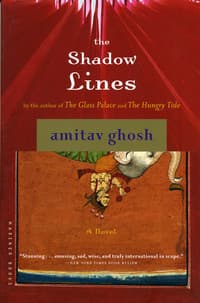
The unnamed Bengali narrator, a boy in Calcutta in the 1960s, is captivated by his older cousin, Tridib. Tridib, an unusual and eccentric figure, shares vivid stories of his childhood visit to London during the war, especially his time with the Price family: Mrs. Price, her daughter May, and her son Nick. These stories, describing bombed streets, air raids, and everyday English life, form the basis of the narrator's imagination, making London and the Price family more real to him than his own surroundings. Tridib's way of storytelling, focusing on sights and sounds, influences the narrator's view of the world and history, blurring the lines between personal memory and shared narrative.
The Price Family's Arrival in Calcutta
Years later, May Price, the English girl from Tridib's stories, visits Calcutta. Her presence brings Tridib's fantastic anecdotes into sharp reality for the narrator. May stays with the narrator's family, and her interactions, especially with Tridib and the narrator's grandmother (Tha'mma), show cultural differences and shared human experiences. The narrator, now older, watches May and Tridib closely, trying to match the real May with the character from Tridib's tales. May's visit is a key meeting point, bringing London into Calcutta's present and deepening the narrator's understanding of their connected lives and histories.
Tha'mma's Journey to Dhaka
The narrator's grandmother, Tha'mma, tells a moving and terrible story of her trip to Dhaka (then Dacca) in 1964, after riots erupted over the theft of the Prophet's hair relic in Kashmir. Despite danger and her family's pleas, Tha'mma, a very independent woman, insists on going to retrieve her uncle's ancestral home and ensure his safety. Her journey across the new border between India and East Pakistan is full of fear and uncertainty, showing the human cost of the Partition. This story reveals Tha'mma's strong sense of duty and her complex connection to her homeland, highlighting how political divisions violently tear apart lives and family histories, leaving lasting scars on memory and identity.
The Dhaka Riots and Tridib's Death
In a terrible turn of events, Tridib, May Price, and the narrator's family are caught in the communal riots in Dhaka in 1964. They are visiting Tha'mma's ancestral home when the violence grows. While trying to help a Muslim rickshaw-puller attacked by a Hindu mob, Tridib intervenes. In the chaos, Tridib is brutally murdered while protecting the rickshaw-puller and May. May herself is badly hurt. This tragedy, a direct result of political and religious tensions from the Partition, shatters their lives and leaves a lasting trauma on the narrator and May, linking them forever through this shared, horrific memory. The event becomes the novel's central 'shadow line'.
The Narrator's London Years
Years after the Dhaka tragedy, the narrator moves to London for his studies, driven by an unconscious wish to live in the world Tridib had described and to piece together their shared history. He lives with the Price family, especially May, who is still dealing with the trauma from Dhaka. In London, the narrator explores Tridib's past, visiting places Tridib knew, seeking to understand the man and the events that shaped him. He observes the Price family, especially Nick, and his interactions with them help him connect memories, both personal and collective, between Calcutta and London, and between past and present. His time in London is a search for understanding and a way to keep Tridib's memory alive.
May's Lingering Trauma and Confession
In London, May Price, still troubled by the Dhaka riots, slowly confides in the narrator. She confesses her deep guilt and the details of her actions during the incident that led to Tridib's death. May reveals that she was the one who first tried to help the rickshaw-puller, drawing Tridib into the dangerous situation. Her confession shows the complex mix of innocence, good intentions, and the devastating results of political violence. The revelation deepens the narrator's understanding of the tragedy and May's lasting psychological scars, showing how individual choices, even well-meaning ones, can have unforeseen and fatal effects in a volatile political situation. Her confession is a turning point in their relationship and in the narrator's grasp of the past.
Nick's Detachment and Nationalism
The narrator also observes Nick Price, May's brother, who shows a different response to the shared history. Nick, unlike May, seems detached from the Dhaka tragedy and the emotional weight of the past. He becomes involved in right-wing nationalist politics in England, expressing views critical of immigration and multiculturalism. His political views and disinterest in his family's and the narrator's intertwined histories contrast with May's lingering trauma and the narrator's search for understanding. Nick's character highlights the different ways people face or ignore the 'shadow lines' of history and national identity, and how easily some can disconnect from the consequences of political extremism.
The Search for Robi-mama's House
Years after the traumatic events of 1964, the narrator's family, especially his mother, tries to find their ancestral home in Dhaka, now the capital of independent Bangladesh. The search for 'Robi-mama's house' symbolizes the family's desire to reconnect with their roots and reclaim a part of their identity lost to Partition. However, the search is difficult; the house has changed owners, its original inhabitants are gone, and the area itself has been changed by time and political upheaval. This failed quest shows the irreversible nature of historical displacement and how national borders can permanently cut off personal connections to place and heritage, leaving only fragmented memories and a sense of loss.
The Narrator's Reflections on Identity and Borders
Throughout his journey, the narrator thinks deeply about how arbitrary national borders are and how identity is built. He grapples with the idea that lines on maps, which dictate citizenship and belonging, are artificial and often violent, separating people who share common histories and cultures. He understands that 'shadow lines' are not just physical marks but also psychological and emotional barriers that influence how people see themselves and others. His experiences in Calcutta, Dhaka, and London lead him to question the idea of a fixed national identity, emphasizing instead the fluidity and interconnectedness of human lives across geographical and political divides, a main theme of the novel.
The Enduring Power of Stories and Memory
As the novel ends, the narrator, now an adult, recognizes the power of stories and memory in shaping understanding and preserving the past. He realizes that Tridib's tales, though not always factual, provided a framework for understanding the world and making connections across cultures and generations. Through his own narration, the narrator tries to piece together fragmented memories, personal stories, and historical events to create a cohesive understanding of his family's experiences and the larger historical forces that shaped them. The novel itself becomes an act of memory-keeping, showing how individual stories, when connected, can illuminate history and bridge the 'shadow lines' that divide humanity.