“We are all connected, Maia. The past is never truly gone; it lives on in us, in our choices, in our very souls.”
— Maia's grandmother explains the family's mysterious origins.

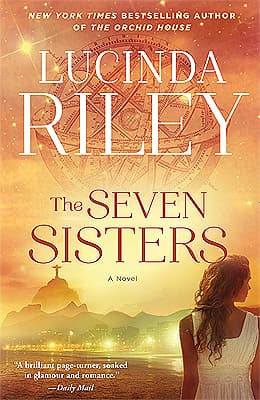
Lucinda Riley (2014)
Genre
Historical Fiction / Mystery / Romance
Reading Time
920 min
Key Themes
See below
Sign in to track this book
Orphaned Maia travels the world to find her Brazilian family, uncovering a century-old story of forbidden love and the creation of Christ the Redeemer during Rio's Belle Époque.
The story begins with Maia D’Apliese, the oldest of six adopted sisters, learning her adoptive father, Pa Salt, has died. Each of the sisters – Maia, Ally, Star, CeCe, Tiggy, and Electra – returns to their childhood home, 'Atlantis' castle on Lake Geneva. Pa Salt, a rich and private man, adopted each of them from different parts of the world as babies. They meet Georg Hoffman, Pa Salt's lawyer, who says their father was buried at sea, as he wished. Each sister gets a letter and a clue to her heritage. Maia feels a deep loss and curiosity about her past.
Maia's clue is an armillary sphere with coordinates and a note about her birthplace in Rio de Janeiro. She does not want to go at first, wanting to stay in Switzerland with her boyfriend, Zaz, but she feels she must follow the clue. She travels to Rio and finds a crumbling mansion in the Lapa district. There, she meets Augusto Bonifacio, an old man who thinks she is his long-lost great-grandmother, Izabela. Augusto, with his nurse, Yara, gives Maia old letters and a diary, starting to uncover a complex family history connected to the Christ the Redeemer statue.
The story goes back to Rio de Janeiro in 1927, showing Izabela Bonifacio, a beautiful and lively young woman from a rich family. Her father, a traditional and ambitious man, has arranged her marriage to Gustavo Aires de Vasconcelos, a nobleman, to raise their family's social standing. Izabela, however, dreams of art, travel, and a life beyond her sheltered home. She is a talented artist, sketching the city around her, but her parents, especially her mother, who wants proper behavior, limit her goals.
Architect Heitor da Silva Costa, a family friend and the person behind the Christ the Redeemer statue, travels to Paris to hire a sculptor. Izabela, wanting to avoid her upcoming marriage and see the world, convinces her father to let her go with him and her family to Europe. In Paris, at the studio of Paul Landowski, the French sculptor chosen for the Christ the Redeemer project, Izabela's life changes. She meets Laurent Brouilly, a charming and ambitious young sculptor working as Landowski's assistant. They connect right away, starting a forbidden romance.
Despite her family watching her closely, Izabela and Laurent start a secret, passionate relationship. They meet in the cafes and art places of Montparnasse, very different from Izabela's life in Rio. Laurent shows Izabela a world of artistic freedom and ideas, making her want independence even more. Their love grows, and Izabela feels torn between her duty to her family and what her heart wants. She secretly poses for Laurent, becoming his inspiration, and they dream of a future together, despite the big social barriers between them.
The secret relationship between Izabela and Laurent is found out, causing a scandal that could ruin the Bonifacio family's name. Izabela's parents are angry and force her to return to Rio de Janeiro to marry Gustavo. Heartbroken and pregnant with Laurent's child, Izabela is desperate. She makes a plan with her maid, Beatriz, and her kind aunt, Tilde, to hide her pregnancy and arrange for the baby to be adopted. She hopes that one day, she can be with Laurent and their child again.
Back in Rio, Izabela marries Gustavo, who, despite being from a noble family, is a gentle and sad man. She gives birth to her daughter, Cristina, in secret with the help of Beatriz and Tilde. The baby is then given to the family's gardener, Felicio, and his wife, who raise her as their own daughter, Maria. Izabela lives a life of quiet sadness, wanting Laurent and her lost child, while publicly acting like a devoted wife and mother to her later child with Gustavo, a son named João. She continues to secretly paint, finding comfort in her art.
In the present, Maia learns more about the past. Augusto Bonifacio says he is Izabela's grandson (through João) and shares more letters and memories. Maia learns that Izabela later met Laurent again, but their love was only brief before tragedy happened again. The biggest discovery is when Maia finds out that Izabela's first daughter, Maria, was her own grandmother. This means Maia is directly related to Izabela and Laurent, making her a Bonifacio by blood. She also learns that Izabela never truly got over losing her first child and Laurent.
Maia feels the emotional weight of her family history but also finds a sense of belonging. She connects with Augusto and Yara, forming a bond with her new Brazilian family. She visits the Christ the Redeemer statue, now understanding its connection to her ancestors' story. Maia decides to stay in Rio for a while, accepting her heritage. She breaks up with Zaz, realizing their relationship was not what she wanted. Finding her past helps Maia start a new part of her life, personally and professionally, by taking a job translating a book in Paris, hinting at future adventures.
As Maia finishes her trip in Rio, she thinks about Pa Salt's choice to send each sister to find her origins. She realizes that her father, in his own way, wanted them to find themselves and understand their places in the world. The mystery of his sudden death and burial at sea remains unsolved, leaving Maia with more questions than answers about the man who raised her. She understands that her journey is just the first step in a bigger story, as her sisters will go on similar searches to find their own pasts.
The Protagonist
Maia transforms from a hesitant, introverted woman into a more confident and self-assured individual, embracing her heritage and making bold choices for her future.
The Supporting/Catalyst
His death acts as the catalyst for the entire series, his character revealed posthumously through his daughters' discoveries.
The Protagonist (historical timeline)
Izabela's arc is one of youthful rebellion, followed by profound sacrifice and a lifetime of regret for a lost love and child, yet she maintains an enduring artistic spirit.
The Supporting (historical timeline)
Laurent experiences the joy of first love and the pain of its loss, carrying the memory of Izabela throughout his life.
The Supporting (present timeline)
Augusto finds a sense of closure and connection by sharing his family's history with Maia.
The Supporting (present timeline)
Yara provides stable support to both Augusto and Maia, witnessing the reconnection of a family.
The Supporting (historical timeline)
Tilde acts as a steadfast protector and enabler of Izabela's desperate plan, remaining loyal despite societal risks.
The Supporting (historical timeline)
Gustavo lives a life largely unaware of his wife's deepest sorrows, a representation of societal expectations.
The Supporting (historical timeline)
Beatriz demonstrates unwavering loyalty to Izabela, helping her through her most difficult personal crisis.
The main theme is Maia's journey to find her true origins, leading to a better understanding of herself. This is also seen in Izabela's fight for self-expression within social rules. Both women, from different times, try to define who they are beyond the roles given to them. Maia's search for her biological family helps her understand her place in the world and make decisions about her future, moving past her adoptive father's influence and her old relationship.
““I knew that a part of me would always be with Pa, but I also knew that it was time to find out who I was without him.””
The novel looks at different kinds of love – romantic, family, and parental – and what people give up for them. Izabela's passionate, forbidden love for Laurent leads to a big sacrifice: giving up her child and living with regret. Pa Salt's adoptive love for his daughters is also a sacrifice, as he raises them and then, after his death, guides them to their true heritage. Maia's own journey means giving up her comfortable, but unfulfilling, relationship with Zaz for a chance at real self-discovery and a deeper connection to her past.
““Love, I had learned, was a dangerous game. And I had lost.””
This theme is mainly shown through Izabela's story. She struggles between her duty to her family and society, which demands an arranged marriage and social conformity, and her personal desires for artistic freedom, love with Laurent, and a life of her own. Her struggle shows how limiting social expectations were in the 1920s. While less obvious, Maia also faces a milder version of this, feeling a duty to stay with Zaz or in her comfort zone, versus her desire to explore her past and create a new path.
““My heart longed for one life, but my duty dictated another.””
Art is an important part of the novel and a way to express and connect. Izabela is a talented artist who finds comfort and a voice in her sketches and paintings, even when her life is restricted. Laurent is a sculptor, and his work on the Christ the Redeemer statue becomes a lasting symbol connected to Izabela's story. Maia, as a translator of literature, also connects with art deeply. Art crosses time, linking generations and giving a real link to the past, allowing characters to express what words cannot.
““My art was the only place where I could truly be myself.””
The novel shows how past events and choices affect the present. Izabela's hidden love affair and the secret adoption of her child directly lead to Maia's existence and her search for discovery. Pa Salt's mysterious clues make sure his daughters must face their family histories. The settings, like the old mansion in Rio and the Christ the Redeemer statue, remind us that the past always affects and shapes lives across generations.
““The past, I realized, was not a dead thing. It was alive, breathing, and stretching its long fingers into my present.””
Alternating between present-day Maia and 1920s Izabela to reveal a connected story.
This device is central to the novel's structure, weaving together Maia's contemporary search for her origins with the historical narrative of her great-grandmother, Izabela. The past storyline is often presented through letters, diaries, and recounted memories, which Maia uncovers in the present. This allows for a gradual revelation of secrets, building suspense and drawing parallels between the challenges faced by women across generations. It enriches the plot by providing historical context and emotional depth to Maia's personal journey.
A symbolic clue left by Pa Salt, guiding Maia to her origins.
The armillary sphere is the physical clue Pa Salt leaves for Maia, inscribed with coordinates leading to Rio de Janeiro. It serves as a literal navigational tool for her journey and a symbolic representation of the interconnectedness of the universe and her own place within it. As an astronomical instrument, it hints at the vastness of the world and the intricate paths that lead to one's destiny, embodying the mystery and global reach of Pa Salt's adoptions.
Primary means of revealing the historical plot and character motivations.
Izabela's diary and various letters are crucial plot devices that allow Maia (and the reader) direct access to the thoughts, feelings, and events of the past. These personal documents provide an intimate, first-person perspective on Izabela's struggles, her forbidden love, and her sacrifices. Without them, Maia's understanding of her heritage would be incomplete, and the emotional resonance of Izabela's story would be diminished. They serve as a powerful link between the past and present.
An iconic landmark intertwined with Izabela's story and a symbol of enduring love.
The Christ the Redeemer statue is more than just a setting; it becomes a powerful symbol within the narrative. Its construction serves as a backdrop to Izabela's life in Rio and her connection to Laurent, who works on its design. The statue, with its open arms, comes to represent enduring love, sacrifice, and a kind of silent witness to the generations of the Bonifacio family. For Maia, visiting it brings a profound sense of connection to her ancestors and the epic scale of their story.
The inciting incident and an ongoing enigma that drives the entire series.
The sudden and unexplained death of Pa Salt, coupled with his unusual burial at sea, is the inciting incident that sets all the sisters' journeys in motion. It's a significant plot device because it provides the initial motivation for each sister to explore her past. The mystery surrounding his death is not resolved in this book and serves as an overarching enigma that connects all seven novels in the series, hinting at deeper secrets and a larger narrative beyond individual family histories.
“We are all connected, Maia. The past is never truly gone; it lives on in us, in our choices, in our very souls.”
— Maia's grandmother explains the family's mysterious origins.
“Sometimes the greatest mysteries are not in the world around us, but within ourselves.”
— Ally reflects on her journey of self-discovery.
“Love is not a cage, but a key that unlocks the deepest parts of our hearts.”
— Star contemplates her romantic relationships.
“The stars may guide us, but it is our own courage that lights the path.”
— CeCe faces a difficult decision about her future.
“In every ending, there is a beginning waiting to be discovered.”
— Tiggy finds hope after a personal loss.
“A name is not just a label; it is a story, a legacy, a piece of history.”
— Electra learns about the significance of her name.
“The truth may be painful, but it is the only foundation upon which we can build our future.”
— Maia confronts a family secret.
“We are like the seven sisters of the Pleiades: bound by blood, yet each shining with our own unique light.”
— The sisters gather and reflect on their bond.
“To find where you are going, you must first understand where you have come from.”
— Ally researches her ancestry.
“Fear is a shadow that disappears when you turn on the light of knowledge.”
— Star overcomes her anxieties about the unknown.
“The heart has a memory all its own, one that time cannot erase.”
— CeCe reminisces about a lost love.
“In the tapestry of life, every thread, no matter how broken, has its purpose.”
— Tiggy finds meaning in her struggles.
“Sometimes the most ordinary moments hold the most extraordinary truths.”
— Electra finds clarity in a simple conversation.
“To be vulnerable is not a weakness, but the greatest strength of all.”
— Maia opens up about her feelings.
Ready to see how well you understood this book? Take our interactive quiz with 10 questions.

Biography coming soon.







