“Don’t ever let anyone make you feel like you don’t deserve what you want.”
— Evelyn's advice to Celia St. James early in their careers.

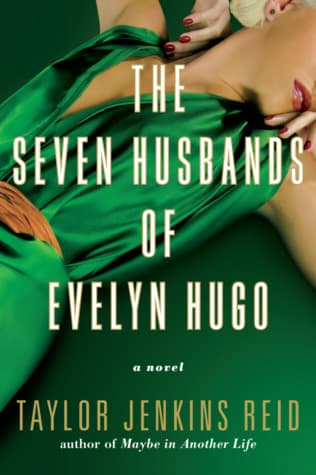
Taylor Jenkins Reid (2017)
Genre
Historical Fiction / Romance
Reading Time
7-8 hours
Key Themes
See below
Sign in to track this book
A reclusive Old Hollywood legend, Evelyn Hugo, unveils the scandalous truth of her seven marriages and forbidden love to an unknown reporter, Monique Grant, whose own life becomes inextricably linked to Evelyn's tragic past.
Monique Grant, a struggling biracial magazine reporter recently separated from her husband, David, is stunned when legendary, reclusive Hollywood star Evelyn Hugo specifically requests her to write her definitive biography. Monique's editor, Frankie, is equally surprised but gives Monique the assignment, seeing it as a potential career-making opportunity. Monique travels to Evelyn's luxurious Upper East Side apartment, where Evelyn reveals her intention to tell the complete, unfiltered truth about her life, including the mysteries surrounding her seven marriages, and that she chose Monique for a specific, undisclosed reason. Despite her initial skepticism, Monique agrees, recognizing the immense privilege and potential impact of this exclusive story.
Evelyn begins her story in Hell's Kitchen, New York, as Evelyn Herrera, a Cuban-American girl from a poor, abusive home. At 14, after her mother's death, she marries a local boy, Ernie Diaz, to escape her father and move to Hollywood. Once in Los Angeles, she quickly realizes Ernie is a means to an end. She uses her striking looks to attract a studio executive, Harry Cameron, who sees her potential. He helps her secure a screen test, but not before advising her to dye her dark hair blonde and change her surname to 'Hugo' to appear more 'American' and marketable. This marks her calculated entry into the cutthroat world of 1950s Hollywood, where she quickly learns to manipulate the system for her advancement.
Evelyn's career takes off, and she becomes a major star. Her marriage to Don Adler, a charming but volatile leading man, is her third, and it becomes a highly publicized, passionate, and ultimately destructive relationship. Don's jealousy and abusive tendencies lead to public fights and private turmoil, yet their on-screen chemistry is undeniable, making them a golden couple of Hollywood. Evelyn learns to use the media to her advantage, crafting narratives around her marriages to maintain public interest and sympathy while skillfully navigating studio politics and the demands of stardom. Her ambition is paramount, often at the expense of genuine personal connection.
During the filming of 'Little Women,' Evelyn develops a deep, undeniable love for her co-star, Celia St. James. Their relationship becomes the central, hidden truth of Evelyn's life. To protect their careers and their secret, Evelyn and Celia engage in a series of strategic marriages and public relationships. Evelyn marries Rex North, a respectable actor, and later Mick Riva, a famous singer, both to deflect suspicion from her relationship with Celia and to manage her public image. These marriages, though portrayed as passionate affairs for the media, are often facades, allowing Evelyn and Celia to maintain their clandestine love amidst the judgmental scrutiny of Hollywood and society.
Evelyn's sixth marriage is to Harry Cameron, her best friend and a powerful studio executive, who is secretly gay. This marriage is a mutual arrangement, providing both Evelyn and Harry with a conventional front to protect their respective hidden loves and careers. During this period, Evelyn becomes pregnant with Harry's child, Connor. Motherhood brings a new dimension to Evelyn's life, and she deeply loves her daughter, even as she continues to navigate the complexities of her public persona and her enduring, secret relationship with Celia. Harry becomes her closest confidant and an anchor in her life, understanding her better than anyone.
A period of estrangement occurs between Evelyn and Celia after Evelyn's public affair with Don Adler, orchestrated to protect Celia's reputation after a scandal. Celia, feeling betrayed, cuts ties with Evelyn. Years later, after Evelyn's marriage to Harry and Celia's own marriage to a man named John, they reconcile. Evelyn and Celia decide to live together quietly in a Spanish villa, finally able to openly express their love away from the Hollywood spotlight. This period represents a rare stretch of peace and genuine happiness for Evelyn, as she prioritizes her true love over public image for the first time in her life, even as Harry remains a vital part of their extended family.
Tragedy strikes when Harry Cameron dies in a drunk driving accident, which Evelyn reveals was actually a suicide to protect Celia, who was in the car with him. Harry had been struggling with his sexuality and the pressures of his life. After Harry's death, Evelyn, heartbroken and seeking to protect Celia's legacy and her own secret, marries Max Girard, a director who had always been infatuated with her. This seventh marriage is short-lived and purely transactional, as Max seeks to capitalize on her fame and control her. Evelyn quickly realizes her mistake and divorces him, marking the end of her marital saga.
As Evelyn's story reaches the present day, she reveals the true reason she chose Monique. Monique's father was James Grant, a man Evelyn had an affair with years ago. More shockingly, James was actually Harry Cameron's brother. Furthermore, Evelyn confesses that Harry's fatal car crash was not an accident but a suicide, and she was in the car with him. She moved him to the passenger seat to protect his reputation and Celia's, making it appear he was driving drunk. Monique's own father, James, was also in the car and died from the impact. Evelyn had covered up the truth to protect those she loved, including Harry and Celia, and Monique's mother. The revelation devastates Monique, tying her own family tragedy directly to Evelyn's life.
Monique is reeling from Evelyn's confession, realizing that her own father died in the same car crash as Harry Cameron, and that Evelyn deliberately concealed the truth for decades. She confronts Evelyn, struggling with feelings of anger, betrayal, and a deep sense of personal connection to the star's story. Monique must decide whether to publish Evelyn's full, unvarnished truth, including the part about her own father's death and Evelyn's involvement in the cover-up. This decision challenges her journalistic ethics, her personal feelings about Evelyn, and the potential impact on her own life and career. She also learns that Evelyn is terminally ill and intends for this book to be her final, complete legacy.
After much internal struggle, Monique decides to publish Evelyn's biography with all the truths, including the details of her father's death and Evelyn's role in the cover-up. She understands Evelyn's motivations to protect Celia and Harry, even if it caused her personal pain. The book is a massive success, solidifying Evelyn's legacy as a complex, powerful woman who lived life on her own terms, and launching Monique's career. Monique finds a sense of closure regarding her father and a renewed purpose in her life. Evelyn Hugo passes away shortly after the book's release, her final act being to reveal her complete truth to the world through Monique.
The Protagonist
Evelyn transforms from a desperate girl using her beauty to escape poverty into a powerful, self-made star who ultimately seeks to reveal her authentic self and legacy.
The Protagonist
Monique evolves from a hesitant, insecure reporter to a confident, ethical journalist who finds her voice and purpose while confronting a painful personal truth.
The Supporting
Celia navigates a life of secret love and public fame, eventually finding a measure of peace living openly with Evelyn.
The Supporting
Harry lives a life of quiet desperation and strategic alliances, finding true friendship and fatherhood with Evelyn before his tragic death.
The Supporting
Don remains a volatile figure, his destructive behavior ultimately leading to the end of his marriage with Evelyn.
The Supporting
Connor grows up with Evelyn and Harry, representing the stability and love Evelyn sought to protect.
The Mentioned
His past death is uncovered, revealing a direct, tragic link between Evelyn's life and Monique's.
The Supporting
Frankie serves as a professional catalyst for Monique's career growth.
The novel deeply explores how Evelyn Hugo, born Evelyn Herrera, consciously constructs and reconstructs her identity to survive and thrive in Hollywood. From changing her name and hair color to carefully curating her public persona through her marriages, Evelyn actively shapes who she is perceived to be. This theme extends to her secret life, where her true identity as a woman in love with Celia is hidden. The book questions the authenticity of identity when it's so meticulously manufactured for public consumption versus the private self. Monique, too, grapples with her identity as a biracial woman and a struggling journalist, finding her voice by telling Evelyn's truth.
““I spent my entire life trying to be the woman everyone wanted me to be. Now, in my old age, I am finally free to be the woman I am.””
The central emotional core of the book is the enduring, secret love between Evelyn Hugo and Celia St. James. Their relationship is forbidden by the social mores and homophobic climate of mid-20th century Hollywood, forcing them to make immense sacrifices. They endure public marriages, betrayals, and long periods of separation to protect their careers and their love. This theme highlights the lengths people will go to for love, the pain of living a lie, and the devastating impact of societal judgment on personal happiness. Their love is portrayed as the most real and significant relationship in Evelyn's life, overshadowing all her highly publicized marriages.
““Don’t you understand? I am not a person, I am a star. I have to protect my star.””
Evelyn Hugo's relentless ambition drives her rise to superstardom, but the novel details the heavy personal cost of such fame. She makes calculated decisions, uses people, and sacrifices genuine connection for career advancement. The constant scrutiny, the need to maintain a flawless public image, and the pressure to conform to Hollywood's expectations lead to a life of secrets, loneliness, and strategic manipulation. The book illustrates how fame can isolate individuals and force them into compromising positions, blurring the lines between their public and private selves. Evelyn's seven marriages are a direct consequence of her navigating this world.
““When you're given an opportunity to change your life, be ready to do whatever it takes to make it happen. The world doesn't give things, you have to take things.””
A fundamental theme is the contrast between the carefully constructed public narrative of Evelyn Hugo's life and the complex, often messy, underlying truth. Evelyn herself is a master storyteller, crafting her own legend. The book explores how stories are made, manipulated, and consumed by the public, and the power of controlling one's own narrative. Monique's role is to uncover the 'real' truth, leading to ethical dilemmas about what to publish and how to reconcile Evelyn's version of events with objective facts. The ultimate truth revealed—about Harry's death and Monique's father—shows the difference between public perception and lived reality.
““People think that they know you. They think they know your story. But they don't. They know the story you've allowed them to know.””
Evelyn Hugo's story is told within Monique Grant's present-day narrative.
The novel employs a nested narrative structure where Evelyn Hugo's life story, spanning decades, is recounted to Monique Grant in the present day. Monique's chapters serve as the framing device, detailing her interactions with Evelyn, her personal struggles, and her process of writing the biography. Evelyn's story, told in chronological order, forms the core of the book. This structure allows for dual perspectives: Evelyn's firsthand account and Monique's journalistic interpretation and personal reaction, building suspense and revealing the connection between the two women gradually.
Each husband marks a significant period or strategic decision in Evelyn's life.
Evelyn Hugo's seven husbands are not merely plot points but serve as a structural device to delineate different eras and strategic phases of her career and personal life. Each marriage represents a calculated move, a public facade, or a temporary alliance, allowing Evelyn to navigate Hollywood's pressures, protect her secrets, and advance her career. By focusing on the 'seven husbands,' the novel uses a seemingly scandalous premise to peel back layers, revealing the true, hidden love story and Evelyn's complex motivations, ultimately subverting the initial expectation of a salacious tell-all.
Evelyn's initial omissions and later revelations challenge the reader's perception of truth.
While Evelyn is ultimately committed to telling the truth, her initial narration subtly functions as an unreliable narrator by withholding crucial information and allowing the reader to form assumptions before revealing the full, often shocking, reality. For example, she initially presents Harry Cameron's death as an accident. This deliberate withholding of information builds suspense and forces both Monique and the reader to question the surface-level narrative, highlighting the theme of truth versus public perception and the selective nature of storytelling, even from a seemingly honest source.
The sudden, shocking link between Evelyn and Monique's lives.
The ultimate revelation that Monique's deceased father, James Grant, was Harry Cameron's brother and died in the same car crash as Harry, and that Evelyn covered it up, serves as a powerful plot device. This twist transforms Monique from a detached journalist into a deeply implicated participant in Evelyn's story. It raises the stakes significantly, creating a profound ethical and personal dilemma for Monique, forcing her to confront the impact of Evelyn's life on her own family and challenging her journalistic objectivity in a visceral way.
“Don’t ever let anyone make you feel like you don’t deserve what you want.”
— Evelyn's advice to Celia St. James early in their careers.
“When you’re given an opportunity to change your life, be brave enough to do it.”
— Evelyn reflecting on her decision to move to Hollywood.
“People think that intimacy is about sex. But intimacy is about truth. When you realize you can tell someone your truth, when you can show yourself to them, when you are bare, and their response is 'You’re safe with me'—that’s intimacy.”
— Evelyn explaining her understanding of true intimacy, particularly in her relationship with Celia.
“The world is an ugly place, Monique. And sometimes the only way to survive is to be a little ugly yourself.”
— Evelyn reflecting on the harsh realities of Hollywood and the choices she made.
“Heartbreak is a lot like a tornado. It appears seemingly out of nowhere, it rips your world apart, and then it disappears, leaving you to clean up the mess.”
— Evelyn describing the pain of heartbreak after a significant loss.
“I was a movie star. I was a legend. I was a woman who had lived a full and complicated life. And I had loved, truly and deeply, in ways that most people only dream of.”
— Evelyn reflecting on her life and accomplishments towards the end of her story.
“You are not a bad person for doing what you needed to do to survive.”
— Evelyn reassuring Monique about difficult choices made in life.
“There’s no such thing as being 'too much.' Or 'not enough.' We are all just ourselves, and that should be celebrated.”
— Evelyn's perspective on individuality and self-acceptance.
“I gave them Evelyn Hugo. I gave them the glamour, the sex, the scandal. But I kept Celia St. James for myself.”
— Evelyn explaining how she protected her true love from public scrutiny.
“When you're a woman in Hollywood, you're constantly fighting to be seen as more than just a body.”
— Evelyn discussing the sexism and objectification she faced in the film industry.
“No one is purely good or purely bad. We're all a mix of both, and that's what makes us human.”
— Evelyn's nuanced view on human nature and morality.
“We need to look at our lives and see what we can do to make them better, even if it means doing the hard thing.”
— Evelyn's philosophy on personal growth and making difficult decisions.
“It’s okay to want to be loved. It’s okay to want to be seen. It’s okay to want it all.”
— Evelyn validating the universal desires for love, recognition, and fulfillment.
“Sometimes, the only way to get what you want is to take it.”
— Evelyn reflecting on her assertive approach to achieving her goals in Hollywood.
Ready to see how well you understood this book? Take our interactive quiz with 10 questions.

Biography coming soon.







