“The past is never dead. It's not even past.”
— A recurring theme about the lingering impact of history and secrets.

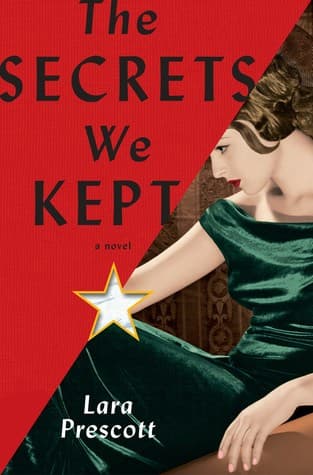
Lara Prescott (2019)
Genre
Thriller / Historical Fiction
Reading Time
9-10 hours
Key Themes
See below
Sign in to track this book
During the Cold War, two CIA secretaries trade typewriters for espionage, risking everything to smuggle a forbidden love story into Soviet Russia and spark a quiet revolution with literature.
In 1956, Sally Forrester, a former OSS agent with a troubled past and successful secret operations, lives a quiet life in Washington D.C. when the CIA calls her back. Her handler, Paul, tells her about a sensitive project: to help publish and distribute Boris Pasternak's novel, *Doctor Zhivago*, which the USSR banned as anti-Soviet. The CIA believes the book's themes of individual freedom and the human spirit will be a strong tool against communism. Sally's skills and experience in espionage make her a good choice for this delicate and dangerous task, requiring her to use her charm and intelligence in the high-stakes world of Cold War intelligence.
Irina Drozdov, a young, smart typist in the CIA's secretarial pool in 1956, finds her routine changed when she is chosen for a new assignment. She first transcribes and translates parts of Russian literature, including *Doctor Zhivago*, a book she quickly loves. Her supervisor, Liz, a strict but observant woman, sees Irina's sharp mind and fluency in Russian as valuable. Irina does not know she is being prepared for a bigger role in the secret plan to spread Pasternak's novel, a mission far from her usual work of typing memos and reports. This is her first step into a world of secrets and international intrigue.
Sally and Irina are formally paired for their mission: to secretly move the *Doctor Zhivago* manuscript out of the Soviet Union and arrange its publication in the West. This involves a network of contacts, secret meetings, and the constant threat of being discovered by the KGB. Sally, with her espionage experience, guides Irina through spycraft, teaching her how to keep cover, do dead drops, and spot surveillance. Their first efforts focus on getting the original manuscript from Pasternak's contacts and then finding a publisher for such a political work, all while under the close watch of the Cold War.
Through the story, flashbacks show Sally Forrester's past as an OSS agent during World War II, especially her dangerous missions in Nazi-occupied Europe. These glimpses into her history show her resourcefulness and bravery, but also the deep personal sacrifices she made for her country. We learn about her complex relationship with a fellow agent, a man she loved and lost, and the emotional scars that never healed. Her past experiences shape her current caution and her understanding of espionage's harsh realities, contributing to her guarded manner and her dedication to the mission, even at the cost of her own happiness.
A key moment in the operation happens at the 1958 Brussels World's Fair (often combined with Geneva in intelligence operations of the time), where the CIA plans to give thousands of small copies of *Doctor Zhivago* to Soviet citizens and foreign delegates. Sally and Irina, disguised as ordinary attendees, are crucial to this effort. They work to discreetly hand out the books, watching the reactions of recipients and the eyes of Soviet agents. The success of this distribution is a major win for the CIA, showing literature's power as a weapon in the ideological war, and making *Doctor Zhivago* a symbol of resistance.
As Irina gets more involved in the operation, she starts to question the ethics and true reasons behind the CIA's work. While she admires Pasternak's novel and believes in its message, she grows uncomfortable with the deception and manipulation in her work. She sees the human cost of Cold War espionage and the blurred lines between right and wrong, freedom and control. Her early idealism is challenged by the practical and often ruthless demands of intelligence work, leading to a growing disillusionment about her mission's true nature and the agency she serves.
When Boris Pasternak receives the Nobel Prize in Literature in 1958, it causes a fierce international controversy. The Soviet government, angry at the recognition of a dissident author and the widespread distribution of his banned novel, forces Pasternak to decline the award under great pressure. This political fallout directly affects Sally and Irina, as their mission's stakes rise. The increased scrutiny from both sides makes their work even more dangerous, and they must navigate a situation of increased surveillance and possible retaliation. The Nobel Prize, meant as an honor, becomes a symbol of the Cold War's bitter ideological struggle.
Sally gets a final, very dangerous assignment related to the *Doctor Zhivago* project, which makes her face unresolved issues from her past. This mission takes her back to Europe, where she meets memories of her wartime experiences and makes a deep personal sacrifice for the operation's success. The mission's success comes at a great personal cost, changing her forever and strengthening her commitment to a life of service, even if it means enduring profound loneliness and emotional hardship. Her actions show the heavy toll that a life in intelligence takes on a person.
Decades later, in the 1990s, an older Irina Drozdov thinks about her time in the CIA and her part in the *Doctor Zhivago* operation. She has left intelligence work, but the experiences have deeply shaped her life. She grapples with her actions' legacy, the moral compromises she made, and the personal relationships that formed and broke during that tumultuous period. Her reflections offer a look back at the Cold War, literature's power, and the complex interaction between individual lives and grand political schemes. She finally comes to terms with her past, finding a nuanced understanding of her contributions.
The novel ends by highlighting the lasting legacy of *Doctor Zhivago* as a literary work and a symbol of freedom that crossed political borders. It shows how the CIA's secret operation, led by agents like Sally and Irina, was crucial in bringing Pasternak's work to the world. The story subtly points to the eventual recognition of the agents' contributions, even if late and anonymously. The story ultimately shows art's power to challenge oppressive regimes and the quiet heroism of those who risk everything to ensure such voices are heard, even if their own stories remain hidden for decades.
The Protagonist
Sally evolves from a battle-hardened, emotionally reserved operative to someone who, despite her sacrifices, finds a quiet sense of purpose in her contributions to freedom.
The Protagonist
Irina transforms from an innocent novice into a discerning and morally aware operative, ultimately finding her own truth beyond the agency's directives.
The Supporting
Pasternak maintains his artistic integrity despite facing severe state persecution, becoming a global symbol of intellectual freedom.
The Supporting
Paul remains largely consistent as a driven, results-oriented intelligence officer, representing the unchanging face of the agency's mission.
The Supporting
Liz consistently serves as a supportive and insightful figure, ensuring the right people are in the right places for the mission.
The Supporting
Olga endures immense suffering for her loyalty to Pasternak and his work, embodying the personal cost of artistic freedom.
The Mentioned
His presence serves to illustrate the family pressures on Boris Pasternak, rather than a personal arc.
The Antagonist
The KGB remains a consistent, omnipresent antagonistic force, unwavering in its mission to uphold Soviet ideology.
The novel explores how literature, specifically *Doctor Zhivago*, can cross political borders and act as a strong weapon in ideological war. The CIA believes Pasternak's novel, with its themes of individual freedom and the human spirit, can weaken the Soviet regime more effectively than propaganda. Scenes showing the secret distribution of the book at the Brussels World's Fair show its immediate impact on Soviet citizens, who crave truth and beauty. The book becomes a symbol of hope and resistance, showing that art can change hearts and minds, challenging oppressive systems by appealing to universal human emotions.
“A book is a loaded gun in the house next door.”
Sacrifice is a main theme, especially through Sally and Irina's experiences, and implicitly, Boris Pasternak's. Sally's flashbacks show a history of lost love and personal happiness given up for her wartime service, leaving her emotionally scarred. Irina, at first idealistic, comes to understand the moral compromises and personal risks in espionage, questioning her duty's true cost. Pasternak himself sacrifices his peace, reputation, and even his Nobel Prize to stay true to his artistic vision. The novel consistently shows that commitment to a cause, whether national security or artistic integrity, often demands deep personal loss and lasting emotional burdens.
“What does a life in intelligence leave you with, in the end? Only the secrets, and the ghosts.”
The story looks at the complex interplay of truth and deception in espionage. While the CIA's mission is to spread 'truth' through literature, it relies heavily on secret operations, lies, and manipulation. Irina's journey, in particular, shows this moral ambiguity as she grapples with her work's ethics. She questions whether the 'good' outcome of distributing *Doctor Zhivago* justifies the deceptive methods used. The novel suggests that in the high-stakes world of the Cold War, the lines between hero and manipulator, truth-teller and deceiver, become blurred, forcing characters to navigate a situation where pure moral clarity is often impossible.
“Sometimes, the truth needs a little help to find its way into the world.”
The book explores the often-overlooked roles of women in intelligence during the Cold War, challenging traditional gender stereotypes. Sally and Irina, initially in typing pools, prove to be capable and essential operatives. They navigate a male-dominated world, using their intelligence, charm, and perceptiveness as key tools. The novel also subtly addresses society's expectations for women during this era, contrasting their public roles with their secret, dangerous lives. Their stories shed light on the unsung contributions of women who played crucial, though often uncredited, roles in shaping historical events.
“They thought we were just typists. They never saw the steel underneath.”
Alternating chapters follow Sally and Irina, offering contrasting views of the mission.
The novel employs a dual perspective narrative, primarily alternating between Sally Forrester's seasoned spy's viewpoint and Irina Drozdov's novice perspective. This device allows the reader to experience the *Doctor Zhivago* operation from different angles: Sally's cynical, experienced, and world-weary approach versus Irina's initial idealism and growing moral questioning. It enriches the understanding of the mission's complexities, the personal tolls of espionage, and the broader Cold War context, providing a more comprehensive and nuanced view of the events.
Interspersed memories reveal Sally's past and the origins of her character.
Flashbacks are strategically used to reveal Sally Forrester's past as an OSS agent during World War II. These glimpses into her history explain her skills, her emotional guardedness, and the profound personal sacrifices she has made. They provide crucial context for her character development, illustrating the long-lasting impact of her wartime experiences on her present-day motivations and relationships. This device adds depth to Sally's character, explaining her resilience and her understanding of the harsh realities of espionage.
Brief excerpts of historical facts or documents provide context for the Zhivago affair.
The novel occasionally includes brief, factual interludes, such as excerpts from historical documents, CIA memos, or news reports pertaining to *Doctor Zhivago* and the Cold War. This device grounds the fictional narrative in historical reality, lending authenticity and gravitas to the story. It reminds the reader that the plot is 'inspired by a true story' and provides factual context for the political climate and the significance of Pasternak's novel, blurring the lines between fiction and documented history.
The banned novel serves as the central object driving the entire plot.
While *Doctor Zhivago* is more than just a MacGuffin, it functions as the central object that drives the entire plot forward. Its existence, banning, and the CIA's desire to disseminate it are the primary motivators for all character actions and the unfolding of the espionage plot. It is the catalyst for Sally and Irina's mission, the source of conflict with the Soviet Union, and the ultimate goal around which all operations revolve, even as its thematic content adds deeper meaning beyond a mere plot device.
“The past is never dead. It's not even past.”
— A recurring theme about the lingering impact of history and secrets.
“In the game of espionage, everyone is a pawn, even the queens.”
— Reflecting on the dangerous and manipulative nature of the spy world.
“Sometimes the greatest betrayals come from those closest to you.”
— A character grappling with a personal betrayal amidst political intrigue.
“A book can be more dangerous than a bomb.”
— Highlighting the power of literature and ideas in a totalitarian state.
“We all have secrets. Some we keep from others, some we keep from ourselves.”
— Exploring the internal and external nature of secrets within the characters.
“The truth is a luxury few can afford.”
— A cynical observation about the compromises made in the pursuit of political goals.
“Every word written, every page turned, was an act of defiance.”
— Describing the clandestine efforts to publish and distribute forbidden literature.
“Love, like a secret, can be both a burden and a salvation.”
— Examining the complex role of love and personal relationships in a dangerous world.
“The silence was louder than any confession.”
— A character recognizing unspoken truths and hidden guilt.
“History is written by the victors, but sometimes, the vanquished leave behind the most important stories.”
— Emphasizing the importance of untold narratives and marginalized voices.
“To be truly free, one must first be free in their mind.”
— A reflection on intellectual freedom versus physical freedom.
“The weight of a secret can crush you, or it can make you stronger.”
— Exploring the transformative power of secrets on individual characters.
“Even in the darkest times, there is always a flicker of hope, if you know where to look.”
— A moment of optimism amidst the pervasive danger and deception.
Ready to see how well you understood this book? Take our interactive quiz with 10 questions.







