“The past was a river, and it flowed in every direction, not just forward.”
— Reflecting on the nature of memory and history in a new land.

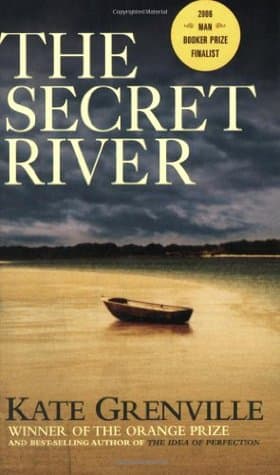
Kate Grenville (2005)
Genre
Literary Fiction / Historical Fiction
Reading Time
7-9 hours
Key Themes
See below
Sign in to track this book
An English convict, sent to early 19th-century New South Wales, finds that making a home for his family means violently taking land from its original inhabitants, forcing him to face the harsh reality of colonial settlement.
William Thornhill grows up poor in London, working on the Thames. He lives in poverty and struggles to survive. He marries Sal, a childhood friend, hoping for a better future. But William's quick temper and desperation lead him to steal. After being caught stealing wood, he is sent to the penal colony of New South Wales in Australia. Sal, pregnant, chooses to go with him, facing a new life in an unknown land.
After a difficult voyage, William, Sal, and their children arrive in Sydney. The colony is harsh, far from England. William is assigned to a master, Mr. King, and begins his service. Sal struggles with the basic conditions and the constant threat of illness and violence. They see the harshness of colonial life, including cruelty towards convicts and the distant, often unfriendly, Aboriginal people. William wants to serve his time and make a future for his family, even if it means great hardship.
William serves his seven-year sentence, working hard and seeing opportunities in the new colony. He learns about land grants and how former convicts can become landowners. He saves what little money he can, driven by a strong desire to escape the poverty of his past. Sal, though she misses England, supports his goal, understanding that land ownership is their only real chance for their children's future. They endure hard conditions, always looking to the day William will be free.
Once William receives his freedom papers, he looks for land to claim. He travels up the Hawkesbury River, drawn by the promise of good soil. He finds a beautiful, hidden cove he thinks is perfect for his family. But a group of Aboriginal people already lives on this land. William watches them from afar, aware of their presence but at first ignoring their claim, seeing the land as empty and ready to be taken. This first meeting sets the stage for the conflict that will shape his settlement.
William brings Sal and their children to the cove, which he names Thornhill's Point. They begin the hard work of clearing land and building a home. The Aboriginal people, whom William calls 'Blackwood's mob,' continue to visit the area, watching the settlers with a mix of curiosity and growing worry. Early interactions are careful, sometimes involving small trades, but tension is clear. William's desire to claim and farm the land directly conflicts with the Aboriginal people's traditional use and ownership of it, leading to misunderstandings and small clashes.
As the Thornhills expand their farm, cutting trees and fencing land, the Aboriginal people's frustration grows. They take corn from William's fields and fish from the river. William sees these acts as theft. William's neighbors, like Smasher Sullivan, push for harsh revenge against the Aboriginal people. Sal becomes more afraid for her children. William tries to manage the situation, sometimes attempting to bribe or warn the Aboriginal people away, but the cultural differences and ideas about ownership make peaceful life together impossible.
The tension peaks when one of William's dogs is found speared. William sees this as a deliberate challenge and a direct threat, which strengthens his resolve. It pushes him closer to the violent solutions his neighbors suggest. Sal is terrified, urging William to leave the land, but his pride and deep wish for a permanent home keep him there. This event marks a turning point, making it clear that the conflict can no longer be contained by passive resistance or small fights.
Driven by fear, anger, and pressure from other settlers, William joins a group led by Smasher Sullivan. They track the Aboriginal group to Blackwood's Lagoon and attack them by surprise. William, despite his first hesitation and inner struggle, takes part in the killing, seeing and contributing to the violence against men, women, and children. This act forever stains his soul and seals his fate as a colonizer who committed terrible acts to get his land. The 'secret river' becomes a symbol of the hidden truth and the violence upon which his new life is built.
After the killing, William tries to forget his guilt, focusing on the material success of his land. He becomes a wealthy landowner, building a large house and securing his family's future. But the memory of the violence bothers him. Sal, deeply affected by the events and the brutality of their new life, withdraws, never fully recovering. The children grow up mostly unaware of the full horror of their father's actions, but the silence and unspoken truths create a lasting divide in the family.
Years pass, and William Thornhill becomes a respected man in the community, a sign of his ambition and hard work. He expands his land and ensures his children's wealth. Still, he is never truly at peace. He sometimes sees the ghost of an old Aboriginal man, a recurring image of his conscience. He tries to explain his actions to his children, but they cannot fully understand the moral choices he made. The 'secret river' of the title represents the hidden history of violence and displacement upon which the colony was founded, a truth that William carries until his death.
The Protagonist
From a desperate London thief, William transforms into a successful but morally compromised landowner, his ambition overriding his humanity.
The Supporting
Sal's initial hope and resilience give way to a profound sense of loss and trauma, her spirit never fully recovering from the violence.
The Supporting
Dick's youthful openness to Aboriginal culture is overshadowed by his father's actions, leading to a conflicted adult life.
The Antagonist/Supporting
Smasher remains a consistently brutal and unrepentant character, serving as a catalyst for violence.
The Mentioned/Symbolic
Blackwood's presence shifts from a living, resisting leader to a haunting symbol of the past's injustices.
The Supporting
Mr. King serves as an early mentor figure, showcasing the path from convict to landowner, and then fades from William's direct narrative.
The Supporting
Mrs. Herring remains a static character, a symbol of the tough, practical female settler.
The Supporting
Blackwood remains a voice of reason and attempted reconciliation, ultimately unable to prevent the tragedy.
This theme looks at the moral cost of taking land and starting a new life through displacement and violence. William Thornhill's journey from a poor Londoner to a rich Australian landowner is directly linked to the displacement and killing of Aboriginal people. The 'secret river' itself stands for the hidden, violent truth beneath colonial success. The novel makes readers face the idea that modern Australia was built on destroying an existing culture, and that William's personal success comes at a great moral price, as shown by his lasting guilt after Blackwood's Lagoon.
“A man's heart was a secret river, its own life. He had gone where he had to go, and done what he had to do.”
The novel clearly shows the deep and unresolvable clash between European settlers' idea of land ownership and Aboriginal people's spiritual connection to their ancestral lands. William and Sal see land as something to be 'taken,' 'cleared,' and 'owned' for farming, a way to gain security. The Aboriginal people, however, see the land as a living thing, a provider, and a core part of their identity. This basic misunderstanding, made worse by fear and bias, fuels the growing conflict, as when William sees the Aboriginal people hunting and gathering on 'his' land as theft, while they are simply living as they always have.
“This was how it was: the two ways of being in the world, side by side.”
As William Thornhill gains more control over his land and future, he also becomes harder and more capable of cruelty. The power dynamic shifts from William being a powerless convict to him being a powerful landowner. This new power, along with common colonial attitudes and pressure from people like Smasher Sullivan, allows him to justify and take part in terrible acts. His first hesitation to use violence slowly disappears, showing how the desire for ownership and security can corrupt even a basically good man, leading him to commit unforgivable acts for progress.
“He knew, with a certainty that was like a stone in his gut, that if he did not take the land, someone else would.”
The novel explores how history is told and how uncomfortable truths are often hidden or forgotten. William Thornhill, later in life, actively tries to bury the memory of the killing, building a grand house and a successful life on the very land stained by violence. Sal also retreats into silence, her trauma unspoken. The 'secret river' symbolizes these hidden histories and the collective forgetting around the terrible acts committed during colonization. The story questions the romantic view of early Australian settlement, insisting on remembering the violent beginnings and the deep effect on the Indigenous population, so the past is never truly gone for William.
“There were some things that had to be forgotten if a man was to go on living.”
A central metaphor representing hidden truths and the unspoken history of violence.
The 'secret river' of the title serves as a powerful metaphor throughout the novel. On a literal level, it refers to the Hawkesbury River, the waterway that leads William Thornhill to his chosen land. Metaphorically, it represents the hidden, often violent, undercurrents of colonial history—the unspoken atrocities, the suppressed guilt, and the truth of dispossession that lies beneath the surface of apparent prosperity. It also symbolizes the 'secret river' within William's own heart, the unacknowledged guilt and the moral compromises he makes to secure his future, which he carries to his grave.
Hints and clues that suggest future conflicts and tragic outcomes.
Foreshadowing is used effectively to build tension and indicate the inevitable clash between William and the Aboriginal people. Early descriptions of the Aboriginal people's watchful presence, the settlers' casual racism, and William's own growing possessiveness of the land all hint at the violent confrontations to come. For instance, the constant warnings from other settlers about the 'savages' and the initial skirmishes over resources gradually prepare the reader for the eventual massacre. This creates a sense of dread and inevitability, highlighting that the path to violence was not sudden, but a gradual escalation.
The contrasting of two elements to highlight their differences or create tension.
Juxtaposition is used to highlight the stark differences between English and Aboriginal cultures, as well as William's past and present. The novel juxtaposes William's impoverished London life with the vast, seemingly empty Australian wilderness, emphasizing his desperate desire for land. More critically, it juxtaposes the Aboriginal people's deep, spiritual connection to the land with the settlers' utilitarian view of it as property to be exploited. This contrast underscores the fundamental misunderstanding and the irreconcilable differences that drive the conflict, making the tragedy feel almost inevitable due to these opposing worldviews.
The Thornhill's house as a symbol of aspiration, ownership, and the 'cost' of settlement.
The house William Thornhill builds on his land at Thornhill's Point is a powerful symbol. Initially, it represents his aspiration for security, permanence, and a better life for his family, a stark contrast to his childhood poverty. As it grows larger and more elaborate, it becomes a symbol of his prosperity and his successful claim to the land. However, it also subtly symbolizes the moral cost of that success; it is built on the land taken from the Aboriginal people, and its grandeur is a monument to the violence and dispossession that enabled its existence. It is a physical manifestation of his 'secret river' of guilt.
“The past was a river, and it flowed in every direction, not just forward.”
— Reflecting on the nature of memory and history in a new land.
“He had come to the edge of the world, and found it was not the edge at all, but only the beginning.”
— Thornhill's initial arrival in New South Wales.
“This was not a place to make a living, but a place to make a life.”
— Thornhill's evolving perspective on his settlement.
“Every man carried his own secret river within him, and it was always flowing towards the sea of his own making.”
— A metaphorical reflection on personal destiny and actions.
“The land was not empty. It was full of invisible lines, ancient stories, and spirits that watched every step.”
— Thornhill's growing, uneasy awareness of the Indigenous presence.
“What a man did, that was what he was.”
— A recurring theme about actions defining character, particularly in the harsh new world.
“He had learned to fear the silence, for in it he could hear the unspoken words of the land itself.”
— Thornhill's growing paranoia and isolation.
“The past was a rope, and it pulled him back even as he tried to walk forward.”
— Thornhill grappling with his criminal past and its influence.
“There was no going back. Only forward, into whatever lay ahead, even if it was darkness.”
— The irreversible nature of their journey and decisions.
“The river was a mirror, reflecting not just the sky, but all the things that had happened on its banks.”
— A symbolic representation of the river bearing witness to history.
“He had wanted a piece of land, but the land had taken a piece of him.”
— The cost of settlement and the psychological impact on Thornhill.
“The world was not fixed. It was always changing, always flowing, like the river.”
— A philosophical observation on the impermanence of things.
“He had built his house on the bones of others, and he knew it.”
— Thornhill's final, haunting realization about the foundation of his prosperity.
“The silence was not empty. It was full of ghosts.”
— The lingering presence of the dispossessed Indigenous people.
Ready to see how well you understood this book? Take our interactive quiz with 10 questions.

Biography coming soon.







