“The Hardy Boys were always ready for a new adventure, and this one promised to be more exciting than most.”
— Narrator setting the stage for the mystery.

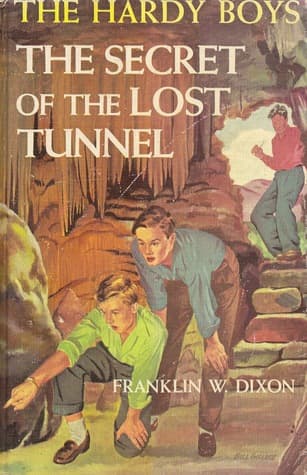
Franklin W. Dixon (1949)
Genre
Children's / Mystery / Young Adult
Reading Time
190 min
Key Themes
See below
Sign in to track this book
The Hardy Boys journey to the Deep South to clear a Confederate general's name and recover stolen gold, proving that even a century-old mystery can be solved.
Frank and Joe Hardy are enjoying a quiet day when a mysterious telegram arrives for their father, Fenton Hardy. The telegram, from a Mr. Jefferson Fox, asks for Fenton's help in clearing the name of General Anthony Philbrick, a Confederate officer accused of stealing gold during the Civil War. Fenton is unsure due to how old the case is, but the boys' excitement and the mystery's appeal interest him. Mr. Fox, a descendant of a soldier who served under Philbrick, believes the general was framed and has documents suggesting a cover-up. The Hardys decide to take the case, preparing for a trip to the Deep South.
Upon arriving in the fictional town of Bayport, Georgia, the Hardy boys meet Jefferson Fox, a kind but somewhat unusual historian. Fox explains that General Philbrick was disgraced after the Civil War for supposedly running off with a large sum of gold meant for the Confederate treasury. This led to his ruin and lasting shame for his family. The gold was said to be hidden in a tunnel near Philbrick's plantation, 'Shadowbrook.' The boys begin their investigation by looking at old maps and documents from Fox, which hint at the tunnel's location and possible clues left by Philbrick. They also meet Mrs. Philbrick, the general's elderly granddaughter, who lives a quiet life at the decaying Shadowbrook plantation, still sad about her ancestor's bad reputation.
As Frank and Joe investigate, they meet Silas Crow, a grumpy and suspicious local who seems to be trying to stop them. Crow, a distant relative of a man who worked for General Philbrick, claims the general was a thief and warns the Hardys to drop the case, saying they are causing old trouble. He often appears wherever the boys are investigating, watching them. The boys suspect Crow knows more than he says and might be involved in keeping the gold's truth hidden. His unfriendly behavior makes them believe there is a real secret to uncover and that someone wants it to stay buried.
The Hardy boys get into the old Shadowbrook plantation, General Philbrick's former home. With Mrs. Philbrick's hesitant permission, they start a thorough search, focusing on the older parts of the house and the surrounding land. They soon find hidden passages and secret rooms, some with traps, suggesting that the general or someone else took great care to protect secrets on the estate. These hidden features add to the suspense and give initial clues about the general's careful nature and perhaps his attempts to hide something valuable or important in his home, not just the tunnel.
While exploring the thick woods around Shadowbrook, Frank and Joe are attacked. Rocks are thrown from the bushes, and a shot is fired, barely missing them. They realize someone is actively trying to stop their investigation, and the danger is greater than they first thought. This attack confirms their suspicions about Silas Crow's involvement, or at least that someone is working with him, and shows how dangerous their quest is. The incident makes them more careful but also more determined to find the truth, knowing they are close to something important.
Using the old documents and maps from Jefferson Fox, along with clues found at Shadowbrook, Frank and Joe start to put together the puzzle of the lost tunnel's location. The map is cryptic, using landmarks and coded messages, requiring careful decoding. They spend hours comparing sketches to the actual land, eventually narrowing the search to a specific part of the woods near a winding creek. This careful work shows their investigative skills and their persistence in the face of unclear historical data, slowly bringing them closer to the physical mystery.
After days of searching, following clues from the old map and their own ideas, Frank and Joe finally find the well-hidden entrance to the lost tunnel. It is cleverly hidden behind tangled vines and bushes, almost invisible. This discovery is a major breakthrough, confirming the legendary tunnel's existence and proving that stories of hidden gold were not just folklore. The entrance is dark and ominous, hinting at the challenges and dangers inside, but also the chance for discovery.
Armed with flashlights and their wits, Frank and Joe go into the dark, damp tunnel. Inside, they find more elaborate traps, including tripwires, falling rocks, and cleverly placed pitfalls, clearly meant to stop intruders. These traps show that whoever built or used the tunnel wanted to protect its secrets. The boys navigate these dangers carefully, showing their resourcefulness and bravery. The tunnel's design suggests it was not just a simple storage place but a carefully built hidden vault, adding to the mystery of what might be hidden inside.
Deep inside the tunnel, Frank and Joe finally discover the Confederate gold. However, it is not just stolen loot. They find the gold hidden in a cleverly disguised compartment, along with a sealed letter. The letter, written by General Philbrick himself, explains that he was told to hide the gold to keep it from Union hands. He never stole it but was ordered to hide it and then falsely accused by a jealous rival in the Confederate command who wanted to discredit him and claim the gold for himself. This discovery clears the general and exposes the real conspiracy against him.
Just as Frank and Joe are looking at the gold and the general's letter, Silas Crow appears, having followed them into the tunnel. He tries to overpower the boys and claim the gold for himself, revealing that he knew about the tunnel and the gold all along, having inherited information from his ancestor. Crow believed the gold was stolen and rightfully belonged to him as a form of payment for his family's perceived wrongs. A struggle happens, but the Hardy boys, with their quick thinking and agility, manage to subdue Crow, stopping him from escaping with the gold.
After being caught, Silas Crow confesses his part and reveals he was not working alone. He was in contact with a corrupt local official, Mr. Henderson, who had also been looking for the gold and had been manipulating Crow, promising him a share. Henderson had been giving Crow information and encouraging him to scare off the Hardys. Crow's ancestor had been involved in the original cover-up, forced by Henderson's grandfather, who was the true rival officer who framed General Philbrick. This confession unravels the generations-old conspiracy and points to the real culprits.
With the gold recovered, General Philbrick's letter, and Silas Crow's confession, Frank and Joe have all the evidence needed. They present their findings to Jefferson Fox, Mrs. Philbrick, and the local authorities. The general's name is officially cleared, restoring his honor and bringing peace to his family. The gold is returned to its rightful place, and Mr. Henderson is implicated and arrested. The Hardy boys successfully complete their mission, bringing justice to a historical wrong and proving their detective skills once again, solidifying their reputation as clever investigators.
The Protagonist
Frank's arc involves using his intellectual prowess to unravel a generations-old mystery, growing in confidence as he meticulously connects historical dots.
The Protagonist
Joe's arc showcases his physical bravery and quick reflexes, contributing significantly to overcoming obstacles and apprehending culprits.
The Supporting
Fenton's role is largely static, serving as an experienced guide and trusting his sons to handle the complexities of the case.
The Supporting
Fox's arc is one of hope and eventual vindication, seeing his long-held family belief in General Philbrick's innocence confirmed.
The Mentioned
General Philbrick's arc is posthumous, his reputation moving from disgrace to vindication through the Hardys' efforts.
The Supporting
Mrs. Philbrick's arc moves from quiet despair and resignation to joy and relief as her grandfather's name is cleared.
The Antagonist
Silas Crow's arc is one of escalating villainy, culminating in his capture and the exposure of his complicity in the cover-up.
The Antagonist
Henderson's arc reveals him as the mastermind behind the current obstruction, ultimately leading to his exposure and arrest.
The main theme is to correct a historical wrong. General Philbrick was falsely accused and disgraced for over 80 years, and the Hardy boys' goal is to clear his name. This theme shows how reputation lasts and how important it is to find the truth, even generations later. The discovery of General Philbrick's letter and the gold's true purpose in the tunnel directly supports this theme, bringing peace to Mrs. Philbrick and restoring the general's honor.
“"For generations, a cloud has hung over the name Philbrick. It's time that cloud was lifted."”
The story shows how secrets, especially those about big events like stolen gold and wartime plots, can last for decades, affecting lives and causing conflict. The lost tunnel itself is a physical sign of a hidden secret, protected by traps and obscured by time. Silas Crow's knowledge of the gold, passed down through his family, and Mr. Henderson's efforts to keep the truth hidden, all show how deeply secrets can become part of a community and affect many generations.
“"Some secrets, it seems, are too big to stay buried forever."”
Greed is a main reason for both the historical villain who framed General Philbrick and the current bad guys, Silas Crow and Mr. Henderson. The desire for the Confederate gold makes Crow try to stop the Hardys and steal it, while Henderson's family tried to discredit Philbrick to gain power and wealth. This theme explores how wanting treasure can corrupt people and lead them to dishonest and violent acts, lasting through generations.
“"Gold has a way of making honest men do dishonest things, and dishonest men even worse."”
The Hardy boys succeed because of their strong determination and sharp thinking. They carefully put together fragmented clues from old maps, historical documents, and the physical setting of Shadowbrook and the tunnel. Their persistence in the face of traps, ambushes, and dead ends is important. This theme emphasizes that even the most complex mysteries can be solved through careful analysis, courage, and not giving up, showing the boys' investigative skills.
“"Every hidden passage, every cryptic drawing, is a piece of the puzzle. We just have to fit them together."”
An old, coded map that guides the Hardys to the lost tunnel.
The cryptic map is a classic mystery device, serving as the primary guide for the Hardy boys. It is filled with coded messages, obscure landmarks, and symbolic drawings that require careful deciphering. This device not only provides a tangible goal for the boys but also allows for a series of intellectual challenges as they interpret its clues, leading them on a treasure hunt-like journey through the Southern landscape. It effectively builds suspense and demonstrates Frank's analytical skills.
Defensive mechanisms within Shadowbrook and the tunnel, creating suspense and danger.
The booby traps and hidden passages found within Shadowbrook plantation and the lost tunnel are crucial for building suspense and adding an element of physical danger to the boys' investigation. These devices are not merely decorative; they actively impede the Hardys' progress, forcing them to use their wits and agility to avoid injury. They also signify the importance and secrecy of what is hidden, suggesting that someone went to great lengths to protect the tunnel's contents from discovery.
General Philbrick's letter, found with the gold, reveals the truth.
General Philbrick's posthumous letter is the ultimate reveal device. Found at the climax of the tunnel exploration, it provides the definitive explanation for the gold's presence and the general's innocence. This letter serves to completely vindicate Philbrick, providing direct evidence from the source and unraveling the entire historical conspiracy. It is a powerful narrative tool that brings closure to the mystery and fulfills the core mission of clearing the general's name.
The conflict and secrets passed down through families.
This device highlights how past events and injustices continue to affect present-day characters. The descendants of General Philbrick seek vindication, while the descendants of his accuser and a complicit employee (Silas Crow, Mr. Henderson) seek to maintain the lie or profit from it. This generational legacy creates deep-seated motivations for the characters and adds historical weight to the mystery, showing how the past can cast a long shadow over the present.
“The Hardy Boys were always ready for a new adventure, and this one promised to be more exciting than most.”
— Narrator setting the stage for the mystery.
“Frank, with his logical mind, often took the lead in planning, while Joe, impulsive and athletic, was always ready for action.”
— Describing the contrasting personalities of the Hardy brothers.
“The old tunnel was rumored to hide more than just forgotten tracks; whispers of treasure and danger clung to its shadowed entrance.”
— Introducing the central mystery of the lost tunnel.
“A good detective never overlooks the obvious, but a great one always looks beyond it.”
— Frank reflecting on their investigative approach.
“Sometimes the greatest secrets are hidden in plain sight, if only you know where to look.”
— The boys discussing a clue they almost missed.
“The sound of their footsteps echoed eerily in the damp, dark passage, a testament to the tunnel's forgotten past.”
— The boys exploring inside the tunnel.
“Even in the darkest places, a flicker of hope can light the way.”
— Joe encouraging Frank when they face a setback.
“It wasn't just about solving a case; it was about bringing justice to those who had been wronged.”
— The boys discussing their motivation.
“The more complicated a mystery seems, the simpler the solution often is, if you can only strip away the distractions.”
— Frank's analytical thought process.
“A true friend is someone who stands by you, even when the tunnel seems endless.”
— Chet Morton showing loyalty to the Hardy Boys.
“Danger was a constant companion for the Hardy Boys, but it never deterred them from their quest for truth.”
— Narrator commenting on their bravery.
“Every clue, no matter how small, was a piece of the puzzle waiting to be fitted into place.”
— The boys meticulously examining evidence.
“The thrill of discovery was a reward in itself, even before the mystery was fully unraveled.”
— Their excitement upon finding something significant.
“Sometimes, the past holds the key to the present, and the future depends on understanding both.”
— Reflecting on the historical elements of the mystery.
Ready to see how well you understood this book? Take our interactive quiz with 10 questions.

Franklin W. Dixon is the pen name used by a variety of different authors who were part of a team that wrote The Hardy Boys novels for the Stratemeyer Syndicate. Dixon was also the writer attributed for the Ted Scott Flying Stories series, published by Grosset & Dunlap.

Dan Gemeinhart
4.5
Kate O'Hearn
4.4

Jeanne Birdsall
4.4

Jen Wang
4.4

Wendelin Van Draanen
4.3

John Marsden
4.3

Chris Van Allsburg
4.3
Jennifer A. Nielsen
4.2