“The past is never really gone, not as long as there are people to remember it.”
— Early in the story, as Sarah reflects on the history of Laurel Oaks and the lingering presence of past events.

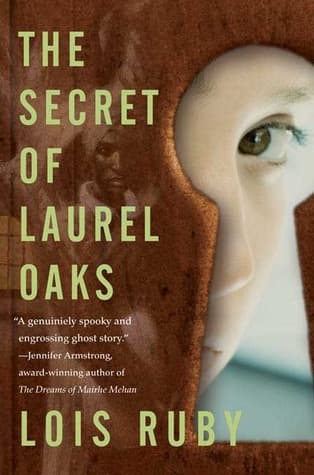
Lois Ruby (2008)
Genre
Fantasy / Historical Fiction / Mystery / Young Adult
Reading Time
360 min
Key Themes
See below
Sign in to track this book
A contemporary girl with a gift for sensing spirits must unravel a 150-year-old murder mystery at a haunted Louisiana plantation to clear the name of a wrongly accused slave girl and finally bring peace to her restless spirit.
Thirteen-year-old Lila and her family – her parents, Mr. and Mrs. Penrose, and her older brother, Brad – arrive at Laurel Oaks Plantation in Louisiana for a summer vacation. Lila is immediately drawn to the historic house's eerie atmosphere, rumored to be haunted. Her parents and Brad are skeptical, with Brad often teasing Lila about her sensitivity to the supernatural. Lila, however, feels a connection to the house and a sense of anticipation, believing there might be more to the ghost stories than her family thinks. She notices subtle signs that suggest a presence, setting her apart from her pragmatic family.
Soon after their arrival, Lila experiences unusual occurrences. Objects move, she hears faint whispers, and feels cold spots in certain rooms. Unlike her family, who attribute these events to the old house settling or their imaginations, Lila believes they are signs of a ghostly presence. During one strong experience in an upstairs bedroom, she feels a powerful, almost desperate, energy. This encounter confirms her belief that a spirit is trying to communicate, and she feels a growing need to understand what it wants.
Through clearer communications, Lila realizes she is connecting with the spirit of a young slave girl named Daphne. Daphne tells Lila that she lived at Laurel Oaks in the 1840s and was wrongly accused of poisoning the master's wife, Mrs. Laurance, and her two daughters, Clara and Eleanor. Daphne's spirit is restless and unable to find peace, trapped by the unproven accusations and the desire for her innocence to be recognized. She sees Lila as the only one who can hear her and help her clear her name, forming a unique bond between the living girl and the deceased one.
As Lila talks with Daphne, the story shifts to Daphne's life in the 1840s. Daphne describes her life as a house slave at Laurel Oaks, detailing daily routines, the strict hierarchy, and her relationships with other slaves and the Laurance family. She shares her close bond with Mrs. Laurance's daughters, Clara and Eleanor, especially Clara, who was kind to her. Daphne also talks about tensions in the household, including the master's frequent absences and Mrs. Laurance's declining health, which she thought was an unknown illness, not poison.
Daphne describes the night Mrs. Laurance and her two daughters became gravely ill and died. She remembers the chaos and fear that took over the plantation. Despite her efforts to help, she was quickly identified as the culprit, mainly because she prepared the family's meals and remedies. The evidence against her was indirect, driven by prejudice and the need for a quick scapegoat. Daphne strongly denied poisoning them, but her pleas were ignored by the panicked and grieving white residents, leading to her swift condemnation.
Moved by Daphne's pleas and her own growing belief in the spirit's innocence, Lila starts her own investigation into the historical events. She looks through old documents, local histories, and plantation records at Laurel Oaks, hoping to find overlooked details or inconsistencies in the original account. Her parents and Brad remain unaware or dismissive of her efforts, seeing her activities as typical teenage curiosity. Lila feels a growing responsibility to Daphne, knowing she is the only one who can truly help.
As Lila looks deeper, she finds inconsistencies in the historical records and Daphne's account. She learns about a local doctor who often visited the plantation, and about herbal remedies used by slaves. Daphne also recalls a specific plant that grew near the house, which she sometimes used for medicine. Lila begins to suspect that the deaths might not have been deliberate poisoning, but perhaps an accident, or even a natural illness misdiagnosed before modern medicine. She focuses on the specific symptoms Daphne described.
Through Daphne's fragmented memories and Lila's research, the truth appears. Lila finds historical information about the Yellow Jasmine plant, which grew commonly around Laurel Oaks and was sometimes mistakenly used for its medicinal properties, but was highly poisonous if ingested incorrectly. Daphne's memories confirm she had used a similar-looking plant for a remedy for Mrs. Laurance's stomach issues, believing it to be helpful. The deaths were not a deliberate act of poisoning by Daphne, but a tragic accident, a misunderstanding of powerful natural remedies, made worse by the limited medical knowledge of the time.
With her evidence, Lila presents her findings to her skeptical parents and brother. Initially, they are dismissive, but Lila's detailed explanation, along with some unexplained phenomena in the house, begins to sway them. Her mother, in particular, starts to consider Daphne's innocence. The family's initial skepticism turns into a reluctant acceptance, then a realization of the historical injustice. This is a turning point, as Lila finally has allies in her quest to bring peace to Daphne.
Once Lila and her family acknowledge the truth and understand the injustice of Daphne's accusation, a change occurs. Daphne's presence, which had been urgent and restless, begins to soften. Lila experiences a final, clear communication from Daphne, a feeling of gratitude and release. The lingering chill in the house disappears, and the subtle ghostly signs stop. Daphne's spirit, finally free from the burden of her wrongful accusation, is able to move on, leaving Lila with a sense of accomplishment and a lasting connection to the past.
As their vacation at Laurel Oaks Plantation ends, Lila and her family prepare to leave. The experience has left a mark on all of them, especially Lila. While her family may not fully understand her connection with Daphne, they have seen her dedication and the clear shift in the house's atmosphere. Lila carries with her not just the memory of a haunted house, but the story of a young girl's injustice and her role in correcting a historical wrong. The Penrose family leaves with a new perspective on history, empathy, and the unseen world.
The Protagonist
Lila evolves from a timid girl who is teased for her sensitivity to a confident investigator who uses her unique gift to right a historical wrong.
The Supporting/Central Ghost
Daphne's arc is one of release, moving from a tormented, earthbound spirit to one finally at peace once her truth is revealed.
The Supporting
Mr. Penrose shifts from outright skepticism to a reluctant but growing acceptance of the unseen, supporting Lila in the end.
The Supporting
Mrs. Penrose moves from cautious skepticism to becoming Lila's most empathetic and understanding advocate within the family.
The Supporting
Brad's arc involves a softening of his cynical demeanor, moving from outright mockery to a grudging respect for Lila's unusual abilities and the historical truth she uncovers.
The Mentioned/Historical Figure
Her arc is static, her significance lying in her role as the catalyst for Daphne's wrongful accusation and Lila's quest.
The Mentioned/Historical Figure
Her arc is static, serving as a representation of innocence and a positive connection Daphne had within the Laurance household.
The novel explores justice and injustice, especially through historical wrongs. Daphne, an innocent slave girl, is wrongly accused and condemned for a crime she did not commit, showing the systemic prejudices of the 19th-century South. Lila's quest is driven by a desire to correct this historical injustice, to prove Daphne's innocence, and to bring peace to her restless spirit. The mystery's resolution is about solving a puzzle and achieving a moral rightness denied in the past, as seen when Lila's family finally believes her about Daphne's innocence.
““She just wants someone to believe her. To know the truth.””
Empathy is central to Lila's ability to connect with Daphne. Lila's sensitivity allows her to feel Daphne's pain and desperation, crossing the boundaries of time and death. Her empathy drives her to investigate, even when her family is skeptical, and helps her understand Daphne's story from the spirit's view. This theme shows how deep human connection, even with those long gone, can lead to healing and resolution, demonstrated by Lila's commitment to Daphne's cause.
““I felt her sadness, her fear, like it was my own.””
The novel looks at how history is recorded, remembered, and potentially twisted, especially when the voices of marginalized people are silenced. The official history of Laurel Oaks calls Daphne a murderer, but Daphne's ghostly memories offer a truer story. Lila's investigation involves sifting through historical records and comparing them with Daphne's experiences, revealing gaps and biases in historical accounts. The story suggests that true history is not just about documented facts, but also about understanding individuals' lived experiences and injustices, allowing the past to truly speak.
““History isn’t always what’s written down. Sometimes, it’s what’s remembered.””
This theme is shown by the different views within the Penrose family. Lila represents belief and openness to the supernatural, while her parents and brother, Brad, represent skepticism and reliance on rational explanations. The story explores the tension between these two views, showing how skepticism can blind people to truths beyond their immediate understanding, while also showing the importance of seeking evidence. Ultimately, the story suggests that belief, when combined with a search for truth, can lead to discoveries, as the family's skepticism gradually fades with Lila's findings and Daphne's undeniable presence.
““It’s just an old house, Lila. Houses creak.””
Laurel Oaks Plantation serves as the setting for spiritual unrest and historical revelation.
The Laurel Oaks Plantation functions as a classic haunted house, but with a unique twist. It's not merely a place of jump scares or malevolent spirits; instead, it's a repository of unresolved history and a stage for an innocent spirit seeking justice. The house's eerie atmosphere, unexplained phenomena, and historical significance are central to the plot, creating the ideal environment for Lila's psychic connection to flourish. It acts as a character in itself, holding the secrets of the past and enabling the communication between worlds.
The story alternates between Lila's present-day investigation and Daphne's past experiences.
The novel employs a dual narrative structure, shifting between Lila's contemporary investigation in the present and Daphne's firsthand accounts of life and tragedy in the 1840s. This device allows readers to experience both the unfolding mystery and the historical context simultaneously. It builds suspense as Lila pieces together clues and provides crucial backstory and emotional depth from Daphne's perspective, making the historical injustice more immediate and poignant. This interweaving of timelines is essential for understanding the full scope of the tragedy and its resolution.
Lila's unique psychic ability to connect with spirits drives the entire plot.
Lila's inherent sensitivity and ability to perceive and communicate with spirits is the primary plot device that sets the entire story in motion. Without her unique gift, Daphne's story would remain untold, and the historical injustice would persist. This ability is not just a supernatural flair; it's the engine for the mystery, the catalyst for the emotional connection, and the means by which the truth is ultimately uncovered. It highlights the idea that some truths require a different kind of perception to be revealed.
Lila's use of historical records to corroborate Daphne's ghostly memories.
Lila's investigation is not solely reliant on her psychic abilities; she also engages in tangible historical research, examining old plantation records, local histories, and scientific information about plants. This plot device grounds the supernatural elements in reality, providing a logical framework for solving the mystery. It allows Lila to cross-reference Daphne's fragmented memories with verifiable facts, lending credibility to the ghostly narrative and strengthening the final revelation of Daphne's innocence. It emphasizes that history can be re-examined and re-interpreted.
“The past is never really gone, not as long as there are people to remember it.”
— Early in the story, as Sarah reflects on the history of Laurel Oaks and the lingering presence of past events.
“Sometimes the biggest mysteries aren't about what happened, but why.”
— Sarah's internal monologue while investigating a puzzling clue related to the mansion's original inhabitants.
“A house holds secrets, not just in its walls, but in the very air you breathe inside it.”
— Describing the atmosphere of Laurel Oaks mansion, hinting at its hidden past.
“Fear can make people do terrible things, but hope can make them do extraordinary ones.”
— A character reflecting on the choices made by historical figures in the story during a time of crisis.
“The truth isn't always neat and tidy. Sometimes it's messy and complicated, like life itself.”
— Sarah grappling with conflicting pieces of information about the family's past.
“Every object has a story, if you only know how to listen.”
— When Sarah discovers an old locket, realizing its significance to the overall mystery.
“It's easy to judge the past from the comfort of the present, but you weren't there.”
— A wise elder character cautioning Sarah against making quick judgments about historical figures' actions.
“Some bonds are stronger than time, stronger than distance, stronger even than death.”
— Referring to the enduring connections between characters, both living and from the past.
“The greatest treasures aren't gold or jewels, but the stories we carry in our hearts.”
— A character reflecting on the true value of family history and personal narratives.
“You can't change what happened, but you can change how you remember it, how you learn from it.”
— Sarah processing a difficult revelation about her family's history.
“Sometimes, the answers you're looking for have been right in front of you all along, just hidden in plain sight.”
— Sarah's realization after overlooking an obvious detail during her investigation.
“The past doesn't just inform the present; it actively shapes it, like clay in a potter's hands.”
— A metaphor used to explain the profound influence of historical events on current circumstances.
“Courage isn't the absence of fear, but the willingness to act despite it.”
— A character demonstrating bravery in a challenging situation, inspiring Sarah.
“Even in the darkest corners, there's always a glimmer of light, if you know where to look.”
— Sarah finding hope and a way forward after facing a grim discovery.
Ready to see how well you understood this book? Take our interactive quiz with 10 questions.







