“The past is never dead. It's not even past.”
— Reflecting on the haunting history of Crickley Hall and its lingering effects.

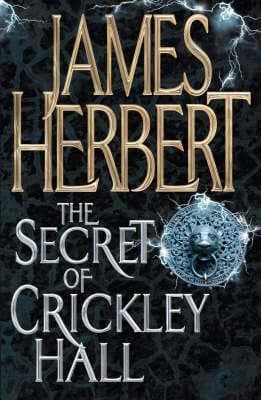
James Herbert (2006)
Genre
Thriller / Fantasy / Mystery
Reading Time
1200 min
Key Themes
See below
Sign in to track this book
A grieving family seeking solace in a secluded Devon manor finds their new home is a chilling portal to a past filled with malevolent spirits and a dark secret that refuses to stay buried.
The Caleigh family – Gabe, Eve, and their daughters Loren and Cally – are still dealing with their five-year-old son Cameron's disappearance six months earlier. Wanting a change of scenery and a chance to heal, Gabe rents Crickley Hall, a large, old house in Hollow Bay, Devon. The house is isolated, overlooking Devil's Cleave, and at first seems like a good place to retreat. However, strange things start happening almost immediately. The family dog, Chester, is clearly upset, whining and barking at unseen things. Doors open and close by themselves, cold spots appear, and unsettling noises echo through the old halls, suggesting a disturbing history in their new home.
As weeks pass, the paranormal events at Crickley Hall get stronger. Eve, especially, becomes the focus of these events. She hears whispers, sees shadowy figures, and has vivid, disturbing dreams and waking visions. The cellar door keeps opening by itself, even though it is closed securely each night. A child's cry, sounding like Cameron's, is heard, and toys move on their own. Eve, guided by a mother's instinct and her deep grief, starts to think that Cameron's spirit might be trying to talk to her through the house, or that the house itself is connected to missing children.
Gabe, at first a skeptic, becomes more worried by Eve's distress and the house's undeniable strangeness. Local residents, including Percy Judd, give vague warnings and share parts of Crickley Hall's past. The Caleighs find out the house was an orphanage in the 1940s, run by a cruel woman named Augusta Coyle and her equally brutal brother, Elias. They learn about the harsh conditions, severe punishments, and unexplained deaths of several children there. This dark history starts to connect with the present, suggesting a lingering evil within the walls.
The spirits of the children who died at Crickley Hall, including Maurice, Gordon, and other unnamed souls, start to show themselves more clearly. They are not mean to the Caleighs, but are trapped and tormented, always reliving their suffering. The Caleigh daughters, Loren and Cally, also have encounters, sometimes seeing the children, sometimes feeling their fear. Eve feels a strong connection to the trapped spirits and wants to help them find peace, even as she looks for clues about Cameron's fate in the house's ghost activity.
Eve's connection to the house and its past grows, leading to a powerful, immersive vision. She directly experiences Augusta Coyle and Elias's brutal rule, seeing their cruelty, the starvation, and the regular beatings given to the children. She sees how children were locked in the cellar, tortured, and how some died, often by drowning in the river or from abuse. This vision confirms the horrific history and the deep pain that fills Crickley Hall, strengthening Eve's resolve to bring justice and peace to the tormented spirits.
Through increasingly clear ghost messages and her own hunches, Eve realizes Cameron is connected to Crickley Hall. She learns his spirit is also present, having been drawn to the house after his death. It is revealed that Cameron, after wandering off, accidentally drowned in the river near their previous home. His spirit, perhaps drawn by the many child spirits or a natural pull, found its way to Crickley Hall. His presence is what first brought the Caleighs to the house, an unseen force guiding them to their son.
As the Caleighs find out more about the past and the children's spirits become more active, Augusta and Elias Coyle's evil presence also grows stronger. Their spirits, also trapped and filled with their former cruelty, start to actively terrorize the Caleighs and the ghost children. The house becomes a battleground between the innocent spirits seeking peace and the sadistic former caretakers still wanting to cause pain. The Coyle siblings try to drive the Caleighs out, seeing them as intruders disturbing their endless control over the helpless children.
Gabe, at first logical and doubtful, can no longer deny the strong evidence of the supernatural. Seeing the Coyle siblings' evil and his family's fear, as well as the child spirits', he becomes a fierce protector. He actively tries to face and push back the Coyle spirits, using his physical presence and will to challenge their hold on the house. This leads to a terrifying increase in poltergeist activity, with objects flying, temperatures dropping, and the Coyle siblings showing themselves with greater force, trying to harm the Caleighs and prevent the truth from fully coming out.
With help from Percy Judd, who reveals he is a medium and has long known the house's dark secrets, the Caleighs decide to confront the Coyle spirits directly. They plan an exorcism, or a ritual, to help the children's spirits move on and to banish the Coyles. This leads to a final and terrifying confrontation inside Crickley Hall. The Coyle siblings fight back with great power, appearing physically and releasing their fury. The house itself seems to come alive, resisting attempts to cleanse it, but the combined will of the Caleighs, Percy, and the child spirits' desperate wish for peace creates a powerful force.
In a difficult struggle, the Coyle siblings are finally defeated and banished. Their evil cannot stand against the combined spiritual and emotional force. With their tormentors gone, the spirits of the abused children, including Maurice and Gordon, can finally find peace and move on. Cameron's spirit also finds its release. Eve shares a last, tender moment with her son's spirit, allowing her to truly grieve and say goodbye, bringing a deep sense of closure to the Caleigh family. Though changed by their experience, the family can finally begin to heal, having faced their grief and helped others find peace.
The Protagonist
Eve transforms from a grief-stricken, fragile woman into a determined, spiritually aware individual who finds closure for her son and helps free tormented souls.
The Protagonist
Gabe evolves from a rational skeptic into a believer and a courageous defender against the supernatural forces.
The Supporting/Mentioned
Cameron's spirit, initially lost and guiding, finds peace and moves on with the other children.
The Supporting
Loren grows from a frightened child into one who understands the spectral reality and finds courage in the face of terror.
The Supporting
Cally remains a vulnerable child, a symbol of innocence threatened by the house's dark history.
The Antagonist
Augusta's spirit, eternally trapped in her cruelty, is ultimately defeated and banished, ending her reign of terror.
The Antagonist
Elias's spirit, a relentless force of evil, is ultimately vanquished alongside his sister.
The Supporting
Percy acts as a catalyst and guide, helping the Caleighs to understand and resolve the haunting.
The Supporting
Maurice's spirit, eternally suffering, eventually finds peace and moves on.
The main theme is the Caleigh family's deep grief over Cameron's disappearance and death. Eve, especially, is consumed by her loss, and this emotion makes her open to the supernatural. Crickley Hall becomes a place for their mourning, forcing them to deal with Cameron's death and the shared grief of the children who died in the orphanage. The end of the haunting lets Eve finally find closure for Cameron, showing how facing past trauma can help with personal loss.
“A mother’s grief was a strange and terrible thing, a wound that never truly healed, only scarred over, ready to reopen at the slightest touch.”
The novel clearly shows the lasting effect of human cruelty through Augusta and Elias Coyle. Their evil spirits continue to torment the house and its inhabitants decades after their deaths, showing that evil can go beyond physical life. The abuse of the children at the orphanage is shown in horrifying detail, highlighting how unchecked power and cruelty create a mark that time cannot easily erase. The Coyle siblings are a chilling reminder that some forms of evil last beyond death.
“Evil, once unleashed, rarely confined itself to the moment. It lingered, a poisonous residue on the very fabric of existence.”
While the Caleighs look for personal healing, a large part of their journey involves bringing a form of justice and redemption to the child spirits trapped in Crickley Hall. Eve's compassion for the abused orphans leads her to confront the Coyles and help the children move on. By freeing the spirits from their tormentors, the Caleighs achieve a kind of spiritual justice for the long-suffering victims. This act of empathy and courage ultimately allows the children, and Cameron, to find peace, offering hope amid the horror.
“Sometimes, the living had to fight for the dead, to give them the peace that had been stolen from them in life.”
The fierce, protective love of parents for their children is a strong theme. Eve's maternal instinct lets her connect with Cameron's spirit and feel for the tormented children of Crickley Hall. Gabe, despite his initial doubt, is driven by an equally strong desire to protect his family from the evil forces in the house. This theme contrasts with the complete lack of parental care and extreme cruelty shown by Augusta and Elias Coyle towards the orphans, showing the difference between true love and destructive malice.
“A parent's love, it seemed, could pierce through veils that no ordinary senses could perceive.”
Crickley Hall is more than just a place; it is a character filled with its horrific history. The house actively remembers and re-enacts the past, trapping the spirits of both victims and perpetrators. The physical structure and its surroundings, like Devil's Cleave and the river, are important to the haunting, symbolizing how inescapable past events are. The Caleighs' struggle is not just with ghosts, but with a place full of suffering, showing how certain locations can hold human experience, both good and bad.
“Some houses, like some people, carried their past within them, a dark, indelible stain that refused to fade.”
Interweaves the Caleighs' present haunting with the orphanage's past horrors.
The novel skillfully employs a dual timeline, alternating between the Caleigh family's present-day experiences at Crickley Hall and vivid flashbacks or visions depicting the horrific events of the orphanage in the 1940s. This device is crucial for gradually revealing the house's dark history and the identities of the spirits. Eve's psychic sensitivity often acts as the bridge between these two timelines, allowing her to experience the past as if it were happening in the present, thus building suspense and providing essential exposition about the Coyle siblings and the child victims.
Manifests the supernatural presence through physical disturbances and sensory phenomena.
Poltergeist activity is a primary means by which the supernatural elements manifest in Crickley Hall. This includes doors opening and closing on their own, objects moving, sudden drops in temperature, disembodied voices, and unsettling noises. These physical disturbances serve to gradually erode Gabe's skepticism and provide tangible evidence of the haunting for the Caleigh family and the reader. The intensity of the poltergeist activity escalates as the Coyle spirits become more active, creating a constant sense of dread and immediate danger within the house.
Eve's ability to connect with spirits and experience past events directly.
Eve's innate psychic sensitivity and her ability to experience vivid visions are central to unraveling the mystery of Crickley Hall. Her grief over Cameron makes her particularly open to spiritual communication, allowing her to perceive the child spirits and, more profoundly, to witness the past abuses as if she were there. This device not only provides crucial plot information but also deepens her emotional connection to the suffering children and strengthens her resolve to help them, making her the primary conduit for the reader into the house's history.
Crickley Hall as a character, embodying the accumulated trauma of its past.
Crickley Hall is a classic haunted house, but Herbert elevates it beyond a mere setting. The house itself acts as a repository of trauma, its very fabric imbued with the suffering of the past. It is a character in its own right, actively holding onto the spirits and re-enacting the horrific events. Its gloomy atmosphere, isolated location, and unique features (like the cellar and the river) are integral to the haunting, making it a tangible, oppressive force that not only houses the spirits but seems to feed on their presence and the fear of the living.
A symbolic and literal conduit for death and connection.
The river flowing past Crickley Hall plays a significant, multi-layered role. Literally, it is the location where some of the orphanage children met their tragic end, either by accident or design, and where Cameron Caleigh also drowned. Symbolically, the river represents passage, the flow of life and death, and a connection between different places and times. It acts as a conduit, drawing Cameron's spirit to Crickley Hall and providing a means for the spirits to linger or, eventually, to move on. Its constant presence adds to the melancholic and foreboding atmosphere of the setting.
“The past is never dead. It's not even past.”
— Reflecting on the haunting history of Crickley Hall and its lingering effects.
“Fear is a ghost that haunts the living, not the dead.”
— Describing the psychological impact of the supernatural events on the characters.
“Some houses are built with sorrow in their walls.”
— Commenting on the tragic history embedded in Crickley Hall's structure.
“In the silence, the whispers of the past grow loudest.”
— During a quiet moment when paranormal activity intensifies.
“A child's innocence can see what adults refuse to believe.”
— Highlighting how the children in the story perceive the ghosts more clearly.
“Ghosts are memories with unfinished business.”
— Explaining the nature of the spirits haunting Crickley Hall.
“The truth hides in shadows, waiting to be uncovered.”
— As the mystery of the house's history begins to unravel.
“Courage is not the absence of fear, but facing what terrifies you.”
— A character musters bravery to confront the supernatural threats.
“Every creak in the floorboard tells a story of pain.”
— Describing the eerie atmosphere of Crickley Hall.
“Loss carves hollows in the soul that echoes never fill.”
— Reflecting on the grief experienced by characters due to past tragedies.
“The line between reality and nightmare is thinner than a whisper.”
— During a surreal encounter with the supernatural.
“To heal, one must first confront the wounds of history.”
— As characters seek closure from the house's dark past.
“Darkness has a memory all its own.”
— Noting how evil events leave a lasting imprint on places.
“In the heart of fear, lies the seed of truth.”
— Discovering crucial revelations amidst terrifying experiences.
Ready to see how well you understood this book? Take our interactive quiz with 10 questions.
Biography coming soon.







