“The secret commonwealth is the world of the imagination, the world of the daemons, the world of the dead, the world of the spirits.”
— Lyra reflects on the nature of reality and the unseen realms.

Philip Pullman (2019)
Genre
Fantasy / Science Fiction / Young Adult
Reading Time
1266 min
Key Themes
See below
Sign in to track this book
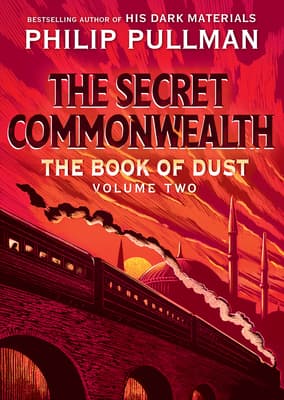
Decades after her childhood, Lyra Silvertongue and her daemon, Pantalaimon, go on a quest for a lost city and the truth of Dust, making her face a world bigger and more dangerous than she imagined.
Seven years after 'His Dark Materials,' Lyra Silvertongue, now a 20-year-old student at St Sophia's College, Oxford, has a difficult relationship with her daemon, Pantalaimon. Their connection is now marked by frequent arguments and Pantalaimon's growing independence and cynicism, often as a polecat or pine marten. The main cause of their disagreement is Lyra's study of a paper on the Rose-Garden, a philosophical idea Pantalaimon finds cold. One evening, Lyra sees two unknown people brutally murder a botanist, Dr. Hanna Relf. Before dying, Relf whispers about 'the Rose-Garden' and a secret involving Lyra, starting a new mystery.
Dr. Relf's murder, with Lyra's interest in the Rose-Garden, makes the tension between Lyra and Pantalaimon worse. During a bitter argument about love and the human-daemon bond, Pantalaimon, angry and sad about Lyra's perceived emotional distance, leaves her. This separation is devastating and new for Lyra, as the bond between a human and their daemon is thought to be unbreakable. Upset and weak from the separation, Lyra asks her former guardian, Malcolm Polstead, now a professor and agent for the Oakley Street intelligence network, for advice. She also talks to Dr. Madek, a scholar of daemons, hoping for an explanation or a way to make up with Pantalaimon.
While Lyra deals with Pantalaimon's absence, Malcolm Polstead is asked by Oakley Street to investigate the disappearance of a young scholar named Olav Tryggvason, who was researching 'the Secret Commonwealth' and Dust. Malcolm goes to Geneva, where he learns Olav was last seen with a woman named Madame Rona and was involved with a group called the 'Magisterium's Office of Applied Theology' (MOAT). Malcolm's investigation finds a link between Olav's research, the Rose-Garden, and a powerful secret society controlling events, suggesting a global fight for knowledge and thought.
Following a clue from Dr. Relf and her own feelings, Lyra decides to go to Prague, thinking Pantalaimon might be drawn there by a shared interest in the Rose-Garden. She finds a world different from Oxford, with refugees escaping political problems and economic hardship. In Prague, Lyra meets a young Syrian refugee, Nour Huda, who becomes her guide. Lyra also sees the Magisterium's growing power and the persecution of those considered different. Her search for Pantalaimon mixes with her growing awareness of the suffering around her.
Lyra's research into the Rose-Garden increases as she travels. She learns it is not a physical place but a philosophical idea, a 'place beyond places' where pure thought and meaning exist, reachable through deep understanding and detachment. Her alethiometer, though harder to read without Pantalaimon, keeps giving her cryptic guidance, warning her of danger and the involvement of powerful, unseen forces. She realizes the Rose-Garden is central to the conflict and that both she and Pantalaimon are being drawn into a dangerous search related to its secrets and Dust.
Malcolm's investigation leads him to a Magisterium stronghold where he is captured and questioned by MOAT agents, including Olivier Bonneville. They believe Malcolm has information about Lyra and Dust. Despite their harsh methods, Malcolm resists, but he learns more about their goals: to control information and suppress any knowledge that challenges their authority, especially about daemons and the Rose-Garden. With help from an unexpected ally, Malcolm escapes, taking important information about the Magisterium's plans and their pursuit of Lyra.
Lyra's journey takes her to a desert region where she meets Olivier Bonneville, the man who murdered Dr. Relf and a key figure in the Magisterium. Bonneville, with a twisted interest in Lyra and a desire to use her connection to Dust, tries to capture her. Lyra, using her intelligence and the limited guidance of her alethiometer, avoids him. She finds a hidden settlement in the desert, a community of scholars and mystics who also seek the Rose-Garden and have old knowledge about Dust and reality. Here, she finds temporary safety and a deeper understanding of her search.
After leaving Lyra, Pantalaimon travels through Europe, meeting different human and daemon communities. He struggles with his independence, missing Lyra but also enjoying his freedom. He joins a network of Gyptians, who know about the Magisterium's plans and secretly work against them. Through his interactions, Pantalaimon learns more about the political situation, the growing persecution of daemons, and the Magisterium's desire to control all knowledge. He also hears rumors of a 'city of daemons' and a place where the barrier between worlds is thin, which he thinks might explain his own identity and Lyra's.
Lyra and Pantalaimon are reunited in the hidden desert settlement. Their reunion has tension but also great relief. They begin to fix their broken bond, understanding that their individual journeys have given them new ideas. Here, the wise elders of the community reveal the Rose-Garden: it is not a physical place but a state of being, a complete understanding of Dust and the connection of all things, available only to those who use both reason and emotion, the balance Lyra and Pantalaimon must find.
As Lyra and Pantalaimon make up, Malcolm arrives, having tracked them through the desert. He brings news of the Magisterium's pursuit and their determination to capture Lyra, believing she holds the key to Dust and the Rose-Garden. The three, with some desert scholars, go on a dangerous journey, constantly avoiding Bonneville and his agents. Their path leads them to a 'city of daemons' – a place where daemons can exist without their humans, an idea that challenges everything they thought they knew about their world and themselves, setting up the next book.
The Protagonist
Lyra begins disconnected from her daemon and intellectualizing emotion, but through her journey and suffering, she learns the importance of empathy and the true nature of connection.
The Supporting
Pan's journey away from Lyra allows him to develop his own identity and perspective, ultimately leading to a more mature and balanced reunion.
The Supporting
Malcolm's arc reinforces his role as a loyal and resourceful protector, expanding his understanding of the global threats posed by the Magisterium.
The Antagonist
Bonneville remains a steadfast antagonist, embodying the Magisterium's ruthless pursuit of power and control.
The Mentioned
Her death serves as the inciting incident for Lyra's new adventure.
The Supporting
Nour's journey is one of survival and resilience, offering Lyra a glimpse into a different kind of strength.
The Mentioned
His disappearance serves as a key plot device to draw Malcolm into the overarching narrative.
The Supporting
Dr. Madek provides initial intellectual and emotional support for Lyra at the start of her journey.
The Mentioned
Her involvement with Olav highlights the Magisterium's deceptive methods.
The main theme is the change and strain in the human-daemon connection. Lyra and Pantalaimon's difficult relationship shows the balance between independence and unity, and how emotional and intellectual differences affect them. Their separation forces both to think about their individual identities and what their existence together means. The book looks at the philosophical ideas of a daemon's freedom and the pain of a bond that, while unbreakable, can be hurt. It suggests that true connection needs mutual respect and emotional understanding, not just shared existence.
““They were two parts of one being, but they were not the same part, and their difference was causing them pain.””
Lyra, now an adult, deals with who she is outside of her past as a child of prophecy. Her studies and her daemon's absence make her question her beliefs, her emotions, and her place in the world. Pantalaimon also goes on a journey of self-discovery, learning what it means to be separate and how his identity is both linked to and different from Lyra's. The Rose-Garden, a 'place beyond places' of pure meaning, shows this search for deeper understanding of self and reality.
““She had been Lyra Silvertongue, the child of prophecy, but now she was just Lyra, a student, and a woman whose daemon had left her.””
The conflict between seeking open knowledge and control by strict institutions is important. The Magisterium, through MOAT, stops information, persecutes scholars like Dr. Relf and Olav Tryggvason, and tries to control stories about Dust and the Secret Commonwealth. Lyra's curiosity and Malcolm's intelligence work represent the fight for truth and freedom of thought against an oppressive group that fears any challenge to its power. The Rose-Garden itself becomes a debated idea, representing a dangerous truth the Magisterium wants to hide.
““The Magisterium feared knowledge more than anything, especially knowledge that challenged their version of truth.””
Lyra's journey through refugee camps and her meetings with characters like Nour Huda show her the suffering and injustice in the world. Her academic distance is challenged by the realities of political instability, poverty, and persecution. This theme shows the importance of empathy and compassion, urging Lyra (and the reader) to look beyond personal concerns and engage with global humanitarian issues. Her growing awareness of these injustices strengthens her resolve and changes her understanding of her own responsibilities.
““She had read about suffering in books, but seeing it, feeling it, was a different thing entirely.””
The book explores humanity's drive to find deeper meaning, often as a search for something sacred or beyond. The 'Rose-Garden' symbolizes this search for truth and understanding, a place where pure thought and meaning exist. Different groups interpret and pursue this idea in various ways, from Lyra's academic study to the desert mystics' old wisdom, and the Magisterium's desire to control it. It looks at the philosophical and spiritual aspects of Dust and the universe, questioning how meaning is made and seen.
““The Rose-Garden was not a place you could find on any map, but a place you found within yourself, or beyond yourself.””
A truth-telling device that guides Lyra, albeit with difficulty.
The alethiometer, a golden compass-like device, remains Lyra's primary tool for seeking truth and guidance. However, in 'The Secret Commonwealth,' its function is complicated by Pantalaimon's absence. Lyra struggles to read it with the same clarity and speed she once possessed, symbolizing her emotional and intellectual disconnect. This difficulty reinforces the idea that the alethiometer's power is deeply intertwined with the human-daemon bond and requires a holistic understanding that Lyra temporarily lacks. It acts as a constant reminder of her fractured connection and the deeper truths she must uncover.
A philosophical concept representing pure meaning and a contested truth.
The 'Rose-Garden' is a central plot device, initially presented as a mysterious concept that Dr. Relf was researching and that causes friction between Lyra and Pantalaimon. It evolves from a philosophical idea to a tangible object of pursuit for multiple factions, including the Magisterium and the desert mystics. It functions as a MacGuffin, driving the plot forward, but also as a profound symbol for the search for ultimate truth, pure thought, and the interconnectedness of Dust. Its elusive nature represents the difficulty of grasping profound truths.
The unprecedented physical and emotional split between Lyra and Pantalaimon.
The physical separation of Lyra and Pantalaimon is a groundbreaking plot device in the 'His Dark Materials' universe, challenging the fundamental understanding of the human-daemon bond. This separation not only creates immense emotional turmoil for both characters but also has physical and psychological consequences, weakening Lyra and forcing Pantalaimon to develop independence. It allows for dual narrative perspectives, with each character experiencing the world and evolving separately, ultimately leading to a more complex and mature understanding of their relationship upon reunion.
A hidden world or state of being connected to Dust and daemons.
The 'Secret Commonwealth' is a mysterious concept that Olav Tryggvason was researching and that Malcolm Polstead is tasked to investigate. It refers to a hidden dimension or aspect of reality, possibly related to the true nature of Dust, consciousness, and the deeper interactions between humans and daemons. It functions as a crucial piece of lore that expands the universe, hinting at unseen forces and unknown possibilities. Its ambiguity builds suspense and suggests that there is much more to reality than what is commonly perceived, driving both Malcolm's and Lyra's quests.
“The secret commonwealth is the world of the imagination, the world of the daemons, the world of the dead, the world of the spirits.”
— Lyra reflects on the nature of reality and the unseen realms.
“We are all subject to the fictions we create.”
— Malcolm discusses how beliefs shape human experience.
“A scholar's job is to ask questions, not to provide answers.”
— Dr. Relf advises Lyra on academic inquiry.
“The mind is a universe of its own, and we are only beginning to explore it.”
— Lyra contemplates consciousness and inner worlds.
“Fear is a poison that distorts the truth.”
— A character warns about the dangers of fear in seeking knowledge.
“Every story is a lie until someone believes it.”
— Reflection on the power of narrative and belief.
“The world is full of invisible things, not all of them friendly.”
— Lyra acknowledges the hidden dangers in the unseen realms.
“To understand another, you must first understand yourself.”
— Advice given to Lyra about empathy and self-awareness.
“Power corrupts, but so does the lack of it.”
— A discussion on the dynamics of power and oppression.
“The past is not dead; it is not even past.”
— Reflection on how history influences the present.
“Love is a kind of madness, but so is hate.”
— Lyra muses on the extremes of human emotion.
“We are all stories in the end.”
— A philosophical observation on human existence.
“The truth is often a matter of perspective.”
— A character debates the subjective nature of truth.
“Courage is not the absence of fear, but the will to act despite it.”
— Lyra reflects on bravery in the face of danger.
Ready to see how well you understood this book? Take our interactive quiz with 10 questions.
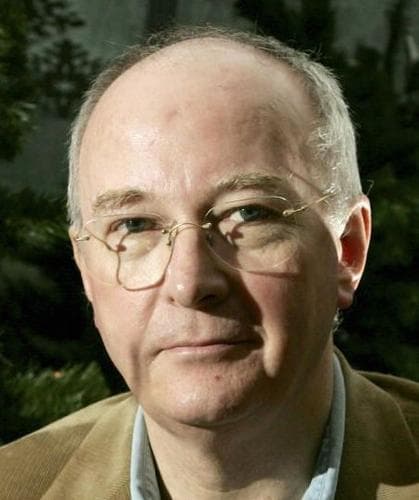
Sir Philip Nicholas Outram Pullman is an English writer. His books include the fantasy trilogy His Dark Materials and The Good Man Jesus and the Scoundrel Christ, a fictionalised biography of Jesus. In 2008, The Times named Pullman one of the "50 greatest British writers since 1945". In a 2004 BBC poll, he was named the eleventh most influential person in British culture. He was knighted in the 2019 New Year Honours for services to literature.







