BookBrief
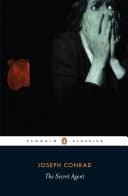
The Secret Agent cover
Archivist's Choice

The Secret Agent

Joseph Conrad (2007)

Genre

Thriller / Mystery

Reading Time

12 Minutes

Key Themes

See below

Track Your Reading

Sign in to track this book

A Russian spy in London plans a disastrous anarchist bombing, exposing the dark ironies and widespread fear hidden beneath Edwardian society.

Synopsis

In late 19th-century London, Adolf Verloc maintains a triple life: shopkeeper, Russian secret agent, and ostensible member of an anarchist cell. His handler, Mr. Vladimir, tasks him with a seemingly absurd act of terrorism – bombing the Greenwich Observatory – to provoke a crackdown on anarchists. Verloc, under pressure, manipulates his mentally disabled brother-in-law, Stevie, into carrying out the attack, with catastrophic and unintended consequences. The ensuing police investigation and Verloc's attempts to cover his tracks unravel his carefully constructed life, exposing the dark underbelly of political intrigue, domestic deceit, and the tragic fallout of his actions on his unsuspecting wife, Winnie, and her family.
Difficulty
Medium
Pacing
Moderate
Mood
Cynical, Tense, Tragic, Atmospheric, Ironic

Plot Summary

A Visit to the Embassy

Mr. Verloc, a seemingly lazy shopkeeper in Soho, London, is a secret agent for an unnamed foreign embassy (likely Russian). He is called in by First Secretary Mr. Vladimir. Vladimir is unhappy with Verloc's lack of success in starting revolutionary actions. He gives Verloc a new, extreme order: bomb the Greenwich Observatory. The goal is not just destruction, but to make anarchists in England look senselessly violent. This would force the British government to get tougher on political refugees and foreign activists. Vladimir stresses the need for a 'purely destructive' act, without political meaning, to create maximum public anger and fear. Verloc, used to a less active role, is surprised by how dangerous this new assignment is.

The Verloc Household and the Anarchists

The story moves to Verloc's home life, which includes his wife Winnie, her intellectually disabled brother Stevie, and her elderly mother. Winnie is devoted to Stevie, who is very sensitive and easily upset by violence. Verloc runs a shop selling questionable goods and pornography, which hides his secret work. He often hosts meetings of a small, mostly ineffective group of anarchists at his house: Michaelis, the 'ticket-of-leave apostle'; Comrade Ossipon, a kind of doctor; Karl Yundt, an old, cynical terrorist; and The Professor, a dangerous bomb-maker. Verloc tries to recruit these individuals for his new mission, but finds them too idealistic, too cowardly, or too distant to be useful for the specific, meaningless act Vladimir wants.

The Professor's Ideology

Verloc visits The Professor, a solitary and very intelligent man who carries a bomb, ready to detonate it and himself if caught. The Professor is not part of Verloc's anarchist group but is a freelance bomb-maker. He believes destruction is the only way to a new world. He sees society as corrupt and thinks widespread terror and chaos are needed to break it down. Verloc tries to get an explosive device from The Professor, hinting at a major operation. The Professor, however, is wary of Verloc's motives, seeing him as a state tool rather than a real revolutionary. He agrees to provide a bomb but warns Verloc against incompetence.

Stevie's Involvement

Unable to find an accomplice among his anarchist contacts, Verloc decides to use Stevie for the bombing. He uses Stevie's simple obedience and his desire to 'help' by having him carry the bomb to the Greenwich Observatory. Verloc carefully prepares Stevie, giving him the package with the explosive and clear, though misleading, instructions. He believes Stevie's innocence will make him an ideal, untraceable scapegoat, and that his disability will ensure he does not fully grasp the seriousness of his actions. Winnie, unaware of the errand's true nature, is vaguely uneasy but trusts her husband, believing he would never intentionally harm her brother.

The Greenwich Bombing

Stevie, carrying the bomb, heads for the Greenwich Observatory. Because of his limited understanding and a possible stumble, the bomb explodes too soon. The blast is catastrophic, killing Stevie instantly and scattering his remains over a wide area. The act, meant to be a precise, shocking statement, instead becomes a messy, tragic accident. The police, led by Chief Inspector Heat, are immediately called to the scene. The incident causes widespread public alarm, and a frantic investigation begins to find the perpetrator and their motives. The dismembered remains are hard to identify, causing initial confusion and a lack of clear leads about the bomber's identity.

Chief Inspector Heat's Investigation

Chief Inspector Heat of Scotland Yard, a shrewd and experienced detective, takes charge of the investigation. He quickly concludes that the bombing was an act of political extremism, not common crime. His initial focus is on known anarchist groups, especially those Verloc frequented. Heat has an informal arrangement with Verloc, using him as an informant to monitor the anarchists. He visits Verloc's shop, supposedly to gather information, but also to subtly gauge Verloc's reaction and look for clues. Heat recognizes a piece of clothing found at the scene, a label from Stevie's coat, and realizes the connection to Verloc's household, though he doesn't immediately tell Verloc.

Verloc's Revelation to Winnie

Verloc returns home, deeply shaken by the disastrous plan and Stevie's death. He struggles with how to tell Winnie. When Chief Inspector Heat arrives and subtly pressures Verloc, Verloc has to face the reality of Stevie's death. In a moment of desperation, Verloc tells Winnie that Stevie was the bomber and that he, Verloc, had planned it all. He tries to justify his actions, blaming pressure from the embassy and his desire to protect his family. Winnie is devastated, her world broken by the news that her husband caused the death of her beloved, innocent brother.

Winnie's Grief and Despair

Winnie falls into deep shock and grief. Her devotion to Stevie was the center of her life, and Verloc's betrayal is an unbearable blow. She sees Verloc differently, no longer as her protector but as a monstrous murderer. Her mind focuses on the image of Stevie's dismembered body. The story explores Winnie's inner turmoil, showing her simple, loyal nature and the complete destruction of her trust and affection. She feels alone and betrayed, unable to reconcile the man she married with the man who sent her brother to his horrific death. Her grief turns into cold, determined rage.

The Murder of Verloc

Overwhelmed by grief and a chilling sense of betrayal, Winnie confronts Verloc. The memory of Stevie's innocence and gruesome death consumes her. In a moment of intense, almost mechanical, rage, she grabs a carving knife from the supper table and fatally stabs Verloc. The act is impulsive, driven by a need for vengeance and a complete breakdown of her moral compass. Verloc dies quickly, unaware of the depth of Winnie's despair or her murderous intent. Winnie is left alone with the body, the reality of her action slowly dawning on her, but overshadowed by the lingering horror of Stevie's fate and Verloc's guilt.

Winnie's Flight and Encounter with Ossipon

After murdering Verloc, Winnie flees her home in terror and confusion. She wanders the streets of London, clutching the blood-stained knife, until she meets Comrade Ossipon, one of Verloc's anarchist acquaintances. Ossipon, a self-proclaimed 'doctor' and womanizer, initially sees a chance to exploit Winnie's vulnerability. Winnie, desperate and mentally unraveling, confesses her crime to him. Ossipon, though at first interested in a sensational story, becomes increasingly repulsed by her madness and the reality of the murder. He also realizes the potential danger to himself if he gets involved with her.

Ossipon's Betrayal

Ossipon, fearing involvement in Verloc's murder and disgusted by Winnie's mental state, decides to abandon her. He takes her money, supposedly to help her escape, but he really wants to get rid of her. He gives her vague instructions for leaving the country, knowing her fragile state makes her unable to follow them. He leaves her on a train, effectively condemning her to a desperate and lonely fate. Ossipon then returns to his anarchist friends, where he tries to explain his actions and keep his self-image as a man of principle, despite his callous betrayal of Winnie.

Winnie's Final Act

Abandoned by Ossipon, alone, and consumed by despair and the horror of her actions and Verloc's betrayal, Winnie finds herself on a cross-channel ferry. Her mind, already broken by the trauma of Stevie's death and her own crime, can no longer bear the weight of her existence. The thought of being caught and executed for Verloc's murder, combined with the lingering pain of Stevie's fate, leads her to a final, tragic act. She jumps overboard into the English Channel, committing suicide. Her death, like Stevie's, is a result of the destructive forces unleashed by Verloc's secret life and the indifference of society around them.

Principal Figures

Adolf Verloc

The Protagonist/Antagonist

Verloc begins as a complacent secret agent, forced into a drastic act that ultimately leads to the destruction of his family and his own violent end.

Winnie Verloc

The Supporting/Protagonist

Winnie transforms from a passive, devoted wife into a vengeful murderer, ultimately succumbing to despair and suicide after her world is destroyed by her husband's actions.

Stevie

The Supporting

Stevie's arc is tragically cut short, as his innocence is exploited, leading to his unwitting participation in and death during the Greenwich bombing.

Mr. Vladimir

The Antagonist

Vladimir remains a static character, representing the unchanging, cynical face of state power that initiates the tragic events.

Chief Inspector Heat

The Supporting

Heat initially seeks to solve the bombing while protecting his informant, Verloc, but ultimately uncovers the truth of Verloc's culpability, leading to the case's resolution.

The Professor

The Supporting

The Professor remains an unyielding figure of nihilistic ideology, serving as a philosophical counterpoint and practical enabler to Verloc's more self-serving actions.

Comrade Ossipon

The Supporting

Ossipon initially attempts to exploit Winnie's vulnerability but ultimately abandons her, revealing his true cowardly and self-serving nature.

Michaelis

The Supporting

Michaelis remains largely unaffected by the central plot, serving as a static representation of a gentler, more theoretical form of anarchism.

Themes & Insights

The Destructive Nature of Idealism and Ideology

Conrad explores how various beliefs—anarchism, nihilism, and even government policy—can lead to destruction when taken to extremes or used without care for human life. The anarchists, often ineffective, have destructive desires, while The Professor represents pure, nihilistic destruction. Most importantly, Vladimir's cold, calculated state ideology demands a senseless act of violence for political goals, showing how even 'rational' political aims can require horrific methods. The novel suggests that strict adherence to abstract principles, whether revolutionary or governmental, often causes chaos and suffering for individuals caught in their path.

The Professor, a 'perfect anarchist,' 'had no future. He was a force. His thoughts caressed the image of a perfectly spherical bomb.'

Narrator

Betrayal and Deception

Betrayal is a common theme, appearing on many levels. Verloc betrays his family by using Stevie and hiding his true job from Winnie. The foreign embassy betrays Verloc by pushing him into a dangerous act. Ossipon betrays Winnie by abandoning her and taking her money. These betrayals highlight the moral failings of the characters and the corrupting effect of their secret lives. The novel suggests that deception, whether for political reasons or personal gain, always unravels, leading to tragic outcomes and the destruction of trust and human connection. Private life is shown to be as vulnerable to treachery as public life.

He discovered that in the secret recesses of his wife's heart there was a reserve of... hatred for him.

Narrator, regarding Verloc's realization

The Fragility of Domesticity and Private Life

Conrad carefully shows the Verloc household as a seemingly ordinary home, completely shattered by Verloc's secret life. Winnie's carefully built world, centered on protecting Stevie and her simple devotion to Verloc, proves to be a fragile front. The novel demonstrates how political schemes and the demands of a 'secret agent' can utterly destroy personal relationships and domestic peace. The home's sanctity is violated, leading to murder and suicide. This emphasizes that no private space is truly safe from the encroaching dangers of the external, public world, especially when deception is at its core.

Winnie's 'secret of her life' was Stevie; and Verloc's 'secret of his life' was the secret service.

Narrator

Social Indifference and Isolation

The novel shows London society as largely uncaring about the suffering of its marginalized people and the schemes happening in its underworld. The anarchists are mostly ineffective and isolated, while the police and foreign powers operate with a detached, bureaucratic efficiency. Winnie's desperate situation after murdering Verloc is met with Ossipon's self-serving indifference, not genuine compassion. Stevie's vulnerability is overlooked or exploited by almost everyone. This widespread indifference creates a deep sense of isolation for the characters, highlighting a lack of true human connection and empathy in a modern, urban environment where individuals are often reduced to their usefulness or ideological labels.

Nobody was sorry for Mr Verloc. He was a secret agent, and if he were to die by a knife, then so be it.

Narrator (paraphrasing general societal view)

The Absurdity of Human Endeavor

Conrad fills the story with dark, satirical humor that highlights the absurdity of the characters' actions and motives. Verloc's bombing plot, meant to be a grand political statement, turns into a messy, tragic accident. The anarchists are mostly ineffective pretenders, and even the state's plans are shown to be prone to grotesque miscalculation. The novel suggests that human efforts, especially those driven by grand ideologies or selfish desires, often lead to outcomes that are farcical, meaningless, and deeply ironic. The gap between intention and outcome is vast, revealing the inherent futility and tragicomedy of human striving in a chaotic world.

The world was a bad joke, and if it were to explode, it would do so without sense or reason.

Narrator (reflecting the Professor's view)

Plot Devices & Literary Techniques

Dramatic Irony

The audience knows more than the characters.

Conrad frequently employs dramatic irony, where the reader is privy to information that certain characters are not, thereby heightening tension and underscoring the characters' ignorance or self-deception. For example, the reader knows Verloc's true profession and his role in the bombing from early on, while Winnie remains blissfully unaware until the tragic climax. This device allows Conrad to comment on the characters' moral blindness and the futility of their actions, as the reader can anticipate the disastrous consequences that the characters themselves cannot foresee, making their eventual downfall feel both inevitable and tragic.

Foreshadowing

Hints of future events and tragic outcomes.

The novel uses subtle and not-so-subtle hints to foreshadow the tragic events to come. Stevie's extreme sensitivity to violence and his simple obedience are repeatedly emphasized, foreshadowing his eventual exploitation and demise. The Professor's constant carrying of a bomb and his philosophy of destruction foreshadow the destructive power that will soon be unleashed. Verloc's initial reluctance and unease about the bombing assignment also hint at its disastrous outcome. This device builds suspense and creates a sense of impending doom, making the eventual catastrophe feel predestined and inescapable.

Symbolism of the Greenwich Observatory

A target representing order, knowledge, and the measurement of time.

The choice of the Greenwich Observatory as the target for the bombing is highly symbolic. The Observatory represents scientific progress, the measurement of time, and the establishment of global order (Greenwich Mean Time). Its destruction, particularly by a seemingly senseless act, symbolizes an attack on reason, order, and the very fabric of civilized society. The 'purely destructive' nature of the act, as desired by Vladimir, aims to disrupt not just a physical structure but the underlying principles of knowledge and stability, highlighting the novel's themes of chaos, absurdity, and the undermining of societal foundations.

The Motif of Darkness and Fog

Reflecting moral ambiguity and concealment.

Throughout the novel, London is often depicted shrouded in darkness, fog, and murk. This atmospheric imagery serves as a powerful motif, reflecting the moral ambiguity of the characters' actions, the secrecy of their lives, and the pervasive sense of confusion and uncertainty. The fog obscures vision, mirroring the characters' inability to see the truth or the consequences of their choices. It creates a claustrophobic and oppressive atmosphere, emphasizing the characters' isolation and the moral decay that pervades the city's hidden corners, where secrets fester and dark deeds are planned.

The Unreliable Narrator (Limited Omniscient)

Perspective often shifts, revealing subjective truths.

While Conrad employs a third-person limited omniscient narrator, the perspective often shifts between characters, particularly focusing on Verloc, Winnie, and later, Ossipon. This allows the reader to delve into the subjective realities and flawed perceptions of each character. The narrator sometimes maintains a detached, ironic tone, but at other times offers insights into the characters' inner turmoil, especially Winnie's. This narrative strategy highlights the difficulty of discerning objective truth in a world of deception and miscommunication, forcing the reader to piece together events from fragmented and often biased viewpoints, underscoring the theme of the inscrutability of human motives.

Critical analysis

Notable Quotes

Quiz

Test Your Knowledge

Ready to see how well you understood this book? Take our interactive quiz with 10 questions.

10
Questions
~5
Minutes
?
Best Score

Key Questions (FAQ)

"The Secret Agent" is a dark satirical novel by Joseph Conrad set in London. It centers on Verloc, a Russian spy embedded in an anarchist group, who is tasked by his handlers to orchestrate an attack on the Greenwich Observatory to discredit anarchists. The plot unravels when his plan goes horribly wrong, leading to tragic consequences.

About the author

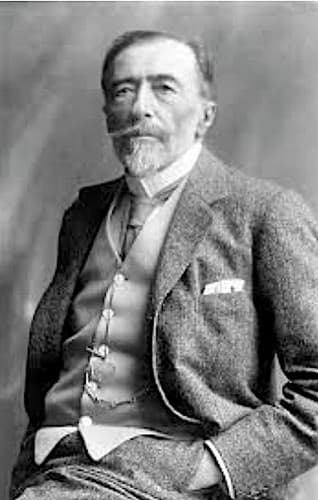
Joseph Conrad

Joseph Conrad was a Polish-British novelist and short story writer. He is regarded as one of the greatest writers in the English language; though he did not speak English fluently until his twenties, he came to be regarded a master prose stylist who brought a non-English sensibility into English literature. He wrote novels and stories, many in nautical settings, that depict crises of human individuality in the midst of what he saw as an indifferent, inscrutable and amoral world.